Apple today announced that Board member Jerome "Jerry" York has passed away after suffering a cerebral hemorrhage Tuesday night.
"Jerry joined Apple's Board in 1997 when most doubted the company's future. He has been a pillar of financial and business expertise and insight on our Board for over a dozen years," said Steve Jobs, Apple's CEO. "It's been a privilege to know and work with Jerry, and I'm going to miss him a lot."
As we noted yesterday, York was hand-picked for his director's position by Jobs in 1997 when Jobs took on the "interim" CEO position after the ousting of Gil Amelio. In addition to his director's position, York was also serving as Chair of the board's Audit and Finance Committee.
Update: Apple has updated its main home page with a tribute to York, temporarily removing all of its featured product image promos.
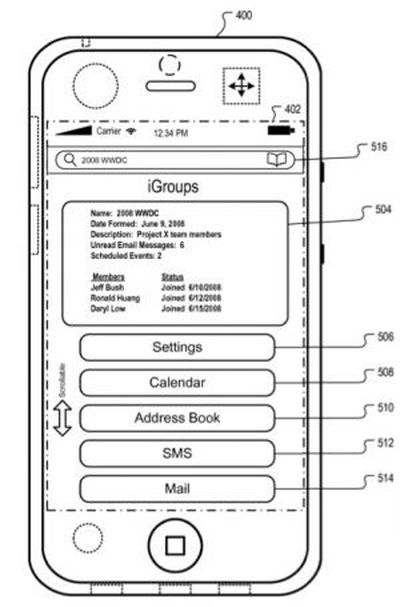
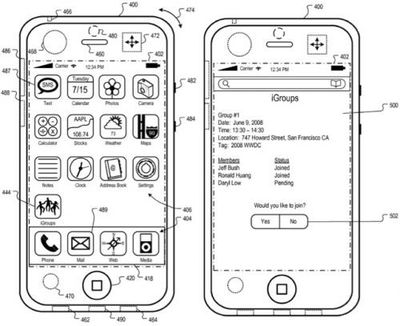
Patently Apple points to a patent application from Apple published today addressing technology to allow users at large events such as concerts, tradeshows, and rallies to utilize their mobile devices to automatically create social networking groups by exchanging "tokens" using such wireless technologies as Bluetooth and Wi-Fi.
The patent application, which was filed in September 2008, describes an example of the technology involving Apple's Worldwide Developers Conference, specifically using an "iGroups" application on the iPhone to demonstrate the process by which attendees could invite one another to a group and access information related to group discussion and activities on their devices.
A similar example shows how concert attendees could set their mobile devices to participate in the formation of a group at the event.
In this example scenario, a number of attendees of a rock concert set their Bluetooth-enabled devices to Token Exchange mode. All devices within transmission range of each other at the concert and that are set in Token Exchange mode begin exchanging and storing tokens. These devices are collectively referred to as a Group, and the users associated with devices in the Group are referred to as Group members. The Token Exchange is referred to as a "contact event." The contact event can be associated with a "contact time" defined by timestamps provided to the trusted service.
Groups created using the method could then utilize functionalities such as e-mail and calendaring applications to interact with each other. The specific "rock concert" example poses a situation in which the musicians on-stage could initiate a group, linking to attendees near the front of the audience. The technology could also "daisy chain" to allow those further back in the crowd to still join the group via attendees further forward even if out of range of the musicians.
Handset manufacturer HTC today issued a statement disagreeing with claims made by Apple in its patent infringement lawsuit filed earlier this month.
"HTC disagrees with Apple's actions and will fully defend itself. HTC strongly advocates intellectual property protection and will continue to respect other innovators and their technologies as we have always done, but we will continue to embrace competition through our own innovation as a healthy way for consumers to get the best mobile experience possible," said Peter Chou, chief executive officer, HTC Corporation.
The press release continues by outlining a number of awards and industry firsts achieved by the company as an argument for its leadership in innovation and intellectual property development.
Apple has reportedly been disrupting iPhone competitors with legal threats based on its substantial intellectual property portfolio. The company's suit against HTC has been seen as a warning shot to prove to the industry that it means business, as well as an indirect attack on Google, who has stood behind HTC as its partner for Android-based phones.
"Kindle for Mac is the perfect companion application for customers who own a Kindle or Kindle DX," said Jay Marine, director, Amazon Kindle. "For those customers around the world who don't yet have a Kindle, Kindle for Mac is a great way to instantly access and read the most popular new releases as well as their old favorites."
Kindle for Mac is a free download that allows Mac users to access Kindle-based eBooks even if you don't own a Kindle. For existing Kindle owners, the Mac application will sync bookmarks and annotations over the air.
Amazon had been said to be working on this Kindle for Mac application since October of last year.
Apple today released iPhone SDK 3.2 Beta 5 via the Phone Dev Center. The update comes only eight days after the previous release, a departure from Apple's trend of biweekly revisions.
We have yet to hear about any significant changes in the latest update, but we'll keep our eyes peeled as those with access to the SDK comb through it and report their findings.
Apple began taking pre-orders for the iPad in the U.S. last Friday, and Wi-Fi models of the device are expected to become available on April 3rd.
Bloomberg reports that Jerome "Jerry" York, former Chief Financial Officer at IBM and Chrysler and a current member of Apple's Board of Directors, has been hospitalized in critical condition following a cerebral hemorrhage.
York, 71, collapsed at his Rochester, Michigan, home Tuesday night, according to his wife, Eilene York, and was taken to Pontiac Osteopathic Hospital by ambulance. She said today that doctors told her that he suffered a massive cerebral hemorrhage.
York and Intuit CEO Bill Campbell were hand-picked by Apple CEO Steve Jobs for inclusion on the board upon Jobs' return to the company and assumption of the "interim" CEO position in 1997. York was once again reelected to the board at last month's shareholders meeting at the company's headquarters in Cupertino and currently serves as the Chair of the board's Audit and Finance Committee.
Apple's corporate bylaws require a minimum of five directors with a maximum of nine. Since the resignation of Google CEO Eric Schmidt from Apple's Board of Directors last August, Apple has continued with seven directors on its board. Apple's most recent addition to its Board of Directors was Avon CEO Andrea Jung, who was named to the board in January 2008 and took on the position of Co-lead Director last month, sharing the position with former Genentech CEO Art Levinson.
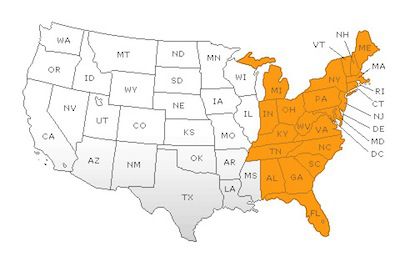
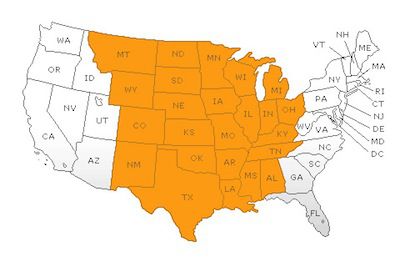
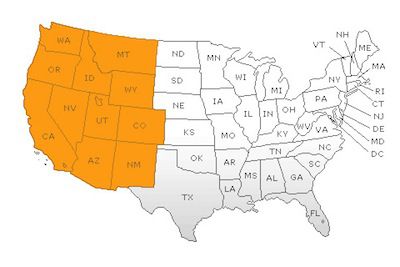
Navigon yesterday rolled out a series of three regional U.S. GPS turn-by-turn navigation applications for the iPhone at an introductory price of $24.99 each, significantly cheaper than its more comprehensive MobileNavigator North America currently priced at $79.99. The three regional applications divide the continental United States into three overlapping segments, permitting customers to purchase discounted versions covering their area of the country. Additional regions are available through in-app purchasing currently priced at $12.99.
Navigon reports that the introductory prices are valid through April 12th, at which point they will increase to $29.99 for the first MyRegion application and $14.99 for subsequent in-app expansions.
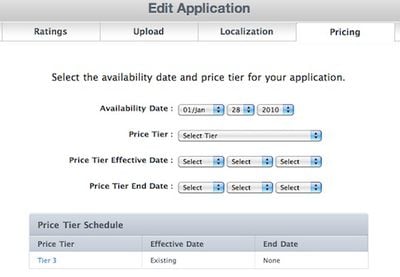
iPhone developer Amro Mousa reports (via Ars Technica) that Apple has added a new feature to its iTunes Connect interface for developers administering their iPhone applications submitted to the App Store, allowing developers to schedule sale prices for their applications in advance.
Developers previously were required to manually update pricing tier selections if they wished to adjust App Store pricing for their applications.
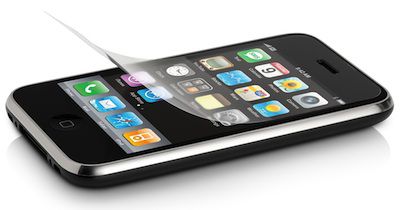
iLounge and Macworld are reporting that Apple has banned the sale of film-based screen protectors for its iPhone, iPod, and Mac lines in its retail stores.
In communications with vendors that have been ongoing for "some time now," according to one company, Apple has said that it will remove both film-only solutions from its stores, as well as any case or other accessory that includes film protection as part of its package, such as cases that include film screen protectors. According to sources, the ban will impact all forms of screen film, including completely clear film, anti-glare film, and mirrored film, regardless of whether the purpose of the film is protective, decorative, or both.
The reason for the removal of film-based screen protectors is currently unknown, although speculation centers around the company looking to reduce the perception that such protectors are a necessity because the devices' screens are not sufficiently durable. Another theory involves high return rates for the products due to difficulties with blemishes and air bubbles introduced by users as they attempt to adhere the products to their devices.
Macworld claims that the ban even extends beyond screen protectors to include protectors and cushions designed to adhere to palm rest areas on Apple's notebook computers. Apple has yet to respond to either publication with comment on the reports.
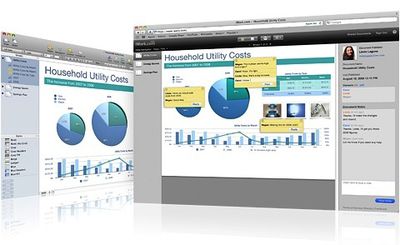
Apple today sent an e-mail to users of its iWork.com beta announcing several enhancements involving document sharing and access to the service from the iPhone, iPod touch, and iPad.
- Share documents on websites and social networks. iWork.com allows you to share a document by creating a public link. Use the link to share your document with large groups or on websites and social networks. There's no need to set a password or send an invitation. Anyone with the public link can view your document but cannot add comments or notes.
- Improved Shared Documents page. Download documents shared on iWork.com without leaving the Shared Documents page. You can also track the number of views your publicly shared documents receive.
- Refined user interface. A redesigned Sign In and Shared Documents page for iPad, iPhone, and iPod touch makes it easy to access your documents while on the go. The new interface and improved scrolling help you find your shared documents faster. Visit www.iwork.com from your iPad, iPhone, or iPod touch to view your shared documents.
iWork.com, introduced in January 2009, is a Web-based interface for sharing documents and allowing others to comment on them. iWork.com has been free for iWork users while in beta, but Apple has said that it plans to charge a fee for the service once it officially launches at some point in the future.
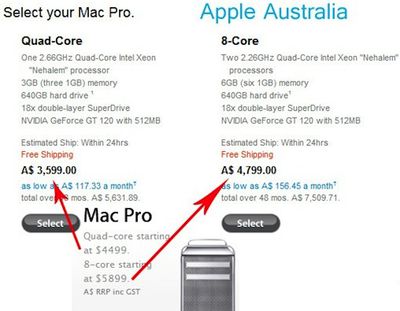
Engadget today pointed to a series of Apple ads appearing on Australian site PC Authority appearing to show significantly increased prices for Apple's MacBook Pro, MacBook Air, and Mac Pro lines, suggesting that new, more expensive models may be imminent. An update to the story added evidence of inconsistencies in pricing on Apple's own Australian and New Zealand sites.
The real story appears to be, however, that Apple has mistakenly included old pricing on its site and in its advertising in these countries. Last October, alongside a slew of product updates including the iMac, Apple also reduced prices on its MacBook Pro and MacBook Air lines in some countries. For example, in Australia, Apple dropped the entry-level MacBook Pro to A$1599 from A$1899 and the entry-level MacBook Air from A$2399 to A$1999. These are same price points appearing in conflict on Apple's site and ads at this time, strongly suggesting that the issue is simply a mistaken use of outdated graphics with incorrect prices.
Apple similarly introduced the Mac Pro in Australia in March 2009 with an entry-level price point of A$4499, as shown in the advertising images currently being seen on Apple's site and elsewhere. The prices were, however, dropped to begin at A$3599, apparently in December when Apple slightly tweaked build-to-order options on the Mac Pro.
We still continue to expect updates to Apple's MacBook Pro, MacBook Air, and Mac Pro models in the relatively near future, and while the new inconsistencies on Apple's site and advertising banners may be an error made as the company prepares some tweaks for an imminent release, the new images appear to reflect outdated rather than upcoming pricing.
The train of Mac OS X 10.6.3 developer seeds continues today, with Apple pushing out Build 10D571 to developers for testing. iPhone in Canadaoffers the details, which include a request that developers focus their testing on Graphics Drivers, iChat, QuickTime, and Fonts. Additional changes in the latest update include:
- Issues addressed that caused background message colors to display incorrectly in Mail when scrolling - Issue resolved that caused machines using BTMM and the Bonjour Sleep Proxy to wake unexpectedly
The seed notes also apparently document one known issue involving Software Update reoffering last week's Safari 4.0.5 update after upgrading to the new build.
The last developer build of Mac OS X 10.6.3 was seeded 11 days ago, and we continue to expect Apple to release a final version to the public in the relatively near future. Apple's release schedule is difficult to predict, however, as it seeks to polish each release to address both documented and publicly undocumented issues in its builds.
Mac OS X 10.6.2 was released in early November, and Apple began seeding versions of 10.6.3 to developers in early January.
Intel today announced the launch of its new Xeon 5600 series processors, bringing to market a number of new four-core and six-core processors that Apple could choose to utilize in an update to its Mac Pro line. The company also introduced its Core i7-980x processor, a high-end consumer-focused relative of the new Xeon chips.
These are also the first server and workstation chips based on the groundbreaking, new Intel 32nm logic technology, which uses Intel's second-generation high-k metal gate transistors to increase speed and decrease energy consumption. The Intel Xeon Processor 5600 series supports up to six cores per processor and delivers up to 60 percent greater performance than the 45nm Intel Xeon processor 5500 series.
Intel Xeon 5500 series processors are currently used in Apple's 8-core Mac Pro introduced last year. Using new six-core Xeon processors in a dual-processor configuration, Apple could now offer up to a 12-core Mac Pro running at base speeds of up to 2.93 GHz if it chose to remain within the thermal constraints of its existing dual-processor Mac Pros or up to 3.33 GHz if it was able to offer sufficient cooling for the increased heat load.
An update to the Mac Pro line is widely expected and earlier rumors had suggested that Apple might introduce Mac Pros today alongside Intel's announcement, but that does not appear to be the case. Apple has in the past even introduced new models using unannounced Intel processors, with last year's Mac Pro refresh utilizing 5500 series Nehalem processors coming a full three weeks before Intel officially announced the line.
MediaMemo reports that National Public Radio and The Wall Street Journal are preparing to roll out iPad-optimized versions of their websites as the device launches in the U.S. on April 3rd. Similar to sites formatted specifically for the iPhone or other mobile devices, users visiting the publications' sites using an iPad will be automatically redirected to the iPad-optimized version.
While the iPhone and other mobile devices with small screens relative to traditional computers can benefit from streamlined and reformatted versions of many sites' content, Apple intends for the iPad's larger display to be used for a much richer browsing experience. The iPad's lack of support for Adobe's Flash technology, however, means that many sites will not display as they would on a traditional computer supporting Flash. Consequently, publications such as NPR and The Wall Street Journal have turned to Flash-free versions of their sites to varying degrees.
So if all goes as planned, iPad users who want to listen to NPR programming will have a couple choices next month. They can:
- Download a free iPad-optimized version of the broadcaster's popular (two million downloads) iPhone app. Or - Use the iPad's browser to visit NPR.org, which will detect that it's being viewed with Apple's device and serve up a custom-built site. This means no trace of Adobe's (ADBE) Flash, which is used to power graphics and media on the site.
I've heard about a handful of other big publishers who are altering some but not all of their Web sites to create iPad-optimized versions.
That's what The Wall Street Journal - like this Web site, the Journal is owned by News Corp. (NWS) - is doing, for instance: Visitors to the newspaper's front page will see an iPad-specific, Flash-free page. But those who click deeper into the site will eventually find pages that haven't been converted.
According to Kinsey Wilson, NPR's head of digital media, the publication recently rebuilt its entire site to separate content from design, allowing it to easily tweak the visual presentation for certain platforms. Another aspect in NPR's favor is its limited advertising, reducing the hurdles imposed by the need to work with that Flash-dependent industry.
So while developing Flash-free versions of websites may be reasonable for certain publications with the structure and resources to accomplish the feat, it is by no means an easy solution for the many sites out there currently relying on Flash to display their standard Web content. During a visit to New York City to promote the iPad to publishers, Apple CEO Steve Jobs reportedly argued against the need for Flash, pushing publications toward adoption of other technologies such as H.264 video and JavaScript that are more iPad-friendly.
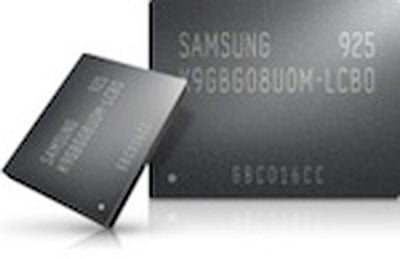
DigiTimes reports that industry demand for NAND flash memory of the type used in iPhones, iPod touches, and now iPads has been relatively weak of late, but Apple has been reluctant to enter into deals with suppliers who have taken steps to prop up prices by limiting the supply reaching the market. According to the report, Apple is now preparing, however, to assert its influence over the market and begin negotiations for longer-term contracts as it undoubtedly begins to ramp toward another iPhone revision later this year.
NAND flash demand has been weak, but pricing has been stable as major suppliers are limiting their supply to the market.
But the sources said Apple may start negotiating long-term supply contracts with its chip partners in the second quarter. Apple's demand will continue to play a significant role in the NAND flash industry in 2010.
A report last October suggested that NAND supply-demand balance would tip back into positive territory early this year after the holiday rush, but tight supplies are again a concern as Apple looks to soak up more of the available industry capacity.
In 2005, Apple announced a long-term NAND flash memory agreement with a number of suppliers that was expected to carry through 2010, although Apple's product lineup has obviously grown by leaps and bounds since that time with tremendous growth in its iPod line accompanied by the iPhone and now the iPad.
PayPal yesterday launched a major upgrade to its free iPhone application, offering a number of new features including the ability to initiate money transfers between users' accounts by "bumping" iPhones.
+ Brand new look and feel! + Bump: Easily start by bumping iPhones. + Withdraw funds from your PayPal balance. + Request Money: Get paid faster, it's the easy way to ask for the money you are owed. + Split the Check: Instantly split the bill, calculate tip, and request everyone's share. + Collect Money: Ask for contributions from a group for an event, gift, or cause. + Set Reminders: Never miss rent or a bill. + Refer the app to a friend
The PayPal application's "bump" feature utilizes the Bump API from Bump Technologies, the company that gained significant publicity when its Bump application for swapping photos and contacts between iPhones was featured in one of Apple's iPhone ads.
Apple yesterday released a pair of printer driver updates for Snow Leopard users, delivering updated compatibility for users of Brother and Samsung printers and multifunction devices.
9 to 5 Mac noticed yesterday that shipping windows for several of Apple's forthcoming iPad accessories have begun to slip well past the device's own April 3rd launch date.
First we noticed the iPad case making a slight shift from April 3rd to Mid-April. Today we notice Apple has delayed the iPad Keyboard Dock. The product was originally set to ship to customers in late-April but now the Apple store has placed the shipping time for sometime in May.
The reason for the delays are currently unknown, although it is reasonable to speculate that high demand may simply be outstripping Apple's supply in the initial rush.
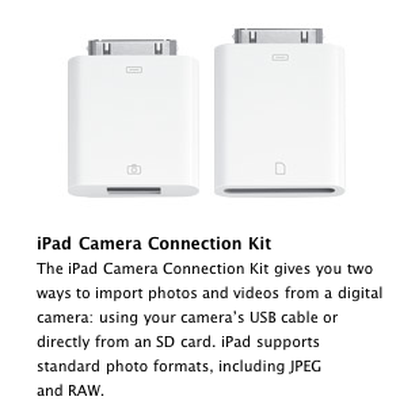
A number of observers have also noted that the iPad Camera Connection Kit, which will offer users the option of USB or SD Card reader connectivity for transferring digital photos and video to their iPads, is yet to be made available for pre-order.
The reason for the lack of pre-order availability on the iPad Camera Connection Kit is similarly unknown, and many users are currently left waiting for news on how soon after the iPad launch they'll be able to easily directly move their photos and videos to their iPads.