Certainly App Store developers are paying close attention to the legal happenings surrounding the Lodsys situation. Lodsys has threatened to sue some App Store developers over seemingly trivial patent claims. Here's some more reading material if you have a vested interest in the outcome.
FOSS Patents provides a nice FAQ-style question analyzing the situation between Lodsys and App Store developers.
This business model of targeting the defenseless is not completely new. Since the cost of successfully fending off patent assertions is high, many patent holders set their financial demands at a level below the cost of litigation. And unfortunately there's a whole lot of patent assertion happening all the time against the defenseless, i.e., those who wouldn't be able to afford a lawsuit due to the costs and risks involved.
Meanwhile, Engadget offers their own analysis with the help of the EFF's Julie Samuels:
The fact that Google and Microsoft and Apple have taken licenses on this already doesn't say that the patent is a great patent, but it does show that at some point Apple decided it was more financially beneficial to take the license than to litigate. Because Apple has already made that value judgement before, they might make it again.
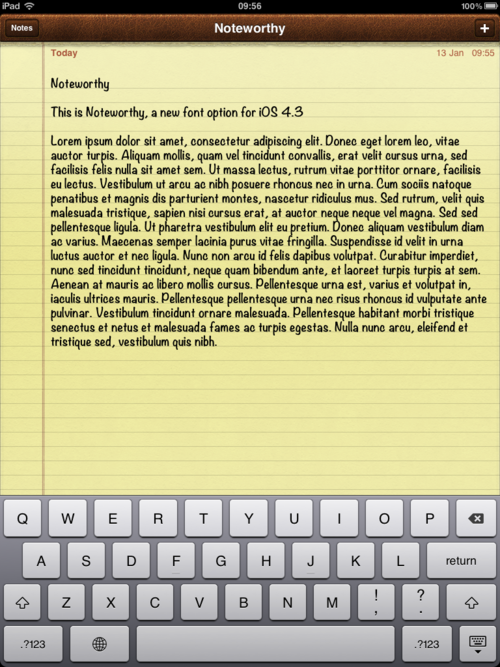
As noted by Patently Apple, Apple has filed a new trademark application in Europe covering the term "Noteworthy", classifying the term under computer software.
The report speculates that the trademark could have something to do with optical character recognition, or even an integrated sensing display capable of acting as a scanner The usual broad range of terms covered in the classification for the trademark make it difficult to speculate on exactly what Apple intends to introduce under the new term.
International Class 009: Computer software; computer software for authoring, downloading, transmitting, receiving, editing, extracting, encoding, decoding, displaying, storing and organizing text, graphics, images, and electronic publications; computer software and firmware, namely, operating system programs for personal and handheld computers; pre-recorded computer programs for personal information management, character recognition software, electronic mail and messaging software, mobile telephone software; handheld digital electronic devices and software related thereto; hand held computers, tablet computers, personal digital assistants, electronic organizers, electronic notepads; mobile digital electronic devices, global positioning system (GPS) devices, telephones; handheld and mobile digital electronic devices for the sending and receiving of telephone calls, faxes, electronic mail, and other digital data; mobile telephones; electronic handheld units for the wireless receipt, storage and/or transmission of data and messages, and electronic devices that enable the user to keep track of or manage personal information; electronic communication equipment and instruments; fonts, typefaces, type designs and symbols in the form of recorded data; downloadable printing fonts; printing fonts that can be downloaded provided by means of electronic transmission; typeface fonts recorded on magnetic media.
Patently Apple pulls out a few interesting classifications such as "character recognition software" to feed their theory on some sort of iOS scanning app, but these classifications tend to be overly broad.
Apple's trademark application for "Noteworthy" was initially filed in November 2010 in Jamaica, a common tactic in which the company quietly files in a rather obscure country to gain priority before moving to major trademark agencies around the world.
paidContent reports that Apple is looking to increase the visibility of its iBookstore by participating in the upcoming BookExpo America trade show with a booth in a "prime location" on the exhibit floor. The booth marks Apple's first appearance at the event and a rare appearance by the company at a third-party trade show, especially since its effort to essentially eliminate such participation that culminated in the company exiting Macworld Expo several years ago.
The company has a large booth in a prime location, next door to Scholastic and in the same area as major publishers including Random House, Disney (NYSE: DIS) Book Group and Macmillan. BEA's website notes that Apple will be represented by Scott Simpson from Apple's iBookstore.
Apple is not expected to make any particular product or service announcements at the conference, and is likely attending simply to raise its profile in the e-book market as it seeks to grow share competing against such major players as Amazon and Barnes & Noble.
Update: A BEA representative has clarified with paidContent that Apple will not be exhibiting publicly at BookExpo America, only meeting privately with publishers at the event. Apple continues to be listed on the BEA site as an "exhibitor", but other details promoting the company's presence have been removed.
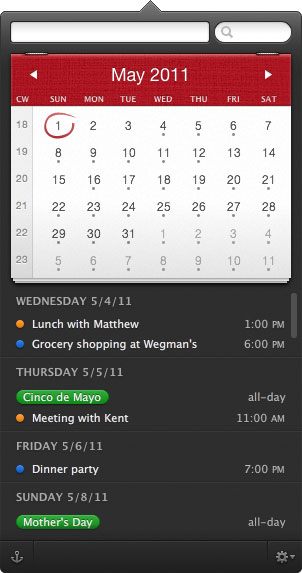
Flexibits has released their new calendar app for the Mac called Fantastical. This natural language calendar assistant allows you to create events by typing in your plans:
Using an advanced natural language engine, Fantastical is extremely expressive, allowing users enter event text in their own style. For example, enter a sentence such as "Lunch with John at 123 Main Street on Tuesday" and Fantastical will translate the sentence into an event and add it to their calendar.
The pre-release previews were very positive, commenting on the quick-access as a menu-bar item that lets you quickly enter new items.
What I like most about Fantastical is how quick and accessible it is. It lives in your Menu Bar and you invoke it via a global hotkey (I use command+option+c), or by clicking on the Menu Bar icon, and it appears instantaneously. It is both keyboard and mouse friendly. The power users in the room will be glad to know you can navigate and operate the app without leaving the keyboard — if it were not so then I certainly would not find the same amount of utility from the app.
And what blows me away every time I use it is the entry panel for an event — Fantastical uses a natural language parser in addition to the standard new-event, iCal interface. So far, in my usage, the natural language parsing has been superb; the best I’ve ever used.
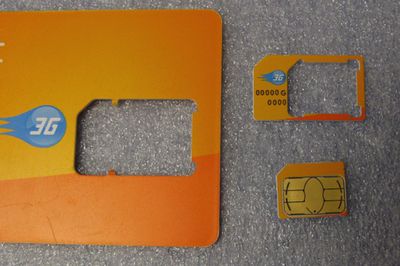
Current micro-SIM (bottom right) punched out of a full-size SIM card (top right)
Reuters reports that Apple has submitted a proposal for a standardized SIM card design smaller than the micro-SIM currently used in the iPhone 4 and iPad, with the new design having apparently won the backing of French carrier Orange. The design would reportedly allow Apple and other companies adopting the card to design smaller and thinner devices.
"We were quite happy to see last week that Apple has submitted a new requirement to (European telecoms standards body) ETSI for a smaller SIM form factor -- smaller than the one that goes in iPhone 4 and iPad," said Anne Bouverot, Orange's head of mobile services.
"They have done that through the standardisation route, through ETSI, with the sponsorship of some major mobile operators, Orange being one of them," she told the Paris leg of the Reuters Global Technology Summit.
With finalization of the standard and technical issues still to be worked out, devices using the smaller SIM card could hit the market next year.
Apple made waves last year with reports that the company was seeking to deploy embedded SIM cards, a step that would remove some of the power of carriers over phone distribution. While the GSM Association and some carriers expressed interest in the idea, threats from other carriers to withhold iPhone subsidies reportedly resulted in Apple backing away from the technology for the time being.
It is unclear whether the newly-proposed standard is related to the embedded SIM technology discussed last year, but it appears to more likely simply be a smaller evolution of the removable SIM cards in use today.
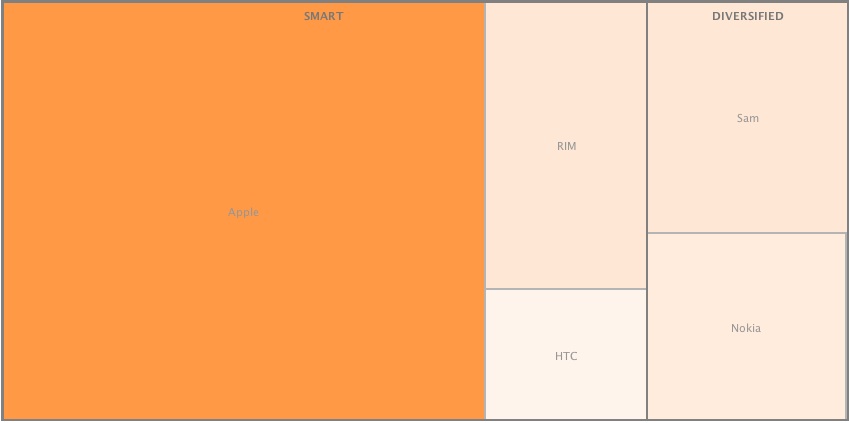
Asymco yesterday published a pair of charts providing an interesting perspective on mobile phone company performance for the first quarter of 2011, comparing units sold against profitability.
In the first view, the eight largest mobile phone brands are depicted according to share of units sold during the quarter, with Apple (shown in dark orange) checking in at about 7% share among those top vendors. Apple is joined by Research in Motion and HTC in a category of "smartphone-only" vendors that were responsible for 16% of the overall units shipped during the quarter by the top vendors.
But in looking at the profitability of those top eight vendors, a very different view emerges with Apple accounting for about 57% of total profits and Research in Motion and HTC pitching in to give the smartphone-only vendors over 75% of the total profits among the top vendors. In addition, three of the five "diversified" vendors (LG, Motorola, and Sony Ericsson) drop out of the picture entirely in the new view as they were each unable to turn a profit on their mobile phone businesses during the quarter.
Asymco's Horace Dediu argues that the trend of smartphone vendors dominating industry profits will force the "diversified" vendors to refocus on smartphones, further driving the shift away from so-called "dumb phones" and leaving that market to lower-tier vendors.
I've suggested before that I don't see non-smart devices being interesting to vendors in the near term. Each additional dumb phone added to a portfolio will decrease a company's operating margin. The market dynamics are such that I think non-smart phones will disappear entirely from branded portfolios in 3 to 5 years.
Apple's profit share of around 57% for the quarter is up from 50% in Asymco's study for the fourth quarter of 2010 and continues a trend that has seen the company grab an increasingly large portion of industry profits over the past several years.
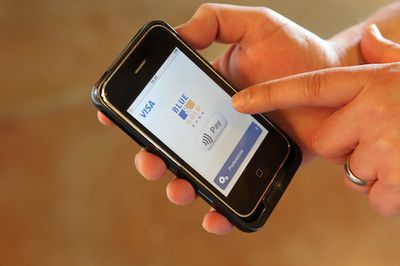
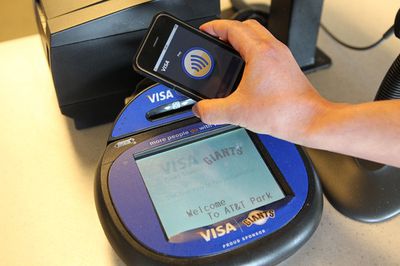
Just one day after a research analyst claimed that Apple will not be including near field communication (NFC) capabilities in the next-generation iPhone, BGR reports that Apple has been making changes to its retail store payment setup and iPod touch-based EasyPay system that could allow the company to begin accepting NFC payments. The development would of course argue in favor of Apple deploying NFC capabilities in the iPhone sooner rather than later.
First off, Apple's POS devices - its iPod touch-based wireless payment terminals - recently all went offline for "maintenance" for an entire day, leaving customers unable to purchase some items or return merchandise. Additionally, we have been told that there were recently multiple "overnights" in Apple retail locations, which required store employees to "assist in installing TBD devices" throughout the stores "as the retail segment of Apple grows." Lastly, sources tell us that there have been new tables installed in stores that have different wiring compared to Apple's standard tables.
The report notes that the changes may have something to do with behind-the-scenes retail store activity potentially related to a 10th anniversary event or product launch but that at least one source has indicated that the new point-of-sale systems will support NFC technology.
According to The Guardian, Apple is "actively investigating" the recent controversy that has seen patent holding firm Lodsys targeting small iOS developers with notices of patent infringement and giving them 21 days to purchase licenses for technology related to in app purchase and upgrade links within apps. The company is also said to be preparing a response to be issued later this week.
Apple's legal department is understood to be "actively investigating" claims by Lodsys, a patent holding company based in Texas, to have a claim against iPhone and iPad developers who use in-app purchase systems.
So far Lodsys has served papers on about a dozen iOS developers who it says are infringing its patent 10/732,102, which it bought in 2004 from the inventor, who filed it in the 1990s, covering user interaction over a network.
Apple is not expected to respond to the claims, which have been passed to it by affected developers, until later this week.
At least one of the affected developers had reached out to Apple's legal department immediately after receiving the notice, seeking advice on how to respond to the claims and whether Apple had any position on the situation. It has been unclear, however, whether Apple would take up an active role on the issue, given Lodsys' claims that Apple, along with Google and Microsoft, already has a license for the technology for its own apps.
Word of Apple's investigation into the matter comes as Lodsys continues to target developers with notices, as Talos Tsui of The Iconfactory sent out a Tweet a short time ago sharing that his company has just been "Lodsysed". It is unclear, however, whether this is a fresh batch of notices or if stragglers from the original round of mailings are still coming through.
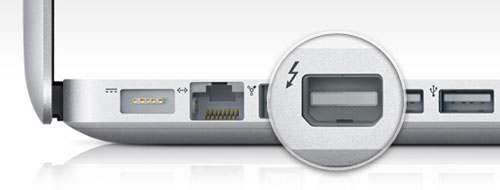
PCWorld reports that while Hewlett-Packard (HP) had considered using Thunderbolt in its newest desktop PCs, for now it's sticking with USB 3.0.
“We did look at [Thunderbolt]. We’re still looking into it. Haven't found a value proposition yet,” said Xavier Lauwaert, worldwide marketing manager for desktops at HP.
According to Lauwaert, everone seems to be content with USB 3.0 so they don't see the value of including Thunderbolt in their desktop machines.
Thunderbolt is the high speed interconnect system that was introduced by Intel in February. Apple was the first customer to adopt the new connector with the launch of its early 2011 MacBook Pros. Apple has since released new iMacs also supporting Thunderbolt. Due to the newness of the connector, there is presently little 3rd party support, though Intel is said to be opening up Thunderbolt development this quarter.
HP is notable for being the largest U.S. computer manufacturer accounting for 26% of the market in the 1st quarter 2011.
As noticed by Stop it, AT&T, Apple has posted a job listing looking for a "Carrier Engineer" located in the Kansas City, Missouri area to work with carriers on technical issues. The listing was posted on April 2nd.
Member of the Carrier Engineering team that supports taking products through technical approval at the carriers. A Carrier Engineer team is responsible for day-to-day technical interactions with the one or more carriers to track down issues reported by the carrier, assist the carrier with testing they might be conducting and working with program management, software development and test teams to get products approved by the carriers.
Kansas City is not a typical staffing location for Apple's engineers, leading to speculation that the position is specifically related to working with Sprint, which has its headquarters in the Kansas City suburb of Overland Park, Kansas.
Late last week, Jeffries & Company research analyst Peter Misek claimed that Apple's next-generation iPhone will debut in September, with service expanding to include Sprint and T-Mobile in the United States before the end of the year.
Update: Apple has changed the location listed on the job posting, now citing the company's headquarters in Cupertino, California.
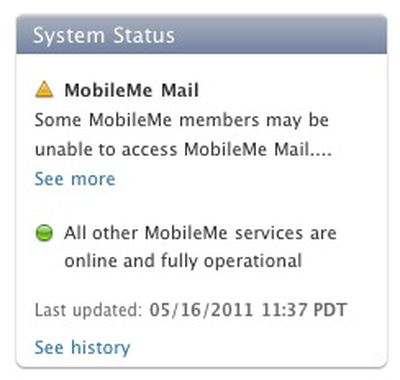
Some MobileMe users are having difficulties accessing their MobileMe mail today. Macgasmnoticed it first, and some of the staff at MacRumors have been having sporadic difficulties connecting via both IMAP and the MobileMe member page at me.com.
Some MobileMe members may be unable to access MobileMe Mail. Normal service will be restored ASAP. We apologize for any inconvenience.
But, Apple is aware of the problem and is actively working to fix it.
MobileMe subscribers don't get a service level agreement, or SLA, for their $99 annual subscription fee, and Apple notes in the MobileMe terms of service that the service is provided "as is" and on an "as available" basis, and provides no warranty that the "service will be timely, uninterrupted, secure or error-free".
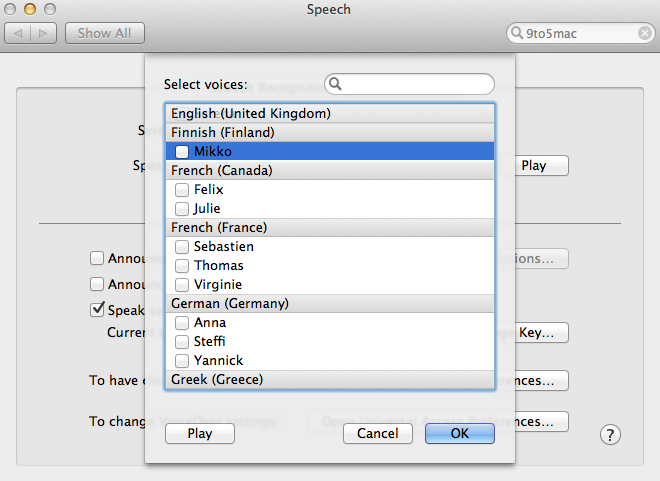
Late last week, Netputing revealed that Mac OS X Lion Developer Previews include an option to install new text-to-speech voices. The voices were actually found to be identical to voices from a Nuance speech product, seemingly confirming that Apple will be using Nuance technology in Mac OS X Lion. The voices aren't quite yet usable in Lion, as Netputing notes that you currently get an error message in Lion when trying to install them. OSX Daily, however, points out that the voices are available online for sample:
The new voices are distinct improvements over the previous text-to-speech voices.
Rumors had pegged Apple's Nuance negotiations to be centered around iOS 5 rather than Mac OS X Lion, although there could be a broader agreement between the two companies. Apple's interest in Nuance seems primarily due to their speech recognition technology rather than text-to-speech functionality, as Siri had used Nuance to power their voice-activated search. Apple acquired Siri in April 2010 and is expected to integrate its technology into iOS.
The monthly magazines will run $1.99 per issue or $19.99 per year on the iPad, with current print subscribers receiving the iPad issues for free. Print subscriptions are available directly through the magazines' websites for the same price as the iPad versions: $19.99/year, notably keeping Conde within Apple's pricing guidelines for in-app subscriptions.
From an internal memo by Conde Nast President Bob Sauerberg:
Today's rollout follows last Monday's successful debut of iPad subscriptions for The New Yorker, which was the top-grossing app for most of the week. We're clearly tapping into the enormous appetite consumers have for our award-winning content.
Thank you to everyone who worked so hard to bring this next important step in our digital growth to market on schedule. We should all be exceedingly proud of each and every milestone.
A Conde Nast spokesperson declined to comment when asked about iPad subscription numbers for The New Yorker.
With in-app subscriptions for five Conde Nast magazines now available for the iPad, subscriptions for the publisher's remaining three iPad magazines (Wired, Self and GQ) should be rolling out by the end of the month.
MacStories reports that Apple retail stores are holding all-hands employee meetings on Sunday, May 22nd. While it's not unusual for Apple to hold such meetings, the early timing of the meeting seems strange.
Store meetings at 7AM Sunday across United States. Unusual time. Expecting some announcement. All stores, brand-wide US. Don't know about other countries.
While there had previously been some speculation about some sort of 10th anniversary Apple retail event, we'd heard that this may simply be due to training.
Boy Genius Report also details some of the seemingly extreme measures:
- There's an overnight shift planned for around 10-15 individuals at each Apple Store to work from late Saturday all the way through mid-Sunday. - During the overnight shift, it's going to be required that employees lock cell phones in the main office. They will also have to sign an NDA with Apple. - There are a wide variety of roles, we're told, for the overnight shift. This includes all visuals staff, a manager, a business team member, a few Genius team members, one back-of-house employee, and a few generic Apple specialists. - Apple stores have apparently already received hardware to install, and are expecting more hardware to come on Friday or Saturday. All materials that Apple stores have received have been instructed to be under lock and key until after close on Saturday night. - Apple employees will be putting up black curtains at all stores so that people walking outside cannot see inside. - Employees have had to download gigabytes of data from Apple corporate labeled, "training" in a password-protected zipped folder that won't accessible to managers or anyone else until Saturday afternoon. - Lastly, all Apple retail stores have mandatory meetings on Sunday, May 22nd. Most meeting are scheduled for the morning, but there are evening meetings as well.
The on-again off-again rumors around Apple including Near Field Communications (NFC) in the next iteration of the iPhone took an off-again turn this morning in a research note from Bernstein, courtesy of Business Insider. According to the report, Bernstein analysts claim that the next iPhone will not have mobile payment support via NFC. From Business Insider:
Apple's next iPhone, said to be called the 4S, will not have the mobile payment support through NFC (near field communication) says Bernstein in a note this morning.
We don't have the full note, just highlights from a Bloomberg terminal.
NFC in the iPhone would allow users to pay for things by waving their phone at the register or get airline tickets electronically and check in with a wave of the iPhone. The technology has not, however, taken off yet in the United States to the degree that it has in other areas of the world, and Apple may still see the inclusion of NFC capabilities in the iPhone as premature for either technical or logistical reasons.
Most indications suggest the next version of the iPhone, rumored to be called the iPhone 4S, won't be a sea-change device like the jump from the iPhone 3GS to the iPhone 4 was, although the inclusion of NFC could be an important enhancement should Apple choose to adopt it. Rumors of Apple including NFC in the next iPhone have been the subject of a seemingly endless back-and-forth, and while it appears that NFC will be included in some future iPhone revision, there is scant evidence that the next-generation iPhone in particular will have the technology. The New York Timesclaimed in March that Apple will include NFC in a "coming iteration" of the iPhone, but stopped short of declaring when that inclusion is scheduled to take place.
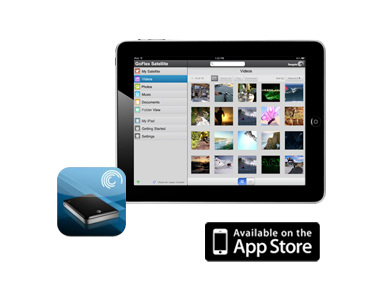
Seagate has introduced the GoFlex Satellite portable hard drive for use with iOS devices such as the iPad and iPhone. The external hard drive includes a Wi-Fi interface as well as the ability to stream photos and movies to your iOS device.
Rather than rely on a buffered stream from a distant provider, GoFlex Satellite mobile storage wirelessly serves up media content as a local attached storage for up to three devices at the same time. With a stand-by battery life of up to 25 hours, the powerful lithium polymer battery delivers up to 5 hours of continuously streaming video.
The expected use case is for you to fill up your drive with movies and media prior to travel and to use the device as a local wireless server. Movies can be streamed over any browser, but there is also an iOS-specific app that lets you interface the media. It supports streaming to up to 3 devices at once. It comes with 500GB of storage, offers USB connectivity to your Mac, and 25 hours of standby and 5 hours of battery life. It's presently available from Amazon and BestBuy.com for $199.
Last late week, we reported that patent holding firm Lodsys had apparently begun targeting small iOS developers with notices of patent infringement for providing in-app purchase and/or App Store purchase links within their apps. Lodsys was requesting that the developers obtain a license within 21 days or face the prospect of a lawsuit.
Lodsys has finally written publicly about the notices, putting together a blog offering responses to a number of questions about the company's actions. Among the interesting revelations:
- In addressing claims that the patents being used by Lodsys are overly broad and obvious and should never have been granted in the first place, Lodsys argues that with the patents dating back nearly 20 years, that much hindsight naturally makes such inventions seem obvious.
- The company also seeks to defend its business model as the most efficient way to handle intellectual property licensing for small inventors such as Dan Abelow, who filed the patents in question. While some have criticized Lodsys for pursuing licensing rights for technology it neither invented nor directly uses, the company argues that its existence creates efficiencies that improve the level of innovation, noting that Abelow was able to sell off his rights to the patents in order to focus on new inventions rather than having to focus on the task of licensing. In passing that responsibility off to another entity, each party is able to focus on what they do best and extract value from inventions.
Apple Already a Licensee?
- Lodsys is targeting developers not because it is seeking to put pressure on Apple, as Apple has already licensed the intellectual property for use in its own products and services, as have Google and Microsoft. Lodsys states that each developer should be responsible for licensing the technology in individual apps, rather than Apple being responsible for an overarching agreement, making an analogy that a hotel owner rather than the owner of the land beneath the hotel is responsible for all services provided to guests.
Licensing Terms
- Lodsys' proposed licensing terms equal 0.575% of U.S. revenue for in-app upgrades, with developers also being responsible for past usage.
In the case of an Application doing an in-application upgrade (and only this scenario), Lodsys is seeking 0.575% of US revenue over for the period of the notice letter to the expiration of the patent, plus applicable past usage. So on an application that sells US$1m worth of sales in a year, the licensee would have an economic exposure of $5,750 per year.
Death Threats "Seriously Uncool"
- Finally, Lodsys notes that it has received a significant amount of hate mail and even death threats from a number of parties, apparently even including those developers who have received notice of licensing requirements. Calling the death threats in particular "seriously uncool", Lodsys argues that such behavior doesn't help the situation and that the company, like the developers, is simply trying to sell its products and make a profit.
Apple's first foldable iPhone, with a book-style design featuring a ~5.5-inch outer display and a ~7.8-inch inner display with a minimal crease down the middle.



 As
As