Labor Day falls on September 7 this year. The last time the holiday was on that day was in 2020, but the iPhone event that year was delayed until October due to the COVID-19 pandemic. The last time Labor Day was on September 7 in a normal year was in 2015, and the iPhone event was held on Wednesday, September 9 that year.
Accordingly, the most likely date for the iPhone 18 Pro and iPhone Ultra event this year is Wednesday, September 9 until proven otherwise.
Back when the iPhone 6s and iPhone 6s Plus event fell on Wednesday, September 9 in 2015, pre-orders began on Saturday, September 12, rather than Friday, September 11. Friday is a much more common day for iPhone pre-orders to begin, but Apple may have been respectfully avoiding September 11 in 2015 due to the 9/11 anniversary.
So, it is possible that iPhone 18 Pro and iPhone Ultra pre-orders will begin on Saturday, September 12 this year, unless Apple changes things up. In that case, the release date for the devices would likely be Friday, September 18.
Another possibility is that Apple waits until Tuesday, September 15 to hold the event, in which case pre-orders would likely begin on Friday, September 18. Then, the devices would likely be released on Friday, September 25.
Apple has yet to announce any official dates, so all we can do is make these educated guesses for now. Soon enough, we will find out the actual dates.
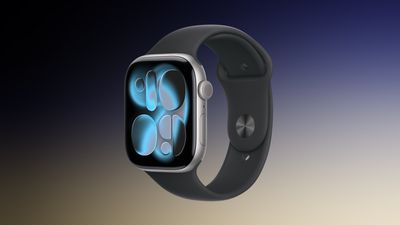
Best Buy this week has low prices on the Apple Watch Series 11, with $100 discounts across numerous models of the smartwatch. This sale includes a handful of 42mm and 46mm GPS aluminum models, as well as similar discounts on cellular devices.
Note: MacRumors is an affiliate partner with Amazon. When you click a link and make a purchase, we may receive a small payment, which helps us keep the site running.
You can get the 42mm GPS Apple Watch Series 11 for $299.00, down from $399.00, and the 46mm GPS model for $329.00, down from $429.00. On Amazon, you'll find matching prices in both the 42mm GPS and 46mm GPS sizes, but stock is dwindling at both retailers so act fast if you're interested.
Compared to past sales, these are both solid second-best prices on the Apple Watch Series 11 and come within $20-$30 of those previous all-time low prices. Head to our full Deals Roundup to get caught up with all of the latest deals and discounts that we've been tracking over the past week.
Deals Newsletter
Interested in hearing more about the best deals you can find in 2026? Sign up for our Deals Newsletter and we'll keep you updated so you don't miss the biggest deals of the season!
Apple plans to upgrade several iPads and Macs with OLED displays over the next three years, according to a new DigiTimes report.
The following five devices will receive OLED displays between 2026 and 2029, according to the Taiwanese publication's industry sources:
iPad mini: 2026
MacBook Pro: Late 2026 or early 2027
iPad Air: 2027
iMac: 2028 or 2029
MacBook Air: 2028 or 2029
OLED displays have better overall image quality compared to LCD displays, thanks to richer colors and higher contrast ratio with true blacks.
All current iPhone, Apple Watch, and iPad Pro models already have OLED displays.
While the iPad Pro features so-called "Tandem OLED" technology that uses two OLED panels for increased brightness, and ProMotion support for up to a 120Hz refresh rate, the report said the iPad Air will have a single-stack OLED display and an LTPS backplane, meaning it will have lower brightness and a 60Hz refresh rate. These limitations would make sense given that the iPad Air is priced hundreds of dollars less than the iPad Pro.
It is unclear if Apple ever plans to release a Studio Display XDR with an OLED display. The monitor currently has mini-LED backlighting.
The entry-level iPad and MacBook Neo are expected to stick with LCD displays.
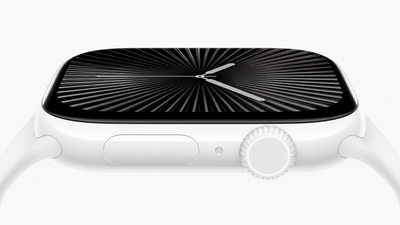
Apple plans to resurrect its ceramic Apple Watch casing with this year's Series 12 model, according to the leaker and prototype collector known as "Kosutami."
In a new post on X, Kosutami said that the casing will return with the Series 12. Apple first introduced a ceramic Apple Watch Edition with the Series 2 in September 2016, replacing the original gold Edition model and bringing the line's price down from thousands of dollars to a comparatively modest $1,249.
The white ceramic finish, made from a compressed zirconia and alumina powder polished with a diamond slurry, was marketed as being four times as hard as stainless steel. Apple expanded the material a year later with a gray ceramic option alongside the Series 3, but the Edition line disappeared entirely for the Series 4 in 2018, with Apple dropping ceramic and offering no high-end case option at all that year.
The white ceramic finish returned for the Series 5 in 2019 alongside an all-new titanium option, before Apple discontinued it for good when the Series 6 launched in 2020. The material has been absent from the Apple Watch lineup for six years since. It has since become one of the more sought after finishes among collectors on the resale market.
Earlier this month, Bloomberg's Mark Gurman reported that the ceramic case option is expected to return either this year or in 2027. Kosutami's latest post suggests that the feature will indeed arrive this year.
The Apple Watch Series 12 is expected to feature a new chip for improved performance, alongside a selection of other small upgrades. The device is expected to be introduced alongside the Apple Watch Ultra 4, iPhone 18 Pro, iPhone 18 Pro Max, and first foldable iPhone next month.
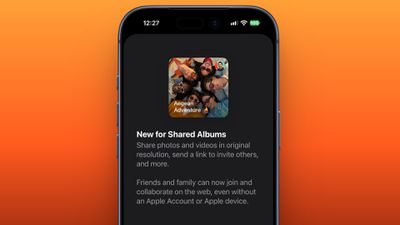
In iOS 27, new Shared Albums you create in the Photos app retain full-resolution quality for the first time, but they now eat into your iCloud storage – and that includes any items added by other people invited to contribute.
Currently, photos in a Shared Album are automatically reduced to 2,048 pixels on the long edge (except for panoramic photos, which can be up to 5,400 pixels wide). In iOS 27 though, both retain their full resolution. But there comes the major trade-off.
For years now, Apple has allowed you to store up to 5,000 photos and videos in Shared Albums without impacting your iCloud storage limit. That's no longer the case in iOS 27. Perhaps more significantly, if you invite someone to a Shared Album and they add their own photos and videos to it, as the owner, this too will count against your iCloud storage limit.
Apple has also made it easier to invite people to Shared Albums. The company says friends and family can now join and collaborate on the web, even without an Apple Account or Apple device. That means Android and Windows users can contribute via iCloud.com, so the inclination for participants to add photos and videos is only likely to increase. Be careful who you invite...
On the plus side, iOS 27 introduces a free alternative – you can create temporary Shared Albums that allow users to collaborate on short-term projects without eating into your iCloud storage. But after 30 days, any photos and videos not saved to your library are deleted.
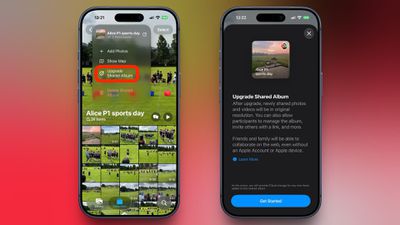
Fortunately, existing Shared Albums by default are unaffected by the changes, but the Photos app does include an "Upgrade Shared Album" option for those who want to improve the quality of its contents – albeit at the cost of iCloud storage.
iOS 27 is currently in public beta and is expected to be released in September when Apple launches new iPhone models with 5GB of free iCloud storage included.
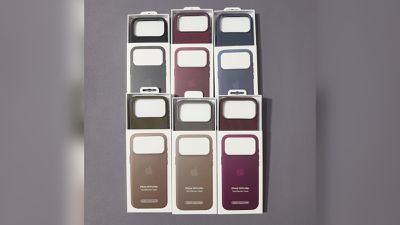
The leaker known as "DuanRui" today shared video and images of cases designed for the iPhone 18 Pro Max, potentially offering an early look at some of the new color options for Apple's official accessories.
The cases themselves are fake, featuring the same model number used for existing iPhone 17 Pro accessories, but they could still be based on the genuine cases Apple is expected to release alongside the iPhone 18 Pro and iPhone 18 Pro Max next month.
Ahead of every major new iPhone announcement, dupe accessories like these tend to circulate in China well before Apple's official unveiling. Case makers frequently work from leaked dimensions and CAD files to get their molds ready in time for launch day, and while some manufacturers take creative liberties and expand their lineups beyond what Apple ends up shipping, such as continuing to offer leather cases, the fakes can still offer an early indication of some of the genuine accessories to come.
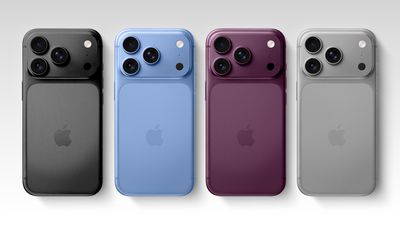
One clip shows an Apple-style clear case tinted light blue. It retains the opaque square in the center of the case that conceals the MagSafe magnets, a design first introduced last year on the iPhone 17 Pro's clear case due to the relocated Apple logo on the device. It was criticized by some for its appearance, particularly with Cosmic Orange and Deep Blue. The light blue tint is notable given that the iPhone 18 Pro is rumored to come in a Light Blue finish, which this case would complement.
The TechWoven cases shown in the images appear in a wider range of colors than what Apple currently offers, featuring black, cherry red, brown, green, blue, and taupe. Apple's existing iPhone 17 Pro TechWoven cases come in just five colors: blue, purple, black, sienna, and green.
The cherry red option stands out in particular, as it would match the eye-catching "flagship" "Dark Cherry" finish widely rumored for the iPhone 18 Pro models.
The iPhone 18 Pro and iPhone 18 Pro Max are expected to launch alongside the first foldable iPhone, dubbed the "iPhone Ultra," in September.
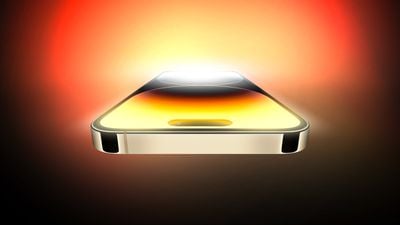
Strong iPhone sales have helped boost flexible OLED display shipments from Samsung Display so far this year, according to a report from The Elec. Samsung shipped approximately 120 million flexible OLED smartphone panels in the first half of the year, up 35 percent year-over-year. That accounted for about 65 percent of the overall increase in global flexible OLED panel shipments.
Market research firm Sigmaintell expects demand to remain strong into the second half of the year, partly thanks to the expected launch of Apple's iPhone 18 Pro and foldable iPhone models in September.
Apple has urged a federal judge to reject OpenAI's recent motion to dismiss its trade secrets lawsuit, arguing in a new filing that the company's defense depends on "distortion, speculation, and improper extrinsic evidence."
Apple sued OpenAI in July, accusing the company of running a scheme to pull confidential product information out of former Apple employees who became job candidates and new hires. Apple's suit claims more than 400 former Apple employees now work at OpenAI.
Earlier this month, OpenAI's motion argued that Apple in its filing never properly identified what information actually counts as a protectable trade secret. The company said it has no interest in Apple's confidential material because it is "building something entirely new and different from anything at Apple."
But in a 32-page opposition brief filed Wednesday, seen by MacRumors, Apple restates several of its main allegations against former engineer Chang Liu and OpenAI hardware chief Tan Yew Tan, and argues that OpenAI's defenses are fact disputes that should be resolved after discovery, rather than used for dismissal.
Apple says Liu exploited a "rare authentication bug" to access Apple's network storage weeks after joining OpenAI, and downloaded dozens of confidential engineering files, including a presentation on how to manufacture and test main logic boards.
As for Tan, Apple repeats its allegation that he used internal project codenames to question interview candidates about unreleased Apple products. The company also claims that Tan asked one Apple employee to bring components she had worked on to OpenAI for a "show and tell" session. The components are said to have included batteries, system-on-chips (SoCs), logic boards, and shields.
Apple also counters OpenAI's argument for dismissal that Apple has not identified a protectable trade secret that the company allegedly stole. Citing the Ninth Circuit's 2025 Quintara decision, Apple contends that this information does not need to be disclosed yet because it is a "fact dispute" that should be resolved later when evidence has been presented, either at summary judgement or trial.
Apple also points out that forcing it to describe its trade secrets in specific detail in a public filing would amount to publishing the very secrets it's trying to protect.
The rest of the brief argues OpenAI is relying on material the judge isn't allowed to consider at this stage. OpenAI included text messages, a website listing Apple's codenames, and a copy of its interview guide to support its motion. Apple argues that none of it belongs there because a dismiss is based on the complaint alone.
Apple also uses one of OpenAI's own lines against it. OpenAI's motion called its innocent explanation for Tan's conduct "at least equally plausible" as Apple's. Indeed, Apple argues that under Ninth Circuit precedent, the case moves forward rather than being thrown out where two plausible explanations compete.
Judge Edward J. Davila is set to hear the company's arguments on October 1.
Apple yesterday updated its App Store fees in the EU to comply with the Digital Markets Act and to put an end to its ongoing conflict with the European Commission. Apple cut the Core Technology Fee and simplified its pricing structure, so apps distributed through alternative marketplaces or through the web will pay less than before.
When announcing the changes, Apple said it worked in "close collaboration" with the EC, and that the updates would "resolve Apple's disagreements with the Commission over business terms and alternative distribution."
The European Commission has since confirmed that it approves of Apple's changes to its App Store policies, giving a statement to the Irish Independent:
The Commission welcomes Apple's changes to their business terms, which follow a close dialogue between the Commission and Apple after the Commission issued a non-compliance decision related to Apple's steering terms as well as preliminary findings related to alternative app distribution, both in April 2025.
Following today's announcement, the Commission will monitor Apple's effective implementation of the new terms. Under the DMA, users in the EU have a right to full and effective choice of alternative app distribution channels.
The EC says it will continue to monitor how Apple implements the new terms, which will go into effect on October 1.
While the EC approved Apple's planned changes, Apple legal opponent Epic Games was not happy with the new fee structure, denouncing the "new junk fees." Epic Games said Apple's new terms do not comply with the Digital Markets Act and claimed if the EC accepts the terms, the DMA "will become meaningless."
Apple announced new junk fees in the EU that do nothing to open up the mobile app ecosystem to competition, as required by Digital Market Act.
Apple will now charge: • 20% fee on alternative in-app payment options • 15% fee on links to make purchases outside apps • 5% Core Technology Commission on payments made in apps downloaded from alternative stores or the web
The law makes it clear that Apple must allow developers to offer link outs to the web for purchases "free of charge" and has to allow "effective use" of competing stores. Apple's terms deliberately violate the Digital Markets Act. If the Commission accepts the terms and drops their ongoing enforcement actions, the law will become meaningless and consumers and developers will not experience the benefits it was designed to provide.
Under the new terms, Epic Games will need to pay a five percent Core Technology Commission on digital purchases made through its Epic Games Store on the iPhone and iPad in the EU. For an app distributed through the App Store with a link to purchase options, Epic would need to pay 15 percent.
Apple is implementing lower rates for Small Business Program, Video Partner Program, and Mini Apps Partner Program participants, plus it waives the Core Technology Commission for small marketplaces. Epic Games does not qualify for reduced fees.
Note: Due to the political or social nature of the discussion regarding this topic, the discussion thread is located in our Political News forum. All forum members and site visitors are welcome to read and follow the thread, but posting is limited to forum members with at least 100 posts.
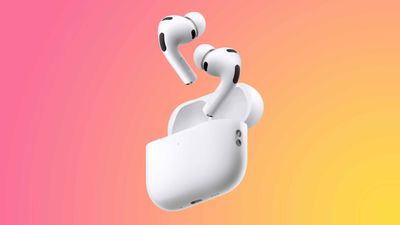
On Monday, MacRumors shared a demo video featuring the camera-equipped AirPods in action. The video was hidden in the macOS Tahoe 26.7 release candidate, suggesting Apple was preparing for a launch. That's apparently not the case, and people familiar with the product told Gurman the AirPods with cameras aren't going to launch anytime soon.
The AirPods are not on Apple's 2026 release schedule because the company is still working to resolve supply chain and software challenges.
Gurman's own reporting on the camera AirPods timing has been confusing. In May, he said the AirPods were in an "advanced" testing stage with mass production to begin soon, and then in June, he said the AirPods had been delayed until late 2027.
In early August, he reversed course and said the camera-equipped AirPods could launch as soon as September. In that report, he clarified that there were two variants of the camera-equipped AirPods in the works, one with a B790 codename and one with a B798 codename. "Apple famously creates competing versions of the same product internally," he wrote.
In today's report, Gurman says the B790 product is a version of the AirPods Pro 3 with cameras, while the B798 model is a new generation of AirPods Pro with cameras. The B790 AirPods were shown off in the video, which featured a man holding a book up to the AirPods so Siri could read the title and save it for later.
The B790 model was apparently "on the 2026 road map until recently," but Apple no longer plans to release it.
The AirPods planned for 2027 will include low-resolution cameras that feed information to Siri AI for Visual Intelligence features as demonstrated in the video. The AirPods cameras will not be able to capture photos and videos.
Apple could launch the new AirPods in fall 2027 alongside the 20th-anniversary iPhone.
Meta today launched a new Meta AI app for the Mac, which is available in a beta capacity.
The app is primarily meant for businesses and content creators, and it integrates with Facebook and Instagram. It incorporates analytics tools so it can answer questions about performance, and connects with Google Workspace for document access. Google Workspace access requires a professional Facebook or Instagram account.
Meta says there's an option to share a window during a session using screen capture to get advice based on what's being worked on. It also includes built-in dictation that works across all apps on the Mac.
Meta is adding new Meta AI features for business users across its platforms, so the assistant can complete recurring tasks and reminders and generate decks, docs, and spreadsheets.
Creators and businesses may want to use caution when opting in to Meta AI, because Meta's privacy policy makes it clear that "interactions with features that are part of AI at Meta" are used to train its models.
Meta AI is free to use, but there are Meta One plans that increase rate limits.
Apple plans to open a new 10,000-square-foot store at The Village at Meridian, an outdoor shopping complex near Boise, Idaho, according to building permits reviewed by BoiseDev.
Apple is aiming to open the store in time for the iPhone 18 Pro launch this September, a tipster claimed. The company's only other store in Idaho is located at the Boise Towne Square shopping mall.
Google today said eligible college students in the United States can get a free year of Google AI Pro. Google AI Pro is normally priced at $19.99 per month, and it includes 4x higher usage limits in Gemini, access to Gemini Spark, Gemini in Google apps like Gmail and Google Docs, and 5TB of storage space.
Eligible college students outside the United States can get a free year of Google AI Plus, which includes Gemini Omni, 4x higher usage limits in Gemini, and 400GB storage.
College students can also opt for a Google AI Pro and YouTube Premium bundle for $8.99 per month in the United States, which is a 70 percent discount off the regular price. Students can subscribe to the YouTube Premium bundle for up to four years, and verification through SheerID is required.
Google added a student hub to Gemini with study notebooks, diagnostic quizzes, and study plans. Gemini Notebook is available in AI Mode in Search, and a dedicated notebook can be set up for each project or class. Notebooks from Gemini Notebook or the Gemini app will appear automatically in Search. Notebooks for AI Mode are rolling out to over 180 countries in the coming days.
Google Search can generate custom tools and simulations for complicated concepts, along with practice quizzes for the ACT, AP, ENEM, GRE, JEE, LSAT, MCAT, NEET, and SAT. Generative UIs are available globally in AI Mode and are rolling out to AI Overviews over the coming weeks, while the practice quiz option is available now.
Lens in Search will soon include an interactive learning experience for breaking down tough problems. Students can use the Google app to take a photo of what they're working on to get an AI Overview that can find mistakes and offer explanations.
Students can sign up for a free AI plan on Google's website through December 31, 2026. After the free subscription period, Google will charge $19.99 per month for AI Pro unless the plan is canceled, and $4.99 per month (or the local currency equivalent) for AI Plus.
Students must be 18 years or older with a personal Google Account and must verify student status with a valid school email address when requested.
One of the Beats codenames MacRumorsfound in the macOS Tahoe 26.7 update (B518) appears to be for the Beats 360, a new set of over-ear headphones that we could see launch soon.
Multiple Reddit users found signs of the Beats 360 on UK websites like Amazon, though those listings have now been removed.
The headphones have a look that is distinct from the existing Beats Studio Pro over-ear headphones, featuring a rounder design with AirPods Max-like mesh fabric ear cups and headband. The ear cups and headband will be replaceable with interchangeable cushion options. The headphones will ship with Performance Knit cushions, but an UltraPlush option will also be available. Beats will sell the headphones in Pink, Black, Sky, and Cloud. Volt and Navy may also be color options, but there are only listings for cushions in the shades.
One listing says these are the first-ever sweat-resistant and water-resistant over-ear headphones Beats has come out with, so it sounds like they should be better for wearing during workouts than current Beats over-ear options. From the listing:
Beats 360 have interchangeable cushion options for both ear cups and headband, so you can have a fresh set ready after your workout or a new colour just to switch up your look. These over-ear noise-cancelling headphones are built for active lifestyles and all-day comfort.
Active Noise Cancelling (ANC) blocks out unwanted noise to help you focus, after adapting to your environment and unique fit - with up to 1.75x more noise cancellation than Beats Studio Pro.
The bespoke, high-fidelity acoustic platform delivers powerful bass and pinpoint precision across the tonal range with ultra-low distortion for the ultimate listening experience. Personalised spatial audio with dynamic head tracking delivers immersive surround sound.
Ear cushions are built from acoustically engineered memory foam and shaped to fit comfortably over your ears, forming an optimal seal for incredible sound.
Exceptional call quality powered by an advanced Al-trained algorithm and beam-forming mic system that filters out background noise.
Our first-ever sweat- and water-resistant over-ear headphones, with an IPX4 rating to ensure they're built to go everywhere you do.
All-day battery life for extended playback even with ANC on.
Compatible with both Apple and Android for one-touch pairing and more. Easy-to-use controls are positioned on the back of each ear cup, including a volume rocker, a multifunction button to control music and calls, a power button and a listening mode button.
Fold-flat design for extra comfort and convenience. Woven ripstop fabric case included.
What's in the box: Beats 360 true wireless over-ear headphones with interchangeable performance knit cushions, woven ripstop fabric carrying case, warranty card and Quick Start Guide. Additional Beats 360 cushion kits, USB-C charging cable and power adapter sold separately.
Pricing is expected to start at $299 in the United States. There's no word on when the new Beats headphones will launch, but with listings popping up, they could come anytime.
We previously saw signs of the new headphones in May, when the U.S. Federal Communications Commission published documents featuring the rounded design that's showing up on product pages, and in July when Beats gave them to World Cup players as a teaser.
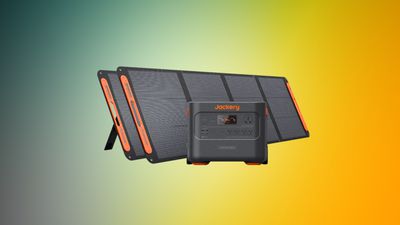
Anker and Jackery have introduced big discounts across their most popular portable power stations this week, including up to $1,500 off select models from each company. We're tracking Anker's best deals over at Amazon, while Jackery's discounts can be found on the retailer's own website.
Anker SOLIX
Note: MacRumors is an affiliate partner with Jackery and Anker. When you click a link and make a purchase, we may receive a small payment, which helps us keep the site running.
The majority of Anker's portable power station deals are from the SOLIX brand on Amazon, and all of these deals have been automatically applied on each page. There are plenty of notable discounts, including the popular Anker SOLIX C300 Portable Power Station with Lantern for $199.99, down from $249.99.
Over on Jackery's website, you'll find up to $1,500 off a wide array of portable power stations, solar generators, add-on batteries, and more. This sale is aimed at anyone preparing for storm season power outages and is set to last for another few days, ending the night of August 26.
If you're on the hunt for more discounts, be sure to visit our Apple Deals roundup where we recap the best Apple-related bargains of the past week.
Deals Newsletter
Interested in hearing more about the best deals you can find in 2026? Sign up for our Deals Newsletter and we'll keep you updated so you don't miss the biggest deals of the season!
Apple on Monday seeded the macOS 26.7 Release Candidate, and the upcoming software update has seemingly leaked more than 10 new Apple products.
macOS 26.7's code contains references to AirPods with infrared cameras for Visual Intelligence, the long-rumored foldable iPhone, an all-new Apple smart home hub, the first-ever MacBook and iPad mini models with OLED displays, an updated Siri Remote for a next-generation Apple TV, and more, according to MacRumors contributor Aaron Perris.
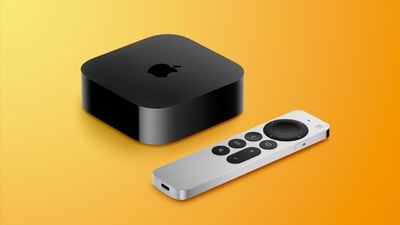
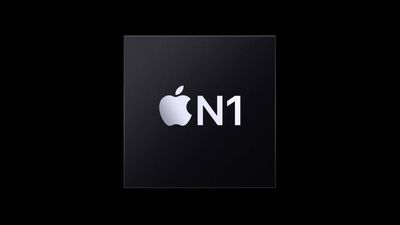
According to rumors, the next-generation Apple TV 4K will have at least five new features, including an A17 Pro chip or newer, increased RAM, Siri AI support, an Apple-designed N1 chip with Wi-Fi 7 support, and an updated Siri Remote.
Below, we recap everything rumored for the next Apple TV, along with potential launch timing.
Rumored Features
A17 Pro Chip or Newer
The next Apple TV will be equipped with the A17 Pro chip, according to MacRumors contributor Aaron Perris, who digs through Apple's code to uncover references to future devices. However, given the lengthy four-year wait for a new Apple TV, it is possible the device will instead receive an even newer A18 Pro or A19 Pro chip.
The current Apple TV uses the A15 Bionic chip that debuted in the iPhone 13 series in 2021.
With an A17 Pro chip or newer, the next Apple TV would have faster performance, hardware-accelerated ray tracing for improved graphics rendering in games, increased RAM, and likely support for some Apple Intelligence and Siri AI features.
Increased RAM
As mentioned above, the next Apple TV should have increased RAM. With an A17 Pro chip or newer, the device should be equipped with at least 8GB of RAM, up from 4GB in the current model. The extra memory would allow the Apple TV to support some Apple Intelligence features, and this will reportedly include Siri AI.
When running Device Hub via Xcode in macOS 27, the Apps list for tvOS 27 has a new addition: Siri.
The Siri entry features a 'com.apple.campo' string. Prior reporting indicates 'campos' is Apple's internal codename for Siri AI.
Comparing app lists for tvOS 26 and tvOS 27 simulator modes confirms that 'Siri' is not present in tvOS 26's list. It's new with tvOS 27.
This addition, combined with the 'campo' reference, strongly suggests that Siri AI will debut in tvOS 27 this fall. It might even come with a dedicated Siri app on Apple TV—though that's not guaranteed, as the 'Apps' list includes system functions beyond just user-facing apps.
Siri AI will likely be limited to the new Apple TV with sufficient RAM and processing power.
Wi-Fi 7 has increased bandwidth, in part because it allows for data transmission over the 2.4GHz, 5GHz, and 6GHz bands simultaneously with a supported device and router. Wi-Fi 7 is theoretically up to 4× faster than Wi-Fi 6, but real-world speeds are typically bottlenecked by internet service providers and other factors.
In the latest iPhones, the N1 chip also supports Bluetooth 6, which would offer lower latency and other benefits compared to the current Apple TV's Bluetooth 5.
Updated Siri Remote
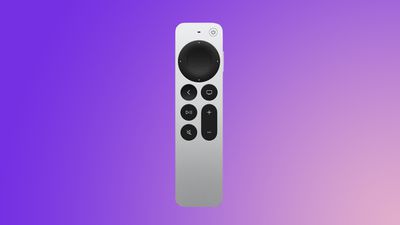
The new Apple TV will likely ship with an upgraded Siri Remote, according to both Bloomberg's Mark Gurman and macOS 26.7 code findings. However, the code did not reveal any specific changes that may be planned for the remote.
Design
The next Apple TV will reportedly have a similar design as the current model.
In 2024, it was reported that Apple had "discussed" offering an Apple TV with a built-in camera for FaceTime and gesture-based controls, but there is no indication that Apple is moving forward with that plan for the next model in particular.
tvOS 17 added a FaceTime app to the Apple TV, allowing for video calls with the rear camera on a connected iPhone or iPad. If the Apple TV gained a built-in camera, users would no longer need to rely on an external device for video calls on the TV.
tvOS 26 enhanced FaceTime in ways that would be fitting for an Apple TV with a camera:
With tvOS 26, users can enjoy a more personalized FaceTime experience that's consistent with iOS. Contact Posters on Apple TV make it easier and more personal by displaying a contact's customized photo and name when starting a FaceTime call on Apple TV. Live Captions expand to include French, German, Japanese, Korean, Mandarin, and Spanish, enabling Apple TV to use on-device intelligence to display Live Captions for FaceTime conversations, so users can follow what's being said in even more languages. Additionally, FaceTime audio and phone call notifications will appear onscreen for the active profile, allowing users to answer on connected HomePod speakers or their iPhone, and ensuring that communication with loved ones remains at the forefront.
In the meantime, a Continuity Camera feature allows you to use an iPhone or iPad camera with the Apple TV 4K (3rd generation).
Launch Timing and Pricing
The new Apple TV will likely be unveiled in September or October this year, at either the annual iPhone event or a follow-up event. Apple reportedly plans to unveil a trio of new smart home products this year, including the new Apple TV, an all-new smart home hub with tabletop and wall-mounted versions, and an updated HomePod mini.
Here is when the previous four Apple TV models were announced:
Apple TV 4K (3rd generation): October 2022
Apple TV 4K (2nd generation): April 2021
Apple TV 4K (1st generation): September 2017
Apple TV HD: September 2015
In June, Apple raised prices on 14 products, including the Apple TV 4K. In the U.S., the Wi-Fi model with 64GB of storage now starts at $199 (up from $129), while the Wi-Fi + Ethernet model with 128GB of storage now starts at $249 (up from $149). It is unclear if the next Apple TV will maintain those prices or be even more expensive.
Cultured Code today released Things 3.23, featuring a significant update to the app's handling of repeating to-dos, addressing two of the most requested changes from users.
Until now, repeating to-dos in Things lacked some of the flexibility of standard to-dos and today's update closes that gap along with a handful of valuable smaller refinements throughout the app. The latest update's changes include:
Complete repeating tasks early: Repeating to-dos now display a regular checkbox, just like any other to-do, allowing them to be completed early, with the next copy scheduled based on the existing rule.
Make Exception or Update Rule: Rescheduling a fixed-schedule repeating to-do by moving it to a new date now prompts a choice between "Make Exception," which moves only that instance and leaves the rest of the schedule untouched, and "Update Rule," which changes the recurrence pattern itself going forward, so moving a Monday to-do to a Tuesday makes it repeat every Tuesday from then on.
After-completion repeat changes: To-dos that repeat a period of time after completion, rather than on a fixed schedule, simply move to the new date when rescheduled, with no prompt.
Create Next Copy: Selecting "Repeat" then "Create Next Copy" allows users get a head start on a to-do or project before its scheduled date, adding notes or completing checklist items in advance.
Repeat icon: Generated copies of repeating to-dos now feature a small grey repeat icon to indicate their origin.
Redesigned setup dialog: The setup dialog for configuring repeating to-dos now has a visual refresh with easier date selection.
Bulk actions: Multiple repeating to-dos can now be paused, resumed, or stopped at once.
Unified codebase: The display and editing of to-dos, both within lists and when expanded, is now driven by the same code across the Mac, iPadOS, and iOS.
Things already featured a list that gathers all repeating to-dos and projects along with their upcoming generated copies in one place, accessible by typing "Repeating" into the app's search field.
Things 3.23 is available now as a free update on the App Store for the Mac, iPad, iPhone, and Vision Pro. The update requires macOS 13.3, iOS and iPadOS 16.4, watchOS 9.1, and visionOS 26, or newer.
Apple's first foldable iPhone, with a book-style design featuring a 5.4-inch outer display and a 7.6-inch inner display with a minimal crease down the middle.


 Note: MacRumors is an affiliate partner with Amazon. When you click a link and make a purchase, we may receive a small payment, which helps us keep the site running.

 Strong iPhone sales have helped boost flexible OLED display shipments from Samsung Display so far this year, according to a report from


 Apple plans to open a new 10,000-square-foot store at The Village at Meridian, an outdoor shopping complex near Boise, Idaho, according to building permits

 Note: MacRumors is an affiliate partner with Jackery and Anker. When you click a link and make a purchase, we may receive a small payment, which helps us keep the site running.