Electricpig.co.uk reports that Apple's UK iPhone PR team is approaching journalists from major publications to fly out to the event in San Francisco next month. Apple's WWDC is kicking off on June 6th which typically opens with a keynote address. Apple has yet to officially announce the keynote, but it's certain to happen.
Now, Electricpig claims the "obvious" conclusion is that Apple will be announcing some new iPhone, though we think that's far from obvious. Apple has already said they will be highlighting the future iOS and Mac OS X during WWDC, so we expect iOS 5 to take center stage.
TechnoBuffalo shares claimed details of Verizon's internal testing for the iPhone 4, highlighting security measures taken by Apple and the carriers to maintain control over the test units.
According to the report, a small number of Verizon employees were provided with iPhones two weeks before the public debut, using them out in the field to ensure that there were no last-minutes hitches in real-world performance. Staffers receiving iPhones were of course required to sign non-disclosure agreements regarding the new hardware, which the source unsurprisingly describes as being above and beyond what is typically required for unreleased hardware. Those privy to the testing process were also reportedly instructed to never refer to the iPhone by name, instead using the code name "Acme" to refer to the device.
But what is particularly interesting are the security methods reportedly employed to help ensure that the handsets remained in the possession of the testers, a system that required testers to manually report in on their devices every twelve hours.
Our source describes a unique protocol requiring staffers to text a secret PIN code to a dedicated phone number every 12 hours. This served as ongoing confirmation that the handset was still in the proper hands. So no PIN code, no functionality.
Early field testing in Apple Stores around the country reportedly began as much as six months ahead of the Verizon iPhone's launch, but it was only in the last several weeks before launch that testing opened up beyond engineering staff to a broader, albeit still select, group of Verizon employees. As is par for the course with Apple product releases, the vast majority of Verizon employees were kept in the dark about the iPhone testing and launch plans.
AT&T today announced that it will launch its next-generation LTE 4G wireless network in five U.S. cities "this summer": Dallas, Houston, Chicago, Atlanta, and San Antonio. An additional ten unnamed markets are planned to see LTE roll out in the second half of the year with AT&T aiming to cover 70 million Americans by the end of the year.
AT&T has delivered five mobile broadband speed upgrades in recent years, including our HSPA+ deployment last year. And average nationwide speeds on the AT&T network have increased - more than 40 percent over the past two years alone.
The next network evolution will arrive this summer with the addition of LTE in five markets - Dallas, Houston, Chicago, Atlanta and San Antonio. We plan to add another 10 or more markets in the second half of the year, and cover 70 million Americans with LTE by year-end. We also have plans to add 20 4G devices to our robust device portfolio this year, with some of those being LTE capable.
The announcement indicates that AT&T remains on schedule for its LTE rollout and offers the first word on launch markets for the service.
Many observers had been hoping that Apple might include LTE technology in the next iPhone, particularly given rumors that Apple won't be introducing the handset until several months after its usual annual update window, but increasing numbers of reports are indicating that LTE won't make it into the new iPhone, simply because the chips required by Apple won't be available until late this year. Apple has stated that the current generation of LTE chips requires handset design compromises that the company is not willing to make.
As noted by The Wall Street Journal, the iPhone 4 is finally launching in India, with the device making its debut on carriers Bhati Airtel and Aircel this Friday.
In a news release, Aircel said it will offer the new model of iPhone--which is popular for its high-speed Internet and mobile software capabilities--under both post-paid and pre-paid subscription plans.
It will charge 34,500 rupees ($763) for iPhones with a 16 gigabyte capacity and 40,900 rupees for those with capacity of 32 gigabytes. Users will be able to recover the cost in monthly credits in their subscription accounts over 24 months, it said in a statement. The prices may vary in some states due to local taxes on mobile phones, it added.
A Bharti Airtel spokeswoman said the company would also offer the iPhone 4 under similar schemes and price ranges.
The two carriers have approximately 220 million customers between them, more than a quarter of India's total mobile phone subscriber base and obviously a significant new opportunity for Apple.
Both Bhati Airtel and Aircel operate GSM networks, meaning that Apple is not yet deploying the CDMA iPhone 4 in India. Last fall, reports surfaced claiming that Apple was in talks to bring the iPhone to CDMA carriers Reliance and Tata in India, but apparently no agreement has yet been reached.
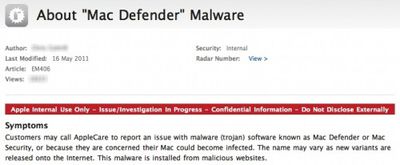
Apple has posted a Knowledge Base article that addresses the recent MacDefender malware issue and also reveals they will be addressing it in the next few days through a software update
In the coming days, Apple will deliver a Mac OS X software update that will automatically find and remove Mac Defender malware and its known variants. The update will also help protect users by providing an explicit warning if they download this malware.
Apple describes "MacDefender" as a recent phishing scam that has targeted Mac users by redirecting them from legitimate websites to fake websites which tell them that their computer is infected with a virus. The user is then offered Mac Defender "anti-virus" software to solve the issue.
Apple also offers instructions and tips for avoiding installation of the malware and how to remove the malware. Apple had previously been criticized for not allowing their support staff from addressing the issue in retail stores.
Apple today released a pair of updates for its Logic audio workstation software packages, primarily adding support for projects imported from GarageBand for iPad released earlier this year. Logic Pro 9.1.4 (192.48 MB) and Logic Express 9.1.4 (138.74 MB) each require Mac OS X 10.5.8 or later.
This update improves overall stability and addresses a number of minor issues, including the following:
Support for opening projects imported from GarageBand for iPad.
Full details on the approximately two dozen other changes included in the updates are available in the release notes for Logic Pro and Logic Express.
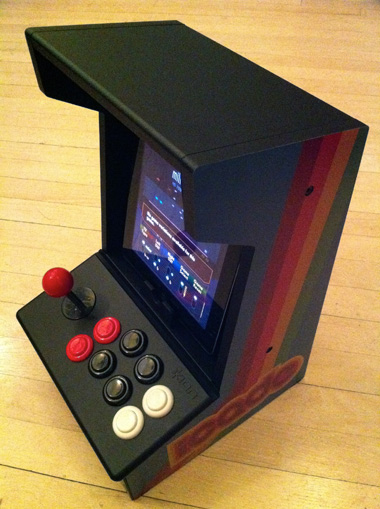
What started as a ThinkGeek April Fools joke has now become reality. The $99 iCade iPad arcade cabinet is now shipping to early customers. The iCade offers iPad users an arcade cabinet shell to slide your iPad in and use the physical joystick and buttons to play games. Our sister site TouchArcade has already received theirs and has been putting it through the paces:
The iCade comes packaged unassembled. The box contains the main control unit, two side panels, a back panel, a handy flip-up top panel with instructions printed on the inside face, a lovely red joystick knob, screws, batteries, and a set of instructions. Getting the unit together with the help of the illustrated assembly sheet is about 5 to 10 minutes' work.
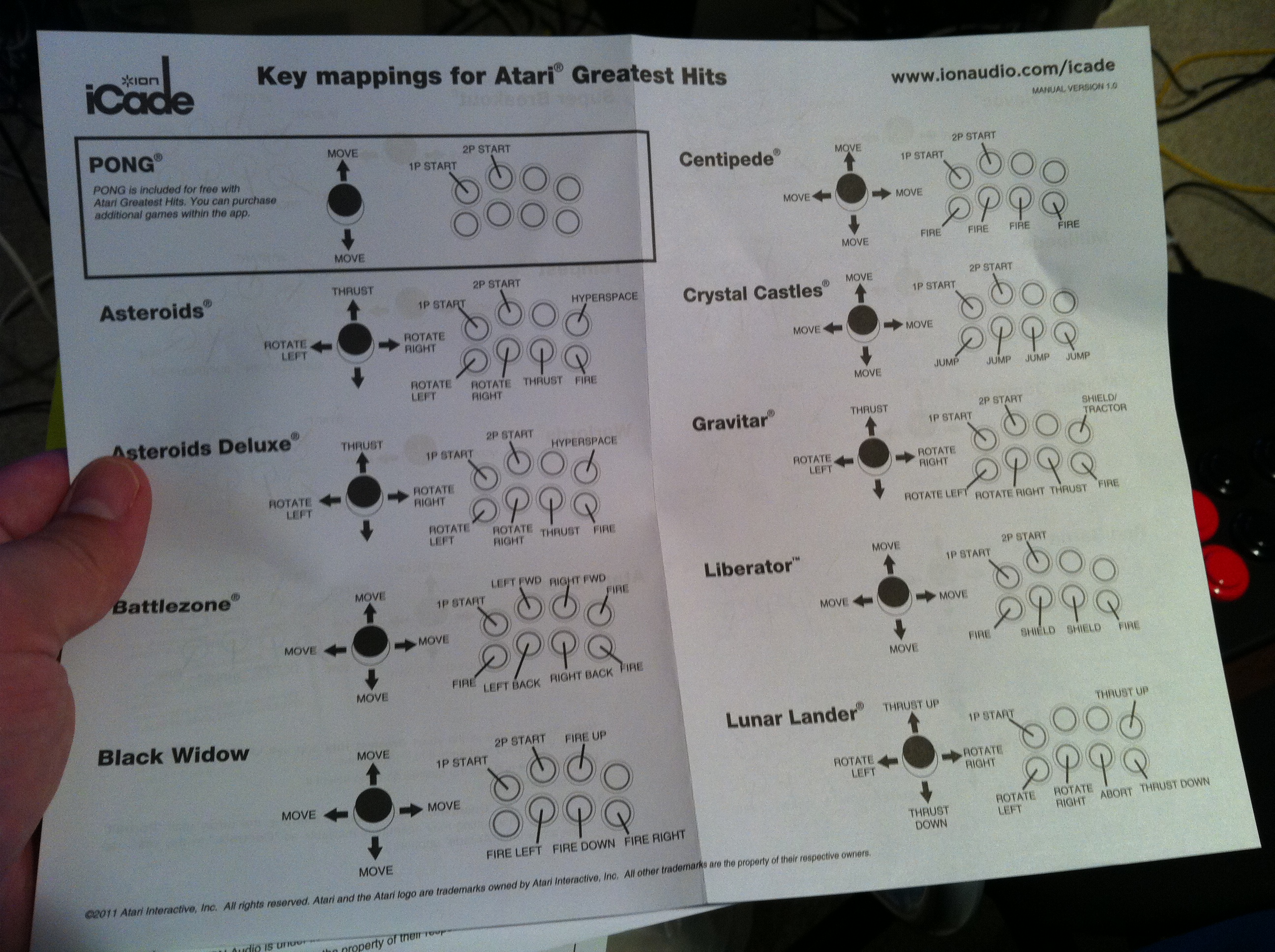
Out of the box, the iCade supports Atari's Greatest Hits iPad app which offers 100 classic Atari games in a single package. Almost every Atari game is already supported with the iCade. The included instructions show how different controls are mapped to the iCade:
As figured out by @thatdecade, the iCade simply sends out two-letter sequences for each button or joystick movement. That means it should be trivial for any iOS game developer to build in support for the iCade into their future games.
Overall the controls seem solid and a welcome addition to these classic games.
I found tearing through these classic games on the iCade to be everything I'd hoped it to be. On the whole, it's just an awesome experience. Holding the stick in your hand, hearing the switches click open and shut, and mashing the fire buttons is absolutely the way these classic games were meant to be played. A proper stick in your hand beats a virtual D-pad every time.
At present, the Atari game pack seems to be the only app to support the iCade. There do seem to be a few frustrations with the iCade acting like a Bluetooth keyboard. For example, when paired, the iPad won't bring up a virtual keyboard in text entry fields as it thinks the iCade is actually a keyboard.
The iCade is available from ThinkGeek but presently is on backorder.
This $0.99 game comes with 60 different puzzles to solve amongst four different types of puzzles. These puzzles all involve familiar mechanics, with three hinging on sliding blocks around in different ways and a fourth that's a strangely abstract version of sudoku. Solving the puzzles disarms a vault's defense system, allowing you to get to the prize inside.
MacHeist has been a promotional partner with MacRumors in the past and is best known for its Mac app discount bundles. Their promotions have always been wrapped in some sort of puzzle/game element.
The iOS app follows the same basic idea, but this time offering it wrapped in an iOS game with a prize awarded at the end. TouchArcade reports that the ultimate prize is a Steam code for a PC/Mac game worth "substantially" more than $0.99.
Last month, Apple filed suit against Samsung, claiming patent and trademark infringement from Samsung having allegedly copied Apple's "technology, user interface and innovative style" in its Galaxy line of smartphones and tablets.
Courthouse News Service now reports that a federal judge has given Samsung 30 days in which to provide Apple with samples of a number of unreleased hardware models in order to assist Apple with determining whether it would like to request an early injunction to halt the claimed infringement.
Samsung Electronics was told Wednesday to fork over five of its not-yet-released mobile phones to Apple. Sitting in Federal Court in San Jose, Judge Lucy Koh ruled that Apple deserves the quick production of cell phone samples three months earlier than usual in the litigation process, though she drew the line at requiring testimony from Samsung executives.
"Apple has demonstrated good cause for some, limited expedited discovery," said Koh. "While Apple has not yet filed a motion for preliminary injunction, courts have found that expedited discovery may be justified to allow a plaintiff to determine whether to seek an early injunction," said Koh.
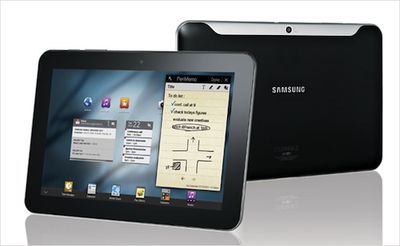
The Samsung models in question include the Galaxy S2, Galaxy Tab 8.9, Galaxy Tab 10.1, Infuse 4G, and Droid Charge.
While the models have yet to be officially released to the public and Samsung has argued that examination of production samples that may not necessarily reflect final shipping versions is inappropriate, Koh noted that the argument is undermined by Samsung's publicity efforts that have seen images and even demo units handed out to members of the media. In one noteworthy example, 5,000 Galaxy Tab 10.1s were given away to attendees at the Google I/O conference earlier this month.
Last week, we noted that Conde Nast had rolled out digital subscriptions for four more of its iPad magazine, joining the earlier debut of The New Yorker.
And with today's launch of subscriptions for Wired and GQ alongside last week's debut of Self, Conde Nast has now completed the rollout across its iPad offerings.
"WIRED thrives on progress across platforms, whether it's in the magazine, on the website, or on the iPad," said VP and publisher Howard Mittman. "When the app launched last year it was the first to show how interactive and innovative the medium could be. Now, by offering our readers a subscription on iPad, WIRED is poised to lead the digital publishing conversation and reach a wider audience."
As with Conde Nast's other monthly magazines, the new titles are available via in app subscription priced at $1.99 per issue or $19.99 per year. Print subscribers can access the digital versions free of charge.
Bright Side of News reports that Russian forensics firm Elcomsoft has discovered a method of cracking Apple's hardware encryption built into iOS 4, providing law enforcement and other parties with a way to access the protected data provided they have physical access to the device.
According to Vladimir Katalov from Elcomsoft, you have to have physical access to the device that is being cracked into:
"Decryption is not possible without having access to the actual device because we need to obtain the encryption keys that are stored in (or computed by) the device and are not dumped or stored during typical physical acquisition."
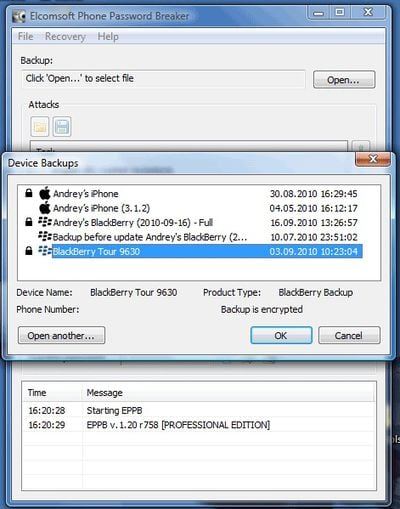
Elcomsoft offers a basic Phone Password Breaker for Windows priced at $79 for home use and capable of unlocking encrupted backups of BlackBerry and iOS devices. A much more advanced package for iOS 4 devices is available for government agencies, offering access to other information such as passwords, stored email messages, and deleted SMS messages and emails.
Additional details on the decryption processes are available in a blog post on Elcomsoft's site.
Eldar Murtazin, editor-in-chief of Russian mobile phone blog Mobile-Review today reported in a Tweet (via MacStories) that iOS 5 will not be compatible with the iPhone 3GS, limiting the next-generation operating system to the current iPhone and of course new models yet to come as far as the iPhone is concerned.
Just one comment. Apple iPhone 3Gs wont be upgradable to iOS 5.x. iPhone 4 will.
The information is unverified and it is unclear from where Murtazin obtained the information, but he does have a very solid reputation in the mobile phone rumor community. Murtazin does not, however, frequently report on Apple's plans.
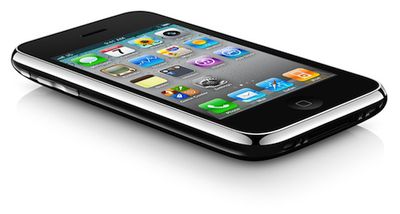
iOS 4.0 was released last June with compatibility for the iPhone 3G, 3GS, and 4, although some of the iOS 4 features were not available on the older hardware. That fragmentation continued until Apple finally discontinued support for iPhone 3G updates with the release of iOS 4.3 earlier this year, leaving that device at a maximum operating system version of iOS 4.2.1.
Limiting iOS 5 to a minimum of iPhone 4 hardware would be a significant shift toward high-end hardware requirements, particularly considering that Apple still sells the iPhone 3GS. iOS 5 has, however, been reported to be a significant reworking of the company's mobile operating system, and Apple may simply feel that only the latest hardware (relatively speaking) will offer a satisfactory experience.
Research firm IHS iSuppli yesterday issued a report estimating the potential iPad 2 production loss due to the explosion at its Chengdu, China plant at up to 500,000 units. The estimated shortfall comes after Foxconn reportedly reassured suppliers that production will continue.
While most iPad 2 production takes place at another Foxconn facility in Shenzhen, that plant may not be able to compensate for all the lost output in the second quarter at the Chengdu site. The Shenzhen facility at present has capacity to produce 7.5 million units in the second quarter - iSuppli forecasts 7.4 million iPad 2 units will be shipped out during this period. To support these shipments, Foxconn must manufacture a larger quantity of devices, at between 7.8 and 8.1 million units during the second quarter. This means that Foxconn's shipments will fall short of expected levels by between 300,000 and 600,000 units in the second quarter.
Preliminary investigations into the cause of the blast have pinpointed a buildup of combustible dust in the facility's ventilation system, and The Wall Street Journal reports that Foxconn has temporarily shut down polishing workshops at all of its facilities for testing in order to ensure that similar explosions do not occur elsewhere. Three workers were killed and over a dozen others were injured in the Chengdu blast.
A spokesman for Hon Hai said the company's tests at the affected workshops could last two days. "The workshops could be back online as soon as they pass the test," he said.
Foxconn has indicated that it has ample supplies of polished parts to carry it through the brief shutdown, suggesting that the testing will have little impact on the company's production capacity. The same can not be said for the damaged Chengdu production lines, as it will undoubtedly take time to sort out the events and restart production. The company does, however, have significant flexibility with its huge number of production lines at a number of different facilities, and its ability to move quickly on construction projects means that it could have the Chengdu plant back up and running in relatively short order.
Opera Software today announced the launch of a redesigned version of its Opera Mini browser for iOS devices, bringing a fresh new look with an iPad-specific interface, enhanced performance, and new tools to improve the user experience on one of the most popular alternatives to Apple's built-in Safari browser.
Have an iPhone 4? Our browser adapts to the high resolution and changes the user interface to accommodate the screen size. How about iPad? Yep, the Opera Mini 6 browser will switch to a more convenient view for tablet handling.
The chorus of Opera Mini users gave feedback and we listened. Like the rest of the Opera Mini 6 lineup, the iOS version features:
- Much faster and smoother panning and zooming that lets the user get all the way into the details of every page, in one smooth motion - Share buttons to share the love for a site to your friends on My Opera, Facebook, Twitter or vKontakte right from the Opera Mini 6 browser - New jazzed-up skin and redesigned Opera menus
Opera Minidebuted on the App Store just over a year ago, and reached one million downloads in just days as it topped Apple's charts around the world.
Late last week, we reported that despite having three of the four major labels on board with its plan for a cloud-based streaming service and the final label apparently close to signing a deal, Apple still needs to reach agreements with the music publishers before it can launch its service. At the time, we noted that the two sides were essentially on the same page, with only monetary compensation to be negotiated.
CNET now provides an update claiming that the two sides are actually quite close on the monetary issue, leaving only a small amount of negotiation. The report does caution, however, that unexpected delays can still pop up and that even seemingly simple negotiations can take significant amounts of time in the complex landscape of music sales.
Negotiations between Apple and music publishers have begun in earnest only recently but the amount of money that separates the two sides from reaching a deal is relatively small, according to two sources with knowledge of the talks. That said, these are cloud-licensing contracts, which are new and complex and there's still several ways Apple's service could be delayed, insiders say.
The report lays out how Apple and music publishers are having to forge into entirely new territory with their negotiations over cloud-based streaming services. Publishers are currently paid at a fixed rate of 9.1 cents per track sold either digitally or on physical media, a rate set by the U.S. Congress. Separate cloud streaming rights are not part of that package and thus Apple and the publishers have had to hash out new standards for the industry.
Reports indicate that labels and publishers are keen to have Apple launch its service quickly, looking to the service as another revenue-generating opportunity to help reverse declines in the industry and as a means to get Google and Amazon to reach similar agreements after those companies launched basic cloud services without the agreement of labels and publishers. That said, there is reportedly some tension between labels and publishers, with publishers apparently upset that labels have already claimed the vast majority of money Apple is prepared to pay for cloud streaming rights, leaving little for the publishers. The disagreements may primarily be posturing by the different parties, however, and thus it is likely that they can be overcome.
CNET does still expect Apple's cloud-based streaming service to debut at the company's Worldwide Developers Conference in San Francisco, an event that begins in just two weeks.
Apple.Pro publishes an unverified image of what claims to be the back cover of the iPhone 5. The shell is white with 2 distinct holes in it. One for the camera, and the other presumably for the camera flash. Apple.Pro can't verify the authenticity of the image. The origin of the image appears to be a microblogging site Weibo.
The image comes a week after the revelation of a iPhone 5 case which also had an extra hole that was believed to be for the camera flash. That case has since been removed from the original vendor site.
Parts like this, of course, are easy to fake, especially after the possibility of a separate camera flash was revealed last week. Still, we've frequently seen prototype parts leak out of China in the weeks to months before a new iPhone release.
Accoridng to PatentlyO, Apple has recently recorded the receipt of 200 patents and pending patent applications from the electronics company Freescale Semiconductor, Inc. Freescale was originally a division of Motorola but was spun off in 2003. The patents reportedly represent a wide range of topics related to computer hardware and wireless devices.
it is unclear from the information now available whether (1) Apple obtained full title to the patents and (2) whether Apple purchased the rights or obtained them through some other type of transaction.
It's not clear what Apple's intentions are with the patents or if they were part of some sort of settlement.
As reported by The Loop, Apple has finally responded regarding developers being targeted by patent holding firm Lodsys with notices of infringement and demands for licensing. According to the report, Apple's General Counsel Bruce Sewell has sent a letter to Lodsys claiming that developers are "undisputedly licensed" for the patent in question.
"Apple is undisputedly licensed to these patents and the App Makers are protected by that license," wrote Bruce Sewell, Apple Senior Vice President and General Counsel.
While it is unclear exactly how Lodsys will respond to Apple's demands, it seems clear that Apple is taking steps to protect developers in its App Store ecosystem and will likely take the lead in any potential lawsuits filed over the issue.
Update: The Loop has updated its report with additional quotes from Apple's response to Lodsys:
"Thus the technology that is targeted in your notice letters is technology that Apple is expressly licensed under the Lodsys patents to offer to Apple's App Makers. These licensed products and services enable Apple's App Makers to communicate with end users through the use of Apple's own licensed hardware, software, APIs, memory, servers, and interfaces, including Apple's App Store. Because Apple is licensed under Lodsys' patents to offer such technology to its App Makers, the App Makers are entitled to use this technology free from any infringement claims by Lodsys."
Update 2: Macworld has now posted the full text of the letter from Apple to Lodsys, which concludes:
Apple requests that Lodsys immediately withdraw all notice letters sent to Apple App Makers and cease its false assertions that the App Makers’ use of licensed Apple products and services in any way constitute infringement of any Lodsys patent.
Apple's first foldable iPhone, with a book-style design featuring a ~5.5-inch outer display and a ~7.8-inch inner display with a minimal crease down the middle.











 Late last week, we