Jimmy Iovine and Dr. Dre, who are expected to take on senior roles at Apple following the company's rumored acquisition of Beats Electronics, may make their first appearance at Apple's upcoming Worldwide Developers Conference, which takes place in June.
Citing sources familiar with the Beats Electronics acquisition talks, Billboard suggests Apple may introduce the two new hires during the event, possibly announcing Iovine as the company's new music chief. Iovine's role may include overseeing Apple's music strategy, securing deals and maintaining relationships with music labels.
Apple is currently said to be in talks with Beats Electronics over a $3.2 billion acquisition that would see the company gaining the Beats headphone business, its music service, and its two co-founders, Iovine and Dre.
Apple's interest in the company is said to be centered around Iovine, who has deep ties to the music industry, but it also gives Apple a successful speaker and headphone accessory line along with an established streaming music service. According to a recent report from Reuters, Apple will likely keep the Beats brand as a separate entity, giving it a way to test a subscription music service without compromising its own iTunes store.
As noted by Billboard, Dr. Dre, aka Andre Young, has previously appeared at an Apple event, congratulating Steve Jobs on the launch of both the iPod and the iTunes Store via video. Iovine has also had an ongoing relationship with Apple, initially pitching Steve Jobs on a music service back in 2003 and speaking with Apple executives prior to the launch of Beats Music earlier this year.
The deal between Apple and Beats Electronics is expected to be announced soon, possibly as early as this week.
Twitter is adding a new "mute" feature to its iOS app and web experience, allowing users to control the content they see in their Twitter feeds by muting other Twitter users. When a user is muted, their Tweets and Retweets will no longer be visible.
In the same way you can turn on device notifications so you never miss a Tweet from your favorite users, you can now mute users you'd like to hear from less. Muting a user on Twitter means their Tweets and Retweets will no longer be visible in your home timeline, and you will no longer receive push or SMS notifications from that user. The muted user will still be able to fave, reply to, and retweet your Tweets; you just won't see any of that activity in your timeline.
Muting can be accomplished by visiting a user's profile page or tapping on "More" on a tweet and choosing the mute option. Muted users will not be notified that they are muted, and a mute can be removed any time. At this time, Twitter's mute function is somewhat more limited than third-party apps like Tweetbot, which also includes keyword and hashtag muting.
Twitter has also updated its app with several iPad improvements that were previously introduced to the iPhone app, including photo and video previews directly in the timeline, easier access to Direct Messages, and the ability to reply, retweet, favorite, or follow users directly from timeline Tweets.
This update includes minor improvements.
Changes to iPad include:
- Choose between "Top" and "All" Tweets in search results. - Tweets with Twitter photos, Vine videos and other select content now show a preview in your home timeline - You can reply, retweet, favorite or follow someone straight from a Tweet in your home timeline. - Easier access to DMs - Choose a filter for your photo. - Refreshed look for navigation. - Discover has been updated to show Tweets related to Trends.
Twitter can be downloaded from the App Store for free. The new mute feature will be rolling out to users starting today and all users will receive access over the course of the next few weeks. [Direct Link]
Several comparison photos and videos have already depicted physical iPhone 6 mockups next to a range of devices, including the iPhone 5s, but a new video from Macitynet has a highly detailed comparison of a good quality iPhone 6 mockup next to Apple's iPhone 5s, demonstrating all of the prospective design differences from multiple angles.
As can be seen in the video, the iPhone 6 mockup appears to be much thinner than the iPhone 5s. Based on design drawings, the mockup measures in at 7mm thick, while the iPhone 5s is a good bit thicker at 7.6mm. It is, of course, taller and wider as well, due to the larger 4.7-inch display.
The mockup also has iPod touch-style curved edges, which contrast the distinct corners of the iPhone 5s, and it has also adopted the microphone holes and the rectangular volume buttons of the iPod touch. Rumors have suggested the iPhone 6 could include a repositioned sleep/wake button on the right side of the device, which is also visible on the mockup. There's also a redesigned circular flash that replaces the pill-shaped flash of the iPhone 5s, which suggests the possibility that Apple has found a way to combine its existing dual-LED True Tone flash into a single LED.
In addition to today's video, various images and videos have depicted iPhone 6 mockups compared to a several other devices, including Apple's iPod touch and the Samsung Galaxy S5, giving us an idea of what Apple's 4.7-inch device might look like when it is released. Printable 3D plans have also been made available, allowing users to 3D print their own 4.7 and 5.5-inch iPhone 6 mockups.
It is important to note that all of the mockups that we've seen have largely been based on the same set of design drawings published in a March issue of Japanese magazine MacFan and it remains unclear whether those schematics are representative of the true design of the iPhone 6.
Apple is expected to launch the 4.7-inch version of the iPhone 6 in the fall, possibly as early as September. A larger 5.5-inch version may follow a few months later, debuting at the end of the year or in early 2015. Rumors have suggested the devices will include an upgraded processor and an improved camera, in addition to a fully redesigned body.
Apple is apparently working on significant improvements to JavaScript performance for its Safari browser, as shown by the inclusion of accelerator upgrades in recent builds of WebKit, reports InfoWorld.
WebKit is the open source browser engine created by Apple and which serves as the basis for Safari, and the new upgrades to WebKit's "Nitro" JavaScript engine are known as "FTLJIT". With the upgrades, WebKit's JavaScript engine would become more competitive with Google's V8 and Mozilla's SpiderMonkey engines.
FTLJIT is still considered experimental, so although it's being made available in the OS X port of WebKit by default, it's not actually turned on yet -- it has to be enabled through command-line flags.
One attribute that could make FTLJIT stand out from the pack all the more is how well it runs JavaScript code that is not specifically optimized for [Mozilla's] asm.js. Every JavaScript engine will run asm.js code, but only Mozilla's SpiderMonkey honors asm.js-specific optimizations, and right now no other browser maker has elected to follow Mozilla's lead.
The report notes that speed tests are showing WebKit with FTLJIT enabled outperforming Chrome, while Firefox still tops the charts when using asm.js-optimized benchmark tests.
JavaScript has been a key technology for web browsers for many years, facilitating a variety of user interactions with web pages such as dynamic loading of content without reloading pages and handling page animations and other media. Because JavaScript code embedded on a website is run inside the user's browser when the page is loaded, the efficiency of the browser's JavaScript engine can have a significant impact on the user experience as JavaScript implementations become increasingly complex.
It is unclear whether Apple is targeting OS X 10.10 for these JavaScript improvements, but with them only being enabled in the OS X version of WebKit, it appears that there is still substantial work to be done.
Music industry veteran Jimmy Iovine is believed to be the primary target in Apple's rumored acquisition of Beats Electronics, but the company also is eyeing Beats' streaming music service and the Beats branded headphone business, reports Bloomberg. Apple likely will assume leadership of the company, but keep the Beats brand independent.
Beats co-founder Iovine previously pitched the idea of a streaming music service to both Steve Jobs and Tim Cook, but neither party showed interest until the streaming music service launched earlier this year.
Apple became interested in doing a deal with Beats after executives were impressed by Beats Music, an online music streaming service unveiled earlier this year, which was rapidly converting users into paying subscribers, said a person with knowledge of the talks, who asked not to be identified because the discussions are private.
Beats Music could fill a gap in Apple's music portfolio, which now offers digital downloads via iTunes and iTunes Radio, a channel-based music streaming service akin to Pandora. Though still a leader in the music download arena, iTunes is losing ground to full-library streaming music services like Spotify, which is poised to overtake iTunes as Europe's largest online digital music service.
Besides the music service, Apple also will obtain a high-margin headphone business co-founded by rap musician Dr. Dre, Iovine, and early partner Monster cable. As part of the acquisition, Beats will likely remain an independent brand with Apple providing design improvements for future Beats products.
Both Iovine and Dre may take on senior roles at Apple following Apple's acquisition, remaining at Beats' Los Angeles headquarters and traveling to Cupertino when necessary. Iovine is expected to leave his role as chairman of Interscope Geffen A&M records and use his music industry experience to help Apple secure future deals with music labels.
Apple has improved its return policy, offering faster refunds for customers who purchase items online, reports Reuters. Apple was able to shorten the refund processing time from 10 days to less than a week by using an expedited shipping method to send devices back to the company for return.
According to retail-intelligence firm StellaService, Apple switched to FedEx 2Day service last November during the holiday shopping season and has continued to use the service, despite the greater upfront cost associated with the faster shipping method. Customers will not incur any additional costs for Apple's decision to use FedEx, notes a source "with knowledge of the new procedure."
StellaService researchers first noted the improvement in refund processing times in November, but chalked it up to a temporary measure for the busy holiday season. The company, which orders items from Apple's website several times a day for research purposes, also discovered that packages were stamped with FedEx 2Day, rather than a Newgistics prepaid label.
Apple is going against the grain by investing in the returns process, an area that companies often trim because it does not help their bottom line. CEO Tim Cook has repeatedly said Apple does not have a profits-first policy, but instead prides itself on delivering a quality experience to its customers.
This focus on the overall experience benefits Apple's brand reputation among consumers as the company routinely leads its competitors in customer satisfaction. Apple recently reclaimed its spot as the highest ranked tablet manufacturer in J.D. Power's latest U.S. tablet customer satisfaction study, earning a 5-star rating and edging out rival Samsung.
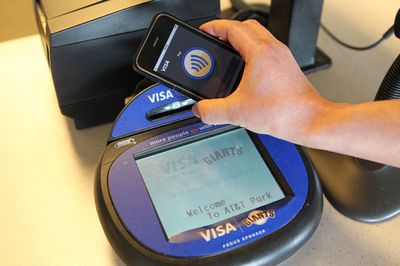
Apple is gearing up to incorporate Near Field Communication (NFC) technology in the iPhone 6, according to a report from BrightWire citing sources familiar with the matter. The report also notes that Apple has struck a deal with China UnionPay to integrate the banking company's services into Passbook and elsewhere.
Apple is likely to incorporate a Near Field Communication (NFC) payment function in the next generation iPhone and has reached an agreement with China UnionPay on a mobile payment service, according to a source close to the matter.
...In addition to NFC payment, the two companies will also work together on another mobile payment solution that can be used for purchases in Apple Stores, added the source.
Integrating NFC into the iPhone 6 would be a bit of a surprise move by Apple, as the company's head of marketing Phil Schiller stated in 2012 that the technology was "not the solution to any current problem." Notably, KGI Securities analyst Ming-Chi Kuo predicted last month that Apple would integrate NFC chips into the next-generation iPhone alongside a host of other features.
The news also comes as Apple is pursuing plans to develop a mobile payment solution, which will be possibly tied to the Touch ID fingerprint sensor currently found in the iPhone 5s and reportedly headed for the iPhone 6 and next-generation iPads. It is also possible that Apple combines its existing Touch ID fingerprint scanner and NFC technology into the home button, as the company filed for a patent detailing such a system last September.
Apple is expected to unveil the iPhone 6 in two sizes of 4.7-inches and 5.5-inches later this year, with the smaller version of the phone launching ahead of the larger model. Aside from a larger display, the iPhone 6 will likely feature a thinner profile, a faster A8 processor, and an improved camera in the form of imagestabilization. Apple is also said to be negotating with carriers for a $100 price increase on the iPhone 6.
According to a new report from market research firm DisplaySearch (via CNET and ZDNet Korea), Samsung claimed the top spot as Apple's biggest iPad display panel supplier in the first quarter of 2014, shipping 5.2 million units of the high resolution 9.7-inch panels that were used in the iPad Air and the reintroduced 4th generation iPad.
Samsung's panels accounted for 62% of Apple's 9.7-inch displays, while longtime partner LG Display shipped 3.2 million displays to account for 38% of the total. Apple was said to have chosen Samsung as a primary iPad display supplier last August, and reportedly turned to the Korean company in October to produce displays for the Retina iPad mini as Sharp and LG Display struggled with low yields.
Apple has been reported for quite some time to be seeking to reduce its reliance on Samsung as a component supplier due to tensions between the two companies as they have become top competitors in the mobile device market. However, Samsung's technological advantages and production capacity as a display supplier have proven valuable to Apple's needs over the years, as the two companies are likely to continue that partnership for the foreseeable future.
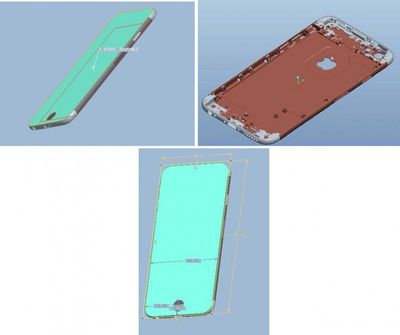
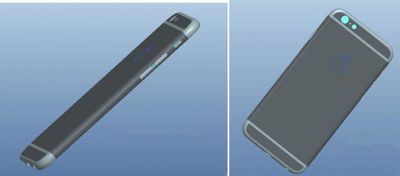
New alleged renderings of the 4.7-inch iPhone 6 said to be sourced from primary Apple supplier Foxconn have surfaced on Chinese site Wei Feng [Google Translate, via GforGames].
The renders, which show measurements of 138 x 67mm for the device, appears to be consistent with drawings published in Japanese magazine MacFan last month, and in line with precise measurements of a mockup done by Taiwanese blog AppleCorner last week.
Similar to details in otherreports, the new renders show a number of design changes on the iPhone 6, including rounded corners, rectangular volume controls on the left, and a relocated power button on the top right hand side. Also shown is a cutout for the Apple logo on the rear of the device, which appears to be different than the current logo found on the iPhone 5s and previous models.
Notably, the drawings show two antenna breaks cut out on the rear of the device, which seems to suggest that Apple will incorporate a three-stage aluminum design on the back of the iPhone 6. A report from Mac Otakara last month claimed that Apple would be doing away with the glass breaks currently found on the iPhone 5s, although it is unsure how Apple will change its overall antenna design to accommodate the new look.
Apple is expected to unveil the iPhone 6 later this year, with a recent report stating that the company will launch the 4.7-inch version in August and the larger 5.5-inch version in September. Aside from a large display, Apple's next-generation iPhone will likely include a thinner profile, a new A8 processor, and an improved camera in the form of either optical or electronic image stabilization.
Beats co-founders Jimmy Iovine and musician Dr. Dre are both expected to take on senior roles at Apple following Apple's acquisition of Beats Electronics, reports The Wall Street Journal. The two may not take on full time positions, but will commute from the Los Angeles area, where Beats is based, to meetings in Cupertino and elsewhere as necessary.
Citing people familiar with the matter, The Wall Street Journal suggests that specific roles for Iovine and Dre remain unclear, but Iovine will be leaving his role as chairman of Interscope Geffan A&M records, a division of Vivendi SA's Universal Music Group. Both Dr. Dre -- real name Andre Young -- and Iovine could help Apple secure deals with record labels and attract younger customers.
While Mr. Iovine's rock-star temperament could still ruffle some feathers in tech-centric Cupertino, it may help Apple broker deals in the music industry and appeal to the younger consumers who gravitate to Beats headphones.
Apple is said to be working on an overhaul of iTunes in order to boost declining music sales. The addition of the Beats Music streaming service along with a thriving hardware business and two seasoned veterans of the music industry may help the company achieve the drastic revamp it's aiming for while introducing new revenue streams.
Today's report follows a report from the New York Post suggesting Iovine will join Apple as a "special adviser" to Tim Cook on creative matters. While Apple's $3.2 billion acquisition of Beats Electronics has yet to be completed, Dr. Dre seemingly confirmed the acquisition in a video posted this morning, where he alluded the merger would make him the "first billionaire in hip-hop."
As noted by The Wall Street Journal, Apple's hiring of Dr. Dre and Jimmy Iovine represents Tim Cook's willingness to step out of the spotlight. Earlier this month, the company welcomed former Burberry CEO and high-profile hire Angela Ahrendts as the new retail chief. Other Apple executives, like Jony Ive and Craig Federighi, have also been stepping into the spotlight more often than they did under Steve Jobs.
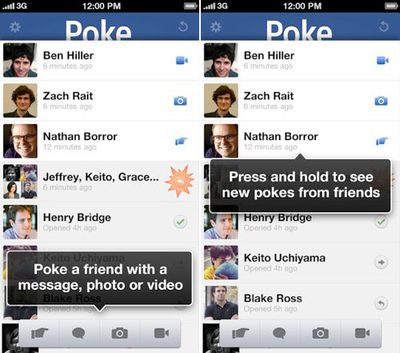
Facebook today removed its long defunct Facebook Poke and Facebook Camera apps from the App Store, quietly pulling the apps with no notification to users. A Facebook spokesperson confirmed the removal to The Verge, but declined to comment further.
First introduced in December of 2012, Facebook's Poke app was the company's answer to Snapchat, allowing users to send ephemeral photos, videos, messages, and "poke" notifications to their friends. Each message only lasted a few seconds before expiring, much like Snapchat's temporary messages.
Poke quickly floundered following its release as it failed to gain popularity amid competition from Snapchat, and it received no updates.
Facebook's Camera app was slightly more popular when it launched in May of 2012 as a way to make sharing multiple photos on Facebook "faster and easier." The single function app, which also let users browse photos, saw several updates during the first year it was released but later fell to the wayside as Facebook integrated Camera features into its main Facebook app. At the time of removal, the Facebook Camera had not been updated since August of 2013.
Despite the failure of Facebook Poke and Facebook Camera, Facebook has continued with development of standalone Facebook apps under its Creative Labs initiative. Paper, the first product to come out of Creative Labs, has been lauded for its design and has thus far enjoyed moderate success.
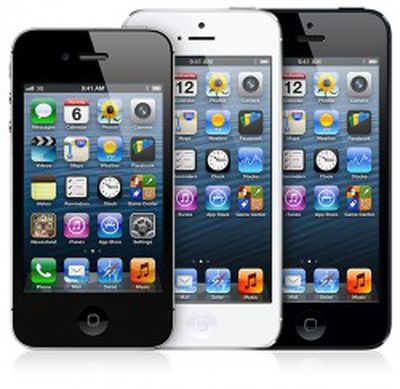
Apple's iPhone upgrade event has officially begun, as the company has started to send out emails encouraging upgrade-eligible older iPhone owners to trade in their phones for newer models. iPhone 4s users started receiving emails on May 8, with the headline "It's a beautiful time for an upgrade."
The emails nudged iPhone 4s owners to "recycle" their phones to receive up to a $199 credit to put towards the purchase of an iPhone 5s or iPhone 5c under Apple's iPhone trade-in program, which the company first launched in August.
As noted by 9to5Mac, Apple Store employees have also received a memo instructing them to encourage iPhone 4 and 4s to trade in their phones with more attractive trade-in values. Apple is offering iPhone 4 users up to $99 towards the purchase of an iPhone 5s or 5c, while iPhone 4s owners can get up to $199, making an upgrade to a subsidized iPhone 5s essentially free.
Apple's retail stores are also displaying signs with the same "It's a beautiful time to upgrade" message, but it appears those signs may have pre-dated the kick off of Apple's upgrade initiative, having been spotted last week.
"It's a beautiful time for an upgrade. You may be eligible for upgrade pricing on a new iPhone. And if you bring in your old iPhone to be recycled, you could get credit toward a new one. Ask us for details."
First highlighted earlier this week, Apple's upgrade initiative is designed to boost in-store sales of the iPhone. The event will see Apple heavily pushing its iPhone trade-in program and launching improved trade-in options in an effort to get customers to upgrade their phones.
Apple CEO Tim Cook has noted his desire to increase in-store iPhone sales multiple times over the past year, saying Apple will improve sales through a variety of promotional tactics and incentive programs. Currently, 80 percent of iPhones are sold at third party locations while Apple sells just 20 percent, a ratio Cook would like to improve.
As Apple kicks off its trade-in initiative, Best Buy is also offering an up to $200 trade-in value for customers who bring in an older iPhone and upgrade to an iPhone 5s or 5c. Phones must be in working condition without a cracked display to receive a Best Buy gift card through May 11. An iPhone 5 is guaranteed $200, while an iPhone 4s gets $150 and the iPhone 4 gets $100.
Over the course of the last several years, streaming music services like Spotify, Rdio, Pandora, and Beats Music have been growing in popularity, usurping traditional music downloads as consumers' listening method of choice. Despite the shift in user preference, Apple has been slow to adapt, attempting to stick to its download model even as its iTunes music sales have declined.
According to a new report from The Wall Street Journal music labels had been urging Apple to get into the subscription music business long before the company decided to enter negotiations to purchase Beats Electronics, and with it, the Beats Music streaming service.
Record executives have been "lobbying Apple for months" to design a subscription streaming service that would introduce the streaming music business model to a wider array of consumers, but Apple has been reluctant to create such a service, instead focusing on download-centric ideas such as exclusive iTunes album releases.
Back in December, Beyoncé launched an iTunes exclusive album and Apple hoped to negotiate with record labels to secure additional exclusive releases to boost iTunes music sales. Record labels didn't believe that strategy would do enough to bolster flagging sales, and instead presented Apple with ideas like prompting users to subscribe to a music service over purchasing a music album.
Apple, on the other hand, had pitched more download-centric ideas in recent months, according to people familiar with the matter. One such suggestion was that record companies release all new albums exclusively on iTunes in album-only format for a window of time to drive album sales, before releasing the singles separately and making them available on streaming services. But labels countered that such a strategy--employed successfully by Beyoncé last year--wouldn't work across the board.
Declining music sales have become a significant issue for Apple, to the point where the company has been forced to consider an entire overhaul of iTunes, introducing not only a streaming music service, but also an Android version of the iTunes store. Music downloads declined approximately 13.3 percent in the first quarter of 2014 compared to the first quarter of 2013.
Apple did launch iTunes Radio back in September of 2013, providing a station-based streaming music service similar to Pandora, but this was seen as a "baby step" aimed at bolstering sales of Apple devices rather than a dedicated entry into the streaming music market.
With the purchase of Beats Music, Apple is potentially signaling its readiness to adapt to the music industry's shift towards streaming services and its readiness to bring music streaming to the mainstream. While Spotify and other streaming services are relatively small, Apple's massive iTunes customer base gives it the potential to introduce streaming music to a huge number of users.
Toward that end, Jon Maples argues that an acquisition of Beats would give Apple an easy entry into the true subscription music streaming market without necessarily diluting iTunes.
While music purchases may be falling, it’s still a big business for Apple. So instead of creating another option in iTunes that would potentially cannibalize download sales, why not just buy a service and keep it separate? Streaming blows up: Apple wins. Streaming doesn’t pan out, well, they still have the iTunes store chugging along.
With Apple having 800 million iTunes accounts to leverage, most with credit cards on file, the company can streamline and promote the Beats experience while still leaving its iTunes download service intact. And as Maples notes, Beats' headphone business is currently highly profitable, which means Apple's $3.2 billion purchase of Beats (Apple's largest acquisition ever by far) could pay for itself in a relatively short period of time and actually provide Apple with a low-cost entry into subscription music services on the side.
Google has launched a new feature for its experimental Chrome Canary browser for Mac, enabling a beta function that allows users to open local Mac files using Chrome apps in Finder. Using the feature, Chrome apps can be associated with OS X files, bringing Google one step closer to replacing desktop functionality with its browser.
For example, the Chrome Text app can be used to open any Mac text file, as seen in the screenshot below. The Text app shows up as an option right alongside native options like TextEdit.
It is now possible to get OS integration of file associations for Chrome Apps in Chrome Canary for Mac.
All you need is to enable the experimental chrome://flags/#enable-apps-file-associations flag and restart your browser.
Enabling this flag in Canary Chrome will let users choose installed Chrome apps as an option when opening an associated file, with the apps behaving as native Mac apps. As noted by Gigaom, the process functions through app manifests, which allow developers to specify which apps are compatible with different file types via file handlers.
While the feature is currently limited to Chrome Canary for testing purposes, many Canary functions eventually make it to Google's stable Chrome browser. There is no word, however, on when the new feature might make it out of testing as there are still several bugs to work out.
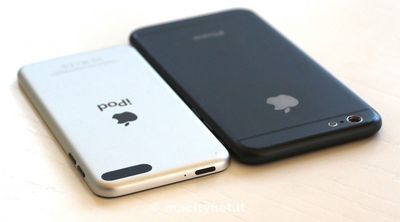
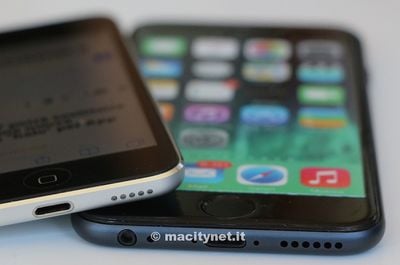
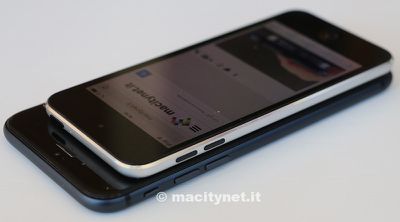
Italian site Macitynet, which previously published several photos of a fairly good quality physical mockup of the rumored 4.7-inch iPhone 6 based on design drawings from Japanese magazine MacFan, has now shared an interesting new photo set [Google Translate] comparing the mockup to a current-generation iPod touch.
The photos clearly show how similar the two devices are in design, from the curved edges on the rear shell to the style of speaker holes along the bottom edge. The iPhone 6 at 7.0 mm thick based on the design drawings is clearly thicker than the iPod touch at 6.1 mm, although the iPhone 6 would still be noticeably thinner than the iPhone 5s at 7.6 mm.
The iPhone 6 of course has larger height and width than the iPod touch, given that the body must accommodate a 4.7-inch display compared to the 4-inch display of the iPod touch.
The style is naturally also similar to the iPhone 5c, which itself took some design cues from the iPod touch, although the bright rear shell colors are the defining features of the iPhone 5c and they are unlikely to make their way into Apple's flagship iPhone 6.
In addition to the 4.7-inch iPhone 6, Apple is rumored to be launching an even larger model with a 5.5-inch display, although that may follow several months after the smaller version. High-quality physical mockups of that device have yet to appear, although users with access to a 3D printer can print their own using files based on the design drawings published by MacFan earlier this year.
Yesterday, designer Martin Hajek started selling a $25 set of 3D files that allow you to print your own 4.7-inch iPhone 6 mockup using a 3D printer. Today, a second set of 3D plans for both the 4.7-inch and 5.5-inch version of the iPhone 6 were released by MacRumors forum user Arthur Tilly and made available for free on Thingiverse.
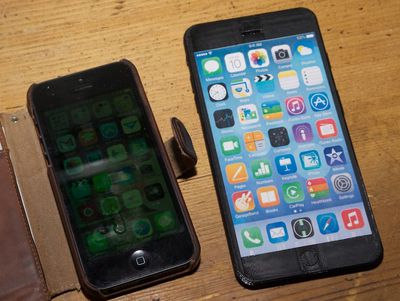
Using measurements available from leaked design drawings, the plans allow anyone with access to a 3D printer to print out the alleged iPhone 6 design and see how it feels in their hand. The set includes an .STL file for 3D printing and an editable OpenSCad file that can be used to modify the design and add some of the missing details like the Apple logo.
So, here's an OpenSCad file to create one, and the STL file it makes. There are some comments in there, so you can adjust things to your personal rumour preference. And improve it, of course. It doesn't print the expected lump on the back for the lens (that would mean the entire build would be on supports, or it would have to be printed a different way around). Neither does it have an apple logo or some other details that would be nice. Maybe I'll improve it soon, or feel free to do so yourself...
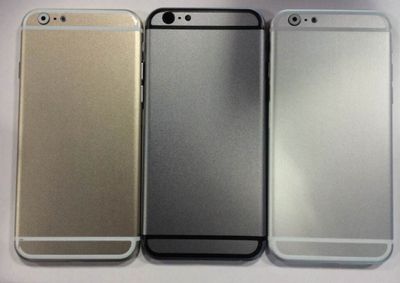
There has been no shortage of renderings of the rumored iPhone 6 that provide an advance look at the possible shape and size of Apple's upcoming smartphone. A new post from Taiwanese blog AppleCorner provides precise measurements of 138 x 67 x 7.0 mm obtained from one of these mockups, while a Sonny Dickson leak shows physical mockups in roughly the current three colors used on the iPhone 5s.
While there are a variety of cases and mockups all pointing in the same direction for the design of the iPhone 6, it is important to remember that most of these products are essentially all based on the same sets of leaked design drawings, and they ultimately may or may not prove correct.
Since the Financial Times broke the news yesterday, numerous publications are now claiming Apple is in the final stages of acquiring Beats Electronics, a headphone company and streaming music service created by hip hop star Dr. Dre and music industry veteran Jimmy Iovine. The response to the news is mixed, with some experts offering compelling reasons for the deal and other pundits questioning Apple's rationale in pursuing what would be its biggest acquisition to date.
Iovine has strong ties to the music industry and a long history of working with Apple, having met with Steve Jobs to discuss a subscription music service in 2003 and more recently in talks with Apple's Tim Cook and Eddy Cue about the Beats Music service before it launched earlier this year. In a recent interview with The Wall Street Journal, Iovine credits Apple as his inspiration for the idea of the Beats brand.
"The idea of Beats...to be very frank, I got from Apple," he said, noting the "uniqueness of their blending of technology with popular culture."
If the acquisition proceeds, Iovine may join Apple as a "special adviser" to Tim Cook on creative matters. Iovine would bring to Apple his knowledge of the music business as evidenced in a AllThingsD interview from last year embedded below, and his insider influence that Wall Street Journal sources predict could be used to boost advertising on Apple's existing iTunes Radio.
Apple also would acquire Beats' successful consumer electronics business selling high-margin headphones and its newly launched music streaming service. Apple could bring the Beats hardware brand under the guidance of Jony Ive and use it to create new music product lines and add new channels to sell Apple's products, suggests Re/code. The Beats music service is likely a longer-term investment, allowing Apple to accelerate any plans to offer a streaming music service for its iTunes customers, which number in the hundreds of millions.
Analysts, however, are meeting the news of the high-priced acquisition with both contempt and confusion, noting that such an acquisition is out of character for the Cupertino company. One of the first to weigh in on the deal was Gene Munster, who called the acquisition a "bad idea" in an investor note.
We are struggling to see the rationale behind this move. Beats would of course bring a world class brand in music to Apple, but Apple already has a world class brand and has never acquired a brand for a brand's sake (i.e., there are no non-Apple sub-brands under the company umbrella). Separately, we are not aware of any intellectual property within Beats that would drive the acquisition justification beyond the brand.
On the surface, this doesn’t make any sense to me. I can’t see Apple keeping the “Beats” brand around for headphones. If Apple wanted to sell expensive high-end headphones, they don’t need to spend $3 billion. The Beats streaming service is interesting, but can’t Apple do that on its own, as an expansion of the iTunes Music Store and iTunes Radio?
According to the original Financial Times report, Apple's acquisition of Beats could be announced as soon as next week. Negotiations are still ongoing with some final details yet to be ironed out, allowing for the possibility that "talks could still fall apart."
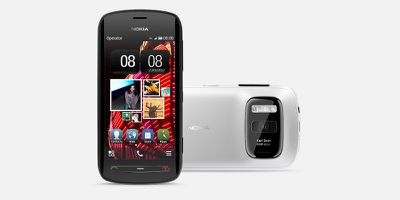
Apple has hired Nokia's Lumia photography chief Ari Partinen, reports Engadget. Partinen stated on his Twitter that he will be "starting a new chapter in Cupertino" this June, later confirming that he will join Apple.
The Nokia 808 PureView with 41MP sensor
According to Partinen's LinkedIn biography, his responsibilities at Nokia included "working with image quality characterization and tuning on camera module level", while handling camera component production and quality control on a global scale. Partinen also lists the Nokia's 808 PureView and Nokia N8 as devices he has worked on, which were regarded for their noteworthy photographic capabilities.
Partinen's hire comes as Apple is reportedly looking to bolster the next-generation iPhone's camera through optical image stabilization and other improvements. Nokia has focused heavily on the advantages of the camera's on its devices throughout the past few years, recently launching the Nokia Lumia 1520 with a 20 MP PureView camera.



 Twitter is
  Apple is apparently working on significant improvements to JavaScript performance for its Safari browser, as shown by the inclusion of accelerator upgrades in recent builds of WebKit,
  Music industry veteran Jimmy Iovine is believed to be
 Apple's iPhone upgrade event has officially begun, as the company has started to send out emails encouraging upgrade-eligible older iPhone owners to trade in their phones for newer models. iPhone 4s users