Apple Stores around the world are preparing to install new product presentations starting on Thursday, October 8.
Apple retail stores received confidential boxes earlier this week featuring "Do Not Open Until October 8" stickers on them. They are believed to contain new visual merchandise, which enables workers to update labels, graphics, and product layouts in stores around the release of new products. MacRumors received a tip-off about the boxes earlier this week, which it has now independently verified.
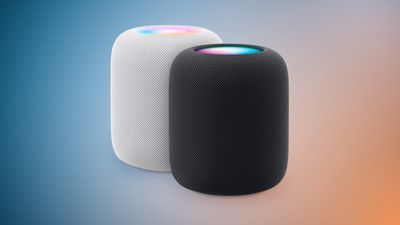
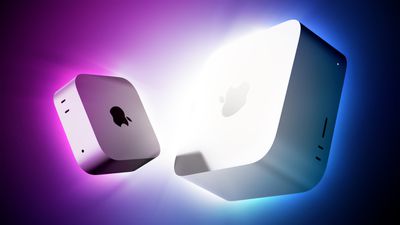
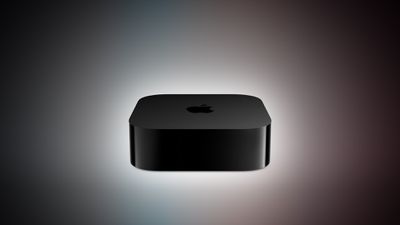
There is a possibility that the materials relate to the iPhone Duo, but it seems more likely given their confidentiality and timing that they relate to the rumored launch of Apple's smart home hub, alongside a new Apple TV 4K, and the HomePod mini 2. Yesterday, Bloomberg's Mark Gurman said that Apple plans to introduce these three long-awaited new devices on Tuesday, October 13.
If Apple announces the new devices sometime in the week of Monday, October 5, Apple Stores would need to update their displays for launch on October 13. For now, the exact timing of the announcement of the trio is unclear. Gurman's report used indeterminate wording, simply saying that Apple would "push into the smart-home market on October 13." This could be either announcement or launch.
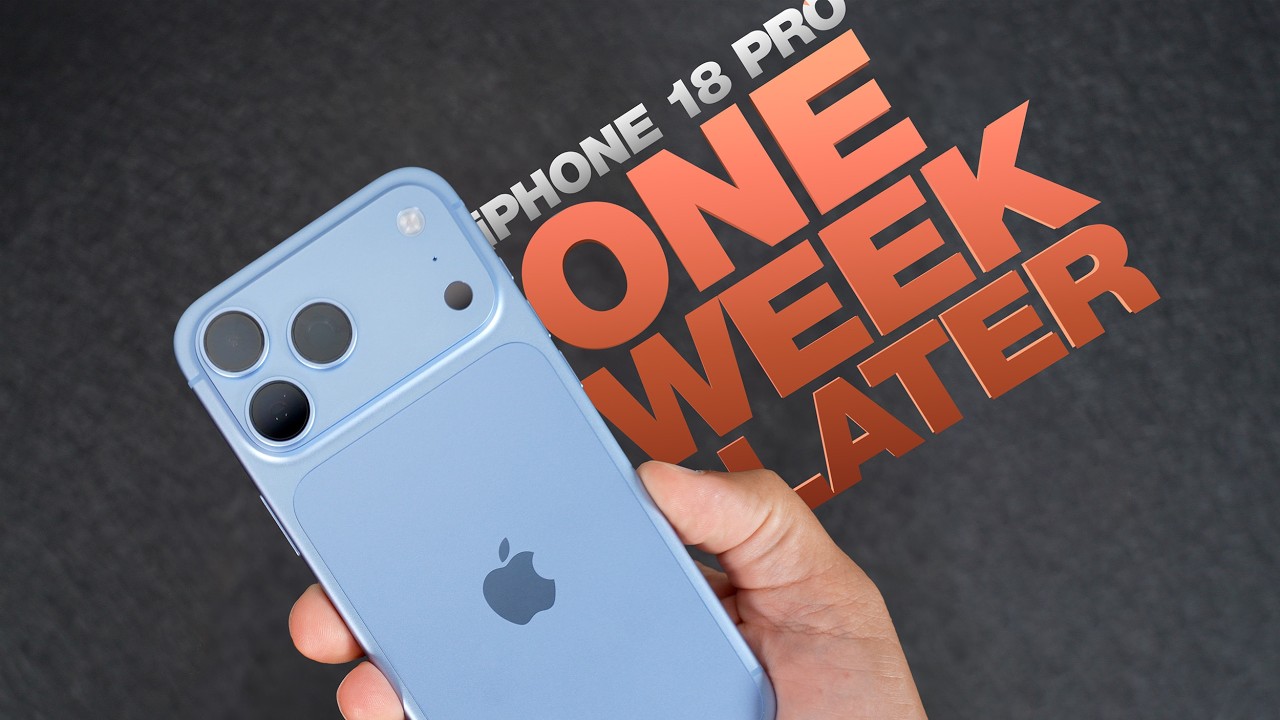
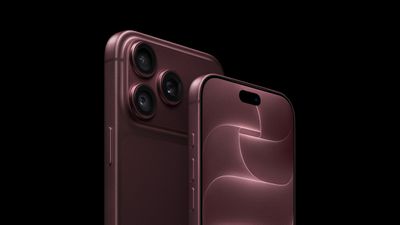
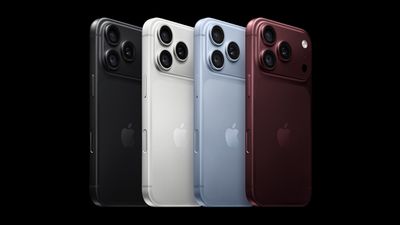
Sales of iPhone 18 Pro models in China were 12% higher in the three days after launching than sales of iPhone 17 Pro models were during their entire first week last year, according to Counterpoint Research.
The strong start helped Apple claim the top spot in the country's smartphone market for the week of September 14 to 20, handing it a 33% share. But the news could get even better for Apple's China market prospects this month: The iPhone Duo goes on sale October 23, and Chinese consumers have a much stronger appetite for foldable devices compared to the rest of the world.
Apple TV appears to be unavailable for some users, following a recent outage of Apple Services that began on September 30.
The original outage took down the App Store, Apple Fitness+, Apple Music, and several other services, but those are all now back online. Only Apple TV is still not working for an unknown number of users.
Apple's System Status page indicates an ongoing issue with Apple TV that started on September 30 at 4:43 p.m. Eastern Time. "Some users are affected," the page says, adding "Apple TV may be unavailable due to scheduled maintenance."
We'll update this article when the situation changes.
Microsoft today began disabling Exchange Web Services (EWS) by default in Exchange Online, which will cut off the protocol that Apple's Mail and Calendar apps on Mac still rely on to sync Microsoft 365 work accounts.
The cutoff has been on the cards for a fairly long time, as Microsoft stopped adding new features to EWS back in 2018, while in 2023 it announced that it would start disabling the protocol in Exchange Online from October 2026.
As Microsoft explains in the blog post linked above, organizations that have chosen to keep EWS running aren't affected for now. As for everyone else, the cutoff may not happen all at once. In a recently updated post from June, Microsoft described the change as a "phased rollout," so some Mac users could lose access sooner than others.
It's still possible for IT administrators to restore access. However, Microsoft plans to shut down EWS in Exchange Online permanently on April 1, 2027, and no extensions are currently planned.
As you'd expect, Apple is aware of the situation. In an Apple Platform Deployment support document, the company says it is "actively working with Microsoft" to move Mail, Calendar, Contacts, Notes, and Reminders apps on Mac to the newer Microsoft Graph API in a future macOS 27 update.
Except, that update hasn't arrived yet. Apple skipped macOS 27.1 betas entirely, while release notes for the macOS 27.2 betas have yet to make any mention of Graph support.
Meanwhile, affected organizations can just keep EWS running or move Mac users to a Graph-compatible client, such as Microsoft's Outlook app.
Note that the change will only affect Microsoft's cloud-hosted email server. In other words, companies that run their own Exchange servers aren't affected. Neither will iPhone and iPad be impacted, since they use Exchange ActiveSync rather than EWS.
Apple is working on a new smart home accessory that will serve as a hub for interacting with Siri AI, controlling HomeKit devices, watching videos, checking the calendar and the weather, and generally offering up useful information to everyone in the household.
This guide aggregates everything that we know about Apple's smart home hub.
Design
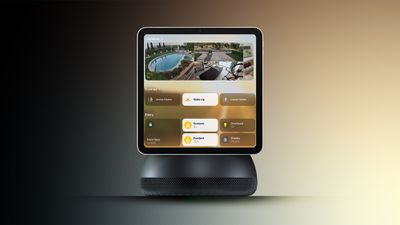
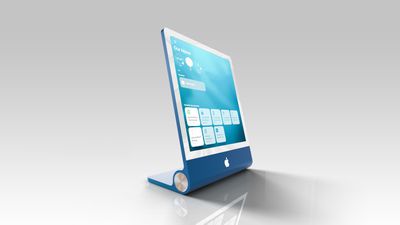
Apple's smart home device will somewhat resemble an iPad, and it will have a display-focused design. It is expected to be square rather than rectangular, and it will measure in at 6 inches with quarter-inch black bezels around the edges.
In terms of size, it will look similar to two iPhones that are side-by-side, and it will be about as thick as an iPhone. Apple imagines people having multiples of the hub in different rooms of the house. The device will support touch input for opening apps and controlling connected devices.
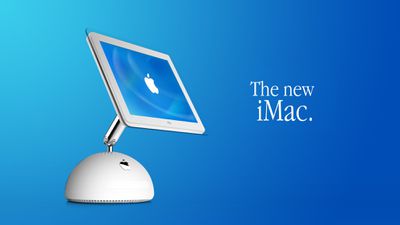
Apple is making two versions of the home hub. One will have a 6-inch display and is meant to be mounted on the wall, and the second version has the same 6-inch display and a hemispherical speaker base that looks similar to the iMac G4. The display attaches to the base with a polished metal arm that holds the small screen and allows it to be tilted forward or backward. The base features speaker hole perforations and a rubber bottom for stability.
The original iMac G4
The wall-mounted version will have a thin square base for the speakers and the mics, and it will sit flush against the wall. Both models will have a 1080p camera on the front for FaceTime calls, authenticating users, and recognizing different people in the home. Apple is planning to release the hub in a gray aluminum finish.
The device has no internal battery and is instead meant to be used while connected to power via USB-C.
Sensors
The smart home hub will be able to determine how close a person is standing to it, adjusting features from there. When no one is nearby, for example, it might show the temperature, but as someone approaches, it could shift to an interface for adjusting the thermostat.
Person detection will likely allow it to be used in smart home automations for doing things like turning on the lights when someone enters a room. The sensor will be able to tell one person from another, and it could recognize hand gestures for longer-range control.
Facial recognition
The home hub will use a Face ID-like feature along with voice for authentication and to identify who is in a room. With the recognition features, the home hub will be able to switch to the profile for the person in the home who is interacting with the device. Each user will have a customizable profile and interface with options to change profiles through the Control Center.
The camera won't be as accurate as Face ID, so voice is an alternative. Apple's HomePod also uses voice recognition for some personalized features. Users will be able to set up secondary authentication with an iPhone for more security, and a visitor mode will hide personal information.
Rumors suggest there is a Mac-style edge light around the screen to offer lighting so the device can identify people in the dark.
Chip
Apple's smart home accessory is expected to use an A18 chip or better for Apple Intelligence support. Given that Apple Intelligence requires 8GB RAM minimum, it will have at least 8GB RAM.
Operating System
Apple's home hub will run an operating system that Apple refers to as "Charismatic" internally, though it could be called homeOS when it launches. It's going to use elements from tvOS, watchOS, and iOS, and it will sync with the iPhone for setup purposes.
Interface
Apple does not plan to create a dedicated App Store for the home hub, but it will come with several apps pre-installed. The main view will be a customizable home screen with widgets that can show the weather, important home controls, photo slideshows, upcoming events, and more. A built-in camera will scan the face of each user, bringing up different apps and a Home Screen for each person.
The interface is something like a cross between watchOS and the iPhone's StandBy mode, with a heavy focus on clock faces and photo slideshows when the device is idle. The Home Screen will feature Apple Watch-like icons, but the apps will have an iPad-like design with a two-panel layout. There will be familiar customization options like pressing and holding to rearrange icons and swiping up to get to the app launcher.
There will be a Widget Gallery that suggests widgets from a linked iPhone. Widgets shown on the device from an iPhone that's connected will only display widget content when the primary user is in the home. A Smart Stack will be available to intelligently rotate through different widget options throughout the day, and the clock will be customizable with a Face Gallery.
The hub will adopt the visual aesthetic of Siri AI, with darker design elements. A software-based dock will be available for launching apps, and the hub will be built around Siri AI.
Apps
Several Apple apps will be installed even though there won't be a dedicated App Store. Apps that are rumored:
The hub will support integration into HomeKit scenes alongside other smart home products, and it will play videos, so it can be used for things like following along with a recipe when in the kitchen.
Intercom
More than one of the devices can be used throughout the home, and two or more can serve as room-to-room intercoms.
AirPlay
With its built-in speakers, the device will support music playback and it will be able to work as an AirPlay receiver.
homeOS Trademark
Apple appears to be using a shell company to trademark "homeOS" in several countries around the world, with the trademarking kicking off in October 2024. Apple has secured the homeOS trademark in Liechtenstein, and trademarks are pending in the U.S., Argentina, Peru, and more.
Future Smart Home Accessories
Apple is creating an indoor security camera that will connect to the home hub, and it's rumored for 2027. Privacy would be a focus, providing an alternative to cameras from companies like Ring and Nest.
Pricing
Apple's home hub could be priced somewhere around $350, which would make it more expensive than competing products like the Amazon Echo Show.
Launch Date
Apple's smart home hub is rumored to be debuting on October 13 alongside a new Apple TV 4K and a new HomePod mini.
Apple's rumored smart home hub will have different faces users can choose from, some of which are similar to StandBy screens planned for the iPhone Duo. Leaker pdfu shared setup screens of the Photo Face said to be for Apple's upcoming home product.
Based on the images, users can select from different photo collections, memories, or shared albums for the Photo Face, and those photos will be shown on the device's display. Photos are pulled from iCloud, so iCloud Photos needs to be turned on for it to work. Users will be prompted to set up the Photo Face when activating the device.
Pdfu says the Photo Face for the hub is the same as the Photo Face coming to the iPhone Duo, and that could explain why Apple hasn't made the iPhone Duo's StandBy mode available in the Xcode simulator yet.
This is the first visual of a home hub face we've seen. The hub is expected to have a 6-inch screen, and it will look similar to an iPad except for the square shape and the base. The hub is rumored to have an iMac G4-like half-dome metal base that connects to the display with an arm.
Prior rumors have said the home hub won't have a full App Store, but it will support apps and widgets like Calendar, Weather, Music, Messages, Reminders, and more. The device will be able to tell when someone is approaching it, and can distinguish between people in the home to show different widgets for each user. It makes sense for the hub to display a StandBy-like interface when it is not in active use.
There will be multiple idle display options to choose from, just like there are now when using the iPhone in StandBy mode. Earlier today, Bloomberg said the home hub interface is "built heavily" around clock displays and photo slideshows, so the Photo Face will likely be an integral part of the device's software.
The free Apple Invites app for the iPhone was updated today with three new features: shared albums now support full-resolution photo sharing, Image Playground now lets you create photorealistic backgrounds for invites, and guests who need to verify their email can now tap a link in their inbox instead of entering a code.
Released in February 2025, the Apple Invites app makes it easy to invite people to events, such as birthday parties and baby showers. The ability to create an event in the app requires subscribing to an iCloud+ plan with at least 50GB of storage for $0.99 per month, but anyone who receives an event link can RSVP for free on any device.
Apple's full release notes for version 1.12.0 of the app:
• Shared Albums now support full-resolution sharing, so you can relive every moment in stunning detail right in the app. Anyone, including users without an Apple device, can join and contribute.
• Image Playground now lets you create high quality backgrounds in pretty much any style, including photorealistic, so your invite captures exactly the vibe you have in mind.
• Guests who need to verify their email can now tap a link in their inbox instead of entering a code, making it even easier to get into an event.
• This update contains bug fixes and performance improvements.
Earlier this week, Daring Fireball's John Gruber floated Tuesday, October 13 as a potential date for Apple to hand out iPhone Duo review units to selected reviewers in person, and it appears that he might have been on to something.
Bloomberg's Mark Gurman today reported that Apple plans to unveil its all-new smart home hub, a second-generation HomePod mini, and a new Apple TV 4K model on October 13, the same date that Gruber mentioned in his speculative piece a few days ago.
In a separate post, Gruber opined that there is "no way" that Apple would unveil the home hub through an Apple Newsroom announcement only, given it is an all-new device with an all-new interface. "If this is coming, it has to be unveiled with a keynote video and some sort of media event with hands-on demos," he said.
If Gruber is right that the home hub "has to be unveiled with a keynote video," that would set the stage for an online-only Apple Event that would be streamed on Apple's website and YouTube on October 13. Afterwards, Apple would likely hold a hands-on experience for the media, allowing them to demo the products that were announced.
The same thing happened in October 2023. On October 24 that year, Apple announced that it would be holding an online-only Apple Event on October 30, which was streamed on Apple's website and YouTube. Later that day, Apple allowed selected journalists and content creators to go hands-on with the Macs unveiled during the event in person.
During the hands-on experience, selected individuals could also receive an iPhone Duo review unit in hand, allowing Apple to avoid a first-of-its-kind iPhone getting lost in the mail before it launches on Friday, October 23. Apple typically gives out review units around a week before a device launches, so the timing would line up.
In any case, mark your calendars, as it sounds like October 13 will be a big day for Apple.
If there is an October 13 event, expect Apple to announce it by next week.
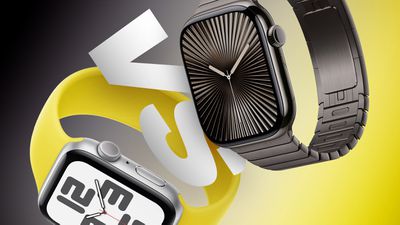
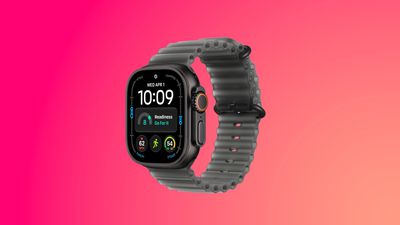
The Apple Watch SE 3 starts at $249, while the Apple Watch Series 12 starts at $399. The $150 difference buys a more advanced health sensing system, a larger display, longer battery life, and more options for tracking training and recovery.
The two watches still share many features, including an always-on display, wrist temperature sensing, sleep apnea notifications, retrospective ovulation estimates, 5G connectivity on cellular models, media playback, and 64GB of storage. Our guide helps to answer the question of how to decide which of these two Apple Watch models is best for you. The differences between the two models are as follows:
Apple Watch SE 3
Apple Watch Series 12
Same design as Apple Watch Series 4, 5, and 6
Refined design with a thinner casing, display with more rounded edges and a wider aspect ratio, and front glass that extends further over the sides for a higher screen-to-body ratio
40mm or 44mm case
42mm or 46mm case
Aluminum case
Aluminum, titanium, or ceramic case
40mm: 40 by 34 by 10.7mm 44mm: 44 by 38 by 10.7mm
42mm aluminum/titanium: 42 by 37 by 9.7mm 46mm aluminum/titanium: 46 by 40 by 9.7mm 42mm ceramic: 43 by 37 by 9.85mm 46mm ceramic: 47 by 41 by 9.85mm
Aluminum GPS weight: 26.3 grams (40mm) or 32.9 grams (44mm)
Aluminum GPS weight: 32.2 grams (42mm) or 39.5 grams (46mm)
Ion-X front glass
Ceramic Shield 2 front on aluminum models; sapphire crystal front on titanium and ceramic models
HomePod playback controls and proximity-based media suggestions with a compatible Ultra Wideband HomePod
Up to 18 hours of normal use
Up to 24 hours of normal use
Up to 32 hours in Low Power Mode
Up to 38 hours in Low Power Mode
Up to 7 hours of workout tracking
Up to 10 hours of workout tracking
Charges from 0 to 80% in about 45 minutes
Charges from 0 to 80% in about 30 minutes
15 minutes of charging for up to 8 hours of normal use
15 minutes of charging for up to 12 hours of normal use
8 minutes of charging for up to 8 hours of sleep tracking
5 minutes of charging for up to 10 hours of sleep tracking
Midnight and Starlight aluminum finishes
Dark Bronze, Light Gold, Black, and Space Gray aluminum finishes
Radiant Gold and Natural titanium finishes
Pearl White and Night Blue ceramic finishes
Silver and Radiant Gold titanium Hermès models
40mm: $249 GPS or $299 GPS + Cellular 44mm: $279 GPS or $329 GPS + Cellular
Aluminum 42mm: $399 GPS or $499 GPS + Cellular Aluminum 46mm: $449 GPS or $549 GPS + Cellular
Titanium models start at $699; ceramic models start at $899
If you mainly want a smart watch for notifications, standard workout and sleep tracking, and an always-on display, the Apple Watch SE 3 remains the better value. Although it is now a year old, it still represents excellent value for money at $249, offering most of the Apple Watch's core features for $150 less than the entry-level Series 12.
The Apple Watch Series 12 has a much stronger case for anyone who uses their device to follow health and recovery trends. Its new Health Sensing System enables frequent heart rate readings, Recovery HRV, and a Readiness score that draws on recent activity, training load, vitals, and sleep. ECG, blood oxygen monitoring, and hypertension notifications add further capabilities unavailable on the Apple Watch SE 3.
Battery life may be a decisive factor. The Apple Watch Series 12 is rated for six more hours of normal use and three more hours of outdoor workout tracking. It also charges faster, which is particularly useful if you wear your watch overnight for sleep tracking.
The Series 12 also offers a larger and brighter display, which makes a noticeable difference in daily use, along with 5GHz Wi-Fi, Precision Finding for a misplaced iPhone, and premium titanium and ceramic case options. Its Audio Intelligence features include Siri Recap, Sound Recognition, and always-on Shazam.
If you prefer the Series 12's broader health tracking capabilities, longer battery life, display advantages, or luxury case options, the extra cost is justified. If those features are unlikely to change how you use or appreciate your watch, the Apple Watch SE 3 is the more economical choice.
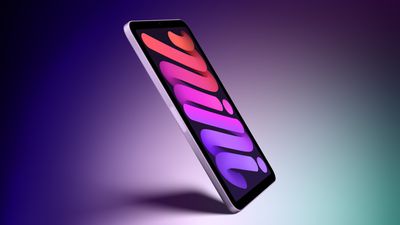
Last week, our exclusive leak revealed that the next-generation iPad mini will feature Apple's latest A20 Pro chip, a landscape front camera, and a redesigned speaker system, but that is not all, as plenty of other upgrades have been rumored.
Here are 10 new features and changes expected for the iPad mini 8:
Apple's latest A20 Pro chip, manufactured with TSMC's advanced 2nm process. Expect up to around 1.5× faster CPU performance and up to around 2.5× faster GPU performance compared to the A17 Pro chip in the current iPad mini. A20 Pro also introduces a "dual 16-core Neural Engine" for a total of 32 cores.
With the A20 Pro chip, the next iPad mini will have 12GB of RAM, up from 8GB of RAM in the current model. This means the device will support the ability to customize the pace and expressiveness of Siri AI's voice.
OLED display with better overall image quality compared to the current LCD model, thanks to richer colors and higher contrast ratio with true blacks.
Slimmer bezels around the display compared to the current model.
Landscape front camera, meaning the camera will be in the right bezel instead of the top bezel when holding the device in an upright position.
Apple's custom-designed N1 chip with Wi-Fi 7 and Bluetooth 6 support.
Apple's custom-designed C1X or C2 modem for cellular configurations.
A redesigned speaker system with no speaker holes and potentially an iPhone earpiece-like speaker in the top bezel.
IP-rated water resistance for the first time.
Apple is expected to announce the iPad mini 8 this year, with an October launch most likely. In the U.S., the current iPad mini starts at $599 after receiving a $100 price increase in June, which Apple attributed to skyrocketing RAM and storage chip prices. With a costlier OLED display, the next model might be even more expensive.
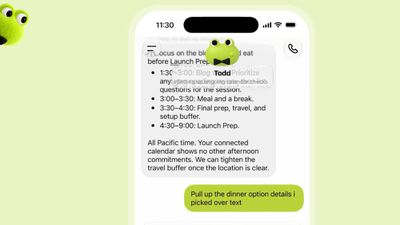
DoorDash is inviting U.S. customers to join a waitlist for an AI assistant that can take food orders through Apple's Messages app (via Bloomberg).
The phone number used in the conversation connects the request to a customer's DoorDash account. The assistant can use previous purchases and preferences to help put together an order, then use a saved payment method at checkout. Customers can also view food photos in the chat or send a picture of their fridge for recipe ideas and suggestions for missing ingredients.
The service builds on Ask DoorDash, which launched inside the DoorDash app in June. DoorDash describes the message assistant as a pilot for select U.S. account holders and advises users to check their carts before paying because the AI can make mistakes.
To join the beta waitlist, U.S. iOS users can enter their phone number at doordash.com/text and select Continue. DoorDash says Android support is coming soon.
Amazon today is taking up to $150 off the M5 MacBook Air, with discounts on both 13-inch and 15-inch models. These remain the best prices we've seen on the M5 MacBook Air in the wake of Apple's summertime price hikes.
Note: MacRumors is an affiliate partner with Amazon. When you click a link and make a purchase, we may receive a small payment, which helps us keep the site running.
Amazon has the 16GB/1TB 13-inch MacBook Air for $1,449.00, down from $1,599.00. This one is available in Sky Blue, and it's accompanied by two discounts on the 15-inch M5 MacBook Air.
If you're on the hunt for more discounts, be sure to visit our Apple Deals roundup where we recap the best Apple-related bargains of the past week.
Deals Newsletter
Interested in hearing more about the best deals you can find in 2026? Sign up for our Deals Newsletter and we'll keep you updated so you don't miss the biggest deals of the season!
Bloomberg's Mark Gurman today briefly mentioned that "Apple aims to eventually update its larger HomePod," assuring that the company remains committed to the full-sized speaker, which was discontinued in 2021 and reintroduced in 2023.
The report said a new HomePod mini, new Apple TV 4K, and an all-new Apple smart home hub will all be announced on Tuesday, October 13, but it sounds like a new version of the full-sized HomePod will not be unveiled until a later date. If and when it does finally arrive, expect support for the more intelligent Siri AI to be a key new feature.
Siri AI support would require a faster chip—the current HomePod uses the Apple Watch Series 7's S7 chip. Other likely upgrades include improved audio quality, new color options, and Apple's custom-designed N1 chip with Wi-Fi 7 and Bluetooth 6 support.
The full-sized HomePod is a relatively niche product, but it is a convenient choice for Apple fans with home theater setups. A pair of HomePods can be set as an Apple TV 4K's default audio output, allowing for stereo sound.
In June, Apple raised prices on more than a dozen products, including the full-sized HomePod. In the U.S., the current model is now priced at $349, up from $299 when it was released in 2023. The first-generation HomePod was initially $349 too when it launched in 2018, so the speaker's pricing has come full circle.
Apple apparently plans to expand the HomeKit platform with support for new categories of connected products. The company is also said to be working with third-party manufacturers on new devices designed for the Siri AI-powered smart home platform.
Apple's long-rumored smart home hub will have an iMac G4-style design and a host of unique features, Bloomberg's Mark Gurman reports.
The smart home hub is said to feature a square 6-inch display, with variants that can be placed on a countertop or mounted on a wall. It features a single FaceTime camera on the front, with microphones and speakers in its connected base. Gurman described the design as follows:
The hub is about as thick as an iPhone, and its display is surrounded by a quarter-inch, black bezel reminiscent of older iPads. It has rounded corners and no sharp edges. The device lacks a battery, so it has to be plugged in at all times, and there are no volume or power buttons.
The product comes in Apple's standard gray aluminum finish and includes a USB-C port for power. The screen sits above a metal, round base with multiple rings of perforated speaker holes and connects to it through a polished metal arm. Users can manually tilt the display forward or backward. And the base has a rubberized bottom to help it stay on a table.
The standard version looks reminiscent of the famous iMac G4 from 2002 that has a large display that sits on a half-dome-shaped base.
Apple has also developed a second version, code-named J491, designed to be mounted on a wall. It has a thin, square-shaped base beneath the display that houses the speakers and microphones. The base sits flat on the wall below the screen. This version also must remain connected to power through a USB-C cable.
Apple envisions customers placing several of the devices throughout their homes. Users will be able to control smart home devices, make video calls and intercom-style messages, play audio, and view slideshows of photos. The device will also be able to serve as an information hub for the kitchen, with the ability to watch videos and look up recipes with voice commands.
It will also be able to recognize who is speaking to it or approaching it, and display personalized content and answers accordingly. The interface will change automatically depending on who is using the device, and there will be a mode for visitors that hides personal information.
The smart home hub will identify users by their voice or facial recognition, but the latter system is said to be less reliable than Face ID, and users will be able to enable a secondary authentication method via an iPhone if they wish. The iPhone will also serve as a fallback solution for when the hub cannot identify a user correctly. In dark rooms, a Mac-style Edge Light feature will illuminate the area around the screen to help the camera recognize the user.
The device purportedly blends interface elements of the Apple Watch, Apple TV, and iPad. Siri AI continues to feature the same dark visual style used on other devices. iPhone-style widgets are available and users can choose a wallpaper and rearrange apps and widgets by pressing and holding them, just like Apple's other devices.
The UI is heavily built around slideshows and clock displays, similar to the revamped StandBy Mode on the iPhone Duo. One clock is said to resemble "a lava lamp with an overlay of the time that shows the hour in digital form with minutes listed below." Users can then swipe up from the clock screen or photos to open the app launcher.
The device will include many of Apple's most frequently used apps, including Calendar, Messages, Photos, FaceTime, Notes, Reminders, Music and Podcasts. The Home Screen features Apple Watch-style apps that open into iPad-style interfaces with multiple panels. For example, the Messages app has a two-panel layout like it does on the iPad. When a user taps a thread in their list of conversations, a second pane opens to display the conversation feed. This interface is said to carry over to many of the other default apps.
The device is reportedly set to be introduced on Tuesday, October 13, alongside new HomePod mini and Apple TV models.
Apple plans to introduce a series of new smart home products on Tuesday, October 13, according to Bloomberg's Mark Gurman.
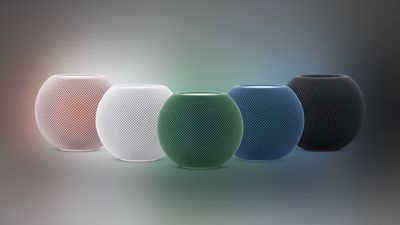
Apple reportedly plans to debut its long-awaited smart home hub device, a new HomePod mini, and a new Apple TV on the date. The new HomePod mini and Apple TV are set to retain their existing designs, but tout faster chips to support Siri AI. The new HomePod mini will also come in new color options, including pink and green.
All three products are set to showcase Siri AI, which apparently explains the delay in their launch. All three were originally planned to launch in 2024.
Apple plans to update the larger HomePod at a later date. A privacy-focused home security camera and sensor is also in the works; the device can detect which room a person is in and does not record video. Apple also continues to work on a higher-end version of the smart home hub, featuring a 9-inch display mounted on a robotic arm that can swivel 360 degrees.
Gurman set out a range of details about the smart home hub device in the report, which we've outlined in another article.
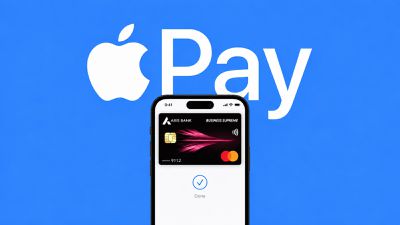
Apple Pay is now available in India, which means customers with an eligible card can add it to the Wallet app on iPhone and Apple Watch for contactless and online payments.
To use Apple Pay in India, users will need an Axis Bank credit card on the Visa or Mastercard network. Earlier today, TechCrunch reported that merchants and payment terminals will need to add Apple Pay support, so the service might not work at every contactless payment location.
RuPay, India's domestic card network, is not compatible with Apple Pay. Major banks such as HDFC Bank, ICICI Bank, and SBI Card have not added support either.
There have been rumors about Apple Pay expanding to India for about a decade, but regulatory issues made it difficult. India already has a popular digital payment option, the Unified Payments Interface (UPI). UPI is a state-backed payment system that allows funds to be transferred instantly between two bank accounts. UPI handles approximately 84 percent of India's digital transaction volume, and it does not work with Apple Pay.
OpenAI today announced the launch of "Dots" to compete with Meta's popular Muse agent. OpenAI describes Dots as always-on agents "built to handle everything."
Dots use the GPT–6 Astra model and have a cloud computer with a web browser, much like Muse. The agents learn from feedback over time, and OpenAI says they can work on the user's goals "24/7" and connect to over 4,000 apps. From the announcement:
You can ask questions, explore ideas, and give feedback along the way; or you can simply hop on a voice call when you need to talk something out. The more you work together, the more your dot learns your preferences, how you think, and what good looks like to you.
Users can communicate with Dots through ChatGPT or other apps like Slack or Teams, and options to text Dots are planned. Dots can carry context across different channels and will do "proactive research" on projects in the background. Dots follow ChatGPT's permissions and support custom rules for which tasks require approval.
Users can create a "primary dot" and name it starting today, with teams of Dots coming later. Dots are rolling out for Pro, Business Premium, and Enterprise plans in select markets, with other users to get access soon.
Eligible users get one Dot at no extra cost. Conversations with the agent don't count toward ChatGPT usage limits, but tasks will use plan allowances. Dots can be set up in the ChatGPT desktop app and accessed in the mobile app afterward.
OpenAI also introduced GPT–6.1 Sol today, which it says is a major upgrade to GPT–6 Sol with improvements in agentic coding, computer use, and professional work.
Apple's first foldable iPhone, with a book-style design featuring a 5.4-inch outer display and a 7.6-inch inner display with a minimal crease down the middle.














 Sales of iPhone 18 Pro models in China were 12% higher in the three days after launching than sales of iPhone 17 Pro models were during their entire first week last year, according to


 The original iMac G4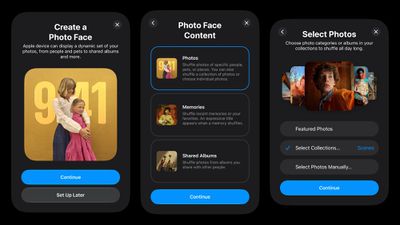

 Note: MacRumors is an affiliate partner with Amazon. When you click a link and make a purchase, we may receive a small payment, which helps us keep the site running.