Australia Considers Case for Opening iPhone NFC Chip to Third Party Payment Systems

Apple on Monday responded to questions from Australia's parliament about its third-party access approach to the NFC chip in its iPhones, following claims that its Apple Pay system is stifling innovation in the contactless payment technology space.
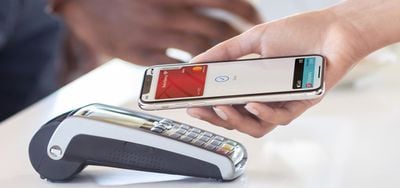
apple pay contactless terminal
The Parliamentary Joint Committee on Corporations and Financial Services heard for-and-against arguments from Apple, Google, and others relating to whether Apple should open up access to its near-field communication (NFC) chip. Australia's big banks have also sought open access to the NFC chip on the iPhone in recent years. However, in a written response to the committee, Apple said it "provides banks with access to NFC functionality on Apple devices" through ‌Apple Pay‌, which is "available to all banks in Australia on fair and non-discriminatory terms."

Apple has developed a technical architecture that comprises hardware and software components and application programming interfaces (APIs) that banks can use to facilitate contactless payments with their cards and mobile banking applications.

Apple chose to call this architecture Apple Pay because: (a) merchants need a simple way to communicate their acceptance of the service to consumers both in store and online, (b) Apple wished to facilitate consumer choice of payment method / bank by providing a consistent and simple experience, and (c) it allowed Apple to market the service to consumers without having to preference one bank over another.

According to ZDNet, Apple cited security as one of the reasons it doesn't support alternatives to ‌Apple Pay‌, comparing it to Google's HCE payment system which it claimed is an inherently less secure system with a worse user experience.

Host Card Emulation (HCE) is a less secure implementation, which was adopted by Android … Apple did not implement HCE because doing so would lead to less security on Apple devices. Google likely selected this implementation because Android software is used in a variety of hardware devices offered from many different companies other than Google, and therefore had to select a software-centric solution, even though it is less secure than a secure element-based implementation.

Apple, which offers a tight integration between the operating system and its own hardware, is able to offer a fully integrated solution that is superior to Android's approach.

In response, Google denied the allegation that it had made a security trade-off in implementing the HCE system.

"Our payments apps are immensely secure … our HCE system, which is used by a very large number of banks all around the world, is audited directly by the banks … we would refute the suggestion our HCE environment is in any way insecure," Google president of partnerships in the EMEA region Diana Layfield told the committee on Monday afternoon. "I would argue the user experience on Google Pay is equal to that of Apple Pay."

The Australian parliamentary committee is still considering the arguments submitted. Elsewhere, the EU is currently considering forcing Apple to open up its NFC payment technology, and earlier this year, Germany passed anti-money laundering legislation that requires Apple to grant payment service providers access to its technical infrastructure.

Popular Stories

maxresdefault

Apple Shows Off a Key Reason to Upgrade to the iPhone 17

Saturday February 7, 2026 9:26 am PST by
Apple today shared an ad that shows how the upgraded Center Stage front camera on the latest iPhones improves the process of taking a group selfie. "Watch how the new front facing camera on iPhone 17 Pro takes group selfies that automatically expand and rotate as more people come into frame," says Apple. While the ad is focused on the iPhone 17 Pro and iPhone 17 Pro Max, the regular iPhone...
apple wallet drivers license feature iPhone 15 pro

Apple Says These 7 U.S. States Plan to Offer iPhone Driver's Licenses

Monday February 9, 2026 6:24 am PST by
In select U.S. states, residents can add their driver's license or state ID to the Apple Wallet app on the iPhone and Apple Watch, and then use it to display proof of identity or age at select airports and businesses, and in select apps. The feature is currently available in 13 U.S. states and Puerto Rico, and it is expected to launch in at least seven more in the future. To set up the...
m5 macbook pro deal

Why You Shouldn't Buy the Next MacBook Pro

Tuesday February 10, 2026 4:27 pm PST by
Apple is planning to launch new MacBook Pro models as soon as early March, but if you can, this is one generation you should skip because there's something much better in the works. We're waiting on 14-inch and 16-inch MacBook Pro models with M5 Pro and M5 Max chips, with few changes other than the processor upgrade. There won't be any tweaks to the design or the display, but later this...
iOS 26

Apple Releases iOS 26.3 and iPadOS 26.3

Wednesday February 11, 2026 10:07 am PST by
Apple today released iOS 26.3 and iPadOS 26.3, the latest updates to the iOS 26 and iPadOS 26 operating systems that came out in September. The new software comes almost two months after Apple released iOS 26.2 and iPadOS 26.2. The new software can be downloaded on eligible iPhones and iPads over-the-air by going to Settings > General > Software Update. According to Apple's release notes, ...
Apple Logo Zoomed

Apple Expected to Launch These 10+ Products Over the Coming Months

Tuesday February 10, 2026 6:33 am PST by
It has been a slow start to 2026 for Apple product launches, with only a new AirTag and a special Apple Watch band released so far. We are still waiting for MacBook Pro models with M5 Pro and M5 Max chips, the iPhone 17e, a lower-cost MacBook with an iPhone chip, long-rumored updates to the Apple TV and HomePod mini, and much more. Apple is expected to release/update the following products...

Top Rated Comments

Porco Avatar
59 months ago
As with a lot of this stuff, if Apple were the only smartphone makers I would completely support the involvement of government and/or lawsuits to allow for fair competition. But they’re not, alternatives exist elsewhere and people buy iPhones understanding the choices and consequences (some good, some bad, mostly subjective). That is competition and choice.
Score: 34 Votes (Like | Disagree)
ruka.snow Avatar
59 months ago
Not fond of having the NFC chip compromised by any government or third party.
Score: 28 Votes (Like | Disagree)
alba_83 Avatar
59 months ago
This makes no sense to me; and I certainly have no sympathy for the banks.

In Australia, we have extremely widespread adoption of NFC/contactless payments. You can literally find yourself in shops that don’t take cash at this stage.

Some of the larger banks like NAB held out on using Apple Pay and now it seems they’re crying foul because it turns out it’s a wildly popular payment method and their own implementations are ridiculous (an NFC ring, anyone? I kid you not).
Score: 19 Votes (Like | Disagree)
59 months ago

It took years before the big four Australian banks and Apple could come to an agreement over Apple Pay. Although it’s been up and running for maybe a couple of years now, Apple users in Australia were years behind with the functionality enjoyed by Android users and in many other countries. If these actions lead to a further relaxation over NFC usage and the ability to use Myki mass transit cards with Apple, then it will be a good thing. At the moment, and for several years, Android users have been able to use an electronic Myki card on their phone for trains and trams. iOS users are still waiting for this functionality, with currently no rumours that it will ever be available.
Probably there is a cartel between banks in Australia, because I don't believe that out dozens or even hundred of banks and card issuers, not a single one is able to reach an agreement with Apple over Apple Pay implementation.

The Australian parliament should investigate that, instead of imposing anything on Apple IMO.
Score: 14 Votes (Like | Disagree)
59 months ago
If some of these ill informed governments carry on, it will stifle innovation and I don't say that in defence of Apple, but innovation in general.

When a company spends millions/billions developing products, and mindful of security, many customers use that as an indicator reason for their purchase.

If we take everything Apple away from Apple, then where is the motivation for development, for security, etc.

I do wonder sometimes if these government paper pushers have another agenda altogether, i.e. in making technology less secure and less private, to enable more and more intrusion into everyone's lives.

Consumers CHOOSE what to buy, and they know what they are buying. I don't want some government no name fighting a corner in my name, when its not what I want, and not what many customers want.

Now when it comes to taxation, that's a different story....don't let any of the IT behemoths get away with paying negligible taxes, but leave them to develop their products, when governments can in many cases even get a decent computer system up and running in their own governments!
Score: 14 Votes (Like | Disagree)
unsynaps Avatar
59 months ago
You know. I always have to look at this stuff in a particular way that makes me go WTF.

You release a product. It's a superior product. Other people try to make same product, but their version is anything from crap to not good enough. They go out of business. Superior product remains unchallenged because they are well a superior product, and no one can seem to make one better.

Monopoly because of their own success. Just sounds stupid to me.
Score: 14 Votes (Like | Disagree)