An alleged solder joint diagram for Apple's A20 Pro chip suggests the processor will deliver a number of significant upgrades, including a seven-core GPU, a wider memory interface, and a larger L2 cache for its efficiency cores.
The claims come from a Weibo user who says the layout was reconstructed by mapping the chip's solder ball positions and overlaying them with die level images to sketch out where each block of the processor sits. According to the post, the resulting outline points to a two and four core CPU configuration and a seven core GPU, with the top of the die housing the GPU and the CPU occupying the center.
Based on the layout, the leaker expects the A20 Pro's efficiency cores to share an 8MB L2 cache, up from 6MB on the A19 Pro, while the performance cores retain their existing 16MB L2 cache. The size of the shared system level cache is not yet known, but the leaker believes it is unlikely to shrink given the chip's new image signal processor and neural engine.
With regards to the GPU, the seven core configuration would mark an increase from the six cores on the A19 Pro, a jump of roughly 16%. The leak also points to a 96-bit memory interface for LPDDR5x RAM, up from the 64-bit interface on the A19 Pro, a 50% increase that would meaningfully boost memory bandwidth. Graphics performance tends to scale with memory bandwidth, so the wider bus could have an additional impact on top of the additional GPU core.
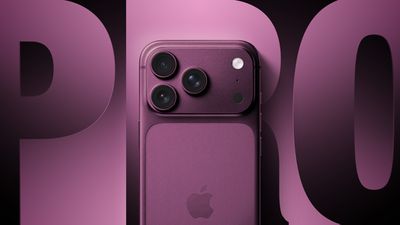
The A20 Pro is highly likely to debut the iPhone 18 Pro and iPhone 18 Pro Max next week. It could also be used in Apple's first foldable iPhone.
Less than a week before Apple debuts new iPhone 18 Pro models, research firm TrendForce estimated the prices of the devices based on the latest hardware cost environment.
TrendForce's price estimates compared to last year's models look like this:
Model
Starting Price
Model
Starting Price
Change
iPhone 17 Pro
$1,099
iPhone 18 Pro
$1,249-$1,299
+$150 to +$200
iPhone 17 Pro Max
$1,199
iPhone 18 Pro Max
$1,349-$1,399
+$150 to +$200
Apple is likely to raise iPhone 18 Pro and iPhone 18 Pro Max prices by around 10-20% compared to last year's Pro models, according to the firm. Taking TrendForce's June forecast of a 14-18% increase, which fits within its latest broader 10-20% range and translates more neatly to Apple's typical pricing scheme, we could see the iPhone 18 Pro starting price jump to between $1,249-$1,299 and the iPhone 18 Pro Max between $1,349-$1,399.
Meanwhile, TrendForce expects prices for Apple's first foldable iPhone (aka "iPhone Duo") to start anywhere between $2,099-$2,299, with the highest storage option potentially exceeding $3,000. The latest on the subject from Bloomberg's Mark Gurman is that the foldable iPhone will have a $2,000 starting price for the 256GB storage option, with the top storage tier potentially reaching $3,000.
The regular iPhone 18 model is not expected to debut until spring 2027. Nevertheless, TrendForce expects the same general 10-20% price increase to apply to that device as well.
The overriding reason for the price increases is memory costs. TrendForce says the cost of a 256GB memory chip has risen nearly 400% year-on-year, while its separate analysis puts the overall bill of materials (BOM) for a 256GB Pro model at around 38% more over the same period. That said, Apple is expected to absorb some of that increase via lower margins, rather than passing the full cost onto consumers.
Last year, Apple managed to avoid raising the price of the iPhone 17 Pro Max, and only marginally raised the iPhone 17 Pro price in the U.S. year-on-year by $100. This year, however, the insatiable AI infrastructure buildout has made memory costs even more expensive, effectively holding the rest of the electronics industry to ransom. And things don't look like they're going to get any better anytime soon.
We will find out the real prices during Apple's "Surprise and shine" event on Wednesday, September 9. The event stream starts at 10:00 a.m. Pacific Time.
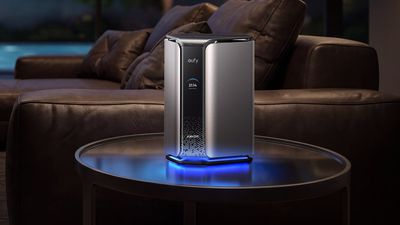
Anker today announced the launch of Anker MindBase, an AI home hub meant to work with almost 100 Anker devices and Matter-enabled smart home devices from other companies. It works alongside HomeKit, and is equipped with an AI Core compute card and the on-device Anker TrueSmart AI Agent.
In addition to working as a smart home hub, the MindBase supports up to 48TB of local storage, and it functions as a NAS. It can be used for storing files, photos, and videos locally. MindBase integrates with Anker security cameras, and Anker plans to sell a MindBase Security Kit that includes a new TrackLight Cam S1, S4 Video Doorbell, and Smart Security Shield sensor.
Anker says on-device AI evaluates events in real time to assess risk and respond through observation, lighting, verbal warnings, or active deterrence. The sensor can be placed at the edge of a property, using radar to detect strangers from up to 15 meters away.
Anker is also debuting several new home security products.
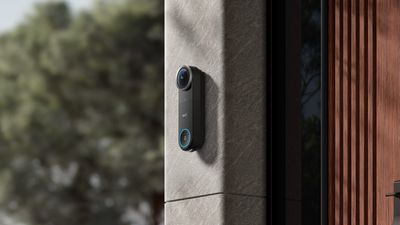
Eufy Video Doorbell S4 - The Video Doorbell S4 is a wired doorbell and security camera combo. It has a 9-megapixel lens with 3K resolution and a 180-degree field of view.
Eufy Window Camera E10 - The E10 is a camera that mounts on the inside of a window for use in rentals. It has a 25-degree adjustable tilt with anti-glare optics, and it records in 2.5K resolution.
Eufy Fall Detection Sensor - The Fall Detection Sensor is a non-wearable sensor that uses mmWave radar sensing to detect falls without using a camera. It can be mounted on the wall and supports two-way communication.
Eufy NVR Security System E50 - The E50 pairs an 8-channel network video recorder with four hybrid bullet pan-tilt-zoom dual-lens camera. There's a 2K resolution wide-angle bullet lens and a motorized 4K resolution PTZ lens.
The E50 system is available on the Eufy website starting at $999. The Video Doorbell S4 is priced at $300 and will be available in late September. The Window Camera E10 will be available later this year for $70. Availability and pricing have not yet been announced for the MindBase and Fall Detection Sensor.
It is apparently not a good day for AI chatbots, as ChatGPT, Claude, and Grok are all down or experiencing issues for many users.
OpenAI's status page acknowledges issues across ChatGPT and Codex, while Grok's website notes that it is currently experiencing issues as well. Likewise, Anthropic's status page indicates Claude is experiencing elevated errors.
All of the companies are investigating the outages.
Update: The chatbots are in the process of coming back online.
Govee today introduced three new lighting products, including theSky Ceiling Light, COB Strip Light 2 Pro, and Permanent Outdoor Lights 2 Pro.
Govee says the $400 Matter-enabled Sky Ceiling Light is a "mood-responsive" light that uses AI Lighting Bot 2.0 to set the color of the light based on the user's mood or request. The light has a 478nm sky-blue spectrum for use indoors when daylight is limited, which Govee claims supports the body's "natural vitality and rhythm." It also offers white light across a 1,000K to 10,000K temperature range, with up to 7,000 lumens.
The $170 COB Strip Light 2 Pro displays custom light scenes using AI text prompts. Govee says users can curate ambient lighting for gaming, parties, movie nights, and more. The light strip has 1,344 LEDs and 16 ICs per meter, plus a triple-layer groove design for smooth output in single-color and multi-color modes.
Govee's Permanent Outdoor Lights 2 Pro feature a dual-layer design with two independently controlled ICs per light head, which allows the top and bottom zones to show different colors and effects at once. Like Govee's other lights, the Outdoor Lights 2 Pro can be controlled with AI Lighting Bot 2.0 and are priced starting at $500.
The Sky Ceiling Light and COB Strip Light 2 Pro will be available from Govee on September 4, while the Permanent Outdoor Lights 2 Pro will launch on September 7.
An original Apple–1 Computer could sell for between $500,000 and $800,000 when it is auctioned off this October.
There are fewer than 75 Apple–1 Computers known to exist, and a smaller number that are operational. The "Hatfield" Apple–1 is number 48 on the Apple–1 registry, and it is in working condition.
The machine was purchased by Fred Hatfield, a computer enthusiast and employee of Computer Data Systems. It is signed by Steve Wozniak and comes with a letter written to Hatfield and signed by Steve Jobs. Jobs authorized a trade-in for the newly released Apple II after Hatfield complained about the Apple–1 software, but Hatfield declined the offer because he would have needed to pay $400 for the upgrade.
Hatfield sold the Apple–1 in 2013 for $40,000. At the time, it was non-functional, but the buyer fixed it, got it signed by Wozniak, and sold it at auction for $671,400. It's now going up for sale again.
Steve Jobs and Steve Wozniak produced 200 Apple–1 computers in 1976. The device was originally offered as a bare circuit board to be sold as a kit and completed by hobbyists, but Jobs sold 50 fully assembled Apple–1 machines to California-based retailer The Byte Shop. The Byte Shop resold the assembled machines for $666.66.
The Hatfield Apple–1 will be available for public and private viewing at locations in Los Angeles, Boston, San Francisco, and New York, with dates and information listed on the auctioneer's website. Bids will be accepted from October 4 to October 14.
Functional Apple–1 computers have sold for over $900,000 at auction in the past, though pricing varies based on condition and provenance.
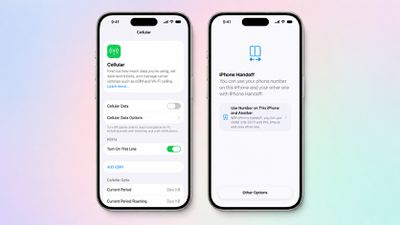
Apple has added a new "iPhone Handoff" feature to iOS 27 that will allow you to switch between two iPhones while using the same phone number on each device.
This functionality was briefly mentioned during the WWDC 2026 keynote in June, on a slide that listed hundreds of new features coming in iOS 27 and corresponding software updates, but Apple never shared any further details at the time.
MacRumors forum member pdfu today shared a video that demonstrates how the feature will work, using two simulated iPhones running in Xcode 27's Device Hub.
"iPhone Handoff" can be set up from the Settings app, under the Cellular menu. During the setup process, you can choose which iPhone you want to be the main device that you use most often and which one you want to be the companion device.
Apple says a user's main eSIM will remain on the main iPhone, while the companion iPhone will receive a companion eSIM, and this will enable you to switch between the devices back and forth while using the same phone number.
All cellular settings are managed on the main iPhone, and location sharing is based on whichever iPhone is actively using the phone number.
In addition to needing two iPhones running iOS 27, "iPhone Handoff" will seemingly require carrier support. The forum post mentions that T-Mobile in the U.S. and Deutsche Telekom in Germany might be among the first carriers to offer the feature.
Following three months of beta testing, iOS 27 is expected to be released later this month, so we will likely hear more about this feature soon.
Apple today shared a short video featuring an Apple Watch user named Amanda who says her device saved her life.
In 2024, Amanda began receiving alerts about an abnormal heart rate. Her watch alerted her about changes to her resting heart rate and her overnight vitals, prompting her to visit her doctor.
She ended up being diagnosed with acute myeloid leukemia, an aggressive cancer. After treatment, she is in remission.
"I absolutely believe that if it wasn't for my Apple Watch, I wouldn't be talking to you," she said.
The Apple Watch regularly monitors heart rate and can send alerts when a high heart rate is detected during rest. It also notes low heart rates and irregular heart rhythms, plus the ECG app can detect atrial fibrillation.
Recently, Daring Fireball's John Gruber resurfaced an old tip that lets you quickly access the settings menu for the currently opened app on your iPhone. If you find it a hassle digging through the Settings app to find the associated app menu, this solution saves you the bother.
It uses a simple Shortcut – made conveniently downloadable courtesy of Quinn Nelson – that you can add to Control Center (or better yet the Action button) by using the "Run Shortcut" control. We couldn't not highlight it here because it's so useful.
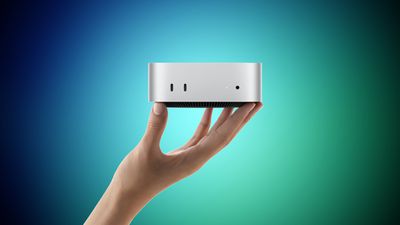
Amazon has introduced the first cash discounts on Apple's brand new Mac mini, with discounts including two of the M6 models as well as the M5 Pro model. All of these deals are pre-order discounts on the 2026 Mac mini, which officially launches on September 22.
Note: MacRumors is an affiliate partner with Amazon. When you click a link and make a purchase, we may receive a small payment, which helps us keep the site running.
You can get the 16GB RAM/256GB SSD Mac mini for $879.99, down from $899.00, and the 16GB RAM/512GB SSD model for $1,069.99, down from $1,099.00. Both of these devices come with the new M6 chip, and Amazon also has $29 off the M5 Pro Mac mini right now.
In terms of upgrades, Apple said the Mac mini with the M6 chip delivers up to 40% faster CPU performance, up to 4× faster performance for AI tasks in particular, up to 2× faster graphics performance, and up to 2× faster storage speeds compared to the previous-generation model with the 10-core M4 chip, 32GB of unified memory, and 2TB of storage.
If you're on the hunt for more discounts, be sure to visit our Apple Deals roundup where we recap the best Apple-related bargains of the past week.
Deals Newsletter
Interested in hearing more about the best deals you can find in 2026? Sign up for our Deals Newsletter and we'll keep you updated so you don't miss the biggest deals of the season!
Starting today, Oklahoma residents can add a digital version of their driver's license to the Apple Wallet app on the iPhone and Apple Watch. The digital ID can be used to display proof of identity or age at TSA checkpoints in select airports, at select businesses, and in select apps, but the number of places where it is accepted is still quite limited.
Oklahoma is the 16th state to implement support for Apple Wallet IDs in the U.S., joining Arizona, Arkansas, California, Colorado, Georgia, Hawaii, Illinois, Iowa, Maryland, Montana, New Mexico, North Dakota, Ohio, Virginia, and West Virginia. The feature is also available in Puerto Rico and works with Japan's My Number Card.
Apple has also been preparing for the feature to go live in North Carolina and Utah in the coming months, and years ago it announced that Connecticut, Kentucky, and Mississippi were committed to launching the feature at some point.
To set up the feature, open the Wallet app on the iPhone and tap on the plus sign in the top-right corner. Next, tap on Driver's License and ID Cards, select Oklahoma from the list, and follow the on-screen steps to complete the process. Then, you can present your digital ID where it is accepted without handing over your device.
You can present an Apple Wallet ID where accepted by simply tapping your iPhone or Apple Watch on an identity reader. Then, you will be able to view the specific information being requested by the TSA or business. Only after authorizing with Face ID or Touch ID is the requested identity information released from your device.
As mentioned, you do not need to unlock, show, or hand over your device to present an Apple Wallet ID in person, ensuring user privacy.
Apple Wallet IDs are generally not accepted by law enforcement, so carrying a physical ID is still legally required for traffic stops. In addition, the number of businesses that accept Apple Wallet IDs is still quite small. At least for now, Apple Wallet IDs are designed to be a convenient alternative where they are accepted.
Apple Wallet IDs are accepted at TSA checkpoints in more than 250 airports across the U.S. for domestic travel, according to Apple.
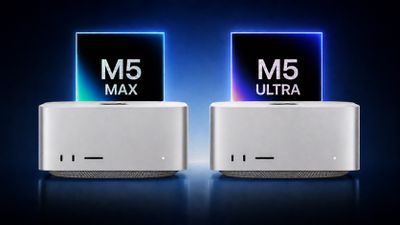
Apple last week announced two new Mac Studio models, with one built around the M5 Max chip and one around the all-new M5 Ultra chip, replacing the M4 Max and M3 Ultra models that had been on sale since March 2025.
The gap between the two is unusually wide this time. Mac Studio with M5 Max starts at $2,499, holding the price Apple set when it raised Mac prices in June, while Mac Studio with M5 Ultra starts at $5,499, a further $200 increase on the post-June M3 Ultra price and $1,500 above what the M3 Ultra cost at launch.
That makes the premium $3,000 before any configure-to-order options, and memory and storage upgrades are more expensive than usual because of the memory chip shortage. Our guide helps to answer the question of how to decide which of these two Mac Studio models is best for you. The shared features include:
An identical enclosure measuring 3.7 inches tall and 7.7 inches wide
Neural Accelerators built into every GPU core, and hardware-accelerated ray tracing
Hardware-accelerated H.264, HEVC, ProRes, and ProRes RAW, plus AV1 decode
A next-generation SSD architecture that Apple says is up to twice as fast as before
Thunderbolt 5 with up to 120Gb/s of bandwidth, and clustering of multiple systems using RDMA (remote direct memory access)
10Gb Ethernet, HDMI, and an SDXC card slot (UHS-II)
Wi-Fi 7 and Bluetooth 6 via the N1 chip, both new to the Mac Studio
Genlock over USB-C for synchronization with professional camera capture
A 3.5mm headphone jack with support for high-impedance headphones
Here is everything that differs between the two models:
Mac Studio (M5 Max)
Mac Studio (M5 Ultra)
Starts at $2,499
Starts at $5,499
M5 Max chip
M5 Ultra chip
18-core CPU with 6 super cores and 12 performance cores
Up to 36-core CPU with 12 super cores and 24 performance cores, from 30 cores
Up to 40-core GPU, from 32 cores
Up to 80-core GPU, from 64 cores
16-core Neural Engine
32-core Neural Engine
Up to 614GB/s memory bandwidth
1.2TB/s memory bandwidth
36GB, 48GB, 64GB, or 128GB of unified memory
96GB, 256GB, or 512GB of unified memory
512GB, 1TB, 2TB, 4TB, or 8TB of storage
1TB, 2TB, 4TB, 8TB, or 16TB of storage
Up to 3.9x faster AI performance than M4 Max
Up to 4.3x the peak AI compute performance of M3 Ultra
Up to 50% faster graphics than M4 Max
Up to 1.8x faster graphics than M3 Ultra
One video decode engine and two video encode engines
Two video decode engines and four video encode engines
Two ProRes encode and decode engines
Four ProRes encode and decode engines
Four Thunderbolt 5 ports, two USB-C ports, and two USB-A ports
Six Thunderbolt 5 ports and two USB-A ports
Support for up to five 4K displays, four 6K displays, or two 8K displays
Support for up to eight 4K displays, eight 6K displays, or four 8K displays
6.0 pounds (2.7 kg)
8.0 pounds (3.6 kg)
For the overwhelming majority of buyers, including most professionals, the M5 Max is the more appropriate choice. An 18-core CPU, up to 40 GPU cores with Neural Accelerators, up to 128GB of unified memory, and up to 614GB/s of bandwidth cover workflows such as multi-stream 4K and 6K editing, large Logic sessions with real-time plugins, compiling substantial codebases, and most 3D and motion work.
Apple's own figures support this, with up to 3x faster Magic Mask performance in Blackmagic Design DaVinci Resolve Studio and 1.4x faster scene rendering in Maxon Redshift compared to M4 Max, and graphics that are up to 50% faster than the previous generation. Since memory cannot be added later, the sensible approach is to spend more on unified memory at the point of purchase rather than on the higher chip tier.
You should only choose the M5 Ultra if you anticipate running into a performance ceiling the M5 Max cannot clear. The most obvious use-case is local AI inference, where the whole model needs to be resident in memory. 256GB and 512GB configurations paired with 1.2TB/s of bandwidth allow models with hundreds of billions of parameters to run on the machine itself, which keeps sensitive material on-device and eliminates the recurring cost of paying for cloud inference.
The other workflows that can take advantage of the M5 Ultra include studios finishing 8K material from several cameras at once, where the doubled Media Engine and its four encode engines earn their keep, research and simulation work that needs an enormous memory pool, and anyone who specifically needs six Thunderbolt 5 ports or more than five displays.
There is a notable catch in how the two memory ladders overlap. The M5 Ultra begins at 96GB, which is less than the 128GB you can configure on the M5 Max, so paying the premium at the entry configuration buys you more cores and more bandwidth, but less memory. The Ultra only separates itself at 256GB and above, and Apple limits the 512GB option to the 80-core GPU model, which means the configurations that justify the machine sit far above its starting price.
This is where the price proximity argument becomes noticeable. Configuring an M5 Max with memory and storage narrows the gap considerably, and at that point the Ultra becomes worth pricing alongside it, because it roughly doubles GPU cores, Neural Engine cores, memory bandwidth, and Media Engine capacity in one step. If your workload sits comfortably inside 128GB, though, that money is better spent on storage and displays than on the chip.
Both models support clustering over Thunderbolt 5 and RDMA, and Apple says four Mac Studio systems working together deliver up to 3x faster AI inference than a single machine, so scaling inference does not necessarily mean buying the most expensive configuration outright.
If the M5 Max still looks like more performance than you need, the new Mac mini with the M5 Pro chip starts at $1,699 with up to a 20-core GPU and 307GB/s of memory bandwidth, which is enough for a great deal of professional work.
Both new Mac Studio models are available to pre-order now, with availability beginning on September 22. The 512GB configuration arrives in late October, and its pricing is expected to start well above $10,000.
The Elec reports that Google, Oppo, and Vivo plan to adopt ultra-thin glass (UTG) in their foldable phones next year, following Apple's lead. Apple's book-style foldable iPhone, expected to be unveiled next week, reportedly uses two UTG layers, with the display sandwiched between them, isolating it from direct contact with the hinge.
The method, pioneered by Apple, is meant to spread mechanical stress across multiple layers to improve durability and reduce visible creasing over time. The UTG layers will be mass produced for Apple's rivals by Samsung, for wide adoption in 2027.
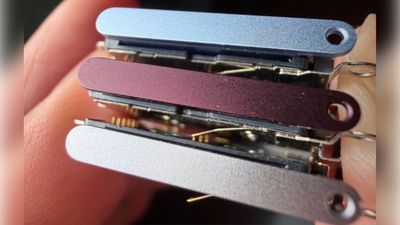
Longtime leaker Sonny Dickson has shared an image of differently colored SIM card trays that he claims are for Apple's upcoming iPhone 18 Pro models, suggesting Apple's flagship lineup will again be available in a trio of colors: Silver, Dark Cherry, and Sky Blue.
Apple currently offers the iPhone 17 Pro in Cosmic Orange, Silver, and Deep Blue.
Dickson shared the image in response to a MacRumors report on Tuesday covering a Chinese leaker's claim that the iPhone 18 Pro models could come in Dark Cherry, Sky Blue, and Black.
Dickson told MacRumors the colors in the shared image are the only ones he's come across in recent months. However, the leaker did share iPhone 18 Pro dummy units back in May that included a fourth Black color. When that was pointed out to him, Dickson argued that black dummies are made every year, but it's not a color Apple prefers to use anymore.
iPhone models sold in the U.S., Canada, and several other regions use eSIMs and don't come with SIM card trays, but devices sold in Europe, Japan, China, and Australia still include one (with the exception of the iPhone Air, which lacked a SIM tray everywhere it was sold).
Chinese leaker Instant Digital in April said there would be no black color for the iPhone 18 Pro. Last year was the first time Apple's high-end iPhones have not been available with a black or dark gray color option in any way, so it's possible Apple will continue that trend. Macworldreported in the same month that Apple would offer Light Blue, Dark Cherry, Dark Gray, and Silver colors.
We'll know either way soon enough. Apple's iPhone 18 Pro and iPhone 18 Pro Max are expected to be unveiled at the company's September event next week, alongside the company's first foldable iPhone, aka "iPhone Ultra."
Apple today informed developers that universal Mac App Store apps that require macOS 13 or later can remove support for Intel-based Mac computers.
We're reaching out to let you know that universal macOS apps on the Mac App Store that require macOS 13 or later can now remove support for Intel-based Mac computers.
By removing support for Intel-based Mac computers, you can simplify your development and optimize your download and on-device size.
Apps that drop Intel support will no longer deliver updates for those machines, but Intel Mac users will be able to keep using the last compatible version of an app. Apple did not previously allow Mac App Store apps with Intel compatibility to drop support.
Apple is also phasing out support for Rosetta 2, the feature that lets Intel-based apps run on Apple silicon Macs. Rosetta will stop working for most apps after macOS Golden Gate, and apps that use it won't launch. Apple is making an exception for some older unmaintained gaming titles that rely on Intel-based frameworks.
It's been almost 12 months since Apple launched the iPhone Air, and because MacRumors videographer Dan Barbera has been using it daily since launch, he decided to do a one-year review covering what it's like using Apple's super-thin iPhone on a long-term basis.
The iPhone Air is the thinnest iPhone Apple has released to date, and the form factor doesn't get old. It's pocketable, can be used with one hand, and it's much lighter than the iPhone 17 Pro and Pro Max. There's not much compromise on screen size since it has a 6.5-inch OLED display.
Apple used a smaller battery in the iPhone Air, and it doesn't last as long as the iPhone 17 Pro models. Some people might be able to get through the day on a single charge, but others will need an external battery pack like the one Apple built for the iPhone Air.
There's a single camera, which is one of the compromises with Apple's super-thin iPhone. You only get the Wide lens, with no option for the Ultra Wide or Telephoto lenses that come with the other iPhone 17 models. No Ultra Wide also means no macro images.
Price was and continues to be the biggest iPhone Air issue. At $999, it's more expensive than the iPhone 17, which has two cameras and nearly the same processor, and only $100 less than the three-camera iPhone 17 Pro. The iPhone Air's price wasn't worth it to a lot of people, and rumors suggest that it didn't sell well.
Make sure to watch Dan's video to see all of his thoughts on the iPhone Air.
Apple has set new CEO John Ternus' target compensation at $58 million, according to an updated SEC filing [PDF]. Tim Cook's target compensation is $47 million in his new role as executive chairman.
Ternus' fiscal 2027 compensation includes a $3 million salary and an annual equity award with a target value of $55 million. A quarter of the award is time-based and will vest semiannually over four years. The rest of the restricted stock units (RSUs) will vest based on Apple's total shareholder return relative to other companies in the S&P 500, which is how Cook's RSUs have worked for many years. For fiscal 2026, Apple granted Ternus a prorated RSU award with a target value of $2.5 million.
Cook's new salary will be $2 million, but he's also earning an equity award with a target value of $45 million in fiscal 2027. Half will be granted in the form of time-based RSUs that vest over four years, and the other half will vest based on Apple's stock performance. Should Cook retire on or after the first anniversary of the grant date, his equity will vest, but he won't receive the shares until the originally scheduled vesting dates.
Target compensation figures for Ternus and Cook do not include performance-based bonuses, so the final amount each earns in fiscal 2027 could change.
In 2025, Cook earned $74.3 million, including a $3 million salary, $12 million in performance-based cash awards, and $57.5 million in stock awards.
Ternus' previous pay as Apple's senior vice president of hardware engineering was not publicly shared, so this is the first look at his compensation.
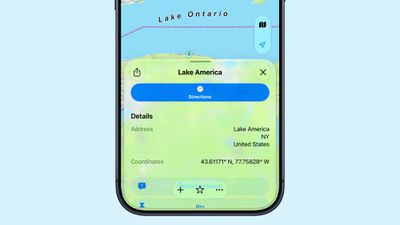
Apple Maps users in the United States will now see "Lake America" instead of "Lake Ontario" for the Great Lake on the border of Ontario and New York.
The updated name is currently rolling out to iPhone, iPad, and Mac users. The Maps app still has the Lake Ontario label for the body of water, but tapping it now says "Lake America." Apple will likely change the label in the next few hours.
As with Trump's renaming of the Gulf of Mexico, Apple Maps users in the United States will see the lake listed as Lake America. Canadians will see the Lake Ontario name, and users outside of the U.S. and Canada will see both names.
According to Axios, Trump directly asked Apple to rename Lake Ontario "Lake America" in the Maps app. Trump announced the name change after the ongoing trade war escalated with both countries announcing additional tariffs.
Once popular mapping app MapQuest refused to change the name of Lake Ontario, and its stance has caused it to surge on the App Store charts. MapQuest is the number one free app on the iPhone at the current time.
Note: This discussion thread is located in our Political News forum with special rules.




 Recently, Daring Fireball's John Gruber
  Note: MacRumors is an affiliate partner with Amazon. When you click a link and make a purchase, we may receive a small payment, which helps us keep the site running.