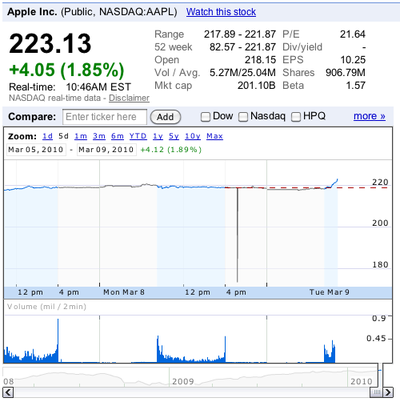
Fueled by Friday's announcement of a shipping date for the iPad, Apple's stock price has jumped over 6% in recent trading, pushing the company beyond $200 billion in market value for the first time in its history. AAPL currently sits at over $223 per share.
Apple currently holds the fifth-largest market capitalization among U.S. public companies, behind Exxon Mobil, Microsoft, Wal-Mart, and Berkshire Hathaway.
Apple subsidiary FileMaker today announced the release of FileMaker Pro 11, the latest version of its popular database application. The updated version brings several new features, as well as streamlined productivity tools for simpler and faster database creation.
"FileMaker Pro 11 is designed for solving real-world business problems, such as the need for interpreting business data," said Ryan Rosenberg, vice president, marketing and services, FileMaker, Inc. "With easy-to-use integrated charting, we bring dynamic visual reporting to FileMaker Pro 11 users. We also provide new tools to boost all users' productivity, helping novice and expert users alike build, share and publish better databases."
Charts and reports are improved in FileMaker Pro 11 with the addition of more powerful, dynamic charts available as tabs within layouts or published to the web with FileMaker Pro Instant Web Publishing. New "Quick Reports" and an improved Layout/Report Assistant also aid users in generating easy-to-digest versions of their data.
FileMaker Pro 11 also includes several new productivity tools to assist users with database creation.
- Innovative Quick Find with iTunes style that searches across all fields within a layout - Inspector, a master tool palette that controls layout objects and properties in one convenient place - Object Badges to visually identify scripted fields in layouts with color-coded icons - A new Invoices Starter Solution, one of more than 30 built-in solutions, designed to track product and customer details and create, manage and print customized invoices for every order - An improved Quick Start Screen to help users create new databases, manage favorite files and find helpful resources - Text highlighting to emphasize key words or numbers in fields
Finally, FileMaker Pro 11 offers several new collaboration tools, enabling users to create "Snapshot Links" of data presentation for sharing with others, as well as assisting with recurring data imports.
Also available today are FileMaker Pro 11 Advanced, offering additional development and customization tools, and FileMaker Server 11, bringing several new tools to the company's solution for centrally-hosted databases.
FileMaker Pro 11 is priced at $299 for new users and $179 for upgrade users, with FileMaker Pro 11 Advanced checking in at $499 and $299 respectively. The basic FileMaker Server 11 is priced at $999/$599, while FileMaker Server 11 Advanced carries a price tag of $2,999/$1,799. All versions are available today.
Last month, speculation that a number of minor iPhone applications such as Stocks, Weather, Voice Memo, Clock, and Calculator "missing" from the iPad could reappear in some sort of "widget mode" similar to Dashboard on Mac OS X received a bit of publicity.
According to Daring Fireball's John Gruber's sources, however, there is no secret "widget mode" and these applications were in fact scrapped by Apple CEO Steve Jobs after internal "blown up" versions of them for the iPad were deemed unsatisfactory.
It's not that Apple couldn't just create bigger versions of these apps and have them run on the iPad. It wasn't a technical problem, it was a design problem. There were, internally to Apple (of course), versions of these apps (or least some of them) with upscaled iPad-sized graphics, but otherwise the same UI and layout as the iPhone versions. Ends up that just blowing up iPhone apps to fill the iPad screen looks and feels weird, even if you use higher-resolution graphics so that nothing looks pixelated. So they were scrapped by you-know-who. Perhaps they'll appear on the iPad in some re-imagined form this summer with OS 4.0, but when the iPad ships next month, there won't be versions of these apps. At least that's the story I've heard from a few well-informed little birdies.
(There is, alas, no secret "widget" mode for iPad in OS 3.2, either.)
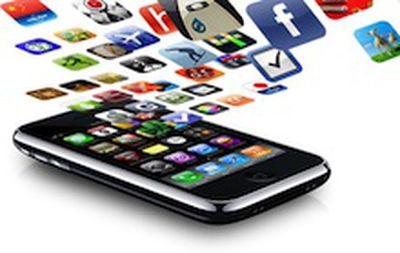
Gruber further notes that, while some iPhone games will work well on the iPad, simpler non-game iPhone applications will just feel strange whether run full-screen or in the iPhone-sized box in the middle of the screen. Similar observations were made by a number of attendees at Apple's media event to introduce the iPad. In particular, the Facebook iPhone application was thought by many to look and feel slightly "off" at the expanded size.
Many developers will likely take advantage of the iPad's expanded screen real estate to offer enhanced versions of their iPhone applications, and Apple could easily due the same with its own minor applications if it so chooses, but it may take some time for those reworked versions to be completed.
Valve Software today officially announced that it is bringing its Steam game distribution platform, as well as its own library of games, to Mac OS X next month.
Steam and Valve's library of games including Left 4 Dead 2, Team Fortress 2, Counter-Strike, Portal, and the Half-Life series will be available in April.
"As we transition from entertainment as a product to entertainment as a service, customers and developers need open, high-quality Internet clients," said Gabe Newell, President of Valve. "The Mac is a great platform for entertainment services."
Valve also confirmed reports that it will offer its forthcoming Portal 2 game as a simultaneous release for Mac and Windows.
Portal 2 will be Valve's first simultaneous release for Mac and Windows. "Checking in code produces a PC build and Mac build at the same time, automatically, so the two platforms are perfectly in lock-step," said Josh Weier, Portal 2 Project Lead. "We're always playing a native version on the Mac right alongside the PC. This makes it very easy for us and for anyone using Source to do game development for the Mac."
Also included in the announcement is the addition of a new "Steam Play" feature for Steam, allowing purchasers of either the Mac or PC versions of Valve's games to play on the other system free of charge. Third-party game developers distributing through Steam are also widely expected to take advantage of the feature.
Valve leaked a series of teaser images hinting at its move to the Mac platform last week.
TechCrunch discusses a picture that is being pieced together from reports from App Store developers suggesting that Apple is looking to crack down on "cookie cutter" iPhone applications that offer little more than could be offered through a web app.
Between the developers I spoke to, the consensus was this: Apple doesn't appear to be opposed to 'app generators' and templates per se, but in the last month or so it has started cracking down on basic applications that are little more than RSS feeds or glorified business cards. In short, Apple doesn't want people using native applications for things that a basic web app could accomplish.
The report offers a lengthy quote from Medialets CEO Eric Litman, who notes that Apple is looking to ensure that iPhone applications offer high-quality experiences that set the iPhone apart from other devices.
Apple wants iPhone apps to be superior to Web experiences because they are extremely sticky and drive people specifically to buy the iPhone over competing smartphone platforms. Apps that are too simple or largely indistinguishable from the Web, other apps or particularly other apps on other platforms send the message to end users that the iPhone app ecosystem might not be particularly special.
In particular, Apple appears to be focusing on submissions from app-building services that utilize only basic templates to generate their products, many of which are little more than spammy regurgitations of Web content. Others involve partnerships with quality content providers but do not offer features that drive a compelling user experience.
According to the report, some app-building services like Appmakr have embraced the shift, working to incorporate more advanced tools such as in-app purchasing, push notifications, and offline access in order to offer the richer experience Apple is looking for. Appmakr hopes that its efforts will not go unnoticed by Apple, allowing it to become a "trusted" developer that could streamline the review process for its applications.
A few times a year, MacRumors partners with MacHeist to promote their Mac application bundle deal. Their latest bundle delivers at least eight Mac applications for $19.95 (over $280 value if all purchased separately) including:
- MacJournal ($40) - Collect, brainstorm, write, and organize your thoughts all in one place. - RipIt ($20) - Easily rip and convert your DVDs for iTunes, iPod or AppleTV - Clips ($27) - Expands the built-in clipboard, so you can store and recall multiple things with a keystroke. - CoverScout ($39.95) - Easily fill in all your missing album art in iTunes, including all the ones iTunes missed. - Flow ($25) - FTP client for Mac, with built-in text editing and streamlined interface. - Tales of Monkey Island ($34.95) - TellTale Games' revival of LucasArts' classic pirating adventure game series. - RapidWeaver ($79) - Easy to use web creation tool; RapidWeaver will become unlocked for all customers once 50,000 bundles have been sold. - Tweetie ($19.95) - Popular Mac Twitter client; Tweetie will become unlocked for all customers once a certain number of bundles (to be announced at the unlocking of RapidWeaver) have been sold, and customers will also receive exclusive early access to Tweetie 2 for Mac beta later this month.
In addition, nanoBundle customers have the opportunity to receive three more free applications (for a total value of over $320 for all 11 applications) by tweeting to spread the word about MacHeist.
- Tracks - Play your music library and browse the iTunes Music Store from your menu bar - Airburst Extreme - Airborne "floating" survival game with multiple gameplay modes - Burning Monkey Solitaire - Suite of solitaire card games enhanced with a singing gorilla, flaming arrows, hundreds of jokes and secret easter eggs
MacRumors is a promotional partner with MacHeist. Bundle sales through these links benefit MacRumors financially, and provide a way for readers to directly support this site.
Update: With the MacHeist nanoBundle passing through 50,000 bundles sold, RapidWeaver has now been unlocked for all customers. Tweetie will be unlocked once 56,789 bundles have been sold.
Apple just aired their first iPad commercial during the 82nd Annual Academy Awards. A description of the ad by Doju:
The commercial was just on, depicted a person using the iPad on their lap, going through the various features (iBooks, Pages, Videos, etc. nothing new) with an upbeat song.
After Valve's series of teaser images, it's now been revealed that their upcoming sequel Portal 2 will also be coming to the Mac. The above image comes from a series of scans from the latest issue of Gameinformer magazine which carries a cover story about the much anticipated sequel.
The original Portal game was originally released as part of the Orange Box compilation for Xbox and PC. It was a relatively short game featuring physics based puzzles in which the player manipulated two different teleporting portal entrances:
The original game was a critical success and has resulted in the full-length sequel planned this fall. Portal 2 will presumably be distributed on a Mac version of Steam which has been hinted at over the past week.
Swedish site Slashat.se reportedly emailed Steve Jobs asking the simple question "Will the wifi-only version somehow support tethering thru my iPhone?" Steve Jobs' reply was a simple "no" and was sent from his iPhone.
Tethering is the process by which you can share an internet connection from a cellular device (such as the iPhone) to a non cellular device such as a notebook, or in this case an iPad. If tethering were allowed, the iPad could share the iPhone's 3G connection removing the need for purchasing wireless service on the iPad itself. The answer is not a surprise as Apple had given no indication that the iPad could service this function.
Meanwhile, Jobs has been busy answering emails as he had also responded to disbelief that the iPad's IPS display could support 10 hours of battery life in such a small form factor. To these inquiries, Jobs replied:
"... yes, we are getting 10 hours in 1.5 pounds."
Notably, in this email, he actually responded using the iPad.
The iPad launches in the U.S. on April 3rd with pre-orders starting on March 12th.
Last week, RBC Capital Markets analyst Mike Abramsky released the results of a survey showing pent-up demand for the iPad exceeding that of the original iPhone, highest customer demand for low-capacity Wi-Fi-only and high-capacity 3G-enabled iPads, and moderate cannibalization of other Apple products by the iPad.
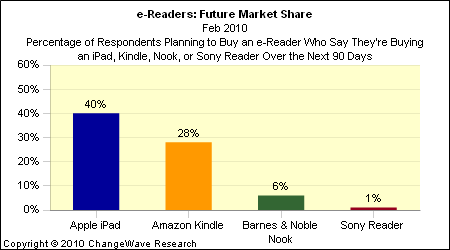
ChangeWave today released additional data from the survey, showing Apple poised to take the top spot among e-reader purchasers over the next 90 days, with 40% of purchasers in the survey planning to opt for an iPad. Amazon's Kindle holds the second spot in the survey at 28%, with Barnes and Noble's Nook placing third at only 6%.
In short, while the iPad launch is likely to strengthen overall e-Reader demand, the survey suggests Amazon and its competitors could well find themselves relegated to playing catch-up within just a few quarters if they don't preemptively move quickly to upgrade their own e-Readers.
Also of interest is ChangeWave's data from customers who already own an e-reader, 27% of whom would have purchased an iPad had it been available when they made their purchase. 45% of purchasers would still have purchased their current e-reader, while 30% registered as undecided.
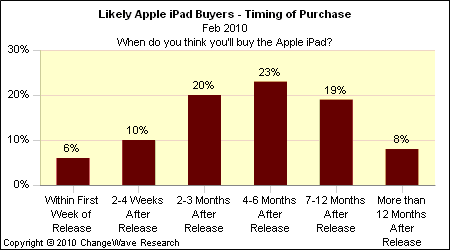
Finally, in looking at timing for iPad purchasing, the survey found that many potential iPad customers are looking beyond the usual 90-day window typically used by ChangeWave for its data, with purchasing windows actually peaking in the 4-6 month post-launch timeframe and considerable numbers of customers planning to hold off even longer.
It is important to note that ChangeWave's research focuses mainly on business, technical and medical professional, as well as early-adopter consumers, so its results are not necessarily indicative of broader consumer buying patterns. Its data does, however, offer a glimpse into the thinking of those who are frequently considered to be at the forefront of such trends.
Daring Fireball's John Gruber claims to have heard from his sources that the slight shipping delay (about a week in the U.S. and on the order of a month in the first batch of international markets) for the Wi-Fi iPad is due not to hardware production issues but to Apple putting the final touches on the software for the device.
It was the software, not the hardware, that took a week or two longer to finish than they'd hoped. Nothing extraordinary or unusual, just the usual hard-to-predict timing of turning software that's almost ready to ship into software that's ready to ship. In the grand history of major OS release date slips, one week is pretty tame.
A report early this week indicated that a "manufacturing bottleneck" would be responsible for limited iPad quantities at launch and possibly a delay of the entire launch. Another analyst claim yesterday offered similar information, but noted that the issues were not related to "glass or manufacturing process". If Gruber's sources are correct and the delays were simply due to software, Apple should be able to quickly deploy the final software version to units in production and rapidly fill its sales channels for launch.
Apple today seeded yet another version of Mac OS X 10.6.3, termed Build 10D567, to developers. iPhone in Canadaoffers some details on the new version, which has seen only minor refinements as development appears to be wrapping up. Developers are reportedly asked to focus their testing on Graphics Drivers, iChat, QuickTime, Printing and Rosetta.
The last developer build of 10.6.3 was seeded last week Wednesday, and we continue to expect a public release of the third maintenance update to Snow Leopard in the relatively near future. Mac OS X 10.6.2 was released in early November.
Patently Apple points to an interesting Apple patent application published yesterday describing methods of incorporating commercials into video content such that viewing of the commercials interspersed throughout the video presentation would be required in order to "unlock" portions of the content. The methods would allow users to freely navigate within a video presentation such as a television show while still requiring them to view commercials.
For example, a downloaded television episode may have multiple commercial breaks encoded into the file, and should a user attempt to navigate to a "locked" portion of the episode, they could be redirected to a commercial that, after viewing, would allow the user to "unlock" the desired content for viewing. Such implementations could allow for such options as one-time unlocking or limited-time unlocking after which the user would have to view commercial content again in order to access the locked segment.
As ad breaks are viewed, a segment of the episode associated with that ad break becomes an unlocked segment 310. The unlocked segment can remain unlocked indefinitely, can remain unlocked for a fixed, limited duration, or can remain unlocked for an unknown, but limited duration, such as until the viewer has finished viewing the entire episode.
Alternatively, the user's desired content could play immediately, but content from the required "unlocking" ad break could be displayed back-to-back with the following ad break at the next opportunity. A third option could be that the user's navigation request would simply be denied until they had reached the appropriate ad break to unlock the segment.
The system also offers the availability of ad "bundles" which can either be included with the downloaded content or offered separately, allowing for certain "bundles" of ads to expire at the end of a campaign and be replaced by new advertising.
Amid growing video downloads from the iTunes Store and reports of Apple developing a subscription-based package of television shows, it is clear that the company is thinking about ways of moving television content to its portable devices while providing methods for content providers to receive sustainable revenue streams. Whether that comes from per-download or subscription fees from users, advertising dollars, or some combination of those sources remains to be seen.
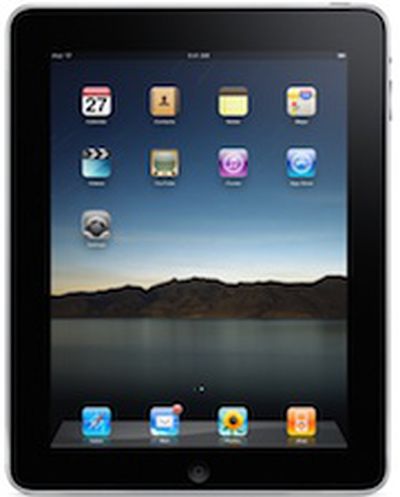
Apple today announced that Wi-Fi models of the iPad will go on sale in the United States on Saturday, April 3rd. 3G-capable models in the U.S., as well as both Wi-Fi and 3G models for a number of other countries, will be available in late April. U.S. preorders for all iPad models begin on March 12th.
Apple today announced that its magical and revolutionary iPad will be available in the US on Saturday, April 3, for Wi-Fi models and in late April for Wi-Fi + 3G models. In addition, all models of iPad will be available in Australia, Canada, France, Germany, Italy, Japan, Spain, Switzerland and the UK in late April.
Beginning a week from today, on March 12, US customers can pre-order both Wi-Fi and Wi-Fi + 3G models from Apple's online store (www.apple.com) or reserve a Wi-Fi model to pick up on Saturday, April 3, at an Apple retail store.
Apple also noted that its free iBooks application offering access to the iBookstore will be available in the U.S. App Store on April 3rd, with other countries to follow "later this year".
Apple had initially announced worldwide availability of Wi-Fi models for late March, with 3G-capable models to follow in April. Severalreports from analysts this week claimed, however, that Apple's manufacturing partner Foxconn has been experiencing production delays that will result in limited initial availability. Based on the iPad's U.S. launch slipping into April and the delay of international availability of the Wi-Fi models, it appears that those reports may have been correct.
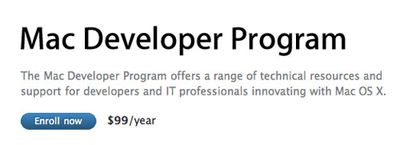
After a brief outage on Thursday, Apple's developer site returned with a dramatically restructured developer program for the Mac that is modeled after the $99/year iPhone developer program:
"Modeled after the highly successful iPhone Developer Program, we've relaunched the Mac Developer Program to offer members technical resources, support, access to pre-release software, developer forums and more, all for just $99 per year. As our developer base continues to grow in leaps and bounds, we're working hard to ensure we provide our developers with everything they need to create innovative applications for both the iPhone OS and Mac OS X."
Previously, Apple offered multiple tiers (Select, Premier) at significantly higher prices ($499, $3499) but also included hardware discounts and other perks to membership. It appears Apple may be looking to tempt the large number of iPhone developers to easily jump to Mac development. Existing ADC members accounts will continue as is until they expire, at which time members can then join the new $99/year program. Prospective Mac developers can still download the Xcode tools for free, but without access to the pre-release software and technical support.
The Wall Street Journal reports (subscription required) on Sony's plans to develop a new lineup of handheld devices to compete against Apple's iPhone, iPod touch, and iPad.
Threatened by Apple Inc.'s growing stable of portable devices, Sony Corp. is developing a new lineup of handheld products, including a smart phone capable of downloading and playing PlayStation games, according to people familiar with the matter.
The Japanese electronics giant also has a project under way to develop a portable device that blurs distinctions among a netbook, an e-reader and a PlayStation Portable, or PSP. The device is designed to compete against multifunction products such as Apple's coming iPad tablet, these people said.
The initiative seems to be an expansion of an effort revealed last year, with Apple's forthcoming iPad now serving as yet another target for Sony. According to today's report, Sony is targeting a 2010 launch for these devices, although specifications and pricing are currently unknown.
The devices will reportedly be designed to take advantage of Sony long-standing leadership position in mobile gaming while also leveraging the company's new media service due for launch this month as a competitor to Apple's iTunes Store. Sony has felt increasing pressure as Apple and third-party developers have been increasingly positioning the iPhone, and particularly the iPod touch, as gaming devices. The iPad, which will be able to run iPhone games as well as iPad-specific applications, obviously offers yet another venue for quality gaming experiences.
In the 2010 edition of its annual ranking of "World's Most Admired Companies", Fortuneplaced Apple at the top of the list for the third year in a row and by the highest margin ever in the survey's ten-year history. Apple was followed in the rankings by Google, Berkshire Hathaway, Johnson & Johnson, and Amazon.
What makes Apple so admired? Product, product, product. This is the company that changed the way we do everything from buy music to design products to engage with the world around us. Its track record for innovation and fierce consumer loyalty translates into tremendous respect across business' highest ranks.
As BMW CEO Norbert Reithofer puts it, "The whole world held its breath before the iPad was announced. That's brand management at its very best."
Reithofer also ranked Apple CEO Steve Jobs as his most admired CEO. And beyond the overall crown, Apple took the top spot in the sub-category of Innovation while placing second in People Management. The company was also recognized as fourth in Quality of Products/Services and in a tie for sixth with Amazon in Management Quality.
Fortune's rankings were based on a poll of 4,200 corporate executives, directors, and industry analysts.
The Associated Press reports that a federal court judge in Delaware has placed a hold on the patent dispute between Apple and Nokia pending review of similar, separate cases by the U.S International Trade Commission (ITC).
The judge signed an order Wednesday staying litigation in a lawsuit in which Nokia claims that Apple is infringing on seven Nokia patents in products ranging from the iPhone to computers.
The order also covers counterclaims in which Apple alleges that Nokia has infringed on nine Apple patents that are the subject of an ITC complaint by Apple.
Apple and Nokia filed claims against each other both in federal court and with the ITC, and the ITC agreed January to review Nokia's case while taking on Apple's case several weeks ago. Because the ITC typically moves more quickly than the courts, it is a popular venue for patent disputes to be addressed. While the ITC can not award damages, it can halt imports of infringing devices, serving as a significant motivator for companies to settle their disputes.