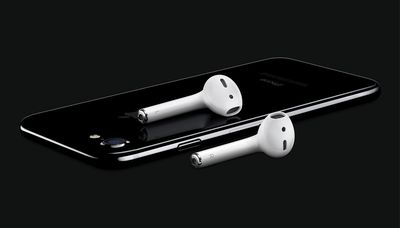
Amazon today has the AirPods 4 available for $99.00, down from $129.00. This is a second-best price on the AirPods 4, which is the base model without Active Noise Cancellation, and it's accompanied by a deal on the AirPods 4 with ANC.
Note: MacRumors is an affiliate partner with some of these vendors. When you click a link and make a purchase, we may receive a small payment, which helps us keep the site running.
Amazon provides a July 19 estimated delivery date for free shipping, with faster delivery options for Prime members. This model hasn't hit its all-time low price since last holiday season, so Amazon's price today remains one of the best we've seen all year on the AirPods 4 base model.
Additionally, you can get the AirPods 4 with ANC on sale for $148.99 right now on Amazon, down from $179.00. Similar to the base model, we haven't tracked a record low price on the AirPods 4 with ANC in months, making today's deal a solid second-best option for anyone shopping for AirPods this summer.
Head to our full Deals Roundup to get caught up with all of the latest deals and discounts that we've been tracking over the past week.
Deals Newsletter
Interested in hearing more about the best deals you can find in 2026? Sign up for our Deals Newsletter and we'll keep you updated so you don't miss the biggest deals of the season!
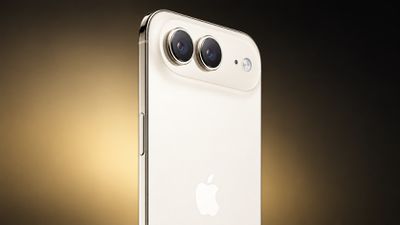
Facilities in Apple's supply chain have finished renovations ahead of "iPhone 20" production, according to a Weibo leaker who says Apple's 20th-anniversary iPhone will move to an all-glass design.
In a new post on Weibo, the leaker known as "Fixed Focus Digital" said the "preferred approach" for the iPhone 20 is a return to glass, with manufacturing quality expected to land somewhere around that of the first-generation iPhone Air. The leaker said the relevant manufacturing facility has "already been renovated" and is now waiting for machining to begin, but didn't name the supplier involved. Lens Technology produces iPhone cover glass and previously took over metal-frame and glass-back assembly plants from fellow supplier Catcher Technology.
Apple's iPhone production typically doesn't reach full-scale manufacturing until a matter of weeks before launch; for the iPhone 17, trial production began in June with full-volume output targeted for August, about a month ahead of the device's September release. The information likely refers to an early step in retooling a production line, which is the kind of groundwork Bloomberg said Apple is already "ramping up" as it develops the 20th-anniversary redesign.
The claim adds fresh supply chain detail to a redesign that has been rumored for well over a year. Bloomberg's Mark Gurman reported that Apple is aiming for a "mostly glass, curved iPhone without any cutouts in the display" to mark the iPhone's 20th anniversary, with curved glass wrapping around all sides of the device and a launch expected in September 2027.
In May, Fixed Focus Digital pushed back on an earlier report from fellow leaker Instant Digital claiming Apple was exploring liquid metal or an improved titanium alloy to replace aluminum on future Pro models, arguing that aluminum remains the only practical choice for now given the heat generated by on-device AI processing.
At the time, Fixed Focus Digital said any material change was unlikely before 2027, in line with the iPhone 18 Pro's expected retention of the same aluminum unibody design introduced on the iPhone 17 Pro. Earlier this month, the leaker reiterated that aluminum mid-frames are "going to be used in straight-edge phones for a long time to come," a distinction that leaves room for a different approach on the curved-edge iPhone 20.
The 20th anniversary iPhone models are expected to launch in the fall of 2027, following the iPhone 18, iPhone 18e, and iPhone Air 2 in the spring.
Apple is allegedly using a 60Hz 8.4-inch display panel in the upcoming OLED iPad mini, which is expected to be released later this year.
The information comes courtesy of a hit-and-miss tipster running the account "yeux1122" on the Korean Naver blog. The leaker claims to have been told by a source in Apple's supply chain that the unreleased iPad mini is equipped with a low-temperature polycrystalline silicon (LTPS) backplane hybrid OLED panel clocked at 60Hz.
Apple's iPad Pro models feature two-stack low-temperature polycrystalline oxide (LTPO) OLED panels, which makes the display capable of dynamically adjusting its refresh rate between 10Hz and 120Hz (aka ProMotion). In contrast, LTPS OLED panels are usually paired with fixed refresh rates – such as 60Hz, 90Hz, or 120Hz – and are typically dimmer than LTPO panels.
If the leak is true, it's likely to disappoint iPad mini fans. Previous reports have not been clear on whether the iPad mini 8 will feature a higher refresh rate than the 60Hz LCD display used in the existing iPad mini 7. Given that the base iPhone 17 uses a 120Hz ProMotion panel, some would have believed it was reasonable to expect the same on the first OLED iPad mini. That said, the iPhone 17e goes to show that Apple is still in the 60Hz OLED business, so it might not consider the iPad mini to be a big enough market to justify the more advanced panel technology.
There's still hope of course that the rumor is off the mark. The leaker also said that the smaller form factor iPad is currently in mass production at Samsung Display's A2 Generation 5.5 OLED production line, which is located at its Asan campus in South Korea. Samsung has used the A2 line to manufacture LTPO panels as well as comparatively inferior LTPS panels, so if that piece of information is true, it doesn't mean the new iPad mini will definitely use the latter panel.
Late last month, a report from Korean outlet ETNewsclaimed that mass production of the iPad mini 8 was underway at a Samsung factory. There are no rumors suggesting exactly when the next iPad mini will be released, but a late 2026 launch is widely expected. Aside from refresh rates, OLED offers several advantages over the LCD technology used in the iPad mini 7, such as higher contrast, deeper blacks, and improved power efficiency.
Apple grew iPhone shipments in China by 24.4 percent year over year in the second quarter of 2026, making it the fastest-growing smartphone brand in a market that shrank overall, according to preliminary figures released today by research firm IDC.
Total shipments in China fell 4.3 percent to roughly 66 million units, amounting to a fifth consecutive quarter of decline. Apple and Huawei were the only major vendors to grow, with Huawei up 19.4 percent.
Apple's share of the Chinese market rose from 13.9 percent to 18.1 percent year over year, which was second only to Huawei's 22.6 percent. Meanwhile, Xiaomi suffered the steepest fall among the big brands, with shipments down 21.7 percent.
IDC attributes the market divergence largely to the way vendors reacted to rising memory and component costs amid the AI infrastructure buildout. Most Android vendors raised prices from late March, but Apple and Huawei held theirs steady, instead introducing targeted promotions.
On top of this, Huawei kept widening its lineup to cover more of the market, while Apple's early warnings of upcoming price increases in the second half of the year encouraged some buyers to purchase iPhone 17 series models sooner than they might have otherwise. "That gave hesitant buyers a reason to go ahead and purchase," said IDC analyst Arthur Guo.
The growth came despite a weak June market, as smartphone sales during China's "618" shopping festival fell nearly 15 percent compared to the same period in 2025.
IDC says it expects conditions to deteriorate over the next couple of years. As vendors run down cheaper component inventory, the firm forecasts China's year-over-year decline could widen to around 20 percent in the second half of 2026, right around when Apple is expected to launch its new iPhone 18 Pro models and first foldable iPhone. Storage prices are unlikely to ease meaningfully before 2027, and a broader recovery is not expected until 2028 or 2029, reckons IDC.
On the bright side, the research firm believes customers are postponing upgrades rather than walking away from smartphones, so the delayed demand should return in time. On that basis, a recovery could arrive around 2028–2029 as a fresh replacement cycle comes due.
WhatsApp is developing a first-party cloud storage option for chat backups on iPhone, providing users with an alternative to iCloud for the first time, according to app tinkerer WABetaInfo.
Code found in the WhatsApp beta for iOS (version 26.28.10.16), available through TestFlight, suggests that users will eventually be able to pick their preferred backup destination directly from the app's chat backup settings. iCloud however will remain the default.
The feature harks back to one that WABetaInfo spotted in development for Android back in April, which is set to give users on Google's platform a way to store backups off Google Drive.
Under the plan, WhatsApp will reportedly include 2GB of free storage on its own servers, and there will be a 50GB tier priced at around $0.99 per month, similar to Apple's entry-level iCloud+ plan. There is also said to be a 1TB option in the works, although the tiers and pricing could always change before the backup feature goes live.
Image: WABetaInfo
Notably, backups kept on WhatsApp's servers will be protected by end-to-end encryption (E2EE) by default, with no way to switch encryption off. That's firmer protection than what is offered by iCloud backups, whose users must turn on encryption manually by enabling Advanced Data Protection (ADP). WhatsApp will reportedly recommend securing backups with a passkey, but a password or 64-digit key will also work.
WABetaInfo says the feature is still in development and not yet working for beta testers, and WhatsApp hasn't yet stated when it plans to officially launch the backup alternative.
Google has announced the rollout of Chrome's latest AI features to Mac and PC users in the U.K., indicated by a new "Ask Gemini" button with a sparkle icon in the upper right side of the browser.
Gemini in Chrome can work across multiple tabs, which is supposed to make it useful for comparing and summarizing information from several websites at once.
It also integrates with Google services such as Calendar, YouTube, Gmail, and Maps, allowing users to perform tasks like jumping to a specific moment in a YouTube video, scheduling a meeting, or drafting an email without leaving the current webpage.
The rollout includes Nano Banana, a new AI tool that can be used to generate images from text prompts right from the browser's sidebar.
Google says the new AI features will also be coming to iOS in the U.K. next month.
If you're not interested in any of this stuff, you can simply right-click on the Ask Gemini button at the upper right corner of Chrome and select Unpin to remove it from the browser.
Gemini's Chrome integration was initially limited to AI Pro and AI Ultra subscribers, but Google expanded access to all desktop users in the US in September 2025, followed by rollouts to over 50 countries.
Apple has made available the first public beta of iOS 27, bringing a more stable version of the software to a wider audience following lengthy testing by developers. Keep reading to learn how to prepare your device for the beta software and how to install it.
Signing up to get the iOS 27 or iPadOS 27 public beta is simple once you know how – it can be done by enrolling an iPhone or iPad in Apple's free Apple Beta Software Program. The steps you need to complete to install the software on your device are provided towards the end of this article, but before you jump ahead, here are a few things worth considering.
Is My iPhone Compatible With iOS 27?
iOS 27 is supported on iPhone 11 and all of the same iPhone models as iOS 26. They include the following:
iPhone 17e
iPhone 17
iPhone 17 Pro & Pro Max
iPhone Air
iPhone 16e
iPhone 16
iPhone 16 Plus
iPhone 16 Pro
iPhone 16 Pro Max
iPhone 15
iPhone 15 Plus
iPhone 15 Pro
iPhone 15 Pro Max
iPhone 14
iPhone 14 Plus
iPhone 14 Pro
iPhone 14 Pro Max
iPhone 13
iPhone 13 mini
iPhone 13 Pro
iPhone 13 Pro Max
iPhone 12
iPhone 12 mini
iPhone 12 Pro
iPhone 12 Pro Max
iPhone 11 Pro
iPhone 11 Pro Max
iPhone 11
iPhone SE (3rd generation)
Is My iPad Compatible With iOS 27?
iPadOS 27 cuts support for more iPad models than last year's iPadOS 26 did, with older iPad Pro, iPad Air, iPad, and iPad mini models all losing compatibility. iPadOS 27 is supported on the following iPad models:
13-inch iPad Pro (M4)
12.9-inch iPad Pro (6th generation)
12.9-inch iPad Pro (5th generation)
12.9-inch iPad Pro (4th generation)
11-inch iPad Pro (M4)
11-inch iPad Pro (4th generation)
11-inch iPad Pro (3rd generation)
11-inch iPad Pro (2nd generation)
iPad Air (M3)
iPad Air (M2)
iPad Air (5th generation)
iPad Air (4th generation)
iPad (A16)
iPad (10th generation)
iPad (9th generation)
iPad mini (A17 Pro)
iPad mini (6th generation)
Note that this compatibility list does not mean that all iOS 27/iPadOS 27 features will work with the above models. Several of the update's features are exclusive to iPhone 15 Pro and newer models, since they rely on Apple Intelligence.
For example, iOS 27's more intelligent and personal version of Siri is available on the iPhone 15 Pro and newer, while two specific features tied to it are exclusive to the iPhone 17 Pro, iPhone 17 Pro Max, and iPhone Air.
Should I Install iOS 27 Public Beta?
Great question! Before downloading the update, it's worth noting that Apple does not recommend installing iOS 27 beta updates on your main iPhone/iPad, so if you have a secondary device, use that. This is beta software, which means there are often bugs and issues that pop up that can prevent software from working properly or cause other problems. Apple still has fixes to make before the final release in September.
Make an Archived Backup of Your Device First
Before installing the beta, make sure to back up your iOS device before installing the software using the following method, otherwise you won't be able to revert back to iOS 26 if things go wrong.
Plug your iPhone into your Mac using the supplied cable.
Allow the accessory to connect by clicking Allow in the dialog prompt.
Open a Finder window by clicking the Finder icon in the Dock.
Click your iOS device's name in the sidebar.
If this is the first time connecting your device to your Mac, click Trust in the Finder window.
Tap Trust on your device when prompted, then enter your passcode to confirm.
In the General tab, click the circle next to where it says Back up all of the data on your iPad to this Mac.
If you want to encrypt the backup, check the box next to Encrypt local backup, then enter a password to protect your data.
If you don't want to create an encrypted backup, or you've already set up encrypted backups, click Back Up Now.
When the backup is finished, you can find the date and time of the last backup in the General tab, just above the Manage Backups button. Remember that this backup will not be overwritten when you manually or automatically back up your iPhone in the future, so you can restore it at any time by using the Restore Backup... option in the same Finder screen.
How to Download iOS 27 Public Beta
Downloading and install the iOS 27 Public Beta is very straightforward. Simply follow these steps:
Now go to Settings ➝ General ➝ Software Update on your iPhone.
Tap Beta Updates. If you don't see the option, try switching off Download iOS Updates (Automatic Updates ➝ Download iOS Updates), then tap Back and it should appear.
Select iOS 27 Public Beta in the list, then tap Back.
Wait for the Software Update screen to check Apple's servers. When the iOS 27 Public Beta appears, tap Download and Install, then follow the instructions and wait for installation to complete.
iOS 27 Features
iOS 27's headline change is a more intelligent and personal version of Siri, but the update also brings a wider set of improvements across Apple's core apps and services. A new Siri mode in the Camera app works with Visual Intelligence, which lets you point their iPhone at real-world items like receipts and take useful actions directly from what's on the screen.
Apple Maps gains an enhanced Flyover experience powered by AI, with sharper and more lifelike aerial imagery for select cities. In the U.S., a new Local Lists feature surfaces relevant place collections, including trending restaurants and family-friendly destinations.
Find My adds more flexible location sharing controls. You can now share your location for a custom duration, set an exact time for sharing to expire, or pause sharing with specific people until the End of the day. Reminders and Calendar now also support natural language input, and Apple Intelligence will automatically fill in details such as the date, time, and location.
Wallet, Apple Cash, and Apple Pay also get major upgrades. iOS 27 adds Apple Intelligence-powered bill splitting with Apple Cash, custom Wallet passes created from physical cards, richer hotel key experiences, and a redesigned Apple Pay checkout flow with easier card switching and more payment details. Tap to Pay on iPhone also gains Tap to Share, letting customers securely share contact, shipping, and Loyalty information with participating merchants.
Apple's media and cloud apps get updates too. Apple Podcasts adds Search within individual shows, iCloud Shared Albums support full-resolution cross-platform sharing and more file types, and Apple Music improves AutoMix while expanding Lyrics Translation to more Language pairings.
Apple released the iOS 27 public beta today, and if you've been curious about the new software, now's the time to try it out. iOS 27 brings Siri AI, performance improvements, and lots of new Apple Intelligence features. With the public betas, you don't need to wait until September to see what's new.
iOS 27 is one of Apple's most stable betas compared to prior years. We never recommend installing a beta on a main device, especially if you rely on important health apps, but if you have a secondary device or can live with a few bugs, the software is worth checking out.
Performance Improvements
Apple sped up a long list of features in iOS 27, and it's immediately noticeable when you download the software.
Everything feels snappier than it did in iOS 26. Animations are quicker, apps launch faster, and AirDrop transfers complete faster. You'll see improvements when taking photos, opening the keyboard, using the App Library, and swapping Home Screen pages. Your iMessages between devices sync more accurately, messages won't fail to send and will be automatically retried, and your iPhone can transition more smoothly between Wi-Fi and cellular.
The majority of new features in iOS 27 require Apple Intelligence and an iPhone 15 Pro or later, but the under-the-hood improvements are available on all iPhones, and even older iPhones will feel faster.
Siri AI
Siri got a total overhaul in iOS 27, and it's now "Siri AI." It's more like ChatGPT or Claude than the prior version of Siri, with support for back-and-forth conversations. Siri AI can do a lot of what other AI chatbots can do, but unlike other AI options, Siri has private access to your messages, emails, photos, apps, and other personal data so it can complete a wider range of tasks. Siri can also search the web, so it can answer all kinds of queries.
You can activate Siri with a wake word, swipe down from the middle of your screen to type a question to Siri, chat with Siri in the Siri app, or press the side button to activate Siri.
Some examples of what Siri is now able to do:
Create home automations with a command like lock all the doors at midnight.
Find specific emails, messages, photos, images, links, files, and other documents people have sent to you. You can ask based on person, time, location, and more.
Delete files, emails, photos, or messages.
Add all items from a recipe on a website to a shopping list.
Recommend activities, places, and restaurants you might like based on what it knows about you.
Look at something on your screen like a website and answer questions about it.
Answer general knowledge questions.
Add information about people to the Contacts app when asked, like birthdays or additional phone numbers.
Find passwords for websites and apps that are stored in the Passwords app.
Visual Intelligence is accessible through the Camera app with a new Siri mode that you can choose as an alternative to photo and video modes. It works the same as it did before, but it's easier to get to.
There are new Visual Intelligence features, and Siri can do things like tell you the nutritional value of something you're about to eat, or calculate what everyone owes from an image of a receipt. We have more examples in our iOS 27 Visual Intelligence guide.
Write with Siri
Siri can generate text from scratch in iOS 27, and there's a system-wide Write with Siri feature you can get to from the keyboard. Siri can help you write, give you feedback on what you've written, change the tone or wording of your writing, and even write in your style by analyzing your emails and messages.
Your iPhone also automatically suggests grammar fixes in addition to spelling fixes.
Photos Clean Up
The Clean Up tool that removes unwanted objects from images in the Photos app is much improved in iOS 27, and it does a better job cleanly removing what you don't want and filling in what's missing more convincingly.
There are also new image tools for extending the borders of a photo using AI, and changing the perspective or composition of an image.
If you use the Passwords app, there's a new feature that uses Safari to automatically change weak and compromised passwords for you. It requires a device that supports Apple Intelligence.
Safari
You can create custom extensions with natural language commands in Safari, which is useful for when you want to do something specific but there isn't a good extension available. Some sample suggestions, from Apple:
Create a citation for the current webpage and copy it to my clipboard
Create a 3-minute focus timer for the page
Set the minimum font size to 14pt
Turn the page into pirate speak
Style websites like 90s websites with bold colors and type
Every time I open a new tab, draw me a different flower
Highlight and show the dimensions of webpage elements when I tap on them
Enter the design mode for a website so that I can edit the contents
Safari can also automatically organize your tabs into categories and watch a webpage and let you know if there are changes. For more, read our iOS 27 Safari guide.
Home App
Use HomeKit Secure Video cameras? They now support 2K and 4K recording. There's also a new AI feature that gives you text descriptions for what's happening in your home, and there's an option to search through videos using natural language to find something you're looking for.
The AI features will require a 2TB iCloud+ plan at launch, but the 4K streaming doesn't.
If you find the Shortcuts app intimidating, it's easier to use in iOS 27. You can tell the Shortcuts app what you want to be able to accomplish with a shortcut, and it'll make it using AI. You can then refine it with further natural language requests, or manually edit.
How to Install the Beta
You can sign up for the iOS 27 beta (and any other betas) using Apple's public beta website. Once you're signed up, you can go to Settings > General > Software Update and then choose the iOS 27 Public Beta to install the update.
Make sure to create a backup before you install the beta just in case you want to downgrade back to iOS 26 later.
iOS 27 is still very much a beta, and this is not the final version of the software we'll see in September. Apple is still refining Siri AI and Apple Intelligence features, as well as addressing bugs and tweaking features.
iOS 27 Discussion and App Info
The iOS MacRumors forums are a good place to discuss iOS 27 features and take a look at what people are saying about the software's stability.
Apple is adding a new warning about malicious iMessages in iOS 26.6, according to X user @limpless_skelly, who shared a mockup of the notification.
The pop-up will warn users that a message could be trying to harm their iPhone or compromise their privacy. Apple asks users to share the message so it can guard against future attacks, and there are "Not Now," "Share With Apple," and "Don't Report" options to tap. Not Now likely causes the pop-up to surface again at a later time.
New in iOS 26.6 Beta 5: Apple is adding a new "Malicious Message Detected" feature.
If iOS detects a potentially malicious message, you'll be warned and can choose to share it with Apple to help investigate the attack and improve future protections. pic.twitter.com/NAVzs528So
— (@limpless_skelly) July 13, 2026
The actual alert hasn't been seen yet, but code in iOS 26.6 beta 5 confirms that it is indeed in the beta. It's not yet clear what messages will cause it to appear, but it could be a response to sophisticated exploits and phishing attempts in the Messages app. Apple added a "BlastDoor" sandbox security system to Messages in iOS 14, but in 2021, there was a zero-click iMessage exploit that was able to circumvent it and install spyware on the target device. Apple has since added Lockdown Mode and iMessage Contact Key Verification for extra security, along with spam message filtering.
Unfortunately, the alert looks similar to some of the fake scam pop-ups that show up in Safari, which could confuse iPhone users.
Apple has released five betas of iOS 26.6 so far, and it's nearing a public launch. We're expecting the update to come out sometime around the end of July.
Apple today released the first public beta of macOS Golden Gate, expanding the macOS 27 beta test to non-developers. You can sign up to test the update on Apple's beta website, and then download it by going to System Settings > General > Software Update and toggling on the macOS 27 beta.
macOS Golden Gate includes the same Siri AI features as iOS 27 and iPadOS 27, but you get to Siri through Spotlight with a Command + Space keyboard shortcut. Siri can search the web to answer questions, look through your personal data like photos, emails, and messages to help you find what you're searching for, and complete actions in and between apps. There is a dedicated Siri app, and you can hold ongoing conversations with Siri.
Apple brought Visual Intelligence to the Mac, so Siri can look at what's on your screen and answer questions about it.
The Liquid Glass design introduced last year has been updated, and Apple added a slider for controlling overall system transparency. Liquid Glass opacity has been changed so it better diffuses complex content, and other design changes bring more depth and separation to the UI so it's easier to tell which window is active.
Apps now feature uniform toolbars with headings and controls that are easier to read, and windows no longer have such dramatically rounded corners. Sidebars are no longer floating and extend edge-to-edge, plus window positioning is more consistent across external displays.
Write with Siri is able to generate text from scratch, correct your grammar, or give you feedback on your writing, and there are new AI editing tools in the Photos app. In Shortcuts, you can create automations with natural language requests, and search has been improved in Mail and Messages. Apple made multiple performance improvements across macOS Golden Gate for a faster, smoother experience even on older Macs.
You can get started by signing up on Apple's beta website and then opting in to the public beta by going to Settings > General > Software Update and choosing the iOS 27 or iPadOS 27 Public Beta option. Today's public beta is identical to the third developer beta, and there's also a newly revised iPadOS 27 third beta available for developers.
iOS 27 introduces Siri AI, a more capable version of Siri that can search the web, access your personal information, see what's on your screen, and take actions in and across apps. Siri in iOS 27 is more similar to Claude or ChatGPT than the prior version of Siri, with a dedicated Siri app for back-and-forth conversations. You can use Siri AI if you have a device that supports Apple Intelligence.
Apple updated the Liquid Glass design that debuted last year, adding a slider to adjust the transparency level and refining its look. There are new AI features in many of Apple's apps. Visual Intelligence moved to the Camera app and supports new features like getting the nutritional information for a meal or splitting a bill, and Siri is able to generate text for you or help you refine your writing with Write with Siri.
There are new AI photo editing tools in the Photos app, Safari can organize your tabs automatically, and you can create Shortcuts and Safari extensions using natural language commands. AirPods have custom EQ, the Home app supports 4K video cameras, and there are new child safety controls for parents.
Apple made dozens of improvements to device performance, and everything feels faster, even on older iPhones. Apps launch quicker, AirDrop transfers are faster, the keyboard loads quicker, and more.
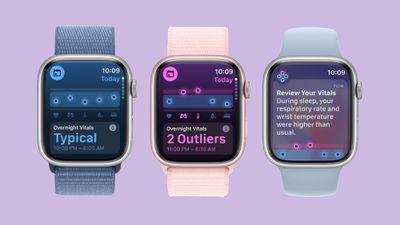
Apple today released the first public betas of tvOS 27 and watchOS 27, giving Apple TV and Apple Watch users a chance to try the new software ahead of its fall launch. There's also a new HomePod Software 27 beta for the HomePod and HomePod mini.
You can sign up for Apple's public beta testing program on the beta website, and then download the updates through the Settings app on each device. Today's public betas are the same as the third developer betas released last week.
watchOS 27 adopts Siri AI, and you can use Siri from your wrist as long as you have an iPhone that supports it. Siri AI can access your personal information, answer all kinds of questions, and complete tasks for you. There is a dedicated Siri app that's front and center on the watch in the new dynamic app grid that comes up when pressing the Digital Crown.
There's a new gesture for selecting a widget in the Smart Stack, plus Apple added Smart Stack suggestions for finding a parked car, accessing a transit card, and getting a birthday reminder.
Workout Buddy works without your iPhone nearby, treadmill run and walk distances are tracked more accurately, and Apple added a unified Find My app that also supports Precision Finding.
tvOS 27 has a redesigned Podcasts app, Hi-Res Lossless audio and AutoMix song transitions in Apple Music, and easier profile switching. With performance improvements, apps launch faster, animations are speedier, and devices connect more quickly when AirPlaying content.
Apple today seeded the fifth betas of upcoming iOS 26.6 and iPadOS 26.6 updates to developers for testing purposes, with the software coming a week after Apple seeded the fourth betas.
Registered developers can download the betas from the Settings app on the iPhone or iPad by going to the General section and selecting Software Update.
With iOS 27 set to launch in September, Apple is wrapping up work on iOS 26. We are not expecting any major new features in the iOS 26.6 update, and it will primarily focus on bug fixes and performance improvements.
The update adds new wording around blocked contact limits, letting users know when they have exceeded the maximum number of blocked contacts. The update might also include a new anti-snatching feature that locks your iPhone if it's grabbed from your hand.
Apple today provided the fifth beta of an upcoming macOS Tahoe 26.6 update to developers for testing purposes, with the update coming a week after Apple seeded the fourth beta.
Developers can download the macOS Tahoe 26.6 update by opening up the System Settings app, selecting the General category, and then choosing Software Update. Beta Updates will need to be enabled, and a free developer account is required.
With macOS Golden Gate launching in just a couple months, Apple is likely focusing most of its attention on the new software. We are not expecting any major new features in macOS Tahoe 26.6.
Apple today provided developers with the fifth betas of upcoming watchOS 26.6, tvOS 26.6, and visionOS 26.6 betas for testing purposes. The software comes a week after Apple seeded the fourth betas.
The software updates are available through the Settings app on each device, and because these are developer betas, a free developer account is required.
There's no word on what's in the software as of yet. watchOS, tvOS, and visionOS often get few features in each new beta, with updates primarily focusing on bug fixes and performance improvements.
OpenAI's ambitions to build a hardware rival to the iPhone are already running into trouble because of Apple's trade secret lawsuit, according to Bloomberg's Mark Gurman, who argues the damage is showing up well before any court ruling.
Apple sued OpenAI last week, accusing the company of pushing former employees, and even people it was trying to recruit, to hand over details on unreleased products. The suit also claims OpenAI coached new hires on how to dodge Apple's exit-interview security checks using a document tied to former iPhone design chief Tang Tan. Apple is asking the court to order OpenAI to stop the alleged conduct, destroy any proprietary material it obtained, and pay damages.
A courtroom resolution could take years, Gurman says, but he argues the suit is doing damage now, squeezing OpenAI's ability to recruit and creating drag on its device work long before a judge weighs in. OpenAI has declined to discuss its hardware roadmap directly, though in response to the suit the company said it has "no interest in other companies' trade secrets" and remains focused on its own technology.
The scale of the talent drain is a major part of why this matters to Apple. More than 400 former Apple employees now work at OpenAI, including former Apple design chief Jony Ive, and Gurman says the company poached so heavily from Apple's iPhone product design group specifically that Apple had to rebuild parts of the team. Apple has responded with bigger retention bonuses and executives personally working to keep engineers from leaving.
The trade secret situation has apparently become one of Apple's biggest internal concerns of the past several months, ranking alongside tariff exposure and the ongoing memory chip shortage. In its own court filing, Apple frames the case as narrowly about trade secrets and describes OpenAI's hardware business as still nascent, arguing that discovery is needed to expose "the pervasive theft of Apple's trade secrets."
The lawsuit is said to already be reshaping OpenAI's hiring, independent of anything a court eventually decides. Apple employees weighing a move to OpenAI may now think twice given the added scrutiny, and even interviewing there could draw attention from Apple's security team, which could keep more engineers at Apple and slow the flow of institutional knowledge to OpenAI.
Former Apple employees are likely to grow more guarded about discussing prior work, with managers avoiding technical questions that risk touching Apple's confidential information. New legal reviews, tighter internal controls, and compliance training could pull engineers away from actual development, while senior OpenAI leadership spends time on discovery and depositions.
Given Apple's leverage over Asia's consumer electronics manufacturers, suppliers may be reluctant to deepen ties with OpenAI for fear of jeopardizing bigger, longer-standing relationships with Apple or getting pulled into the litigation themselves.
Bloomberg Intelligence wrote that "Apple is likely to secure targeted preliminary relief tied to OpenAI's device effort." Any such order would likely require disputed materials to be isolated, evidence preserved, and compliance certified, which could slow OpenAI's hardware plans further. In the longer term, if Apple can prove its trade secrets made it into OpenAI's products, OpenAI could be forced to redesign them.
Regardless, a person familiar with OpenAI's plans told Gurman the company still expects to announce its first hardware product this year and release it in 2027, though that could shift as OpenAI reviews Apple's claims. That device is reportedly far along, but building out a wider family of products, the kind Bloomberg previously described as central to OpenAI's device ambitions, will likely get harder. OpenAI has reportedly explored categories including smart speakers and wearables with an iPhone-style device as the eventual goal, but a simpler, non-phone product is expected to ship first.
Apple captured a record 20% share of the global smartphone market in the second quarter of 2026, even as worldwide shipments fell 4% year-over-year amid an ongoing memory chip shortage, according to a new report from Omdia.
It is Apple's best second-quarter showing on record, landing in what is normally its slowest stretch of the year. Omdia credits this to a strong iPhone 17 upgrade cycle, as well as Apple keeping prices flat across the lineup while rivals were forced to raise theirs. The firm still flagged that Apple raised prices on other products late in the quarter, which raises the question of whether iPhone pricing will follow suit later this year.
The wider industry slump traces back to a memory chip shortage that has pushed component costs sharply higher, with some vendors reportedly paying several times more for memory than a year ago. Samsung was the only other major vendor to grow, holding the top overall spot at 22% share as Chinese competitors pulled back their lineups and raised prices to cope.
Omdia expects the squeeze to worsen over the next two quarters as peak shopping season collides with tight supply, pushing vendors further upmarket to protect margins. That is expected to leave fewer affordable options for budget buyers, and adds another data point to observe as Apple heads into an iPhone 18 cycle already facing rising component costs of its own.
In March, Apple informed the EU that it had agreed to acquire certain assets and hire employees from SigScalr, according to a notice published today on the European Commission's website.
SigScalr created the open-source observability platform SigLens, which companies can use to aggregate and analyze logs, metrics, and traces at massive scales for monitoring and debugging purposes. SigLens was known for being a cost-effective and fast solution compared to many competing platforms.
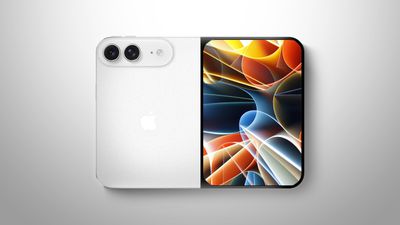
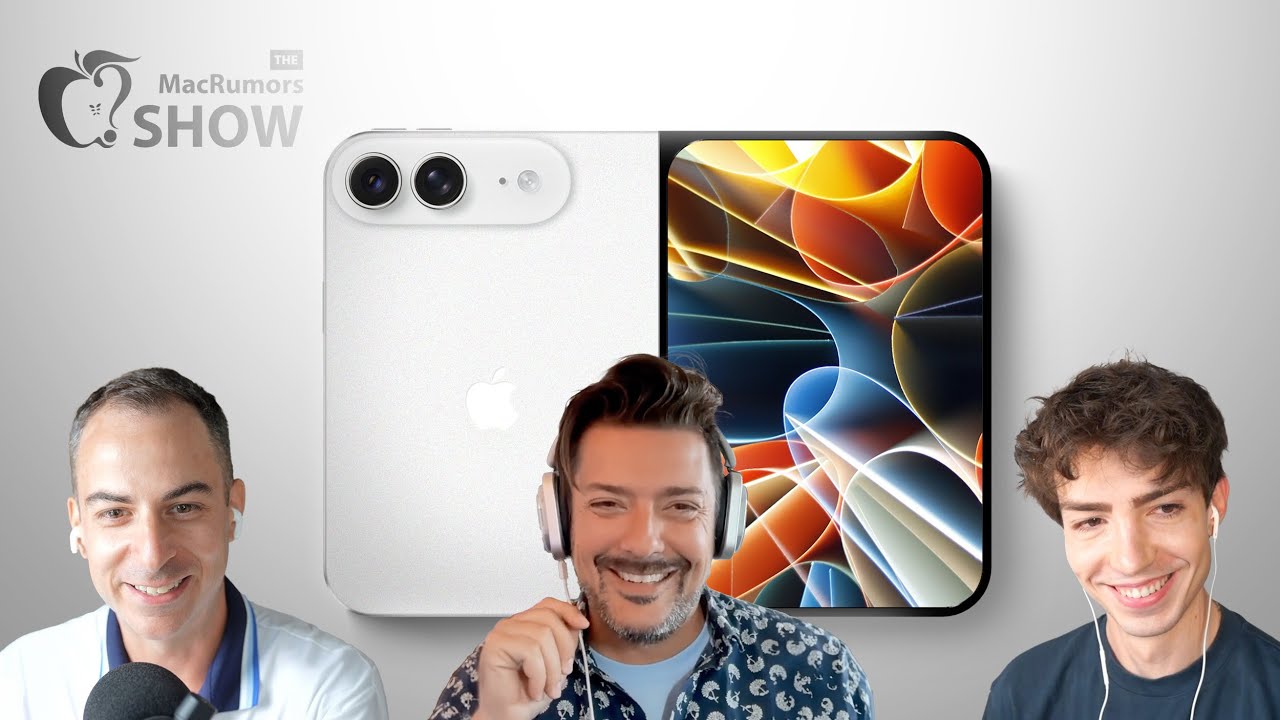
Apple's first foldable iPhone, with a book-style design featuring a ~5.5-inch outer display and a ~7.8-inch inner display with a minimal crease down the middle.