Published Blacklist Blocks Core Location Only?
DaringFireball.net clarifies that the published blacklist url likely only blocks malicious apps from accessing the iPhone's Core Location functions. Core Location allows applications to detect the user's location through GPS and Wi-Fi triangulation.
An informed source at Apple confirmed to me that the clbl in the URL stands for Core Location Blacklist, and that it does just that. It is not a blacklist for disabling apps completely, but rather specifically for preventing any listed apps from accessing Core Location an API which, for obvious privacy reasons, is covered by very strict rules in the iPhone SDK guidelines.
This being said, this doesn't change the fact that Apple has suggested they can disable Applications remotely:
Since each iPhone program will be digitally signed by its creator, this gives Apple the ability to turn off the spigot, as Steve Jobs put it, and revoke programs that dont meet its standards.
Popular Stories
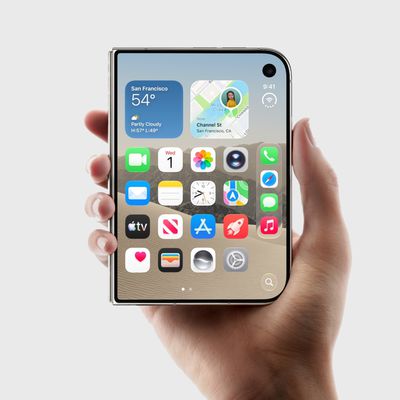
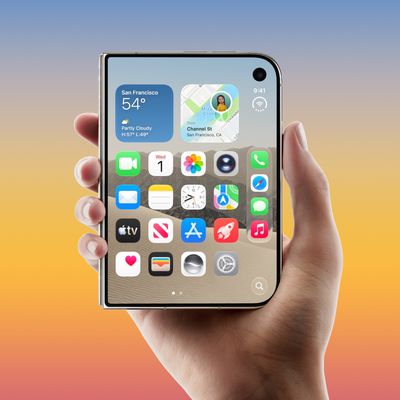
Bloomberg's Mark Gurman today said Apple has four goals for future iPhone Duo models: Face ID, an Action button, a telephoto camera, and a thinner-and-lighter design. Gurman said Apple has already developed iPhone Duo 2 prototypes with Face ID on the outer display, but it is "running out of time" to finalize the feature for that model, so it might not arrive until the iPhone Duo...
Apple today launched a new research study in the U.S. to explore the use of AI for health, and it has released a dedicated iPhone app for participants.
In a press release, Apple said the study and app are "designed to advance the understanding of how people interact with conversational health AI tools."
The Apple Health AI Study App contains a generative AI chatbot that participants can...
Apple today added a new option for unlocking the iPhone Duo using the front-facing camera, giving device users multiple ways to access their content. The feature is available in the second iOS 27.3 beta.
The option to unlock with facial recognition is only available on the Lock Screen, and authentication via Touch ID is still needed for Apple Pay purchases, adding passwords and logins, and...