The Associated Press reports that toy company Hasbro is set to unveil a new device called "My3D" that will allow iPhone and iPod touch users to view 3-D content on their devices.
It promises three-dimensional content that offers a 360-degree experience in gaming, virtual travel experiences and entertainment content. It's aimed at both children and adults.
The device, which resembles a pair of binoculars with a slot in which users insert their iPod or iPhone, will be priced at $30. It will be available starting next spring at stores where Apple's iPhones and iPod Touches are available.
According to the report, Apple assisted Hasbro with development of the My3D accessory, which will require specialized apps to support display of the 3-D content. Hasbro has teamed with Dreamworks Animation, as well as a forthcoming 3-D TV network backed by Discovery, Sony, and IMAX, to produce content for the device.
In its review of the new 11-inch MacBook Air published last week, Ars Technica noted that the battery life of the machine takes a substantial hit when browsing sites with Adobe's Flash Player enabled, pointing to the prevalence of CPU-heavy Flash ads in use on the Internet.
Having Flash installed can cut battery runtime considerably - as much as 33 percent in our testing. With a handful of websites loaded in Safari, Flash-based ads kept the CPU running far more than seemed necessary, and the best time I recorded with Flash installed was just 4 hours. After deleting Flash, however, the MacBook Air ran for 6:02 - with the exact same set of websites reloaded in Safari, and with static ads replacing the CPU-sucking Flash versions.
The difference has gained much attention due to the MacBook Air's limited battery capacity, the ongoing dispute between Apple and Adobe over Flash, and Apple's decision to ship the new MacBook Air without Flash Player pre-installed, a change coming to all of the company's Mac products.
Fast Companyspoke with Adobe Chief Technology Office Kevin Lynch about the MacBook Air news and the broader dispute over Flash, and Lynch argued that it makes perfect sense that displaying Flash content would utilize more battery power than not displaying it. Lynch also claimed that displaying the same content in Apple-supported HTML5 technology would use as much or more battery power than in Flash.
"It's a false argument to make, of the power usage," Lynch explains. "When you're displaying content, any technology will use more power to display, versus not displaying content. If you used HTML5, for example, to display advertisements, that would use as much or more processing power than what Flash uses."
Lynch said several studies have already confirmed Flash's higher battery life, and also argued that HTML5 had far less reliable playback.
Lynch went on to focus on the "negative campaigning" against Adobe's Flash technology, taking aim at Apple for "inciting" the movement, calling Apple's choice to cut off access to Flash content for its iOS users "hurtful" to Adobe and Flash developers and "counter to [Adobe's] values".
"I just think there's this negative campaigning going on, and, for whatever reason, Apple is really choosing to incite it, and condone it," Lynch says. "I think that's unfortunate. We don't think it's good for the web to have aspects closed off--a blockade of certain types of expression. There's a decade of content out there that you just can't view on Apple's device, and I think that's not only hurtful to Adobe, but hurtful to everyone that created that content."
For its part, Adobe is looking at how to accommodate the growing presence of HTML5 content on the Internet, recently offering a demo of a tool that would allow developers to easily port much of their Flash content to HTML5.
Patently Apple reports on a newly-published patent application from Apple coming out of the European patent office and revealing user interfaces offering scrollable menus and toolbars designed to handle the ever-increasing number of tools and options in many applications while limiting the amount of space required to access those options.
In particular, Apple's patent application describes the use of a small selection window through which a variety of options could be scrolled, rather than offering an entire toolbar with all options remaining visible at all times. The drawings accompanying the patent application depict implementations on both Mac OS X and iOS.
Apple's patent and illustrations introduce us to a new concept of scrollable menus and toolbars that may very well end up in both OS X Lion and a future iteration of iOS. The new menus and toolbars may also be integrated into future iterations of Apple applications such as Aperture and/or suite applications like Pages, Numbers and iMovie.
To begin with, Apple states that their invention provides a novel method for presenting a menu in a graphical user interface. The menu includes several selectable menu items that are assigned in a particular order for scrolling through a selection window based on user input. In some embodiments, each of the menu items is associated with a command. When a menu item is in the selection window, a user could select the menu item in order to perform the command associated with the menu item.
In addition to vertical and horizontal scrolling, Apple proposes other geometric organizations such as arcs and circles of icons that could permit a large number of icons to be displayed in a limited area and scrolled into position for selection.
TiPb posts a video demonstrating the performance of the iPhone 3G under the golden master version of iOS 4.2, revealing what appears to be an improvement over iOS 4.1. While the performance obviously does not match that of the iPhone 4, which offers significantly better hardware than the iPhone 3G, the new software version does seems to make for an improved user experience on the older device.
iPhone 3G's hardware isn't as fast and it's RAM is literally a quarter of iPhone 4's but it did a decent job typing, scrolling, pinching, and zooming its way around iOS 4.2.
Users reported significant issues with the original iOS 4 release on the iPhone 3G, primarily citing issues with performance, but also battery drains and overheating. Apple CEO Steve Jobs noted in response to a customer email on the issue that a software update was forthcoming, and an informal comparison did suggest that iOS 4.1 brought improved performance to the iPhone 3G.
Those improvements have not, however, satisfied all iPhone 3G owners, as one filed suit against Apple late last month, seeking class action status for claims that iOS 4 essentially makes iPhone 3Gs unusable.
In her complaint, Wofford claims that Apple was aware that iOS 4 would cause degraded performance on older iPhones, and she accused Apple of purposely creating an incentive for customers to purchase newer iPhones.
"Apple has falsely, intentionally and repeatedly represented to owners and consumers of the iPhone 3G that its new operating system for the device, iOS4, was of a nature, quality, and a significant upgrade for the functionality of all iPhone devices, when in fact, the installation and use of the iOS4 on iPhone 3G resulted in the opposite - a device with little more use than that of a paperweight," the complaint read.
Apple seeded the golden master version of iOS 4.2 to developers early last week, and many observers are expecting a public release sometime this week.
French site MacGeneration reports [Google translation] that one of its readers emailed Apple CEO Steve Jobs to inquire about the reasons behind last Friday's announcement that the company will discontinue the Xserve rackmount server. Jobs reportedly responded to the email, unsurprisingly noting that poor sales were the reason for the discontinuation.
Hardly anyone was buying them.
Sent from my iPhone
While Apple has not routinely revealed sales figures for the Xserve, the report points to data from research firm Gartner published several years ago showing that Apple was selling on the order of 10,000 units per quarter, a tiny fraction of the company's overall computer sales.
With the discontinuation of the Xserve, Apple has suggested that potential customers consider either the Mac mini, which gained a server option in late 2009, or the Mac Pro, which saw Apple release a server-specific standard configuration on Friday.
Toshiba announced today the introduction of a "new form factor" in high capacity solid-state storage called the "Blade X-gale" series. MacRumors readers will recognize the small SSD sticks as the same product that is used in Apple's new MacBook Air. Toshiba supplies these parts to Apple and is now offering the product to the mass market.
Available now, the new drives are offered in capacities of 64-gigabyte (GB) (1), 128GB and 256GB, with a maximum sequential read speed of 220MB per second (MB/s) (2) and a maximum sequential write speed of 180MB/s. Ideally suited for integration into space-sensitive products, including tablet PCs, laptops, mini-mobile and netbook PCs, Toshiba's latest SSD offering helps these devices achieve a super slim profile.
Toshiba's SSDs come in the same three sizes that Apple presently offers (64GB, 128GB, and 256GB) and even shares the same part numbers indicating that these are the exact same product. This is good news for potential MacBook Air customers as it offers a potential upgrade path for the MacBook Air's SSD drive which only comes in specific combinations from Apple. For example, the 256GB SSD is not available in the 11" MacBook Air. We should note that we haven't yet been able to confirm that the 256GB part will actually fit into the 11" MacBook Air, as the 256GB part is slightly thicker than the 64GB and 128GB parts (3.7mm vs 2.2mm).
Another company has already announced their own replacement SSD part for the MacBook Air, and Toshiba's offerings should guarantee a healthy aftermarket for the part. No pricing has been announced for devices.
MacRumors has received word that Apple today seeded a new version of Mac OS X 10.6.5, termed Build 10H571, to select developers for testing. The release comes as Apple this week wrapped up work on iOS 4.2 with the golden master being seeded to iOS developers on Monday. No details on any changes in the latest build have yet been revealed.
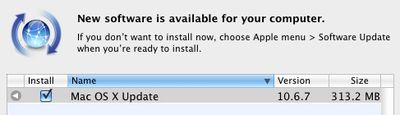
Mac OS X 10.6.5 is required to support the AirPrint functionality being included in iOS 4.2, and thus the two releases are expected to see a public release at roughly the same time, although Apple has so far only indicated that iOS 4.2 will drop sometime in November. But with the golden master of iOS 4.2 already finished, it appears likely the public release will occur sooner rather than later, which suggests that today's Mac OS X 10.6.5 build could be one of the last testing versions or even the final build to be released to the public.
Mac OS X 10.6.5 Build 10H568 was released to developers one week ago. Curiously, Apple just yesterday seeded the first developer build of Mac OS X 10.6.6, despite the fact that 10.6.5 has yet to be released to the public. Details on Mac OS X 10.6.6 suggest that it may be a relatively minor update to support Apple's forthcoming Mac App Store.
Boy Genius Report notes that it has received a tip claiming that Sprint is set to launch the ZTE Peel on November 14th. The Peel is a 3G hotspot device designed as a wraparound case for the iPod touch, providing mobile data access for the device that is typically limited to Wi-Fi-only connections.
According to the report, service for the Peel will be priced at $29.99 per month for 1 GB of data on a no-contract plan, but the price of the Peel itself remains unknown.
We don't have any details on how much the actual device will sell for, but we do know Sprint plans on charging $29.99 per month for 1GB of data usage with no contract.
According to the Peel's user manual that leaked from the U.S. Federal Communications Commission earlier this year, the case would be able to function as a traditional mobile hotspot, providing cellular data access for up to five nearby Wi-Fi devices.
Update: BGR has now received a screenshot appearing to confirm the November 14th release and noting a retail price of $79.99 for the Peel.
For several months, Adobe has been thinking about how it can involve the iPad and other tablet devices in the workflows of Photoshop users, asking users for feedback on what sorts of capabilities they might like to see.
Demo of color-mixing palette tool on iPad
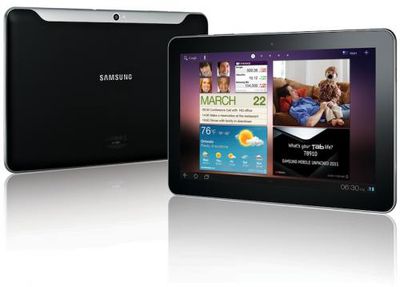
Building on that feedback, the company has now taken its first steps in that direction, as evidenced by a pair of brief demos at last week's Adobe MAX conference in which Adobe Chief Technology Officer Kevin Lynch showed off the company's content-aware fill tool running on a Samsung Galaxy Tab and a color-mixing paint palette application running on an iPad.
Mockup of Photoshop tools on iPad
Adobe's John Nack has also noted that the company's designers have begun mocking up other tools that could allow the iPhone and iPad to serve as extensions of Photoshop running on a desktop or notebook computer.
In a nutshell, you get:
- groups of task-based tools & commands (e.g. all your photography/retouching tools & buttons on one page, or all your painting ones, 3D ones, etc.) - interactive, task-based tutorials that drive Photoshop, helping you get things done
Among the ideas presented in a PDF summary of the team's efforts are custom toolsets accessible by tapping on a companion iPhone application, tutorials with tool accelerators to help quickly walk users through certain tasks, and companion iPad applications housing many of the commonly-used tools for easy access while also allowing for limited image editing (such as liquifying, painting, and drawing) using the multi-touch interface.
Mockup of Photoshop toolset on iPhone
All of these latter concepts appear to simply be mockups at this point, but Adobe is clearly thinking about how best to take advantage of multi-touch functionality to enhance the Photoshop's functionality without attempting to replicate a full Photoshop experience directly on the touch device without the precision and power available on a traditional desktop or notebook.
Apple has long touted the role the iPhone can play in the business world, frequently pointing to the percentages of top companies using or piloting the device in their businesses. Bloomberg reports today that two of the biggest U.S. banks, Bank of America and Citigroup, are engaged in pilot testing that could open the door for their employees to adopt the iPhone for corporate usage as an alternative to their existing BlackBerry-dominated systems.
Bank of America Corp. and Citigroup Inc. are considering whether to let employees use the Apple Inc. phone as an alternative to Research In Motion Ltd.'s BlackBerry for corporate e-mail, said three people familiar with the plans. The banks are testing software for the iPhone that's designed to make it secure enough for company messages, said the people, who didn't want to be named because the plans aren't public.
The news marks yet more evidence of Research in Motion's weakening position in the corporate world, following strong growth by Apple in the most recent quarter which saw the iPhone surpass the BlackBerry line in sales.
Bank of America, which has about 284,000 employees, and Citigroup, with 258,000 workers, are also testing Android smartphones, one person said. The efforts are intended to widen the choice of devices employees can use, rather than replace the BlackBerry, the person said.
The trials at Bank of America and Citigroup involve more than 1,000 employees, two people said. Testing, which typically takes four to six weeks, is advanced at Bank of America and will be followed by a pilot project before potentially wider implementation, one person said.
The report points to a survey showing 83% of U.S. companies now permitting employees to use devices other than BlackBerry phones, with many companies finding that they can cut costs by allowing additional options as employees become increasingly willing to pay for iPhones out of their own pockets.
One item of interest that was overlooked in this morning's news that Apple is discontinuing the Xserve is that the company has added a new standard configuration to its Mac Pro lineup. The new "Server" configuration offers an entry-level 2.8 GHz quad-core processor with 8 GB of RAM, two 1 TB hard drives, and Mac OS X Server for $2999.
The specs on the Mac Pro Server configuration can be boosted with a full range of build-to-order options, including processor options up to dual 2.93 GHz six-core Westmere chips, up to 32 GB of RAM, additional hard drives, a second optical drive, RAID card, Fibre Channel PCI Express card, and Xsan storage area network software.
While Apple's "non-server" Mac Pro options could (and still can) be configured with Mac OS X Server, the new Server configuration offers an optimized starting point for building a machine to focus on server tasks rather than act as a workstation.
As noted by MacGeneration, Apple has announced it will be discontinuing the Xserve as of January 31, 2011. The note appears on Apple's site and links to a PDF titled "Xserve Transition Guide". In the guide, Apple explains that they will not be developing a future version of the Xserve.
Apple will not be developing a future version of Xserve. Xserve will be available for order through January 31, 2011. Apple will honor and support all Xserve system warranties and extended support programs. Apple intends to offer the current ship- ping 160GB, 1TB, and 2TB Apple Drive Modules for Xserve through the end of 2011 or while supplies last. Apple will continue to support Xserve customers with service parts for warranty and out-of-warranty service..
The two alternative server solutions include the Mac Pro with Snow Leopard Server and the Mac mini with Snow Leopard Server. Apple provides transition considerations for customers migrating from the Xserve to these products.
The Xserve was Apple's rackmount line of Mac servers which was first introduced in May, 2002. Apple has kept up with mostly annual updates to the line. The last update for Xserve was April, 2009.
In a rather unusual move, Apple today seeded the first developer version of Mac OS X 10.6.6, known as Build 10J521, even before the company has publicly released Mac OS X 10.6.5.
As 9 to 5 Mac notes, there are no documented known issues in the build and the seed notes mention a focus on support for the forthcoming Mac App Store.
- Contains developer support for fetching and renewing App Store receipts. See "Validating App Store Receipts" for more details.
Interestingly, the Mac OS X 10.6.6 update is only 3.7 MB in size, suggesting only very minor tweaks at this point.
The unusual early seeding of Mac OS X 10.6.6 relative to its predecessor and the apparent requirement of Mac OS X 10.6.6 for certain Mac App Store functions suggest that Apple is likely fast-tracking the operating system update for release in the not-so-distant future.
Apple announced during its October 20th media event that the Mac App Store would launch on Mac OS X Snow Leopard within 90 days, and just yesterday the company began accepting submissions from developers for inclusion in the Mac App Store.
Apple today released iPhoto 9.1, an update to the iPhoto application included in the company's new iLife '11 suite. The update restores support for the photo calendars that had gone missing in the initial iPhoto '11 release, and also fixes several other bugs and introduces new holiday-themed letterpress card options.
This update adds several new print product options to iPhoto '11. It also improves overall stability and addresses a number of other minor issues.
- Provides the ability to create and order calendars in iPhoto. - Additional letterpress holiday greeting card themes are now available. - Fixes an issue that prevented videos downloaded from MobileMe or Flickr from importing correctly into iPhoto events. - The update is recommended for all users of iPhoto '11.
The update is the second to be released for iPhoto '11 since its debut just over two weeks ago, as the company quickly pushed out iPhoto 9.0.1 late last week to address issues with data loss when upgrading from iPhoto '09 to iPhoto '11.
9 to 5 Mac notes that Google has started rolling out its "results-as-you-type" Instant search feature to users visiting the company's homepage on iOS devices. The feature does not yet appear to be available in all locations within the United States, but it should presumably be coming soon to those who have not yet seen it appear.
Notably, the feature is opt-out, meaning that it will be the default behavior for users on the company's site unless they choose to turn it off.
Update: Google has now issued a blog post announcing the launch of Google Instant on iOS and Android in the United States.
We've received word that Apple has begun to deploy iAd availability on a worldwide basis, with developers reporting that they are beginning to see ad impressions rolling in from locations around the globe. Previously, developers had seen ad requests from those countries go unfilled as Apple limited the program to North America and the United Kingdom.
The change opens up additional revenue streams for developers and new audiences for advertisers as the company prepares to extend the iAd service to the iPad with the release of iOS 4.2 sometime this month. With Apple having released the golden master version of iOS 4.2 to developers earlier this week, a public release could occur at any time.
Worldwide Smartphone Sales in 3Q10 in Millions of Units (Source: IDC)
Offering a more complete look at the global smartphone sales for the third quarter of 2010 as hinted at by Canalys earlier this week, research firm IDC has now published its data on global smartphone sales, similarly revealing Apple taking second place with 17.4% of the market and ranking behind only Nokia's 32.7% share.
Apple marked a new milestone in iPhone shipments, enough to take the number 2 ranking worldwide. The third quarter is typically Apple's highest volume quarter, and 3Q10 was no exception. Consumers who did not get their iPhone 4 at the end of June were rewarded for their patience and even the much-hyped 'Antennagate' did little to dampen demand, as the company moved swiftly to provide solutions.
Apple's 90.5% year-over-year growth was only on par with that of the overall industry, but Research in Motion's slower growth of only 46% enabled Apple to take the #2 spot in the rankings.
Several smaller smartphone competitors embracing Google's Android platform saw tremendous year-over-year growth during the quarter, with Samsung rising to fourth place on over 450% growth and HTC seeing over 175% growth.
Just as rumors of Intel pushing forward on its Light Peak connectivity standard surface, LaCie has announced support for USB 3.0 on Mac OS X with the release of a free driver to support the company's USB 3.0 hard drives.
LaCie announced today a major breakthrough, introducing industry-leading performance to Mac users with the availability of a USB 3.0 driver for Mac OS. The driver brings the fast speeds of LaCie's USB 3.0 hard drives to Mac computers and laptops - delivering transfer rates that are more than two times faster than FireWire 800!
With Apple yet to support USB 3.0 hardware and CEO Steve Jobs suggesting that such support is not likely to appear anytime soon, users will need to purchase either a PCI Express Card ($49.99) or ExpressCard/34 ($59.99) to add two USB 3.0 ports to their Mac. Consequently, LaCie's USB 3.0 solutions are only compatible with Mac Pros offering a PCI Express slot and MacBook Pros offering an ExpressCard/34 slot.
USB 3.0 offers a theoretical maximum of 5 Gb/s, topping the 3 Gb/s available through eSATA. Real world burst performance on LaCie USB 3.0 hard drives is on the order of 130 MB/s for single hard drives and 220 MB/s for dual hard drives.
Update: For clarification purposes, LaCie is not the first manufacturer to deliver USB 3.0 drivers to Mac, as CalDigit released a Mac-compatible SuperSpeed PCI Express Card and SuperSpeed ExpressCard, to support the company's line of AV Drive external hard drives, in early September.