Ask MacRumors
Should You Buy the Apple Watch Series 12
The Apple Watch Series 12 is Apple's current flagship Apple Watch, released in September 2026. The Apple Watch Series 12 is at the beginning of its product cycle, so now is the best time to buy. We aren't expecting a new model until September 2027.
Compared to the Series 11, the Series 12 has a faster S11 chip and expanded heart rate tracking capabilities that measure heart rate and HRV more frequently.
If you have an older Apple Watch model, the Series 12 is well worth the upgrade. It has the first Apple Watch chip refresh since the Series 9, so it is faster and more capable than prior models. It features all of the health features Apple has introduced in the Apple Watch to date, including heart rate tracking, ECG, blood oxygen monitoring, hypertension alerts, sleep apnea alerts, sleep tracking, and more.
For those who want a more rugged model with a larger display, Apple sells the $799 Apple Watch Ultra 4, which has satellite connectivity this year. The Apple Watch SE 3 is also available for those who want a more affordable option. The SE 3 lacks blood oxygen monitoring and ECG, plus it has a slower processor.
Apple Watch Series 12
Contents
The Apple Watch Series 12, introduced in September 2026, is the newest iteration of the Apple Watch that initially launched in April 2015.
Apple did not update the design of the Series 12, and it has the same shape and size as the Series 11. It features a square-shaped casing that has rounded edges, a slim-bordered display, sapphire crystal backing and Digital Crown with haptic feedback.
The back of the Apple Watch is made from metal, with a sapphire crystal that protects the included sensors. The metal integrates the Apple Watch antenna into the housing, saving component space, and the matching metal for the front and back is meant to make the Apple Watch look like it's made from a single piece of metal.
The Apple Watch Series 12 is available in 42mm and 46mm size options, and it comes in aluminum, ceramic, or titanium. The aluminum Apple Watch Series 12 is available in Dark Bronze, Light Gold, Black, and Space Gray.. The titanium Series 12 is available in Radiant Gold or Natural with a shiny, reflective finish. Apple stopped selling watches in ceramic for several yers, but it's back for the Series 12 in Pearl White and Night Blue.
Display quality is the same, and the Series 12 features an LTPO3 wide-angle OLED display with a maximum brightness of 2,000 nits. Always-On display technology lets users see their watch face and complications at all times, and there's still a ticking seconds hand that's visible without raising the wrist.
The aluminum Series 12 now uses Ceramic Shield 2 that's 60 percent tougher than the prior Ion-X glass. The titanium and ceramic models use a durable sapphire crystal display. The Series 12 features IP6X dust resistance, and a WR50 water resistance rating so it is swimproof. There is a water temperature sensor that displays the water temperature when you're swimming or in the ocean, and a depth gauge that works up to 6 meters deep for activities like snorkeling and shallow diving. A Tides app also provides seven rolling days of forecasted tidal information for coastlines and surf spots worldwide.
Apple added a new processor to the Series 12. It's equipped with a faster S11 chip with a 64-bit dual-core processor, 64GB storage, and a 4-core Neural Engine. The S11 chip supports Audio Intelligence features including Live Rewind, Siri Recap, Shazam, and Sound Recognition. Live Rewind listens to what's going on and can give you a transcript if you miss something that was said, while Siri Recap uses the same listening capabilities to give you a high-level overview of your conversations throughout the day.
The Apple Watch Series 12 has updated optical and electrical heart sensors and larger, power-efficient green LEDs that power a Health Sensing System. Apple says the Series 12 has the most accurate heart rate sensing in a wearable device.
The watch measures heart rate and heart rate variability more frequently for new health and fitness features, including a real-time heart rate watch face complication and a new readiness score. Each morning, readiness analyzes your recent activity, training load, vitals, and sleep score and gives a 0-10 score ranking your capacity for the day ahead.
Apple redesigned the pedometer model with new machine learning algorithms, and it says the Series 12 gives more accurate distance measurements for indoor walk or run workouts. The S11 chip also offers more accurate step counts.
The Apple Watch Series 12 supports all of the prior health features available in the Series 11, including Heart rate monitoring, blood oxygen detection, ECG readings, sleep tracking with Sleep Score, fall detection, loud noise monitoring, built-in temperature sensing, sleep apnea detection, and hypertension notifications.
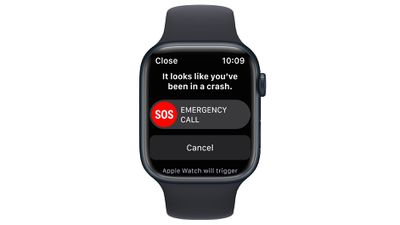
Crash Detection continues to use the watch's gyroscope and accelerometer along with an advanced sensor-fusion algorithm to detect severe car crashes and alert emergency services. When a crash occurs, the Apple Watch checks in with the user and if no response is received within a 10-second countdown, emergency responders are contacted. The Apple Watch Series 12 also supports Fall Detection.
Battery life has improved. The Series 12 battery still lasts for up to 24 hours, but it now offers up to 10 hours of battery life during an outdoor workout, which Apple says is a 25 percent increase compared to the Series 11. Battery life can be extended with Low Power Mode. Low Power Mode disables the Always-On display, turns off background heart rate measurements, limits Wi-Fi and cellular connections, and more.
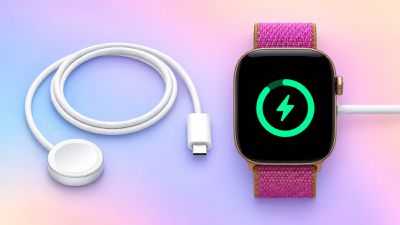
The Series 12 supports faster charging with the charger that it ships with. 15 minutes of charging offers up to 12 hours of additional battery life, which is 50 percent more than the Series 11. The Series 12 can also fast charge from 0 to 80 percent in approximately 30 minutes when using an appropriate fast charger.
Apple is using the same second-generation Ultra Wideband chip in the Series 12 as in the Series 11. The UWB chip enables Precision Finding for locating a misplaced iPhone with visual, haptic, and audio guidance. As with the Series 11, the Series 12 supports media that plays out loud when headphones are unavailable.
Both GPS and GPS + Cellular models are available, and the cellular Apple Watches work with a separate cellular plan. The Series 12 continues to offer 5G connectivity in many countries.
Apple Pay purchases are available with credit and debit cards stored in the Wallet app, and can be activated at a tap to pay location by double-pressing on the side button.
The Series 12 is being sold alongside the larger, more expensive, and more rugged Apple Watch Ultra 4, plus the lower-cost Apple Watch SE 3.
Note: See an error in this roundup or want to offer feedback? Send us an email here.
How to Buy
The Apple Watch Series 12 can be ordered from Apple and other retailers, and it is priced starting at $399.
Reviews
Reviewers said the Series 12 brought meaningful improvements, even if it looks nearly identical to the Series 11.
The S11 chip is noticeably faster, especially for Siri AI, and the new more frequent heart rate tracking didn't appear to have an impact on battery life. Battery lasted about the same as the Series 11, and the fast charging helps. One reviewer said she went from 20 to 64 percent battery in 20 minutes.
Reviewers compared the Series 12 to the Oura ring, as the two health devices share some features. The Series 12 has a readiness score that's similar to Oura's readiness score, but Apple isn't charging a monthly subscription fee to use readiness and other Series 12 health features.
Reviewers also pointed out that Apple updates its readiness score throughout the day, which is unique among wearables with a similar feature.
Some of the key Series 12 features like Live Rewind and Siri Recap aren't available, but reviewers still said the Series 12 is a solid upgrade over older Apple Watch models. The Health Sensing System and increased heart rate measurements pair well with the upgraded Health app that Apple has in the works.
Design
The Apple Watch Series 12 has the same design as the Series 11, with no updates to the device's look except for the color options. It features the same rounded, square look that Apple has used for years.
The Apple Watch Series 12 is available in 42mm and 46mm size options, in aluminum, titanium, or ceramic, which is a casing material that returned this year.
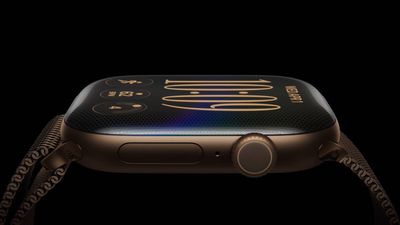
Series 12 models weigh between 31.5 grams and 52.9 grams depending on size and material, with the titanium models coming in at about five grams heavier than aluminum models and ceramic models at about 10 grams heavier. There have been some slight weight changes in the Series 12 compared to the Series 11, likely due to the new health sensors.
There are some small changes in sizing between the Series 11 and Series 12 Apple Watches. Most 42mm Apple Watch Series 12 models measure 42mm tall, 37mm wide, and 9.7mm deep, while the 46mm models measure 46mm tall, 40mm wide, and 9.7mm deep. Ceramic models are slightly different in size at 43mm tall, 37mm wide, and 9.85mm deep for the 42mm model and 47mm tall, 41mm wide, and 9.85mm deep for the 46mm model. Apple says the 42mm models fit 130mm to 200mm wrists, while the 46mm models fit 140mm to 245mm wrists.
The back of the Series 12 is made from an aluminum that matches the casing color, which means the device looks like it is crafted from a single piece of metal. A crystal back houses the electrical heart sensor and optical heart sensors, plus there is a speaker/air vent at the back. The sensors enable health-monitoring features like heart rate detection, ECGs, and more.
There is a Digital Crown on the side of the Apple Watch for scrolling, navigation, and Smart Stack access, and there is a side button for bringing up frequently used apps, accessing emergency services, confirming Apple Pay purchases, and more.
The Digital Crown is equipped with haptic feedback that offers a precise, mechanical feel when scrolling through lists and controlling various aspects of the Apple Watch, and it is key for the ECG app because it has a built-in electrode that works in tandem with the rear sensors.
Colors and Materials
The Apple Watch Series 12 comes in aluminum, titanium, and ceramic, a material Apple brought back after discontinuing it several years ago. The aluminum Apple Watch models are the most affordable, while the titanium and ceramic models are pricier.
Aluminum colors include Dark Bronze, Light Gold, Black, and Space Gray. Titanium colors include Radiant and Natural, both of which have a mirror-like finish. Ceramic models can be purchased in Pearl White or Night Blue and have a polished finish.
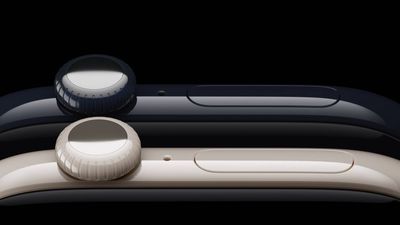
The titanium version of the Apple Watch Series 12 is 3D printed with aerospace-grade titanium powder. Apple's specialized printers create the case layer by layer, using less material than traditional forging.
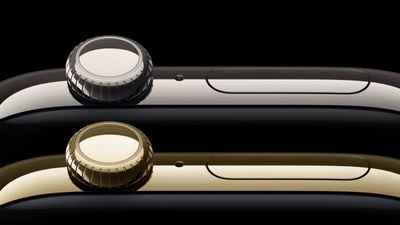
The aluminum Apple Watch models are made from 100 percent recycled 7000 series aluminum, and are lightweight, inexpensive, and designed for an active lifestyle. The titanium models are heavier, more expensive, and designed for everyday wear, as are the ceramic models.
Durability and Water Resistance
The aluminum Apple Watch Series 12 models now use Ceramic Shield 2 for the display. Apple says the material is 60 percent tougher than the Ion-X glass used for the Series 11.
Titanium and ceramic models use an even more durable sapphire crystal. Sapphire crystal is a harder material that's more resistant to scratching and everyday wear and tear.
All Apple Watch Series 12 models feature IP6X dust resistance for use in environments like the beach or the desert, and they offer WR50 water resistance, rated for immersion in water as deep as 50 meters thanks to seals and adhesives. The speaker, which needs air to produce sound, is the only point of ingress and has been designed to expel water using sound vibrations after exposure to moisture.
Because it is rated for 50m immersion, the Apple Watch can be used when swimming in the ocean or in a pool. It can also be used for snorkeling and shallow diving up to 20 feet deep. Apple recommends against wearing the Apple Watch Series 12 when scuba diving, waterskiing, showering, or other activities that involve high-velocity water or deep submersion. For these water activities, the Apple Watch Ultra is recommended.
Apple's Apple Watch warranty does not cover water damage, so it is best to exercise caution when exposing the device to water.
Water Temperature Sensor and Depth Gauge
The Apple Watch Series 12 has a depth gauge and a water temperature sensor, which Apple says can be used for activities like swimming, shallow diving, and snorkeling.
The Depth gauge is able to measure up to six meters below the water's surface.
There's also a dedicated Tides app that provides information on high and low tides, rising and falling tides, tide height and direction, and sunrise and sunset.
Speaker
There is a single speaker in the Series 12, and it supports audio playback without connected headphones, so it can play music out loud.
Display
The Apple Watch Series 12 models have the same displays as the Series 11 models. The 42mm Apple Watch has a 374×446 resolution with 989 sq mm of display area, while the 46mm model has a 416×496 resolution with a 1,220 sq mm display area.
The LTPO3 OLED displays provide a wide viewing angle that ensures brightness remains consistent even when the Apple Watch is viewed from the side. Maximum brightness is still 2,000 nits, and minimum brightness is 1 nit. 1-nit minimum brightness allows for a second hand that updates even when the wrist is down.
With the always-on edge-to-edge display, the watch face, time, and complications are continually visible. The display dims when the wrist is down in order to preserve battery life, but key features like watch hands remain illuminated all the time.
Touching the watch face or raising the wrist brings the display back to full brightness, and to minimize battery drain, Apple has optimized watch faces for the feature. The Apple Watch's display also has a variable refresh rate that drops from 60Hz to as low as 1Hz when the watch is inactive.
S11 Chip
The Apple Watch Series 12 uses the S11 chip, which Apple says is its most powerful wearable chip. The S11 has a 64-bit dual-core processor, a 4-core Neural Engine, and 64GB storage capacity.
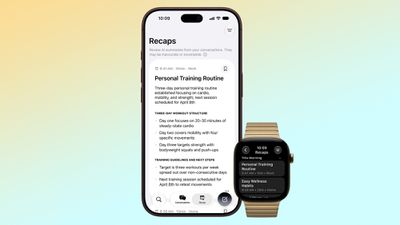
The S11 chip supports new Audio Intelligence features, Siri AI, the Health Sensing System, and more accurate step counts.
Audio Intelligence
Apple says the S11 has a Secure Exclave, which is a dedicated hardware-isolated compartment designed to process audio in isolation from the rest of the system. The Secure Exclave is used for Audio Intelligence features that include Siri Recap and Live Rewind.
There are four Audio Intelligence options.
- Sound Recognition - Alerts Apple Watch users about sounds nearby, like sirens, alarms, doorbells, or a baby crying. Apple says it is useful for users who are deaf or hard of hearing.
- Live Rewind - This feature can recall what was just said in a conversation. Pressing twice on the Digital Crown shows a transcript of the previous 15 seconds of a conversation.
- Siri Recap - Siri Recap creates high-level summaries of conversations that take place throughout the day. After a conversation, Apple Intelligence generates a title and key points in the Siri app so users can look back later.
- Shazam - Detects music playing around the user and displays the song title and artist's name in the Music Recognition widget in the Smart Stack.
Audio Intelligence features are opt-in. Siri Recap has several privacy features, including no speaker attribution, no audio recording because of the Secure Exclave, no full transcripts of conversations, and no transcripts of potentially harmful content or sensitive data. Apple says raw audio is inaccessible and deleted after processing.
Apple plans to implement Audio Intelligence later this year.
Gestures
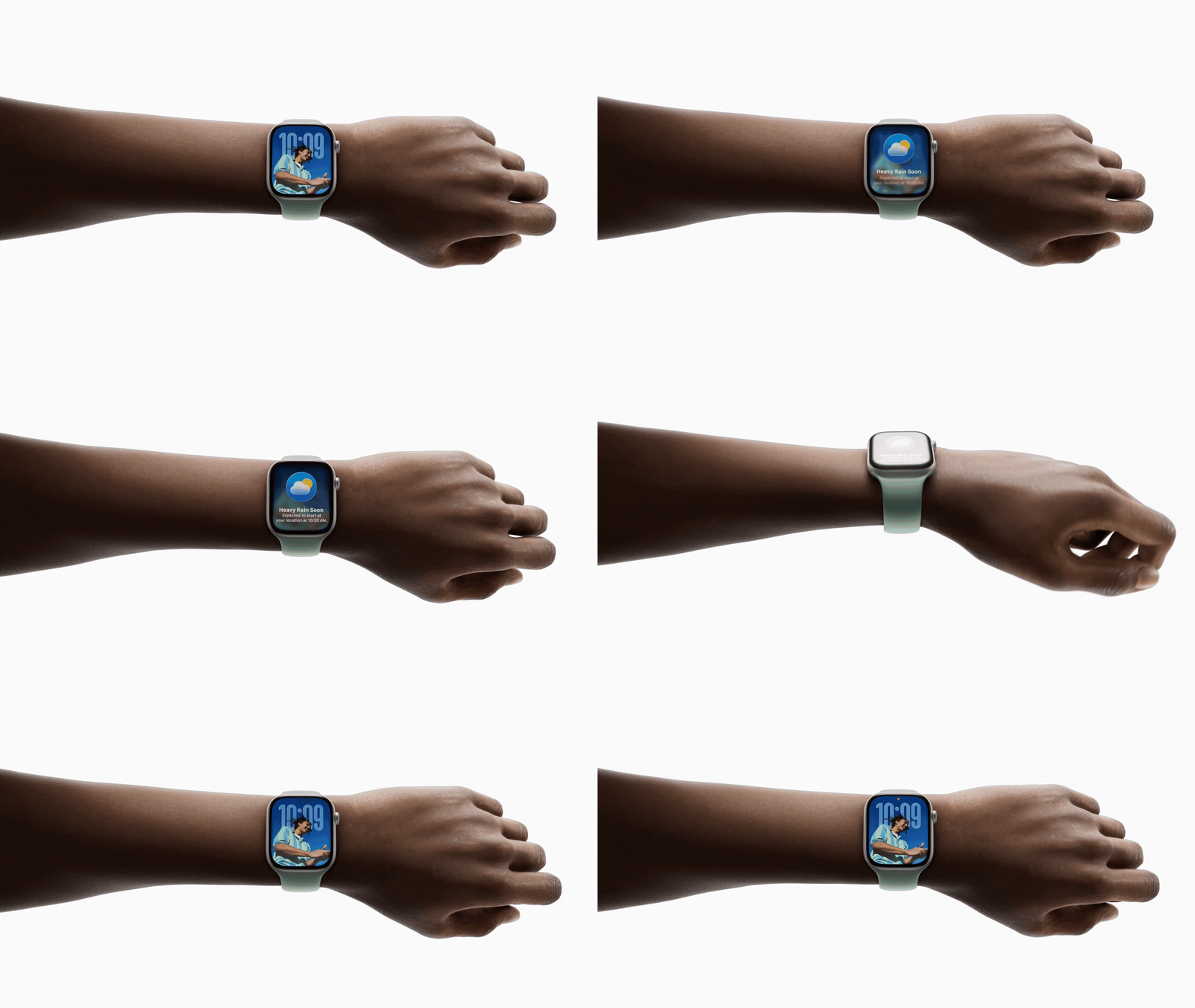
The S11 chip supports several gestures. There's a new single-handed tap gesture that lets users open a widget in the Smart Stack by tapping their index finger and thumb together.
Single tap works with double tap, a gesture that you can use to control the Apple Watch. When you double tap your index finger and thumb, the sensors in the Apple Watch detect the motion and can activate what's on the display, allowing you to do things like answer a call, end a call, open a notification, play or pause music, start or stop a timer, check your Smart Stack, and more. Double Tap also works in third-party apps. You can use double tap to scroll through the Smart Stack, and single tap to open a widget, all one-handed.
The S11 chip also Wrist Flick, a gesture that lets you dismiss incoming notifications, calls, and more with a flick of the wrist.
Health Features
The Apple Watch Series 12 has a new Health Sensing System that improves the tracking of heart-related data. The Health Sensing System includes a second-generation electrical heart sensor, an always-on optical heart sensor with larger, power-efficient green LEDs, a blood oxygen sensor, and a temperature sensor.
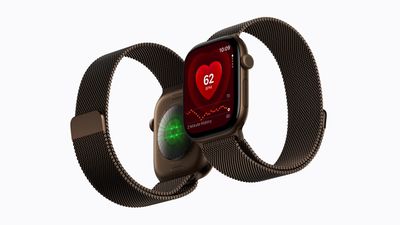
The always-on optical heart rate sensor calculates metrics like calorie burn, resting heart rate, heart rate variability, and heart rate irregularities. Compared to the sensor in the Series 11, it takes readings more frequently. It measures heart rate every five seconds, all day long, offering more insight into a user's fitness and physiological state while also making Exercise and Move Activity rings more accurate.
HRV, an indicator of stress and recovery, is measured up to 24 times more often. Apple updated the heart rate app to show a continuous heart rate reading and HRV data. There's a recovery HRV metric that identifies signals of stress and recovery, plus overall HRV for insights into a user's broader health. Recovery HRV measurements are included in overnight vitals, and there's also a daytime vitals metric.
Apple says the Apple Watch Series 12 offers the most accurate heart rate sensing in a wearable.
The electrical heart rate sensor can be used for taking electrocardiograms, and LEDs and infrared light enable blood oxygen monitoring. A built-in accelerometer and gyroscope enable other important health-related features such as fall detection.
The Apple Watch can detect a low heart rate, a high heart rate, and an abnormal heart rate, monitoring for health problems like atrial fibrillation and sending notifications when anomalies are detected.
Readiness
Readiness is a new metric available on the Apple Watch Series 12. It analyzes a user's recent activity, training load, vitals, and sleep score to give them insight into how well they can handle stress and activity in the day ahead.
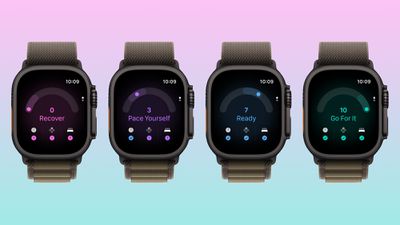
The Apple Watch gives a single 0-10 score with one of four recommendations: Recover, Pace Yourself, Ready, or Go For It.
Readiness is not a static score and it changes throughout the day as new health data comes in.
Step Tracking
Apple says the Series 12's pedometer model has been redesigned with new machine learning algorithms to give more accurate distance measurements during indoor walk or run workouts. Paired with the S11, the Series 12 offers the most accurate step tracking of any smartwatch.
Hypertension Alerts
The Apple Watch Series 12 supports detecting high blood pressure. The Apple Watch isn't able to measure specific systolic and diastolic pressures, but it looks for signs of hypertension in heart rate data.
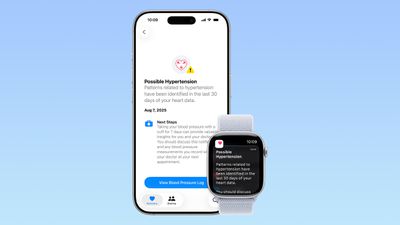
After collecting 30 days of heart rate information, the Apple Watch can determine whether patterns related to possible hypertension have been detected. It analyzes how a user's blood vessels respond to beats of the heart over 30 days. Data is refreshed every 30 days, and users who receive an alert can then provide 7-days of blood pressure testing if a blood pressure cuff is available to get more information before contacting a doctor.
ECGs
Electrodes in the back of the Apple Watch and the Digital Crown work together to allow users to take single-lead electrocardiograms. An ECG measures the electrical activity of the heart and can be used to diagnose health conditions by a doctor.
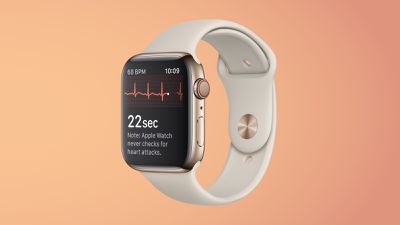
ECGs are captured by holding a finger on the Digital Crown of the Apple Watch and can detect a sinus rhythm (normal), an abnormal result, or, sometimes, an inconclusive result that should be shared with a doctor. The ECG is able to detect atrial fibrillation at heart rates between 50 and either 120 or 150 beats per minute, depending on country or region.
A single-lead ECG like the Apple Watch means there are two points of contact measuring the electrical sensations of your heart. Clinical electrocardiograms done by your doctor can have six to 12 leads for greater accuracy, but the Apple Watch offers the convenience of being able to take an ECG anytime anywhere in approximately 30 seconds.
Sleep Tracking
The Apple Watch Series 12 models can be worn at night to keep track of your sleep. The watch monitors when you're awake and when you're asleep, letting you know how much time you spent in the REM, Core, and Deep sleep stages. Sleep tracking also lets you know how often you've woken up in the night and for how long.
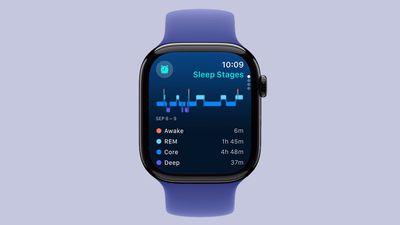
There's a Sleep Score metric that gives a numerical value for sleep quality. Sleep Score takes into account sleep duration, bedtime consistency, and how often the wearer wakes in the night, and how long is spent in each sleep stage.

Sleep Score shows the breakdown in each category so users can understand their sleep quality and learn steps to make it more restorative. Sleep Score is available on the Apple Watch Series 9 and later.
Sleep Apnea Detection
Using the accelerometer, the Apple Watch Series 12 can determine whether the wearer might suffer from sleep apnea. Sleep apnea causes breathing to stop repeatedly, resulting in disrupted sleep.
The Apple Watch is able to sense small movements at the wrist that are associated with interruptions in normal respiratory patterns, and the data can provide insight into the restfulness of sleep.
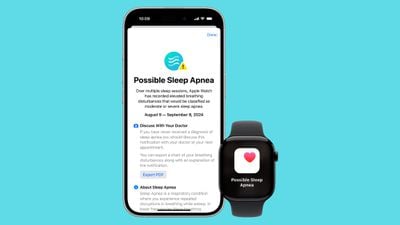
The Series 12 is able to analyze 30 days of sleep, letting you know if signs of sleep apnea are detected. Sleep apnea data can be viewed in the Health app on iPhone.
Crash Detection
Motion sensors and an advanced sensor-fusion algorithm allow the Apple Watch Series 12 to detect a severe car crash and alert emergency services. After a crash is detected, the Apple Watch checks in with the user and then dials emergency services after a 10-second period with no response.
Temperature Measurements
There are two temperature sensors in the Series 12, including one that measures the temperature at the wrist and one that measures the ambient temperature in the air to cut down on outside bias.
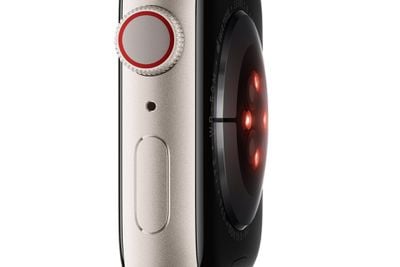
The wrist temperature sensor is primarily designed for women's health. It is able to take temperature readings every five seconds when the wearer is asleep, aggregating the data in the Health app. Temperature fluctuations can provide data on overall health to detect illness, but it is also useful for fertility planning.
The Apple Watch Series 12 is able to deliver retrospective ovulation estimates, letting users know when they might have ovulated for better cycle tracking. Apple says temperature sensing also improves period predictions for those who menstruate.
Blood Oxygen Monitoring
The Apple Watch Series 12 includes a blood oxygen monitoring feature, but in the United States, data from the blood oxygen sensor can only be viewed on the iPhone due to an ongoing lawsuit Apple is fighting. In other countries, data is available right on the watch.
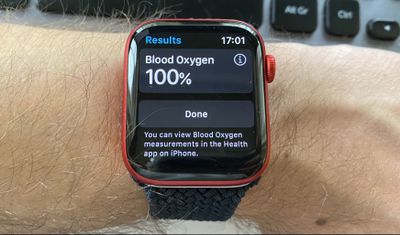
Blood oxygen saturation in a healthy individual is around 95 to 100 percent, and when the percentage of oxygen in the blood drops below that, it can be indicative of a serious health issue that needs immediate attention.
In the Series 12, green, red, and infrared LEDs shine light onto the blood vessels in the wrist, with photodiodes measuring the amount of light reflected back. Apple's algorithms then calculate the color of the blood, which is an indication of how much oxygen is present. The Series 12 can measure blood oxygen between 70 and 100 percent.
Battery Life
Like the Series 11, the Series 12 lasts for up to 24 hours of everyday battery life. It supports up to 10 hours of battery life during an outdoor workout, which Apple says is 25 percent more than the Series 11.
The Apple Watch Series 12 battery can last for up to 38 hours in Low Power Mode.
Charging is faster on the Series 12, but you need to use the Apple charger that comes with the device. 15 minutes of charging give sup to 12 hours of additional battery life, 50 percent more than the previous model.
Apple bases battery life estimates on 300 time checks, 90 notifications, 15 minutes of app use, a 60-minute workout with music playback via Bluetooth, and six hours of sleep tracking over a 24-hour period. For cellular models, Apple assumes four hours of a cellular connection and 20 hours of connection to an iPhone.
Connectivity
Apple Watch Series 12 models are equipped with an Apple-designed W3 chip, and there are two variants available: GPS and GPS + Cellular. GPS + Cellular models have a built-in 5G chip and can connect to 5G or LTE without an iPhone, while GPS models are Wi-Fi only.
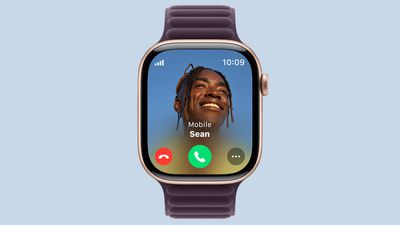
5G connectivity is available in multiple countries, though in some areas, Apple Watch connectivity is limited to LTE.
With a cellular connection, the Apple Watch is untethered from the iPhone and does not require an iPhone or known Wi-Fi network for an internet connection. The Apple Watch is still not entirely independent from the iPhone, because cellular connectivity through a carrier requires an Apple Watch and an iPhone 6s or later to share a cellular plan with the same carrier.
Ultra Wideband Chip
The Apple Watch Series 12 has a second-generation Ultra Wideband (UWB) chip. The second-generation chip enables highly accurate short-range wireless that supports car keys, the feature that allows an Apple Watch (or iPhone) to be used in lieu of a physical car key.
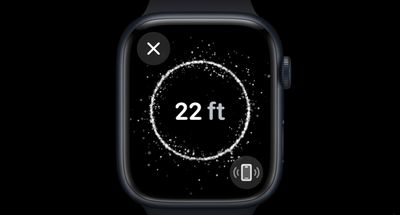
The UWB chip also allows the Apple Watch to track AirTags, and it allows an Apple Watch to use Precision Finding to track down a misplaced iPhone, even if it is in the same room. With the HomePod, when an Apple Watch gets within four meters of a HomePod that is playing audio, the Apple Watch Series 12 shows a Now Playing interface for media control. If nothing is playing on the HomePod, the Apple Watch shows media suggestions at the top of the Smart Stack.
Emergency SOS
Cellular connectivity enables an international Emergency SOS feature that was first released with the Series 5. With Emergency SOS, the Apple Watch can make international calls to emergency services regardless of where the device was originally purchased or if there's an active cellular plan.
If you're traveling to another country and are injured or in a situation where you need help, you can activate the SOS feature on the Apple Watch by holding down the side button to automatically get in touch with that country's emergency services. International emergency calling works with the Apple Watch's fall detection feature, so if that's enabled, it automatically places an emergency call if the watch senses the user has taken a hard fall and remains motionless afterward.
Wi-Fi, Bluetooth and GPS
Apple Watch Series 12 supports 2.4GHz and 5GHz 802.11n Wi-Fi, and Bluetooth 5.3, which offers longer range, faster speeds, larger broadcast message capacity, and better interoperability with other wireless technologies.
GPS has been included in the Apple Watch since the Series 2, and all Series 12 models feature a GPS chip that allows the Apple Watch to determine its position without needing to be near an iPhone.
With GPS, the Apple Watch is able to keep tabs on speed, distance, and route when you're walking, running, hiking, or biking, providing more insight into your fitness activities. GPS, GLONASS, Galileo, BeiDou, and QZSS systems are supported for positioning technology across multiple countries.
Nike and Hermès Models
The Nike Apple Watch was created in partnership with Nike and is designed specifically for runners. Nike Apple Watch models are all made from aluminum and are the same price as the standard aluminum Apple Watches.
Nike Apple Watches come with Nike watch faces (though the watch faces are available on all iPhone models) and unique Nike-themed bands.
The Hermès Apple Watch collection was created in partnership with French fashion house Hermès and features some of the most expensive Apple Watches Apple offers because of the high price of the bands.
All Hermès models feature a titanium Apple Watch body paired with one of the Hermès signature hand-crafted bands and an additional orange Hermès-branded Apple Watch Sport Band. Hermès Apple Watches include unique watch faces based on Hermès watch designs.
Apple Watch Ultra and Apple Watch SE
The Apple Watch Series 11 is being sold alongside the more expensive Apple Watch Ultra 4, priced starting at $799, and the more affordable Apple Watch SE 3, priced starting at $249.
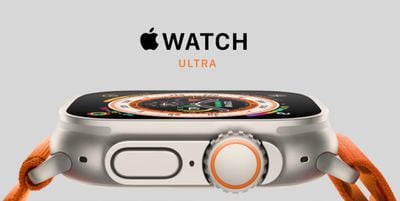
The Apple Watch SE uses an older design and it does not feature a blood oxygen sensor or ECG capabilities, while the high-end Apple Watch Ultra is aimed at adventurers and explorers with a larger 49mm case size, longer battery life, and a more rugged build.
What's Next for the Apple Watch
A major design update won't happen until 2028 at the earliest, though one rumor suggests Apple could introduce a new band attachment system in 2027.
A non-invasive blood glucose monitoring feature is still years away from launching despite 15 years of work, Bloomberg's Mark Gurman said in March 2025. There is no word on when it might be introduced.
Apple is considering using LG Display's high-mobility oxide (HMO) thin-film transistor technology for the next Apple Watch OLED display in 2027.
Compared to the current LTPO display technology, HMO increases electron mobility for lower power consumption.
A future version of the Apple Watch could include support for Touch ID, though it is unclear how this might be implemented. Touch ID could go under the display, or be integrated into the side button. Touch ID on the Apple Watch could reduce reliance on numerical passcodes for unlocking, though it is worth noting that the Apple Watch already has a wrist authentication feature for making purchases and other rumors suggest the Apple Watch will not get Touch ID.
Apple Watch Series 12 Changelog