Skip to Content

Apple Outlines Security and Privacy of CSAM Detection System in New Document

Apple today shared a document that provides a more detailed overview of the child safety features that it first announced last week, including design principles, security and privacy requirements, and threat model considerations.
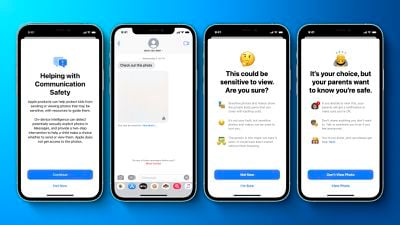
iphone communication safety feature
Apple's plan to detect known Child Sexual Abuse Material (CSAM) images stored in iCloud Photos has been particularly controversial and has prompted concerns from some security researchers, the non-profit Electronic Frontier Foundation, and others about the system potentially being abused by governments as a form of mass surveillance.

The document aims to address these concerns and reiterates some details that surfaced earlier in an interview with Apple's software engineering chief Craig Federighi, including that Apple expects to set an initial match threshold of 30 known CSAM images before an iCloud account is flagged for manual review by the company.

Apple also said that the on-device database of known CSAM images contains only entries that were independently submitted by two or more child safety organizations operating in separate sovereign jurisdictions and not under the control of the same government.

The system is designed so that a user need not trust Apple, any other single entity, or even any set of possibly-colluding entities from the same sovereign jurisdiction (that is, under the control of the same government) to be confident that the system is functioning as advertised. This is achieved through several interlocking mechanisms, including the intrinsic auditability of a single software image distributed worldwide for execution on-device, a requirement that any perceptual image hashes included in the on-device encrypted CSAM database are provided independently by two or more child safety organizations from separate sovereign jurisdictions, and lastly, a human review process to prevent any errant reports.

Apple added that it will publish a support document on its website containing a root hash of the encrypted CSAM hash database included with each version of every Apple operating system that supports the feature. Additionally, Apple said users will be able to inspect the root hash of the encrypted database present on their device, and compare it to the expected root hash in the support document. No timeframe was provided for this.

In a memo obtained by Bloomberg's Mark Gurman, Apple said it will have an independent auditor review the system as well. The memo noted that Apple retail employees may be getting questions from customers about the child safety features and linked to a FAQ that Apple shared earlier this week as a resource the employees can use to address the questions and provide more clarity and transparency to customers.

Apple initially said the new child safety features would be coming to the iPhone, iPad, and Mac with software updates later this year, and the company said the features would be available in the U.S. only at launch. Despite facing criticism, Apple today said it has not made any changes to this timeframe for rolling out the features to users.
Popular Stories

imac video apple feature

Apple Unveils Seven New Products

Friday March 6, 2026 11:48 am PST by
Apple this week unveiled seven products, including an iPhone 17e, an iPad Air with the M4 chip, updated MacBook Air and MacBook Pro models, a new Studio Display, a higher-end Studio Display XDR, and an all-new MacBook Neo that starts at just $599. iPhone 17e features the same overall design as the iPhone 16e, but it gains Apple's A19 chip, MagSafe for magnetic wireless charging and magnetic...
Apple MacBook Pro M4 hero

Apple Planning 'MacBook Ultra' With Touchscreen and Higher Price

Sunday March 8, 2026 8:05 am PDT by
Apple is planning to launch an all-new "MacBook Ultra" model this year, featuring an OLED display, touchscreen, and a higher price point, Bloomberg's Mark Gurman reports. Gurman revealed the information in his latest "Power On" newsletter. While Apple has been widely expected to launch new M6-series MacBook Pro models with OLED displays, touchscreen functionality, and a new, thinner design...
MacBook Neo Feature Pastel 1

First MacBook Neo Benchmarks Are In: Here's How It Compares to the M1 MacBook Air

Thursday March 5, 2026 4:07 pm PST by
Benchmarks for the new MacBook Neo surfaced today, and unsurprisingly, CPU performance is almost identical to the iPhone 16 Pro. The MacBook Neo uses the same 6-core A18 Pro chip that was first introduced in the iPhone 16 Pro, but it has one fewer GPU core. The MacBook Neo earned a single-core score of 3461 and a multi-core score of 8668, along with a Metal score of 31286. Here's how the...

Top Rated Comments

fwmireault Avatar
60 months ago
It’s funny how Apple deeply believes that we just don’t understand the feature. I understand the hashes matching process, and I’m against it. Not because of the feature itself (who could be way more intrusive than that) but because of the risk of abuses of that backdoor.
Score: 129 Votes (Like | Disagree)
60 months ago
How many press releases and FAQs do we need to polish this turd?

Apple designed a system so that an external authority can gain control of your phone to scan your private files and report the results to the police. End of.
Score: 95 Votes (Like | Disagree)
TheYayAreaLiving 🎗️ Avatar
60 months ago
Good try but, Give it up Apple. Shut this down already.

This is an end of an era for Privacy!!!

This is literally Apple right now!


Attachment Image
Score: 83 Votes (Like | Disagree)
60 months ago
Mass surveillance of a billion iPhone users for what – now that every criminal has been warned?

Since it is on the device it looks like a first step, the second step could be a neural network detecting new images (taken with the camera).

It's just unacceptable – I won't update software or hardware.
Score: 78 Votes (Like | Disagree)
60 months ago
They can educate everyone as much as possible but I think the social court has already made its emotional ruling.
Score: 69 Votes (Like | Disagree)
60 months ago
No thanks, Apple.
Score: 55 Votes (Like | Disagree)