Intel CEO Pat Gelsinger has retired following a challenging tenure marked by the company's struggles to compete against Apple and other major chipmakers.
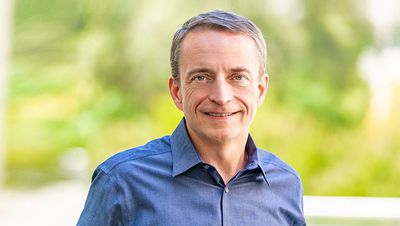
Intel today announced that Gelsinger, who served as the company's CEO since early 2021, officially stepped down on December 1, 2024, concluding a 40-plus-year career at the company. Gelsinger's leadership began with bold aspirations, particularly in addressing the growing influence of Apple Silicon. Intel faced a significant challenge when Apple announced in 2020 that it would transition its Mac lineup from Intel processors to its own custom-designed chips, beginning with the M1, which outperform Intel's offerings. This decision signaled a substantial shift in the industry and a major blow to Intel's dominance.
Gelsinger rejoined Intel in 2021, replacing then-CEO Bob Swan, at a critical moment for the company. His tenure began with a striking statement at an all-hands meeting, where he described Apple as a "lifestyle company" and emphasized Intel's need to deliver superior products. He said, "We have to deliver better products to the PC ecosystem than any possible thing that a lifestyle company in Cupertino can do. We have to be that good."
Apple's move to Apple Silicon was highly significant for the chip industry. The M1 chip, built on an architecture designed in-house by Apple, offered unparalleled performance-per-watt, reshaping consumer expectations for computing power and energy efficiency. Subsequent iterations, including the M2, M3, and M4 families of chips, further cemented Apple's lead over Intel. Under Gelsinger's leadership, Intel responded with marketing campaigns that sought to highlight some of the perceived shortcomings of Apple's Macs. Some of these campaigns included former Apple "I'm a Mac" commercial star Justin Long.
In an interview with Axios shortly after assuming his role as CEO, Gelsinger acknowledged Intel's "stumbles" in retaining Apple's business and stated his intent to "create a better chip" to win Apple back. He expressed a broader vision for Intel to become a foundry partner for companies like Apple, saying, "Apple is a customer, and I hope to make them a big foundry customer because today they're wholly dependent on Taiwan Semiconductor."
Despite Gelsinger's efforts, Intel subsequently faced significant challenges. For example, the company struggled with delays in its 18A manufacturing process, which was intended to be a key component of its competitive recovery. Apple and other major companies such as Qualcomm passed on the technology due to reliability issues. Meanwhile, Apple's partnership with TSMC has only further deepened.
Gelsinger's tenure also coincided with a period of rapid advancement in AI technology, where Intel also found itself at a disadvantage. Nvidia, whose GPUs are widely used in AI workloads, captured significant market share as demand for AI-related processing surged. Intel's Gaudi line of AI accelerators, intended to compete with Nvidia's offerings, failed to gain traction. Meanwhile, Apple's custom silicon chips include a dedicated Neural Engine for machine learning and AI operations.
Gelsinger sought to restore Intel's manufacturing competitiveness by spearheading ambitious plans to build new fabrication facilities, including a massive complex in Ohio, supported by funding from the CHIPS Act. However, these long-term investment efforts did little to address the immediate challenges facing the company.
Intel's revenue and market valuation declined significantly during Gelsinger's tenure. By 2024, the company's share price had fallen by nearly 50% for the year, while Nvidia and Apple continue to thrive. Analysts estimate Intel will record its first annual net loss since 1986. Intel's stock price today rose 5% following the news of Gelsinger's departure.
In his parting remarks, Gelsinger reflected on his career and the challenges he faced during his time as CEO, stating "Leading Intel has been the honor of my lifetime. I can look back with pride at all that we have accomplished together." His departure leaves Intel in a transitional phase, with interim co-CEOs David Zinsner and Michelle Johnston Holthaus tasked with steering the company as it searches for a permanent successor.



































![Apple Pulls Keynote, Pages and Numbers From App Store [Update: Back]](https://images.macrumors.com/t/Okb7kitB_gNr6qe5Pex9nQIysD8=/112x112/article-new/2026/01/Apple-Creator-Studio-iWork-suite.jpg)