Skip to Content

iPhone 16 May Feature More Power-Efficient Samsung OLED Display

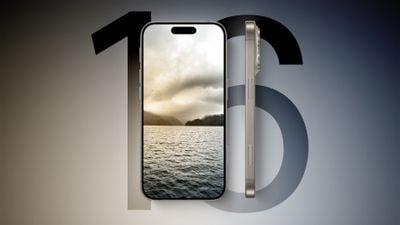
Next year's iPhone 16 could feature a more power-efficient display thanks to a new OLED material set that is reportedly being developed by Samsung specifically for Apple.
iPhone 16 Side Feature
A material set includes a variety of components for OLED screens, such as capping layers (CPL), which adjust the optical characteristics of the screen. Each component is produced by a specialist manufacturer and supplied to Samsung, which then uses them to construct the final OLED panel.

A different composition of materials in the set can alter attributes of the OLED panel, such as lifespan, brightness, color accuracy, or manufacturing efficiency.

Back in April, The Elec reported that Samsung was using its "M12" material set for this year's iPhone 15 models, while also developing a new OLED material set, dubbed "M14," specifically for Apple's 2024 iPhones. The precise reason for the development was not known at the time, but a new report from the Korean-language outlet suggests it could be related to making the OLED panel more energy efficient.

Citing Korean Ubi Research analyst Daejeong Yoon, The Elec now reports that Samsung's OLED development roadmap has been focused on replacing blue fluorescent materials with a blue phosphorescence that could reduce the overall power consumption of an OLED panel.

According to Yoon, Samsung originally intended to use the more power-efficient material in OLED panels developed for a variety of foldable phones in 2024, but it is not easy to develop, and Samsung could instead reserve it for Apple's M14 material set.

"Following the ‌iPhone 16‌ next year, M14 will be applied to the iPhone 17 in 2025, and the application period for the Apple ‌iPhone‌ OLED material set will increase to two years," Yoon was quoted as saying.

The ‌iPhone 16‌ Pro and ‌iPhone 16‌ Pro Max are expected to have larger display sizes, according to multiple sources. The ‌iPhone 16‌ Pro will have a display that's 6.27 inches in size (rounded to 6.3), while the ‌iPhone 16‌ Pro Max is expected to have a display that's 6.85 inches in size (rounded to 6.9).

A previous report in September suggested ‌iPhone 16‌ OLED panels could use micro-lens technology to maintain or increase the brightness of the displays while potentially reducing their power consumption.

Meanwhile an earlier report in May claimed that Apple intends to mass produce more advanced microLED displays in order to lessen its reliance on Samsung and increase its own control over supply, laying the groundwork to realize its ultimate goal of bringing the next-generation technology to iPhones.

Tags: OLED, The Elec

Popular Stories

Multicolored Low Cost A18 Pro MacBook Feature

Apple Accidentally Leaks 'MacBook Neo'

Tuesday March 3, 2026 7:00 am PST by
Apple appears to have prematurely revealed the name of its rumored lower-cost MacBook model, which is expected to be announced this Wednesday. A regulatory document for a "MacBook Neo" (Model A3404) has appeared on Apple's website. Unfortunately, there are no further details or images available yet. While the PDF file does not contain the "MacBook Neo" name, it briefly appeared in a link...
imac video apple feature

Apple Unveils Two New Products

Monday March 2, 2026 7:49 am PST by
Apple today introduced two new devices, including the iPhone 17e and an updated iPad Air. iPhone 17e features the same overall design as the iPhone 16e, but it gains Apple's A19 chip, MagSafe for magnetic wireless charging and magnetic accessories, Apple's second-generation C1X modem for faster 5G, and a doubled 256GB of base storage. In the U.S., the iPhone 17e starts at $599, just like the ...
MacBook Neo Feature Pastel 1

Apple Announces $599 'MacBook Neo' With A18 Pro Chip

Wednesday March 4, 2026 6:15 am PST by
Apple today announced the "MacBook Neo," an all-new kind of low-cost Mac featuring the A18 Pro chip for $599. The MacBook Neo is the first Mac to be powered by an iPhone chip; the A18 Pro debuted in 2024's iPhone 16 Pro models. Apple says it is up to 50% faster for everyday tasks than the bestselling PC with the latest shipping Intel Core Ultra 5, up to 3x faster for on-device AI workloads,...

Top Rated Comments

Octavius8 Avatar
30 months ago
Same old story about better designs, more advanced manufacturing processes, new materials, etc. and we end up with the same battery life year after year.
Score: 13 Votes (Like | Disagree)
AppleFanBoyCAN Avatar
30 months ago
« iPhone 16 delivers the same incredible all-day battery life! »
Score: 10 Votes (Like | Disagree)
30 months ago
I just hope the new iPhone displays do not use PWM or have TLM (temporal light modulation). Many of us cannot use the OLED iPhones because the screens cause severe eye-strain and make us feel sick. I seriously hope they fix that instead of worrying about saving a few more mAh of battery.

Here is concrete evidence of this issue: https://forums.macrumors.com/threads/eye-strain-while-using-iphone-x-and-up.2085427/post-32709834
Score: 8 Votes (Like | Disagree)
Alex Cai Avatar
30 months ago
And make a iOS development gap year, fix the bugs and clean everything up.
Score: 6 Votes (Like | Disagree)
bradman83 Avatar
30 months ago

Same old story about better designs, more advanced manufacturing processes, new materials, etc. and we end up with the same battery life year after year.

« iPhone 16 delivers the same incredible all-day battery life! »
One of the biggest complaints of modern iPhones since the 12 series, especially the pro models, is how heavy they are. Batteries are the biggest contributors to a phone's weight. So if Apple can reduce the phone's weight by shrinking the battery but deliver the same runtime by using more efficient components that would be a win in and of itself. (And yes I fully recognize there are users out there who would carry around a heavy phone with a beefier battery).
Score: 4 Votes (Like | Disagree)
Steve-Jobz Avatar
30 months ago
Tim: OK. -500mAh
Score: 4 Votes (Like | Disagree)