Skip to Content

iPhone Supplier Japan Display Seeks Financing Needed to Shift to OLED Displays

by

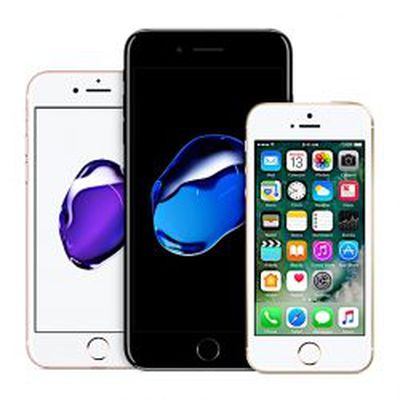
iphone-family-late-2016iPhone display supplier Japan Display is in "advanced talks" with the government-backed fund Innovation Network Corp. of Japan to receive around ¥75 billion ($703 million) in financing, according to The Wall Street Journal.

The bailout deal could help Japan Display improve its LCD display technology to better compete against OLED displays, while the investment could also go towards trying to set up its own manufacturing lines for mass-producing OLED displays.

Apple is widely expected to launch at least one new iPhone with an OLED display next year, with rumors pointing towards a curved 5.5-inch-or-larger model with glass casing. Japan Display's domestic rival Sharp recently said it is building a new OLED facility in Japan to manufacture the displays for a "key customer," while Samsung and LG Display are reportedly in the mix as well.

OLED displays typically have sharper color contrast and brighter colors compared to LCD displays, while the technology allows for flexible, curved designs. OLED panels also typically have faster response times and better viewing angles compared to LCD technology, with the option for an always-on mode. Samsung smartphones have used AMOLED displays, based on OLED technology, for years.

Rumors suggest Apple will release at least two traditional 4.7-inch and 5.5-inch iPhone models with LCD displays next year, as it has used since the original iPhone in 2007, so Japan Display may still have time to ramp up its OLED efforts.

INCJ already owns a controlling 36% stake in Japan Display, a joint venture formed in 2012 by the display making divisions of Hitachi, Sony, and Toshiba. Japan Display has struggled as of late due to the rise of OLED, with its revenue in the July-September quarter declining 25%. The company posted a quarterly net loss of ¥4.9 billion, but it projects a small operating profit for the full fiscal year.

Sharp received a similar financial infusion when it was acquired by Apple manufacturing partner Foxconn for $3.5 billion earlier this year.

Top Rated Comments

69Mustang Avatar
122 months ago
I hope this might mean that Japan Display is investing in mLED which IMHO is the future and better than OLED. And maybe the reason Apple has been waiting to transition.
Don't hold your breath waiting on this to happen... especially for iPhones. mLED is in it's infancy and industry experts think it will be anywhere from 2-10 years before mLED will be commercially viable for mass production. Lot's of companies are working on it, so that's a good thing. My guess is the first appearance of mLED in an Apple product will occur with the Apple Watch. Just like Apple using the Apple Watch to test the viability of OLED. Scaled manufacturing capability is going to be the key for the adoption of mLED on iPhones.

As for Japan Display, I don't think they can really afford to invest in mLED right now. They need their investments to pay off quickly... as in yesterday. They don't have a war chest to carry them for the long haul. They need OLED capacity and more efficienct LCD capacity so they can capitalize on it sooner rather than later. Unfortunately, they have to worry about tomorrow's tech tomorrow.
Score: 5 Votes (Like | Disagree)
122 months ago
I hope this might mean that Japan Display is investing in mLED which IMHO is the future and better than OLED. And maybe the reason Apple has been waiting to transition.
Score: 3 Votes (Like | Disagree)
122 months ago
Don't hold your breath waiting on this to happen... especially for iPhones. mLED is in it's infancy and industry experts think it will be anywhere from 2-10 years before mLED will be commercially viable for mass production. Lot's of companies are working on it, so that's a good thing. My guess is the first appearance of mLED in an Apple product will occur with the Apple Watch. Just like Apple using the Apple Watch to test the viability of OLED. Scaled manufacturing capability is going to be the key for the adoption of mLED on iPhones.

As for Japan Display, I don't think they can really afford to invest in mLED right now. They need their investments to pay off quickly... as in yesterday. They don't have a war chest to carry them for the long haul. They need OLED capacity and more efficienct LCD capacity so they can capitalize on it sooner rather than later. Unfortunately, they have to worry about tomorrow's tech tomorrow.
You may be right. Here ('https://9to5mac.com/2016/06/24/2017-apple-watch-reportedly-switching-to-micro-led-screen-technology-away-from-oled-panels/')is the article basically supporting what you state. Except that it may be quicker than your timeline.
Score: 1 Votes (Like | Disagree)

Popular Stories

MacBook Neo Feature Pastel 1

First MacBook Neo Benchmarks Are In: Here's How It Compares to the M1 MacBook Air

Thursday March 5, 2026 4:07 pm PST by
Benchmarks for the new MacBook Neo surfaced today, and unsurprisingly, CPU performance is almost identical to the iPhone 16 Pro. The MacBook Neo uses the same 6-core A18 Pro chip that was first introduced in the iPhone 16 Pro, but it has one fewer GPU core. The MacBook Neo earned a single-core score of 3461 and a multi-core score of 8668, along with a Metal score of 31286. Here's how the...
HomePod mini and Apple TV Sage

New Apple TV and HomePod Mini Are Still Missing, Here's Why

Thursday March 5, 2026 6:11 am PST by
Apple this week unveiled seven products, ranging from the iPhone 17e to the MacBook Neo, but new Apple TV and HomePod mini models were not among them. Given that there have been rumors about the next-generation Apple TV and HomePod mini since all the way back in late 2024, some customers are wondering why the devices have yet to launch, and the answer likely relates to Siri. In September, ...
MacBook Neo Feature Pastel 1

Apple Announces $599 'MacBook Neo' With A18 Pro Chip

Wednesday March 4, 2026 6:15 am PST by
Apple today announced the "MacBook Neo," an all-new kind of low-cost Mac featuring the A18 Pro chip for $599. The MacBook Neo is the first Mac to be powered by an iPhone chip; the A18 Pro debuted in 2024's iPhone 16 Pro models. Apple says it is up to 50% faster for everyday tasks than the bestselling PC with the latest shipping Intel Core Ultra 5, up to 3x faster for on-device AI workloads,...