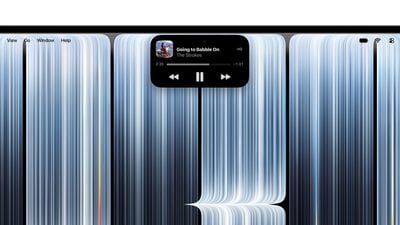
The Dynamic Island first launched on the iPhone 14 Pro and iPhone 14 Pro Max in September 2022. It replaced the notch with a smaller TrueDepth camera cutout surrounded by software that expands and changes shape to display alerts, ongoing Live Activities, and controls.
The Mac version carries over the idea of keeping ongoing activities visible and accessible while users work in other apps. Apple says users can do things like answer a phone call, control music playback, and accept an AirDrop request through the interface. The Dynamic Island also serves as a location for Spotlight and Siri AI.
With the new MacBook Pro's touchscreen, actions such as pausing a song can also simply be performed with a tap.
While the original iPhone implementation incorporated the TrueDepth camera system used for Face ID, the new MacBook Pro retains Touch ID for authentication and features a 12-megapixel Center Stage camera. The arrival of the Dynamic Island therefore does not bring Face ID to the Mac.
The new MacBook Pro models became available to pre-order on October 28 and launch on November 6. U.S. pricing starts at $2,899 for the 14-inch model and $3,399 for the 16-inch model.
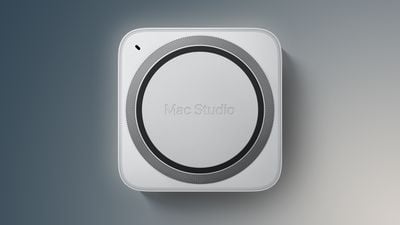
Starting today, the Mac Studio with the M5 Ultra chip can be configured with 512GB of RAM on Apple's online store, but it is an expensive upgrade.
You first have to configure the Mac Studio with the M5 Ultra chip with a 36-core CPU and 80-core GPU, which starts at $6,799 in the U.S., and then you have to select the 512GB of RAM option for an additional $15,500. This pushes the minimum cost for a configuration with 512GB of RAM to an eye-watering $22,299.
With both 512GB of RAM and 16TB of storage, the price rises to $29,799.
Apple promised that a 512GB RAM option for the Mac Studio would be coming in late October, and it is now available right on schedule.
For the Mac Studio with the M5 Max chip, Apple continues to offer a max of 128GB RAM.
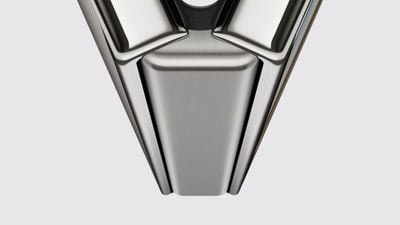
Apple removed the illuminated logo from the MacBook Pro with its 2016 redesign, replacing it with a polished, non-illuminated version. Its return restores one of the laptop's most recognizable design features after a decade.
We're glowing with excitement over the new MacBook Pro. You've gotta touch it to believe it. https://t.co/BLiGkGaefL
— John Ternus (@johnternus) October 28, 2026
The previous illuminated logo used light from the display's backlight. The new MacBook Pro features a "PROLED XDR Display." OLED displays illuminate individual pixels without a separate backlight, so the new model requires a different approach to lighting the logo.
The new MacBook Pro starts at $2,899 for the 14-inch model and $3,399 for the 16-inch model.
Apple today announced a new high-end MacBook Pro, which is available in 14-inch and 16-inch sizes. The new device has a PROLED XDR display that supports touch gestures, and a glowing rear Apple logo.
Pricing on the MacBook Pro starts at $2,899 for the 14-inch model and $3,399 for the 16-inch model.
Apple says the MacBook Pro has the "world's best display in a pro laptop." The PROLED display uses tandem OLED paired with advanced algorithms in the display engine and factory calibration for "exceptional brightness, striking contrast, and vivid true-to-life colors."
The display offers up to 2000 nits peak HDR and SDR brightness, along with a 10,000,000:1 contrast ratio. A display engine controls the color and luminance of each pixel, compensating for content, temperature, environment, and pixel use. ProMotion technology is available with refresh rates ranging from 10Hz to 120Hz. An antireflective coating cuts down on glare in bright lighting conditions, and there is an option to order the new MacBook Pro with a nano-texture display.
We're glowing with excitement over the new MacBook Pro. You've gotta touch it to believe it. https://t.co/BLiGkGaefL
— John Ternus (@johnternus) October 28, 2026
A touch sensor is built directly in the display panel, so there is no added latency. Apple says touch interactions feel "incredibly responsive and refined." Users can scroll through a webpage with a swipe, pinch to zoom in on a photo, drag and drop slides from one presentation to another, and double-tap a window to have it fill the screen.
A new hinge design offers more stability when using touch, and advanced video stabilization smooths the camera feed when using touch on a video call. Apple says macOS automatically translates touch into clicks, so many existing apps will work with touch right away.
The MacBook Pro is up to 1mm slimmer than the existing version, and it is lighter weight at just three pounds for the 14-inch model and four pounds for the 16-inch model. There is no more notch, with Apple instead adding a small Dynamic Island that takes up less space. The Dynamic Island houses Spotlight, Live Activities, and Siri AI. Like on the iPhone, it offers a quick way to see and interact with important information.
Smaller bezels mean the 16-inch MacBook Pro display is now 16.3 inches in size, while the 14-inch MacBook Pro is now 14.2 inches.
The new MacBook Pro uses the same M5 Pro and M5 Max chips as the MacBook Pro models announced back in March, but there is a redesigned thermal architecture that directs warm air away from the display. There is support for up to 128GB of unified memory, and a new six-speaker sound system with 50 percent deeper bass.
There are three Thunderbolt 5 ports, HDMI, an SDXC card slot, MagSafe, and a headphone jack. The new machines support up to four external displays and come with Wi-Fi 7 and Bluetooth 6. Fast charging allows the MacBook Pro to be charged to 50 percent in 30 minutes, and up to 16TB storage is available.
Apple is selling the OLED MacBook Pro models alongside the existing mini-LED models and the new M6 14-inch MacBook Pro. Pre-orders are available now, with a launch coming on Friday, November 6.
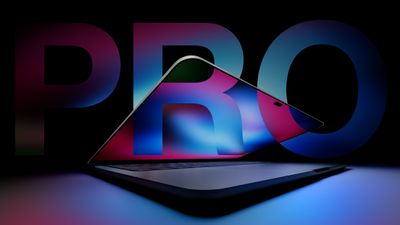
Apple is expected to announce new 14-inch and 16-inch MacBook Pro models with touch-enabled OLED displays, a Dynamic Island instead of a notch, a revamped hinge, a lighter and slightly thinner design, M5 Pro and M5 Max chips, and a redesigned cooling system. macOS Golden Gate is expected to be optimized for touch input on these laptops.
It is not entirely clear if Apple will stick with MacBook Pro branding for these models, or if it will opt for a new name like MacBook Studio or MacBook Ultra.
South Korea has fined Apple 20.8 billion won ($15.5 million) and ordered it to let developers link to external payment options from their apps, The Associated Press reports.
The Korea Media and Communications Commission found that Apple and Google effectively require developers to use their payment systems, violating a 2021 law intended to allow alternatives. Google was fined 42.9 billion won ($32 million).
Both companies allowed third-party payment services within apps, but charged developers a 26% commission and restricted some features. The regulator said these conditions pushed developers toward Apple and Google's payment systems, while rules against external payment links limited their other options.
The companies must also improve their app review processes. The commission found that some reviews were delayed without clear explanations or information about when they would resume. It separately found that Apple charged South Korean developers higher commissions than overseas developers between 2015 and January 2023.
Apple told The Associated Press that it disagrees with the ruling and is considering its legal options. The company says its policies comply with South Korean law and that its payment system helps protect customers against fraud.
Note: This discussion thread is located in our Political News forum with special rules.
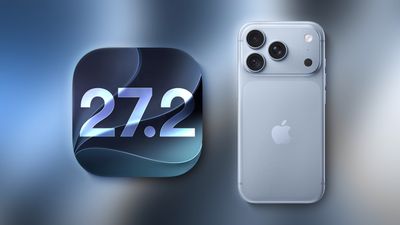
Apple has added selfie-based age verification in iOS 27.2 and iPadOS 27.2, allowing users in supported regions to demonstrate that they are adults without submitting a credit card or government-issued ID.
The feature estimates whether someone is an adult by analyzing their face, according to a new Apple support document. The capture process involves following onscreen prompts to turn and tilt the head, providing views of the face from four directions.
Apple says the verification process combines processing on the user's device with analysis through Private Cloud Compute. The results are brought together locally, and Apple says the images remain inaccessible to the company and anyone else during processing. After successful verification, the selfie is deleted.
Users who receive an age confirmation prompt may be offered the option, although availability varies by location. Regional requirements determine when adult verification is necessary.
Possible triggers include setting up an Apple Account, installing a software update, accessing apps rated 18+, and adjusting safety controls. Once a user has successfully established their adult status, Apple says further confirmation is unnecessary.
Note: MacRumors is an affiliate partner with some of these vendors. When you click a link and make a purchase, we may receive a small payment, which helps us keep the site running.
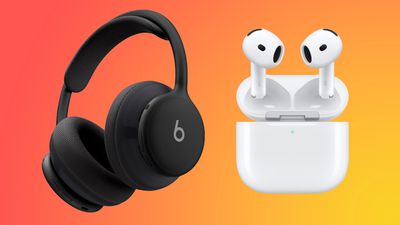
You can get the Beats 360 in Black with Black Performance Knit Cushions for $329.00 this week on Amazon, down from $349.00. This is the first discount we've ever seen on the headphones, and deals on a few Cushion Kits are also still available on Amazon.
For the AirPods 4 with Active Noise Cancellation, you can get this model for $99.00 on Woot, down from $149.00, which is a rare return of the record low price. These are in new condition and come with a 90 day Woot limited Warranty.
If you're on the hunt for more discounts, be sure to visit our Apple Deals roundup where we recap the best Apple-related bargains of the past week.
Deals Newsletter
Interested in hearing more about the best deals you can find as we head into the holidays? You can sign up for our Deals Newsletter and we'll keep you updated so you don't miss the biggest deals of the season!
Apple has raised the MacBook Neo's starting price from $599 to $649 on its online education store in the U.S., meaning it now offers college students and other eligible groups only a $50 discount on the laptop, down from $100. The change was made within the past week, with equivalent increases in local currencies in other countries.
In May, Apple expanded the UNiDAYS verification system that it already used in many European countries to the U.S. and Canada, meaning that customers who are not students, educational staff, or otherwise eligible are no longer be able to break the rules and take advantage of the lower prices available through the education store.
Apple reportedly plans to release a second-generation MacBook Neo with an A19 chip, 12GB of RAM, and new color options in the first half of 2027. The current model has an A18 Pro chip with 8GB of RAM, and it is available in Silver, Blush, Citrus, and Indigo.
If this theory proves to be accurate, then Apple would offer both a Mac Studio desktop computer and a MacBook Studio laptop, plus the Studio Display. Apple would likely position the MacBook Studio as being aimed at creators, and it would surely promote its recently-updated Apple Creator Studio suite of apps alongside the announcement today.
This is obviously all just some last-minute speculation for fun — we did the same with iPhone Duo. The new models could stick with MacBook Pro branding, and the long-rumored MacBook Ultra name still remains a possibility too.
Bonus theory: What if the teaser hints at the glowing Apple logo returning to the MacBook's lid? We truly might be getting ahead of ourselves now.
Here's the teaser in case you missed it:
https://t.co/2XsfEhVRJH
— John Ternus (@johnternus) October 28, 2026
In a post on X today, Apple CEO John Ternus shared a short video that shows an Apple logo being projected onto a MacBook lid against a nighttime city skyline. This teaser comes just a few hours before Apple is expected to announce new MacBook models with touch-enabled OLED displays, so it is very likely in reference to that.
Apple's upcoming touchscreen MacBook Pro will feature hinge improvements related to changes planned for future iPhone Duo models, according to a last-minute claim ahead of its expected announcement later today.
In a new Weibo post, the leaker known as "Fixed Focus Digital" said that one of the new MacBook Pro's key upgrades is its hinge design. The improved design is apparently related to plans for the second- and third-generation iPhone Duo.
The MacBook hinge claim aligns with Bloomberg's Mark Gurman's reporting that Apple has redesigned the mechanism to keep the display steady during touch input, alongside cooling changes that improve airflow through the hinge area.
Gurman has separately said that Apple is considering a larger inner display for a future iPhone Duo, potentially measuring around 7.9 to 8.1 inches compared to the current model's 7.6 inches. It is unclear whether the hinge changes mentioned by Fixed Focus Digital relate to that potential redesign.
The leaker also reiterated that the new MacBook Pro will use a dual-layer OLED display and carry a substantial price increase. Gurman separately reported that Apple has discussed a $2,899 starting price for the 14-inch model with an M5 Pro chip, up from $2,499 for the existing equivalent.
Apple is expected to announce the redesigned 14-inch and 16-inch MacBook Pro models later today, alongside its "Pro and tell" media experience in Los Angeles at 10 a.m. Pacific Time.
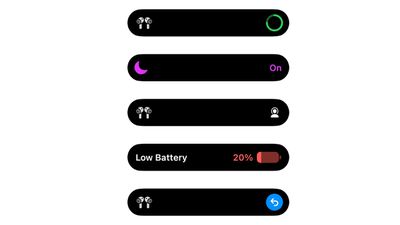
Ahead of Apple's expected debut of new touchscreen MacBook Pro models, five system assets have been discovered in macOS 27 that bear a strong resemblance to information displayed in the iPhone's pill-shaped Dynamic Island.
The new MacBook Pros are expected to feature a Dynamic Island-like cutout for the FaceTime camera, finally doing away with the notch that has been part of the machine's design since 2021.
Uncovered by code explorer pdfu and shared on X (Twitter), the assets cover AirPods connection, Focus activation, AirPods noise cancellation, low battery, and automatic audio switching.
The assets are linked to a new menu bar component called MenuBarAgent, which "paves the way for a touchscreen Mac and a Dynamic Island," according to pdfu. "Some system compact and minimal views already ship," he added.
He also claims Siri AI will eventually occupy what he calls the new "system aperture" in a droplet-like design. The views line up with our previous reporting on macOS 27's touchscreen Mac hints ahead of the touchscreen MacBook Pro models Apple is set to announce later today.
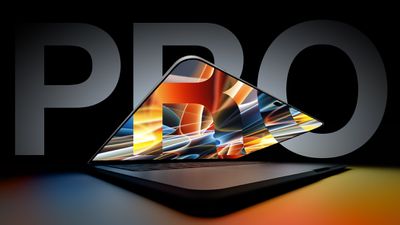
Some reports have suggested the new high-end MacBook Pro models that Apple is expected to announce today might not be called MacBook Pros at all. They could in fact be something altogether new and more exciting – "MacBook Ultra," perhaps – marketed as the company's top-tier laptop offering. The machines are expected to sit above the current M5 Pro and M5 Max MacBook Pros, rather than replace them, suggesting the latter will remain in Apple's lineup.
One thing to state up front is that Apple is expected to stick with the existing M5 Pro and M5 Max chips for its touchscreen MacBook models. Apple reportedly plans to skip what would have been the "M6 Pro" and "M6 Max" for more powerful "M7 Pro" and "M7 Max" chips. Apple announced the new entry-level 14-inch MacBook Pro with the M6 chip yesterday, ahead of pre-orders opening today, but the first "MacBook Ultra" models will use M5 Pro and M5 Max chips, after which second-generation models will come with M7 Pro and Max chips in late 2027.
Apple has already unveiled most of a second set of new products this week, as MacRumors' sources earlier indicated: the OLED iPad mini arrived on Monday, and the M6 iMac and M6 14-inch MacBook Pro followed yesterday. The new touchscreen models are expected to debut today at Apple's "Pro and tell" event in Los Angeles and become available for pre-order at 10:10 a.m. Pacific Time, with Bloomberg reporting that availability could begin as early as November 6. Recent reports have referred to the machines simply as new 14-inch and 16-inch MacBook Pro models, so the final name remains uncertain.
Below, we've listed the features and changes we are expecting for the new high-end MacBook Pro models.
OLED Display
Bloomberg's Mark Gurman and analyst Ming-Chi Kuo say Apple is readying OLED technology for these models, and industry reports corroborate their claims. Samsung Display is said to be making the panels exclusively, and the supplier has invested heavily in an 8.6-generation OLED production line in South Korea. The line reached a key milestone for mass production in May.
OLED presents an overall upgrade over the current mini-LED display technology, bringing deeper colors and a higher contrast ratio with true blacks. In an OLED display, individual pixels turn off instead of dimming when not activated, so there's less light leakage and better power efficiency. OLED displays also tend to have better HDR output than mini-LED, but they don't always match mini-LED brightness levels.
Touchscreen
The new MacBook Pro is expected to become the first Mac to support touch input directly on the display. It's a notable shift from Apple's longstanding position against bringing touchscreen functionality to the Mac.
Apple previously experimented with touch controls through the OLED Touch Bar on earlier MacBook Pro models, but the feature was ultimately discontinued following a lukewarm reception. Rather than positioning the MacBook Pro as a touch-centric device like the iPad, Apple is reportedly planning to let users move seamlessly between touch and traditional trackpad or mouse input across the system.
There are features in macOS Golden Gate that hint at a future touchscreen Mac. Apple added direct touch input to Sidecar so users can tap and interact with macOS elements when using the iPad as a Mac display. macOS Golden Gate also supports an iPhone-style pull-to-refresh option, and it can be used across apps like Safari, Mail, News, Podcasts, and Calendar. A pull-to-refresh option makes the most sense on a touch display.
Reinforced Hinge
Apple has reportedly developed a reinforced hinge and screen hardware to prevent the display from bouncing back or moving when touched. Apple is apparently aware of the same issue that plagues existing touch PCs.
Lighter Design
Gurman has reported that Apple is working to make the OLED MacBook Pro thinner, as part of the company's plan to create "the thinnest and lightest products in their categories across the whole tech industry." (Think the latest iPad Pro and iPad Air – two of the thinnest devices the company has ever made.) Indeed, the reporter said there's a good chance that the next MacBook Pro model will represent a "true overhaul" for the laptop, thanks to the combination of the OLED display and thinner design.
In October 2025, Gurman reported that the OLED MacBook Pro models would have "thinner and lighter" frames. Then again in November 2025, he said the touchscreen models would have "a thinner chassis."
However, Gurman has walked back somewhat on his previous reporting that Apple's upcoming touchscreen OLED MacBook Pro will be thinner than current models. "I don't think it'll be significantly thinner in the end," he said in early October 2026.
In a last-minute detail, Gurman reports that Apple has also reworked the cooling system to improve airflow through the hinge while helping to reduce the laptop's weight.
Dynamic Island
The MacBook Ultra could ditch the current notch used in the MacBook Pro models for a display cutout potentially similar to the iPhone's Dynamic Island, according to Bloomberg. Such a move would mirror Apple's iPhone evolution, since the iPhone's notch became the current Dynamic Island starting with the iPhone 14 Pro models in 2022.
As with the iPhone, the Mac Dynamic Island will be interactive and it will contextually expand based on the app or Mac feature in use. The change should address long-standing user complaints about the notch, which physically ingresses into the macOS menu bar.
Price Changes
There is no doubt that Apple will unveil the new MacBook Pro models as ultra-premium products carrying price tags that are higher than the current MacBook Pro 14-inch and 16-inch models. Apple increased the prices of all its Macs in June 2026 – MacBook Pro pricing went up $300 – so the "MacBook Ultra" will likely be even more expensive than expected.
For what it's worth, the higher-end 14-inch MacBook Pro with M5 Pro chip starts at $2,499 after the price increase, while the 16-inch M5 Pro MacBook Pro starts at $2,999. More specifically, Bloomberg reported this week that Apple has discussed charging $2,899 for the new 14-inch model with an M5 Pro chip, which would mean a starting price of at least $3,399 for the 16-inch model. Hold onto your wallets!
Pre-orders for the iPad mini, iMac, and M6 MacBook Pro opened at 10:10 a.m. Pacific Time on Wednesday, with availability beginning Friday, November 6. The iPad mini starts at $699, the iMac at $1,499, and the M6 MacBook Pro at $1,999. Pricing for the 14-inch MacBook Pro with OLED touchscreen starts at $2,899 for the 14-inch model and $3,399 for the 16-inch.
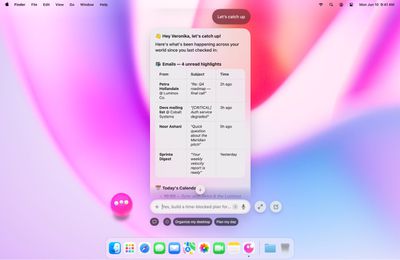
MacPaw has launched Eney, a proactive AI assistant for Mac and iPhone that the company says understands what is happening across a user's apps, files, and system, prepares the next step, and asks before it acts.
On Mac, Eney offers copy-triggered suggestions, bot-free meeting transcription with notes and follow-ups, and ready-made workflows such as Morning Brief and Plan My Day. An "Eney Wand" (Option-W) acts on whatever is dragged over to it, and can translate text, convert prices, turn dates into calendar events, and extract text from images.
The app also surfaces Mac care warnings for low disk space, memory pressure, and crashing apps, and connects to Apple Mail, Calendar, and Reminders out of the box, plus Gmail, Google Calendar, Google Drive, Slack, Notion, Jira, and Linear.
MacPaw calls Eney "proactive, never autonomous", since by default it asks before sending a message, changing an event, or moving a file. Eney is also the first product powered by MacPaw's own AI stack, including a memory layer called Mnemos that MacPaw says manages only Eney's own memory and never reads or changes user files.
Eney for Mac is available to download from eney.ai and requires an Apple silicon Mac running macOS 15 or later. There's a free 14-day trial that includes 10,000 AI credits, after which an AI credits subscription is required. A Starter plan with 10,000 AI credits costs $14.99/month, a Boost plan with 25,000 credits costs $29.99/month, and a Power plan with 50,000 credits costs $49.99/month.
Signing in with a Setapp account is supported, but MacPaw says a Setapp membership is not required on the Mac. An iPhone companion app is also available on the App Store – although its listing describes the app as a companion for active Setapp members, so the eligibility terms on mobile are unclear. For more information, see the Eney website.
In the first video, Morgan tells the story of how her Apple Watch woke her up with high heart rate alerts. She ended up having a kidney infection and was going into septic shock.
The second video features a man named Josh, who used the Apple Watch to lose weight. He weighed 340 pounds until the Apple Watch motivated him to be more active.
Apple previously shared the story of a woman who was alerted to changes in her resting heart rate. When she went to the doctor, she was diagnosed with an aggressive cancer, but was able to get treatment.
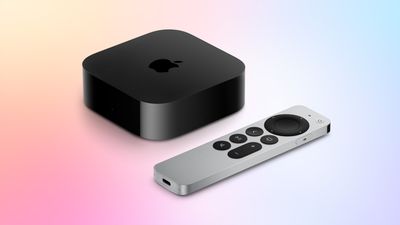
tvOS 27.2 was released on Monday for the Apple TV 4K (2nd generation) and newer, but the Apple TV does not show release notes for software updates in the Settings app. Instead, Apple periodically updates a support document outlining what is new in tvOS updates, and the release notes for tvOS 27.2 are now available.
Note that Apple never released a tvOS 27.1 version, so tvOS 27.2 is the first Apple TV software update since tvOS 27 was released in September.
Apple says tvOS 27.2 includes a few FaceTime enhancements, plus the ability to shuffle through different screen saver categories. In addition, the Find My app now supports the Siri Remote (2nd generation) and later, but Precision Finding is limited to the Siri Remote (4th generation). The update also contains bug fixes and security patches.
Here are Apple's full tvOS 27.2 release notes:
This update brings new ways to stay connected with FaceTime, personalize your screen saver, and locate your Siri Remote with Find My, along with bug fixes and security updates for your Apple TV 4K.
FaceTime
FaceTime links make it easier to join calls directly from your Apple TV.
Sign language interpreter and captioning support lets you add third-party services to your calls.
Screen Savers
Photo personalization lets you use your iPhone to choose specific photos for your screen saver without sharing your full library with Apple TV.
Shuffle option lets you enjoy different screen saver categories as your Apple TV cycles through them.
Find My
Find My support lets you locate your Siri Remote (2nd generation) or later using your iPhone.





 Note: MacRumors is an affiliate partner with some of these vendors. When you click a link and make a purchase, we may receive a small payment, which helps us keep the site running.