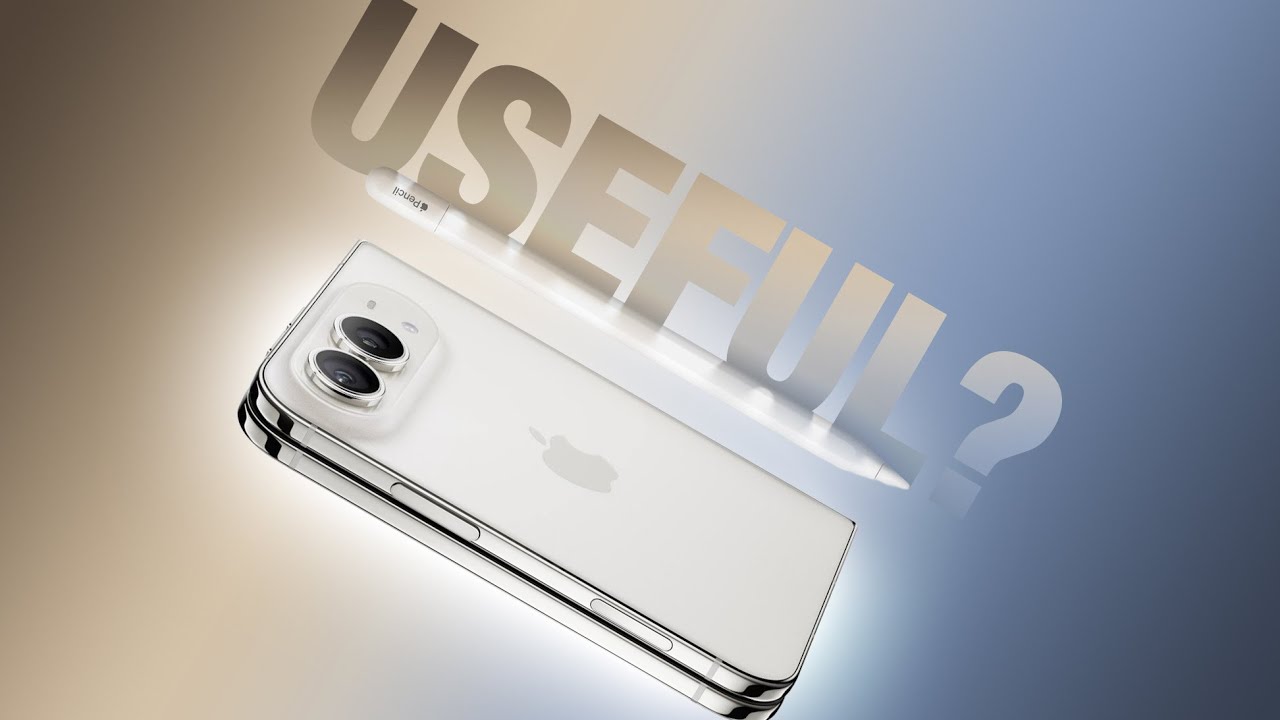
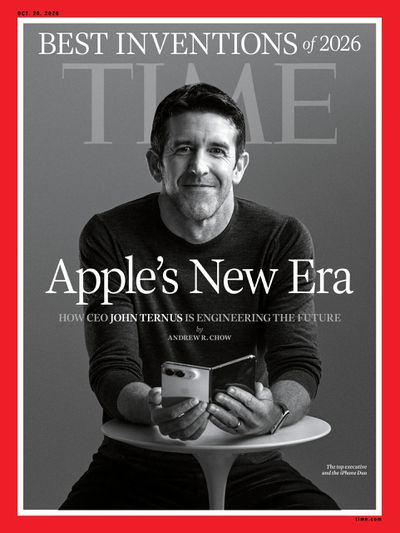
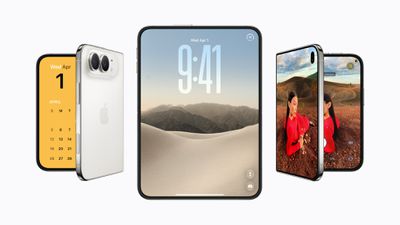
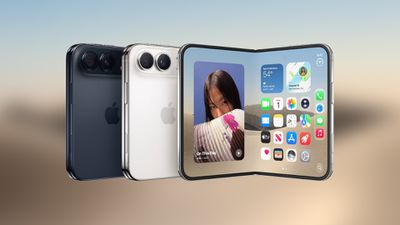
In a recent interview with TIME, Apple CEO John Ternus described some early foldable smartphones as feeling "kind of cheap and crappy." Samsung released its first foldable in 2019, but Apple opted to take its time and has now developed the iPhone Duo with a premium design and a barely-noticeable display crease.
The interview touches on how Ternus gave Apple's design team "the confidence to really push the boundaries on innovation and manufacturing" with the iPhone Duo, which is available to pre-order starting this Friday at 5 a.m. Pacific Time.
In an interview with TIME's Andrew R. Chow, Apple's marketing chief Greg Joswiak said Apple Intelligence is meant for "everyday people" as opposed to the "lunatic fringe."
The full sentence: "In the midst of a populist AI backlash, they contend that they are building a modest but personalized and privacy-preserving form of AI that will actually help ordinary people as opposed to merely dazzling Silicon Valley's 'lunatic fringe,' as Greg Joswiak, senior vice president of worldwide marketing, puts it."
Joswiak apparently believes Apple Intelligence is not for "die-hard AI believers chasing superintelligence," as Chow described it.
"We love them, and they can use it too, but that's not our target," said Joswiak. "It's how to make it better for everyday people."
Joswiak added that "we don't feel threatened" in regards to Apple facing competition in the AI industry. "The fact that we can do the integration that we can means we can create just a better experience than anybody else," he said.
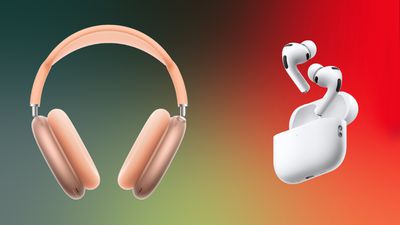
Amazon has a few notable markdowns on AirPods models this week, including the AirPods Max 2 and AirPods Pro 3. In regards to the AirPods Max 2, Amazon's deal today is matching the Prime Day low price we saw earlier this month.
Note: MacRumors is an affiliate partner with some of these vendors. When you click a link and make a purchase, we may receive a small payment, which helps us keep the site running.
You can get the AirPods Max 2 on sale for $429.00, down from $549.00. This is one of the lowest prices we've ever seen on the AirPods Max 2, and the sale is available in Blue, Midnight, Orange, Purple, and Starlight colors.
For the AirPods Pro 3, you can get this model for $199.00, down from $249.00. This is a second-best price on the AirPods Pro 3, but if you missed the all-time low price during Prime Day and want a model now, it's still a solid $50 discount.
This model of the AirPods Pro launched in September 2025 and has 2x better Active Noise Cancellation than the previous generation, better audio quality, a revised fit that's meant to improve comfort and stability, Live Translation for in-person conversations, and heart rate sensing for workouts.
Head to our full Deals Roundup to get caught up with all of the latest deals and discounts that we've been tracking over the past week.
Deals Newsletter
Interested in hearing more about the best deals you can find as we head into the holidays? You can sign up for our Deals Newsletter and we'll keep you updated so you don't miss the biggest deals of the season!
Ternus, who joined Apple in 2001 and was formerly its senior vice president of hardware engineering, succeeded Tim Cook as the company's CEO on September 1. This paved the way for Ternus to unveil the iPhone Duo just eight days later.
Ternus believes the iPhone Duo stands apart from other foldable smartphones.
Ternus was eight years old when his father purchased an Apple II computer. "I started playing games on it and fell in love with Apple," he said.
Cook remains at Apple as executive chairman, with his primary focus being engaging with policymakers around the world. "He has great relationships and loves Apple," Ternus said of Cook. "So wherever he can help, he is happy to help."
In a separate interview, Cook said he is "not meddling" with Ternus.
Apple's large language models that power Siri AI are "based on Google's Gemini models and cloud technology," according to a joint announcement from Apple and Google earlier this year. When asked about this, Ternus said Apple does not always have to make the whole widget, with the company focused on areas it can provide "differentiation."
"There's not really a goal that we have to make every single thing in a product," he said. "We make the things where we can really bring differentiation."
Apple also tries to remain focused.
"You can't do everything," Ternus added. "So we kind of try to constrain ourselves to the stuff that matters most—and then put all of our effort into those things."
By completing this process via Apple's online store or the Apple Store app, Apple said customers can "check out with a single click" when iPhone Duo pre-orders go live on Friday, October 16 at 5 a.m. Pacific Time. The device launches on Friday, October 23.
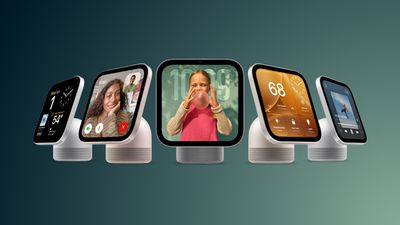
Apple this week introduced an all-new HomeView smart home hub, but popular tech reviewer Marques Brownlee is "not convinced" about it.
In his HomeView impressions video on his YouTube channel MKBHD, Brownlee said "I cannot figure any group that this is actually ideal for."
HomeView has a lot of overlap with other Apple devices, including the iPhone, iPad, Apple Watch, and HomePod. Brownlee said the HomeView does not provide enough "extra value," leading him to believe that the device should be "a skip for most people."
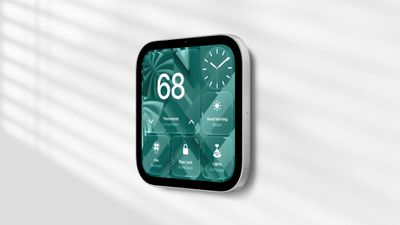
Apple's wall-mounted HomeView will ship without a power adapter, USB-C cable, or mount, requiring customers to purchase compatible accessories separately.
In a support document posted on October 14, Apple outlined different power requirements for the two versions of its new smart home hub. The tabletop HomeView requires a USB-C power adapter rated for at least 30W, supporting an output of 15V at 2A or higher. The wall-mounted model requires at least 20W, with support for 9V at 2.22A or higher.
The tabletop model includes a 30W power adapter and a 1.5-meter USB-C cable. The wall-mounted version's box contains only the device and documentation.
Customers choosing the wall-mounted HomeView will need a compatible third-party mount and power solution. Depending on the mount, the device can use a separate USB-C cable and power adapter or a hardwired connection to line power.
If the power requirements are not met, HomeView will display a "Power Adapter Not Supported" message, accompanied by a lightning bolt and yellow warning triangle. For a wall-mounted unit, Apple suggests testing the device outside its mount with a compatible USB-C cable and adapter. If it works when connected directly, customers should contact the mount manufacturer or their professional installer.
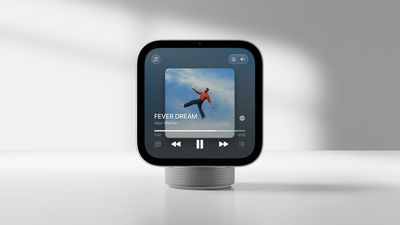
Apple introduced the HomeView earlier this week, featuring a 7-inch Liquid Retina display, an A18 chip, and Siri AI. Both models are available to pre-order for $299 in the United States, with availability beginning on November 13.
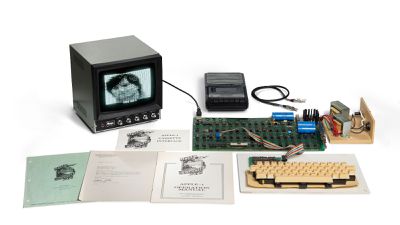
The "Hatfield" Apple-1 has sold for $1,148,200 including the buyer's premium, setting a world auction record for a commercially sold Apple-1, according to Bonhams.
Two bidders competed for 28 minutes before the October 14 auction closed, taking the working computer beyond its $500,000 to $800,000 estimate.
The machine takes its name from original owner Fred Hatfield, who complained to Apple about the lack of software for the Apple-1. A letter included in the sale contains Steve Jobs' 1978 reply, offering an Apple II motherboard in exchange for the Apple-1 and another $400. Hatfield kept his computer.
He eventually sold it privately for $40,000 while it needed repairs. The buyer restored it and obtained Steve Wozniak's signature on the motherboard before it set an auction record in 2013. Bonhams lists that earlier sale as approximately $686,000.
Apple has begun inviting selected members of the media to a product launch experience in Los Angeles on Wednesday, October 28, according to Bloomberg's Mark Gurman.
In a post on X, Gurman described the gathering as an "all-day product launch experience" for touchscreen MacBooks, a new iPad mini, and Macs equipped with M6 chips.
Gurman previously reported that Apple would introduce the devices "on or around" Tuesday, October 27, with an online video presentation and a hands-on experience for the media. His latest post specifies October 28 for the media gathering, but does not say whether the product announcements will take place that day or beforehand.
Alongside the redesigned high-end machines, Apple is expected to introduce M6 versions of the 14-inch MacBook Pro and iMac. The new iPad mini is expected to gain an OLED display, a front-facing camera positioned for landscape video calls, and a redesigned speaker system.
The iPhone Duo unsurprisingly offers performance similar to the iPhone 18 Pro, according to an early iPhone Duo benchmark shared on Geekbench 7. Both devices are equipped with Apple's 2nm A20 Pro chip with a 6-core CPU and a 7-core GPU.
The benchmarked iPhone Duo (iPhone19,4) is running iOS 27.1, as expected, and it had a single-core score of 3986 and a multi-core score of 11067. That's in line with multiple benchmarks collected from iPhone 18 Pro and iPhone 18 Pro Max models.
Scores vary from test to test, so while the result does fall short of the top iPhone 18 Pro benchmark scores, we're only viewing a single score. The iPhone Duo has the same 6-core CPU with a 4.93GHz base frequency that's identified in iPhone 18 Pro benchmarks, and it lists 11.30GB memory, which means 12GB of RAM.
While the iPhone Duo and iPhone 18 Pro models use the same A20 Pro chip, there could be differences in real-world performance based on thermal management, the iPhone Duo's two screens vs. a single screen, and other factors.
Apple says the A20 Pro offers up to 20 percent faster CPU performance than the A19 Pro and up to 40 percent faster GPU performance. GPU speeds were not tested.
Pre-orders for the iPhone Duo will start on October 16, and a launch will follow on October 23.
Apple plans to launch the HomeView on November 13, so we have a month to go until we can learn more about it. Right now, we're limited to the information Apple has shared and what members of the media learned during limited hands-on time.
We've rounded up some interesting HomeView tidbits you might have missed.
Recipe walkthroughs - HomeView makes Safari recipes easier to follow by pulling out the ingredients and steps. You can tap on a "Start Cooking" button to get step-by-step instructions you can use as you cook. The device also supports multiple voice-activated timers.
Siri access - You can say Siri (English only) or Hey Siri for hands-free access, but there are also options for activating Siri with a swipe down from the top of the display or using Type to Siri.
Apple Intelligence - HomeView has some Apple Intelligence features built in. You or members of your household can use Siri AI for general knowledge questions if you don't have an Apple Intelligence iPhone or iPad, but you do need one for any requests involving personal context.
Guests - Personal data is private, but guests can control smart home accessories, check the weather, set timers, and play music. Visitors can also AirPlay audio to the HomeView using peer-to-peer discovery.
Adaptable interface - HomeView can tell when someone is approaching and parts of the interface will change based on proximity. If someone is across the room, it shows less information in a larger view. As the person approaches, the view can change to show more information.
Faces - HomeView has multiple customizable faces similar to watch faces. Apple says some faces can "wake with you in the morning, wind down with you at night." The Snoopy face, for example, has different animations based on time of day, weather, and holidays.
Third-party apps - There's no App Store, but the HomeView has CarPlay-like software capabilities. It can show CarPlay audio and video apps from a linked iPhone. There are no CarPlay video apps except for Apple TV, so app developers will need to add support.
Handoff - You can transfer songs, podcasts, calls, videos, and recipes from the iPhone to the HomeView.
Live Activities - HomeView supports Live Activities, so if you have a timer running or get an incoming Intercom message, content will be visible while you use other apps.
Sensors and HomeKit - The HomeView has temperature and humidity sensors that can be used in Home app scenes and automations. It also serves as a home hub for controlling HomeKit and Matter devices when you're away from home.
HomeView is available for pre-order now, and it will launch on November 13. It is priced at $299 and comes in either a tabletop version with a speaker base or a wall-mounted version.
Apple today closed with a market capitalization above $5 trillion, making it the second company to do so after Nvidia.
As noted by The Wall Street Journal, Apple's market cap has exceeded $5 trillion six times before today during intraday trading, but this is the first time the company stayed above the mark at closing.
Apple closed at $342.96, for a market cap of $5.005 trillion. The new valuation comes just over a month after John Ternus took over for Tim Cook as Apple CEO, and two days ahead of iPhone Duo pre-orders.
While Apple surpassed Nvidia to briefly become the most valuable company in the world in July, Nvidia has since retaken the title and continues to hold the top spot with a market cap of $5.33 trillion.
There's been some confusion about which of Apple's new and existing home devices will support Siri AI and when, because Siri AI isn't going to be available at launch on some products.
Devices With Siri AI
HomeView - Available at launch (November 13)
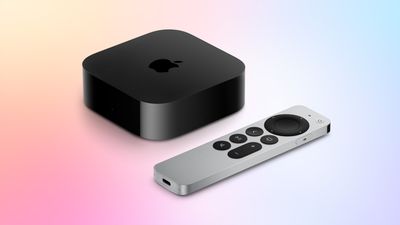
Apple TV 4K (4th generation) - Available at launch (November 13)
Apple TV 4K (3rd generation) - Available in tvOS 27.2
Apple TV 4K (2nd generation) - Available in tvOS 27.2
HomePod mini 2 - Ships October 30, Siri AI coming in a future software update
Despite a report from CNET suggesting the first HomePod mini would support Siri AI, Apple has since confirmed that's not the case.
On the HomePod and Apple TV 4K models that support Siri AI, the home owner in the Home app must have an Apple Intelligence-enabled iPhone or iPad on the latest version of the software. Siri AI has to be turned on, and it has to be set to a supported language. Other members of the household don't need an Apple Intelligence-enabled device once Siri AI is turned on, except for personal requests.
HomeView does not require an Apple Intelligence-enabled iPhone or iPad for Siri AI, except for requests that use personal context.
Siri AI for HomeView, Apple TV 4K, and HomePod mini 2 is English only and is limited to the United States, Australia, Canada, India, New Zealand, Singapore, South Africa, and the UK at launch.
EU Restrictions
Siri AI is not available in the EU on the iPhone and iPad, so Siri AI won't be available for home devices that support it. HomeView isn't even launching in the EU.
Siri AI Beta
Apple is still calling Siri AI a beta, and it will be in beta when it's available on HomeView, Apple TV 4K, and HomePod mini 2.
Apple's new HomeView underwent regulatory testing in October 2024, and it was running what would now be known as HomeView software version 18, according to an FCC document uncovered by MacRumors contributor Aaron Perris.
The document provides the clearest evidence yet that the HomeView was held up due to Siri AI's delayed launch. Apple initially previewed the more intelligent version of Siri at WWDC 2024, but in March 2025 the company announced that it needed more time to get it ready. Siri AI finally launched this September.
Apple plans to bring Apple Intelligence to China in iOS 27.3 after two years of regulatory delays, reports Bloomberg. The launch will include basic Apple Intelligence features for things like photo editing, but Siri AI won't be available. Image Playground and the newer version of Genmoji will be missing, plus text generation tools will be limited.
The South China Morning Post today reported that China's Ministry of Industry and Information Technology recently gave Apple network access permits to add Alibaba's Qwen and Tongyi Wanxiang models to the iPhone Duo, iPhone 18 Pro, and earlier iPhones, paving the way for an Apple Intelligence debut.
Apple introduced the first Apple Intelligence features in iOS 18.1, but they have been missing from China since launch. Apple received initial clearance to launch Apple Intelligence in China in July, but needed additional clearance for a consumer launch.
China restricts foreign AI technology, which meant Apple had to partner with Alibaba and Baidu to launch Apple Intelligence in the country. Apple also has to allow the Chinese government to approve ongoing updates to the AI models.
Competing smartphone makers in China like Huawei have long offered artificial intelligence features, and Apple has been at a disadvantage without comparable tools.
iOS 27.3 is expected in December.
Note: This discussion thread is located in our Political News forum with special rules.
The free Apple Invites app for the iPhone was updated today with two new features: hosts can now more easily manually add guests to an event and mark their RSVP status, and the app's Home Screen widget now supports the extra large size option.
Released in February 2025, the Apple Invites app makes it easy to invite people to events, such as birthday parties and baby showers. The ability to create an event in the app requires subscribing to an iCloud+ plan with at least 50GB of storage for $0.99 per month, but anyone who receives an event link can RSVP for free on any device.
Apple's full release notes for version 1.12.1 of the app:
• Hosts can now more easily manually add guests to the event and mark their RSVP status, so your guest list stays accurate even when someone confirms outside the app.
• Invites widget now supports the extra large size to give you more options to countdown on your Home Screen.
• This update contains bug fixes and performance improvements.
OpenAI today suggested Apple could be using its trade secrets, the very thing Apple is already suing OpenAI for. In a court filing, OpenAI accused an ex-employee of giving sensitive data about an unreleased product to Apple.
The unnamed employee joined OpenAI from Apple and then returned after six months. OpenAI claims the person sent "over a hundred highly confidential files" to personal accounts, including manufacturing data and detailed images of at least one unreleased product. The former employee allegedly "made a presentation" on OpenAI product plans for Apple's senior leadership "months ago," and OpenAI is worried Apple could use that information to further its work on AI devices.
OpenAI is very concerned that its trade secret and confidential information is now circulating inside Apple, where Apple engineers can shape Apple's upcoming products based on OpenAI's confidential and innovative work. OpenAI has raised these issues directly with Apple, but to date, Apple has not provided OpenAI with the requested assurances that Apple is not in possession of, and has not used, OpenAI's trade secret and confidential information.
OpenAI asked the court for permission to investigate and pursue counterclaims if necessary. Apple told Reuters it has found no evidence to support OpenAI's claims and it has policies in place to ensure new employees do not use confidential information from previous employers.
Apple and OpenAI have been involved in a tense legal battle since Apple sued OpenAI in July. Apple says OpenAI employees Chang Liu and Tang Tan stole trade secrets from Apple to develop new AI hardware. OpenAI called the lawsuit "careless, aggressive and oddly personal," stating that it does not "have, nor want, any of their trade secrets" because it is "much more interested in building innovative products and technologies that push the frontier."
Yesterday, the court partially granted Apple's request for expedited discovery. OpenAI has up to two weeks to hand over forensic evidence as well as materials used when interviewing former Apple employees. Liu, Tan, and Alyssa Peng, Liu's former Apple colleague, will need to sit for depositions after Apple gets the requested information.
Judge Edward Davila, who is overseeing the case, said during a hearing today that he is "highly likely" to grant a preliminary injunction prohibiting OpenAI from using Apple's allegedly stolen trade secrets. Bloomberg says an injunction would "mark a potential setback" for OpenAI's hardware development efforts.
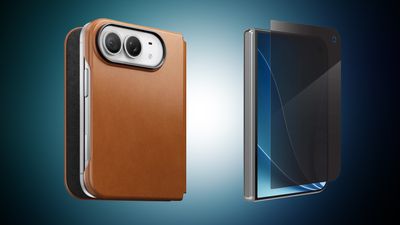
iPhone Duo pre-orders kick off this Friday, and in anticipation of the event we've gathered all of the best cases and screen protectors you can get for your new iPhone Duo. This includes accessories from popular brands like OtterBox, Speck, ZAGG/Mophie, and more.
Note: MacRumors is an affiliate partner with some of these vendors. When you click a link and make a purchase, we may receive a small payment, which helps us keep the site running.
Most of these retailers aren't offering discounts on iPhone Duo cases yet, but at ZAGG you can get 20 percent off your order when you purchase any two items, including iPhone Duo accessories. This is a perfect opportunity to get a case and screen protector for the smartphone at a discounted rate.
Otherwise, you'll find the full list of retailers offering accessories for the iPhone Duo below. Shoppers should note that some of these devices are up for pre-order right now and will launch in November or later, but many are shipping cases for the Duo right now.
Amazon - iPhone Duo cases from Spigen, Speck, ZAGG, and more
AT&T - Discounts on iPhone Duo cases and screen protectors from Speck, Spigen, and more
Best Buy - iPhone Duo cases from Dbrand, OtterBox, Spigen, Kate Spade, and more
Burton Goods - Save on leather cases for iPhone Duo
ESR - iPhone Duo Silicone Leather case with Flex Stand
Target - iPhone Duo cases from ZAGG, Case-Mate, and Kate Spade
ZAGG - Save 20% when you buy 2 items from ZAGG, including iPhone Duo cases and screen protectors
If you're on the hunt for more discounts, be sure to visit our Apple Deals roundup where we recap the best Apple-related bargains of the past week.
Deals Newsletter
Interested in hearing more about the best deals you can find as we head into the holidays? You can sign up for our Deals Newsletter and we'll keep you updated so you don't miss the biggest deals of the season!


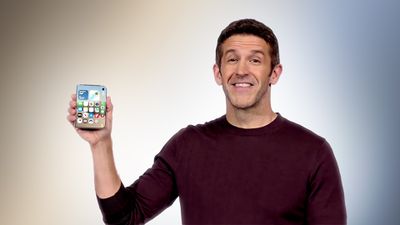 In a recent interview with TIME, Apple CEO John Ternus described some early foldable smartphones as feeling "kind of cheap and crappy." Samsung released its first foldable in 2019, but Apple opted to take its time and has now developed the iPhone Duo with a premium design and a barely-noticeable display crease.

 Note: MacRumors is an affiliate partner with some of these vendors. When you click a link and make a purchase, we may receive a small payment, which helps us keep the site running.

 Apple today



 Note: MacRumors is an affiliate partner with some of these vendors. When you click a link and make a purchase, we may receive a small payment, which helps us keep the site running.