Apple to Buy TSMC's Entire Supply of 3nm Chips for 2023 - MacRumors
Skip to Content

Apple to Buy TSMC's Entire Supply of 3nm Chips for 2023

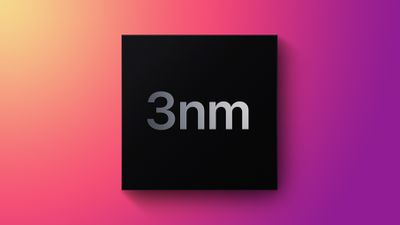
Apple will receive all of TSMC's first-generation 3-nanometer process chips this year for upcoming iPhones, Macs, and iPads, according to industry sources cited by DigiTimes.
3nm apple silicon feature
As early as May, Apple was known to have booked nearly 90% of the Taiwanese pure-play foundry for its upcoming next-gen devices. However, Apple is now projected to take 100% of TSMC's capacity in 2023, due to delays in Intel's wafer needs owing to later modifications to the company's CPU platform design plans.

Intel's lack of orders means TSMC's sales of 3nm chips will be significantly lower this year. While TSMC is still expected to experience significant growth in the fourth quarter as it starts mass producing ‌3nm‌ chips for Apple's needs, they too have been downgraded, according to DigiTimes' industry sources.

The report suggests TSMC's ‌3nm‌ process output may be reduced to 50,000-60,000 wafers monthly in the fourth quarter, down from the 80,000-100,000 units previously anticipated, due to a cutback in Apple's orders. The current monthly output of TSMC's ‌3nm‌ process is estimated at approximately 65,000 wafers, the outlet's sources said.

Apple's upcoming ‌iPhone 15 Pro‌ models are expected to feature the A17 Bionic processor, Apple's first ‌iPhone‌ chip based on TSMC's first-generation ‌‌3nm‌‌ process, also known as N3B. The ‌‌3nm‌‌ technology is said to deliver a 35% power efficiency improvement and 15% faster performance compared to 4nm, which was used to make the A16 Bionic chip for the iPhone 14 Pro and Pro Max.

Apple's M3 chip for Macs and iPads is also expected to use the ‌‌3nm‌‌ process. The first M3 devices are expected to include an updated 13-inch MacBook Air and 24-inch iMac, both of which could arrive as early as this October.

New OLED iPad Pro models coming early next year are also likely to be powered by M3 chips, while Apple analyst Ming-Chi Kuo believes that new 14- and 16-inch MacBook Pro models coming in 2024 will feature ‌M3‌ Pro and ‌‌M3‌‌ Max chips.

According to an App Store developer log obtained by Bloomberg reporter Mark Gurman, Apple is currently testing a new chip with a 12-core CPU, 18-core GPU, and 36GB of memory, which could be the base-level M3 Pro for the next-generation 14-inch and 16-inch ‌MacBook Pro‌ models launching next year.

Apple may also be actively testing an M3 version of the Mac mini, according to Gurman. The Mac is said to be carrying the model identifier "Mac 15,12" and includes eight CPU cores (consisting of four efficiency cores and four performance cores), 10 graphics processor cores, and 24GB of RAM.

According to The Information, future Apple silicon chips built on the ‌‌3nm‌‌ process will feature up to four dies, which would support up to 40 compute cores. The M2 chip has a 10-core CPU and the ‌‌‌M2‌‌‌ Pro and Max have 12-core CPUs, so ‌‌3nm‌‌ could significantly boost multi-core performance. At minimum, ‌‌3nm‌‌ should provide the biggest performance and efficiency leap to Apple's chips since 2020.

TSMC is also working on an enhanced ‌‌3nm‌‌ process called N3E. Apple devices will eventually migrate to the N3E generation, which is expected to enter commercial production in the second half of 2023, but actual shipments will not ramp up until 2024, according to DigiTimes.

Popular Stories

Oled iPads and MackBook Pro Notch

5 Apple Products to Get OLED Displays

Thursday August 20, 2026 6:50 am PDT by
Apple plans to upgrade several iPads and Macs with OLED displays over the next three years, according to a new DigiTimes report. The following five devices will receive OLED displays between 2026 and 2029, according to the Taiwanese publication's industry sources:iPad mini: 2026 MacBook Pro: Late 2026 or early 2027 iPad Air: 2027 iMac: 2028 or 2029 MacBook Air: 2028 or 2029OLED...
iOS 27 Next to iPhone

Here's When iOS 27 Rolls Out in Every Time Zone

Sunday September 13, 2026 3:00 am PDT by
Apple is about to release iOS 27, which will finally deliver more advanced Siri AI capabilities as well as a variety of other refinements, improvements, and new features to iPhones. It's Apple's biggest software update of the year, and Apple announced at Wednesday's iPhone event that it will be releasing iOS 27 sometime tomorrow – Monday, September 14. iOS 27 won't be the only release on...
iPhone Handoff iOS 27 Feature

T-Mobile to Charge $5 a Month for iOS 27 iPhone Handoff

Thursday September 10, 2026 3:58 pm PDT by
T-Mobile will charge customers $5 per month to use iPhone Handoff, an e-SIM feature that allows the same phone number to be used on two separate iPhones. iPhone Handoff requires carrier support, and at launch, only T-Mobile users in the U.S. and Deutsche Telekom users in Germany will be able to use it. T-Mobile says customers can use their number across two compatible iPhone models and...

Top Rated Comments

ItsASpider Avatar
40 months ago

As 1 nanometer is 1000 picometers and there is no unit between the two, Apple could theoretically solve this by inventing a marketing term for a new unit that is 10 picometers. "The new iPhone is powered by 7 applemeter chips" 😆
There is still Angstrom, which is 100 picometer and is what Intel is going with.
Score: 14 Votes (Like | Disagree)
fatTribble Avatar
40 months ago
What Apple and TSMC do to create these powerful processors is truly amazing!

I almost feel guilty buying a new iPad Pro with all of that horsepower only to look at trip photos and read news stories. 😊
Score: 13 Votes (Like | Disagree)
falainber Avatar
40 months ago
Current TSMC 3nm process is just not good (expensive, low yield) so nobody but Apple is designing chips for it. All other customers are waiting for N3E. So the reason Apple is buying the entire supply of 3nm chips this year is not that other customers can't get it, it's because they don't want it.
Score: 12 Votes (Like | Disagree)
40 months ago

0 nm = Quantum Computing! :cool:
The nm scale is nothing but marketing terms, they stopped naming new nodes according to their actual size since 16nm.

Intel upcoming 5nm will be called 20A (20 angstrom, aka 2nm) because they can, and there are no naming standards to follow.
Score: 6 Votes (Like | Disagree)
headlessmike Avatar
40 months ago

There is still Angstrom, which is 100 picometer and is what Intel is going with.
And anything below an Ångström isn't really relevant in this context anyway. The separation between silicon atoms in a crystal is about 2.4 Å. 1 Å is about the "size" of a hydrogen atom.
Score: 6 Votes (Like | Disagree)
wanha Avatar
40 months ago

The new marketing term will be picometers. The challenge for the marketing team will be what number to add in front of "pm". Too small a number will make it sound like a clock time. Too big a number and people will think there is a backwards step.

After all, if you're at "3nm", who wants to go back to, say, "100pm" when "3nm" is clearly smaller than "100pm", eh?
As 1 nanometer is 1000 picometers and there is no unit between the two, Apple could theoretically solve this by inventing a marketing term for a new unit that is 10 picometers. "The new iPhone is powered by 7 applemeter chips" 😆
Score: 6 Votes (Like | Disagree)