Apple today published a support document explaining why it decided to release a standalone Apple Music Classical app for classical music.
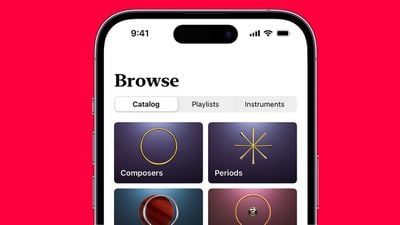
In short, Apple says the app was designed to support classical music's complex metadata:
Classical music is different. It has longer and more detailed titles, multiple artists for each work, and hundreds of recordings of well-known pieces. The Apple Music Classical app is designed to support the complex data structure of classical music.
Apple offers a longer explanation on a new Apple Music Classical page:
Classical music often involves multiple musicians recording works that have been recorded many times before and are referred to by different names. For example, from the formal Beethoven's Piano Sonata No. 14 to the popular byname of Moonlight Sonata, or in multiple languages, such as Mondschein Sonata in German. Such complexities mean that classical music fans have been ill-served by streaming platforms. Until now. A distinct app, included with an Apple Music subscription, gives these classical music lovers the editorial and catalog content they've been missing.
Only a brand-new app — with specialized features and a beautiful interface designed for the genre — could remove the complexity and make classical music easily searchable, browsable, and accessible for beginners and experts alike.
The support document provides answers to some other frequently asked questions about the app, which began rolling out today. Much of the information relates to how the Apple Music Classical app integrates with the standard Apple Music app.
Apple also shared a video overview of the app on YouTube:
Apple Music Classical offers over five million classical music tracks and is free to use with a standard Apple Music subscription on iOS 15.4 and later. The app is based on Primephonic, a classical music streaming service that Apple acquired in 2021. The app is available for the iPhone only at launch, with an Android version coming soon.