SpaceXAI has released Grok Voice mode for Apple CarPlay, allowing CarPlay users to ask the chatbot questions and make requests directly from their vehicle dashboard, handsfree.
Previously, Grok for iPhone displayed a placeholder app in CarPlay saying the handsfree support would be coming soon. Grok comes built-in on Tesla vehicles, but now almost any other car can access it.
Apple started permitting third-party voice-driven conversational apps to integrate with CarPlay in iOS 26.4, but developers must add support for the feature and obtain a special entitlement from Apple.
Apple requires apps to use its voice control template for CarPlay. Whenever voice-based services are active, apps must display the voice control interface and can include up to four action buttons. However, Apple says chatbot apps should not show text or imagery in response to queries.
Grok Voice mode joins ChatGPT and Perplexity, which arrived on CarPlay in March and April, respectively.
CarPlay has supported third-party apps for years, but Apple restricts the types of apps permitted on the platform to reduce driver distractions. Apple maintains a list of approved app categories, including audio, communication, EV charging, and navigation apps.
Apple and Meta have opposed a Canadian bill that the companies say could force them to create backdoor access to encrypted user data, should it pass through the country's parliament.
Proposed by Canada's ruling Liberal Party, Bill C-22 contains provisions that could be similar to a UK data access provision order sent to Apple last year, depending on how they are implemented.
Back in February 2025, the British government demanded that Apple give it blanket access to all encrypted user content uploaded to the cloud. Apple refused, and instead pulled its Advanced Data Protection iCloud feature from the United Kingdom.
U.S. officials later said Britain had dropped the request after the director of national intelligence, Tulsi Gabbard, raised concerns that it could violate a cloud data treaty and tap into US citizens' data.
Apple now finds itself in a similar standoff across the Atlantic. Canadian law enforcement officials say Bill C-22 would help them investigate security threats earlier and act more quickly. But Apple has pushed back against the proposed legislation. The company provided Reuters with the following statement:
"At a time of rising and pervasive threats from malicious actors seeking access to user information, Bill C-22, as drafted, would undermine our ability to offer the powerful privacy and security features users expect from Apple. This legislation could allow the Canadian government to force companies to break encryption by inserting backdoors into their products – something Apple will never do."
Meta also argued that the bill contained "sweeping powers, minimal oversight, and lack of clear safeguards" that could end up making Canadians less safe, rather than more.
Apple CEO Tim Cook has consistently insisted that providing back-door access past its encryption for authorities would open the door for "bad guys" to gain access to its users' data. Cyber security experts agree that it would only be a matter of time before bad actors discover such a point of entry. Apple's stance was enhanced in 2016 when it successfully fought a US order to unlock the iPhone of a shooter in San Bernardino, California.
The Canadian bill is currently being debated in the House of Commons.
Note: Due to the political or social nature of the discussion regarding this topic, the discussion thread is located in our Political News forum. All forum members and site visitors are welcome to read and follow the thread, but posting is limited to forum members with at least 100 posts.
Spotify has launched a new feature that lets users save AI-generated audio briefings called Personal Podcasts directly to their Spotify library. It uses a new command-line tool for desktop that works with AI coding agents like OpenAI's Codex and Anthropic's Claude Code.
After you install the Save to Spotify CLI from GitHub and sign into your Spotify account, you can prompt the agent to generate a custom audio piece, like a daily news digest, a study guide pulled from class notes, or a weekly itinerary. Once generated, it appears alongside your music and regular podcasts in Your Library.
Here's how Spotify frames it. From the company's newsroom post:
People are already starting to use their agents to create personal audio that guides their day: from summaries of class notes before an exam to briefings of what's on their calendar. And they're asking for a way to listen to it on Spotify, where they already listen to everything else.
Now, we're making it possible to save and play Personal Podcasts on Spotify. Your agent can generate a daily briefing, private to you, and it's saved alongside everything else in Your Library. And as always with Spotify, it's seamlessly integrated across the devices you use.
Spotify offers a few use case examples to get you started, such as a morning briefing that flags upcoming meetings, checks the weather, and recommends a commute podcast, or a progressively deeper audio series built from saved articles and personal notes for learning a new subject.
The feature remains in beta but is available worldwide to eligible Free and Premium subscribers, though Spotify cautions that there are usage limits during the testing period.
The CLI tool launch follows Spotify's release last month of a Claude integration that lets users connect their Spotify account to the chatbot and ask for personalized music and podcast recommendations directly in a conversation.
Starting today, Apple will require customers in the U.S., Canada, and Chile to verify their status as a student or educator to get educational discounts. Apple is adopting the UNiDAYS verification system that it uses in other countries, with a new process to accommodate homeschool families.
Apple is also adding the Apple Watch Series 11, Apple Watch SE, and Apple Watch Ultra 3 to its Education Store, which means students and teachers are now eligible for up to a 10 percent discount on Apple's most popular wearable.
Students and educators in the three countries can use the UNiDAYS app or website to verify their academic status with an email address from an educational institution, a student or staff photo ID, or another valid educational document.
Eligible customers who homeschool can also be verified by UNiDAYS. Verification requires an identity document like a driver's license or passport, and a homeschool document, such as a Letter of Intent or Letter of Acknowledgement. Most customers will be verified instantly, with UNiDAYS providing a decision in under 24 hours when manual review is required.
Once confirmed through UNiDAYS, students and educators in the U.S., Canada, and Chile will be able to purchase the Apple Watch and other Apple devices at Apple's discounted educational prices. Apple's Education Store offers special pricing on Macs, iPads, and the Studio Display, along with accessories like the Magic Keyboard and the Apple Pencil.
Apple did not previously have an established academic status verification system in the U.S. or Canada, which meant that anyone could technically purchase from the Education Store. Apple's sales policies said that it routinely audited customer purchases to verify purchase conditions were followed. Apple briefly used UNiDAYS in the U.S. in 2022 to verify student status, but it was removed after a few days following complaints about issues with the verification process.
Apple's Education Store discounts are available to employees of K–12 institutions, faculty and staff of higher education institutions, students attending or accepted to higher education institutions, and parents purchasing on behalf of children attending or accepted to a higher education institution.
In addition to the U.S., Canada, and Chile, Apple has added the Apple Watch to the Education Store in Australia, China, Hong Kong, Japan, Malaysia, Singapore, South Korea, Taiwan, Thailand, Vietnam, France, Germany, India, Italy, Saudi Arabia, Spain, Turkey, and the UK.
Apple also expanded UNiDAYS verification requirements to Australia, Hong Kong, and Turkey yesterday.
OpenAI today launched Codex for Chrome, a Chrome extension that lets Codex work directly in the browser on Macs and PCs.
With the extension, Codex can use the browser to test web apps, get context across multiple tabs, use web DevTools, and more without taking over the browser from the user.
OpenAI says that after it launched Computer Use in the desktop Codex app, it saw that most common workflows happened in the browser. The Chrome extension should make it faster and easier for Codex to help with browser-based work that plugins or APIs can't handle.
According to OpenAI, Codex has more than 4 million weekly active users, an increase of 8x since the beginning of the year. The Chrome extension is part of OpenAI's broader effort to make Codex more useful for work people do daily, while keeping it useful for developers.
The Chrome extension can be installed through the Codex Plugins menu.
Perplexity today launched a new Mac app with support for its hybrid local-cloud AI agent Personal Computer, plus it expanded Personal Computer access to Pro and Enterprise users, so it is no longer limited to just Max subscribers. Perplexity describes Personal Computer as a "personal orchestrator" that hybridizes local and server environments for security and productivity.
Personal Computer is available in the new Mac app, which Perplexity says gives users access to queries, conversations, and dictation. While all Mac users can download the new app, access to Personal Computer still requires a paid subscription.
Personal Computer can access the Mac's file system and native Mac apps to create and execute entire workflows, plus it can access the web. It can see active apps and work across any Mac app, but files are created in a secure sandbox, and its actions are auditable and reversible.
When paired with the Comet browser, Personal Computer can operate web-based tools without the need for direct connectors.
Pressing both Command keys on a Mac activates Personal Computer, and it responds to text or voice commands and displays useful quick actions automatically. Personal Computer can do things like complete each task on a to-do list, sort a messy downloads folder, compare local files against information on the web, and more.
Though it has access to what's on a user's Mac natively, Personal Computer processes intense tasks on Perplexity's servers, so a high-performance Mac isn't needed to run it. Personal Computer works on any Mac with macOS 14 Sonoma or later, though Perplexity says running Personal Computer on a Mac mini creates the best experience because it allows the agent to run continuously.
Perplexity's older Mac app will be deprecated in the coming weeks.
Apple today released a new update for Safari Technology Preview, the experimental browser that was first introduced in March 2016. Apple designed Safari Technology Preview to allow users to test features that are planned for future release versions of the Safari browser.
Safari Technology Preview 243 includes fixes and updates for Accessibility, Animations, CSS, Editing, Encoding, Forms, HTML, JavaScript, Media, Networking, PDF, Rendering, SVG, Scrolling, Spatial Web, UI, Web API, Web Extensions, Web Inspector, WebAssembly, WebGPU, and WebRTC.
The current Safari Technology Preview release is compatible with machines running macOS Sequoia and macOS Tahoe, the newest version of macOS.
The Safari Technology Preview update is available through the Software Update mechanism in System Preferences or System Settings to anyone who has downloaded the browser from Apple's website. Complete release notes for the update are available on the Safari Technology Preview website.
Apple's aim with Safari Technology Preview is to gather feedback from developers and users on its browser development process. Safari Technology Preview can run side-by-side with the existing Safari browser and while it is designed for developers, it does not require a developer account to download and use.
Apple was not able to narrow the scope of a UK lawsuit accusing it of locking 40 million UK consumers into iCloud, to the detriment of third-party cloud storage providers. British consumer group Which? first filed the lawsuit in late 2024, and is asking for £3 billion for UK Apple customers.
Apple wanted to exclude non-paying iCloud users from the lawsuit, but the tribunal denied Apple's request in a 2 to 1 majority. The lawsuit will go to trial, and will cover both paying and non-paying iCloud customers.
Apple users get 5GB of free storage for photos, messages, and other content on the iPhone, but are encouraged to subscribe to Apple's higher-tier iCloud storage options when the 5GB limit is exceeded. Which? claims that Apple favors its own cloud storage option, and makes it difficult for customers to use alternative cloud storage providers.
Which? sued Apple on behalf of all Apple iCloud users in the UK, regardless of whether they pay for an iCloud subscription plan. Normally, a customer that has not lost anything would not be eligible for a damages payment, but Which? has taken a unique approach.
The tribunal said the lawsuit raises a "novel" legal question, because it is not aware of another case where damages have been requested for "forgone consumer surplus." Forgone Consumer Surplus (FCS) is a legal theory that in this case argues people who were priced out of an iCloud subscription because of Apple's alleged market abuse have suffered a tangible loss because they did not have the opportunity to buy a service they wanted at a fair price in a competitive market.
The 200GB iCloud tier that costs £2.99 might have only cost £1.99 at a "fair" price, for example. Which? argues that a customer who would have theoretically paid £1.99 for the service but was not able to do so because the actual £2.99 price was unaffordable suffered a £1 loss, even though the customer paid nothing. Lawsuits for damages are usually more straightforward, covering paying customers who experienced clear harm from inflated pricing.
While two members of the tribunal sided with Which?, the other took Apple's side. The justice who argued against FCS warned that the case could lead to a flood of cases with secondary claims from non-purchasers based on hypothetical willingness-to-pay calculations.
Apple owes no damages at this point, and is now facing a trial to determine whether it abused its position and gave iCloud preferential treatment on iOS.
All UK consumers who are eligible are automatically included in the claim unless they opt out. Eligible consumers include those who obtained iCloud services from November 8, 2018, to the present. Which? estimates that Apple could owe UK customers an average payout of £70.
Which? wants Apple to settle the claim without litigation by offering consumers their money back and opening up iOS to let users choose a cloud provider.
The Trump administration plans to invite Apple CEO Tim Cook and CEOs from other companies like Nvidia, Qualcomm, Exxon, and Boeing on a trip to China next week, reports Semafor.
Trump will apparently focus on building his relationship with Chinese President Xi Jinping during the May 14 and May 15 meetings. Treasury Secretary Scott Bessent, United States Trade Representative Jamieson Greer, and U.S. Ambassador to China David Perdue have been suggesting CEOs for Trump to invite. It will be the first U.S. presidential visit to China since Trump's 2017 visit.
Apple CEO Tim Cook is set to leave his role on September 1, 2026, with Apple hardware chief John Ternus taking over as CEO.
Cook will remain at Apple as executive chairman, and will "assist with certain aspects of the company, including engaging with policymakers around the world." Cook recently said that he plans to be in the executive chairman role "for a long time," and Apple will remain his top priority.
Two weeks ago, Trump said he has "always been a big fan" of Cook, and he has bragged about the relationship Cook has established with him. "I was very impressed with myself to have the head of Apple calling to 'kiss my ass,'" said Trump, speaking of his first presidential term.
Cook has worked through two Trump presidencies, and he has worked to maintain a positive rapport for Apple's benefit. Cook donated $1 million to Trump's inaugural fund in 2025, and he marked Apple's $600 billion U.S. investment pledge with a glass-and-24-karat gold plaque that he gifted to Trump.
With Cook taking on an expanded role interfacing with Trump and other policymakers worldwide, incoming CEO John Ternus will be able to spend more time focused on Apple. Ternus also won't be subject to the same criticism that Cook has faced for his relationship with Trump.
Note: Due to the political or social nature of the discussion regarding this topic, the discussion thread is located in our Political News forum. All forum members and site visitors are welcome to read and follow the thread, but posting is limited to forum members with at least 100 posts.
Apple continues to work on a "pendant with cameras" for release as early as next year, according to the latest word from Bloomberg's Mark Gurman.
In a report today, Gurman said development of the all-new wearable accessory trails AirPods with cameras, which have apparently reached an advanced testing stage.
Apple also continues to work on smart glasses, according to his report.
Given the report was focused on the AirPods with cameras, no further details were provided about the pendant or the smart glasses. However, he has shared many details about the two products in his previous reporting, as recapped below.
Gurman previously described the pendant as an "AirTag-sized" accessory that would be reminiscent of the failed Humane AI Pin. However, it would be an iPhone accessory rather than a standalone product.
Humane AI Pin
The pendant would feature an "always-on" camera and a microphone for Siri voice commands, but it would lack a display and laser projector, according to the report. The pendant is said to have its own chip, but performance is limited, so the device will apparently rely heavily on a paired iPhone for processing.
Apple is said to be debating whether to add a speaker to the accessory.
The pendant would attach to a person's clothing with a clip, or you could insert a cord or chain into a hole in the device and wear it as a necklace.
In January, The Information's Wayne Ma and Qianer Liu were first to report about Apple's so-called AI pin or pendant project, which remains in an early stage of development inside the company. According to both reports, the device could launch as early as 2027, but there is still a chance the project could be canceled.
As for the smart glasses, he said Apple plans to unveil them in late 2026 or early 2027, but that they will not be released until next year either way.
Like the Meta Ray-Bans, Gurman said Apple's glasses will have built-in cameras that let users capture photos and videos. He also expects the glasses to have speakers and microphones for music, phone calls, and notifications announced by Siri.
Apple is apparently focused on tight iPhone integration and premium build quality.
He did not provide too many details about the iPhone integration, but he does expect the cameras on the glasses to be able to feed data to Siri and Apple Intelligence, and this should help to improve features such as turn-by-turn walking directions.
As for build quality, he said Apple is designing its own plastic frames, with the company allegedly testing at least four potential designs:
A larger rectangular frame, similar to Ray-Ban's Wayfarers
A slimmer rectangular design, similar to the glasses worn by Apple CEO Tim Cook
Larger oval or circular frames
Smaller oval or circular frames
Apple is exploring a range of color options, including black, ocean blue, and light brown, and the glasses may have vertically-oriented oval camera lenses, he said.
Meta uses glasses frames from Ray-Ban, the popular brand owned by Italian company EssilorLuxottica, while Google and Samsung are reportedly working on smart glasses in partnership with the American eyewear company Warby Parker.
Unlike the latest generation of Meta Ray-Bans, Gurman does not expect Apple's first smart glasses to be equipped with an in-lens augmented reality display.
Apple's upcoming camera-equipped AirPods Pro are nearing completion and have reached an "advanced" testing stage, reports Bloomberg. The design is almost finalized, as is the feature set, and early mass production could begin soon.
The AirPods Pro will have built-in cameras that will feed visual information about the wearer's surroundings to Siri. While there will be a longer stem for the camera in each AirPod, the device will otherwise look similar to the AirPods Pro 3.
The cameras in the AirPods will not be able to take photos or videos, and will solely be used for AI purposes. A small LED light will illuminate when the AirPods are sending visual information to Siri.
Apple wants users to be able to look at an item and ask Siri questions about it, working similarly to image uploads in chatbot apps. The cameras could also offer reminders based on visual information, and give more detailed turn-by-turn directions by viewing what's around the wearer.
The Camera app in iOS 27 is also set to get a Siri mode that incorporates Visual Intelligence, letting users do things like scan nutrition labels on food packaging for calorie tracking.
Apple wanted to start selling the camera-equipped AirPods Pro in the first half of 2026, but the product's launch has been held back because the smarter, AI version of Siri is not yet ready to be released. The new Siri is set to be introduced in September in iOS 27, macOS 27, and iPadOS 27, so we could see the AirPods Pro launch sometime in that same timeframe.
Apple could also opt to wait to launch the AirPods if it is not satisfied with the quality of the Visual Intelligence features planned for Siri.
It is not yet clear how the new AirPods will fit into Apple's lineup. Rumors suggest Apple does not intend to brand them as the "AirPods Pro 4," and they could instead be referred to as the AirPods Ultra, or perhaps AirPods Pro 3 With Cameras.
Rave, a cross-platform service that lets users watch movies and TV shows together, today filed a series of antitrust lawsuits against Apple after Apple removed the Rave app from the App Store in August 2025.
According to Rave, Apple cited "unspecified allegations of fraud and vague concerns about content moderation" when pulling the app. Rave alleges Apple targeted the service because Rave competed with SharePlay, and Apple wanted to corner the market on smartphone co-viewing. Rave claims that Apple also falsely labeled the Rave Mac app as malware, preventing Mac users from installing it.
Rave claims that it has now created "industry-leading" content moderation and age verification technologies, presumably to preempt Apple's content moderation criticism.
Rave was available on iOS, Mac, Android, and Windows, but after Apple's crackdown, the service is limited to Windows and Android devices. Founded in 2016, Rave lets users remotely watch content together, with built-in discussion features.
Apple's SharePlay service, which came out in 2021, similarly lets iPhone, iPad, and Mac users watch and chat about TV shows, movies, and music. SharePlay does not work on Android and Windows devices, so Rave was able to deliver a cross-platform collaborative viewing experience that was unavailable with SharePlay.
Rave has filed antitrust lawsuits in the U.S., Canada, Brazil, the Netherlands, and Russia, and it is aiming to get the Rave apps reintroduced on iOS and macOS and recover damages related to its removal from the App Store.
Samsung this week is offering big discounts across multiple product categories, including its most popular monitors and TVs. This sale precedes the announcement of Samsung's newest line of 2026 monitors, and if you sign up with your e-mail and phone number, you can lock in $50 savings on the upcoming monitors.
Monitors
Note: MacRumors is an affiliate partner with Samsung. When you click a link and make a purchase, we may receive a small payment, which helps us keep the site running.
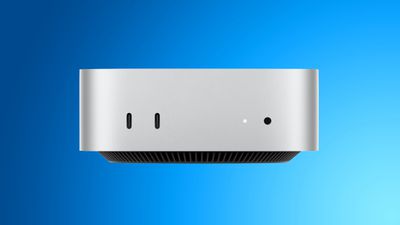
Samsung's new monitor sale this week includes up to $1,099.99 in savings on select devices. A highlight of the event is the 32-inch Smart Monitor M9 for $1,299.99, down from $1,599.99.
In regards to the upcoming 2026 Samsung monitors, the company is set to announce the new products on Tuesday, May 19. Don't forget to sign up to receive a $50 credit to put toward the new monitors once they're available to pre-order.
In regards to TVs, there are quite a few models of The Frame TV on sale, including low prices on The Frame models from 2025. You can get the 2025 65-inch The Frame TV for $999.99 ($800 off), which is a new all-time low price, as well as the 75-inch Frame Pro for $2,199.99 ($1,000 off), a solid second-best price.
You can get up to $380 instant trade-in credit when ordering the Galaxy S26, up to $480 credit for the Galaxy S26+, and up to $720 credit for the Galaxy S26 Ultra. If not trading in an older device, Samsung is still offering up to $200 in Samsung credit when ordering each smartphone.
If you're on the hunt for more discounts, be sure to visit our Apple Deals roundup where we recap the best Apple-related bargains of the past week.
Deals Newsletter
Interested in hearing more about the best deals you can find in 2026? Sign up for our Deals Newsletter and we'll keep you updated so you don't miss the biggest deals of the season!
Samsung is reportedly developing a holographic smartphone display that could be used in a rumored "Spatial iPhone."
The claims come from the leaker known as "Schrödinger" on X, who shared screenshots of messages with an unnamed insider purportedly familiar with the project. Sources have apparently heard discussions about a "Spatial iPhone" in the supply chain, though no credible details about it have yet emerged. Since Apple does not manufacture its own displays, any such device would likely rely on other manufacturers like Samsung, which already supplies OLED panels for the iPhone lineup.
Codenamed "MH1" or "H1," the rumored display differs from earlier glasses-free 3D screens by pairing advanced eye-tracking with diffractive beam-steering, a technique that uses microscopic structures in the display layer to bend and redirect light toward the viewer's eyes at precise angles, creating the perception of depth without additional glasses. The display is also said to incorporate a nano-structured holographic layer integrated directly into the AMOLED stack, enabling spatial depth effects that appear to float above the glass surface. A patented algorithm would purportedly allow users to tilt the device to see around objects in a video, which the leaker described as "360-degree rotation," similar in concept to Samsung's existing 85-inch spatial displays but adapted for handheld use.
Samsung's Advanced Institute of Technology (SAIT) has published academic work on slim-panel holography since 2020, when it released a paper in Nature Communications detailing a steering-backlight unit that increased viewing angles for holographic video by 30 times compared to conventional designs, a key obstacle to making the technology viable in a thin handheld device. The prototype described at the time was approximately 1cm thick and capable of displaying 4K holographic video at 30 frames per second.
The H1 display is also said to maintain full 4K resolution for standard 2D tasks, with the holographic depth layer activating only for specific content, in what the leaker calls "Zero Clarity Loss," avoiding the image quality tradeoff associated with older lenticular lens-based 3D screens. In a follow-up post, Schrödinger noted that the MH1 project remains in phase 1 of R&D, with the leaker pointing toward an approximate 2030 timeframe for holographic smartphones broadly.
The posts also say that "Samsung isn't alone" in its wish to ship a holographic smartphone, and cites supply chain rumors of an Apple "Spatial iPhone" circulating among component suppliers. Samsung's advantage apparently lies in its manufacturing head start, with SAIT's published research forming the groundwork for what the H1 would attempt to productize.
Apple's interest in holographic and glasses-free 3D display technology stretches back almost two decades. In 2008, Apple filed a patent application for a glasses-free autostereoscopic display that tracked the viewer's position to deliver a personalized 3D image without special glasses, with Apple claiming the system could accommodate multiple viewers simultaneously. In 2014, Apple was rumored to be developing a glasses-free 3D iPhone display, the same year the U.S. Patent and Trademark Office granted Apple a patent for an "Interactive holographic display device" that used laser beams, micro lenses, and sensors to produce three-dimensional images on a touchscreen panel.
Of course, none of those efforts resulted in a iPhone with a holographic display, but Apple SVP of Hardware Engineering and future CEO John Ternus said as recently as last month that combining the digital and physical world is an "inevitability," describing spatial computing as being in the "early innings."
Schrödinger is a relatively new account with a limited but not unimpressive track record on Samsung hardware. The leaker has shared what appear to be internal documents and prototypes in the past. Some predictions have held up: in November 2025, Schrödinger claimed hands-on time with a Galaxy S26 Plus prototype, accurately revealing its Exynos 2600 chipset, 12GB of RAM, and One UI 8.5 software, all of which were confirmed upon its launch in February. The account has also correctly revealed device details such as 60W wired and 25W wireless charging for the Galaxy S26 Ultra ahead of its announcement.
Apple today added the Apple Watch to its Education Store in select countries, allowing students and teachers to purchase the device at a discount.
The Apple Watch Series 11, Apple Watch SE, and Apple Watch Ultra 3 are available with education pricing in Australia, China, Hong Kong, Japan, Malaysia, Singapore, South Korea, Taiwan, Thailand, and Vietnam.
Apple is offering up to a 10% discount on the Apple Watch. In Australia, for example, the Apple Watch Series 11 starts at $609 for qualifying students and educators, down from $679 for the general public. Apple Watch SE 3 education pricing starts at $369 (down from $399), and the Apple Watch Ultra 3 starts at $1,259 (down from $1,399).
In Australia and Hong Kong, Apple is introducing an online verification process through UNiDAYS, which is the verification system Apple already uses in several other countries, including those where Apple Watch educational pricing is launching. The UNiDAYS app and website let students and educators verify their academic status with an email address from their educational institution, a student or staff photo ID, or another valid educational document.
Once confirmed through UNiDAYS, students and educators in the above listed countries are able to purchase the Apple Watch and other Apple devices at Apple's discounted educational prices.
Apple's Education Store gives students and educators special pricing on Macs, iPads, and the Studio Display, along with select accessories like the Magic Keyboard and the Apple Pencil. The Apple Watch is new to the list of devices that students can get at a lower price.
Update: Apple has also added the Apple Watch to its Education Store in France, Germany, India, Italy, Saudi Arabia, Spain, Turkey, and the UK. Apple is adopting the UNiDAYS verification in Turkey as of today, while the other countries getting the Apple Watch already use UNiDAYS.
Amazon this week is taking up to $52 off Wi-Fi models of Apple's 11th generation iPad. Prices start at $299.00 for the 128GB Wi-Fi iPad, down from $349.00, which is a solid second-best price on this model.
Note: MacRumors is an affiliate partner with Amazon. When you click a link and make a purchase, we may receive a small payment, which helps us keep the site running.
Additionally, Amazon has the 256GB Wi-Fi iPad for $399.00 ($50 off) and the 512GB Wi-Fi iPad for $597.00 ($52 off). Free delivery estimates are placed around May 8-12 for most of these iPad models, but Prime members should be able to get same-day delivery in many locations.
If you're on the hunt for more discounts, be sure to visit our Apple Deals roundup where we recap the best Apple-related bargains of the past week.
Deals Newsletter
Interested in hearing more about the best deals you can find in 2026? Sign up for our Deals Newsletter and we'll keep you updated so you don't miss the biggest deals of the season!
The annual Swift Student Challenge gives eligible student developers around the world the opportunity to showcase their coding capabilities by using the Swift Playground or Xcode apps to create an interactive "app playground."
Apple said this year's 350 winners represent 37 countries and regions, and each of them received a certificate, AirPods Max 2, and a one-year Apple Developer Program membership. A subset of 50 Distinguished Winners with "truly exceptional" submissions were also invited to visit Apple Park in Cupertino, California during WWDC 2026.
To learn about four of the Distinguished Winners named below, head to the Apple Newsroom.
From left to right: Yoonjae Joung, Karen-Happuch Peprah Henneh, Anton Baranov, and Gayatri Goundadkar
"The breadth of creativity we see in the Swift Student Challenge never ceases to amaze us," said Susan Prescott, Apple's Vice President of Worldwide Developer Relations. "This year's winners found remarkable ways to harness the power of Apple platforms, Swift, and AI tools to build app playgrounds that are as technically impressive as they are meaningful. We're incredibly proud to support their journey and can't wait to see what they create next."
WWDC 2026 will kick off with Apple's keynote on Monday, June 8 at 10 a.m. Pacific Time, and the conference will run through Friday, June 12. Apple is expected to unveil its latest software platforms, such as iOS 27 and macOS 27.
Below, we have answered some key questions regarding the lawsuit.
Why Was Apple Sued?
In June 2024, Apple previewed new Siri capabilities powered by Apple Intelligence, including understanding of a user's personal context, on-screen awareness, and deeper per-app controls. For example, Apple showed an iPhone user asking Siri about their mother's flight and lunch reservation plans based on info from the Mail and Messages apps.
In a statement, Apple touted a range of other Apple Intelligence features it has already released. Nevertheless, Apple agreed to settle the lawsuit "to stay focused" on "delivering the most innovative products and services to our users."
Am I Eligible?
To be eligible to submit a claim, you must reside in the U.S. and have purchased any iPhone 15 Pro or iPhone 16 model between June 10, 2024 and March 29, 2025.
The full list of eligible iPhone models:
iPhone 15 Pro
iPhone 15 Pro Max
iPhone 16
iPhone 16e
iPhone 16 Plus
iPhone 16 Pro
iPhone 16 Pro Max
It is unlikely that individuals who submit a claim will still need to have physical possession of an eligible iPhone model. However, there is a possibility that proof of purchase or other information will be required, such as the device's serial number. Exact requirements will be outlined on the forthcoming settlement website.
How Much Will Apple Pay Me?
According to the terms of the settlement, each person who files an eligible claim will receive a per-device payment of $25, but this amount could increase up to $95 if the total number of claims submitted is lower than anticipated.
Where and When Can I Submit a Claim?
Within the next few months, a settlement website should go live with an online claims form.
Eligible class members will be notified by email within approximately 45 days, according to court documents. Even if you are not notified but are a U.S. resident who purchased one of the above iPhone models within the above dates, you should still be eligible. Keep an eye out for the settlement website within the next few months.
When Will the Siri Features Launch?
On an earnings call last month, Apple CEO Tim Cook said the personalized version of Siri will be released this year. It is expected to be part of the upcoming iOS 27, iPadOS 27, and macOS 27 updates for the iPhone, iPad, and Mac.
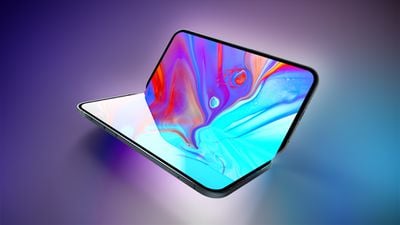
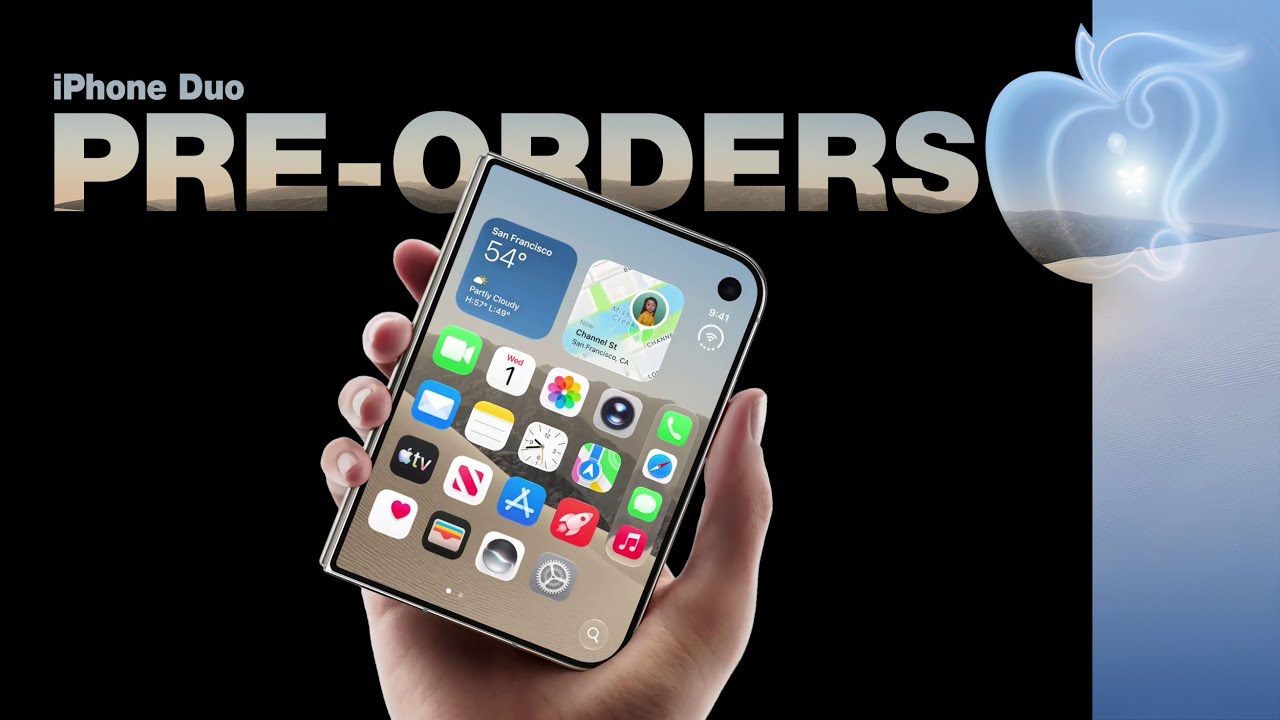
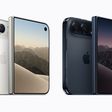
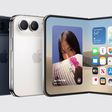
Apple's first foldable iPhone, with a book-style design featuring a ~5.5-inch outer display and a ~7.8-inch inner display with a minimal crease down the middle.