If you dial Apple Support's phone number 1-800-APL-CARE from the U.S. or Canada, there is a good chance that an AI-powered support assistant will now answer.
While many of Apple's phone systems already had a basic automated operator, the Apple Support phone line is now using a voice powered by generative AI. The assistant can answer questions and troubleshoot issues with your Apple products, with it able to provide detailed step-by-step instructions. The assistant can still transfer you to a human advisor if it cannot answer a specific question, or if you ask to speak to a real person.
An anonymous tipster claimed that Apple has partnered with Sierra AI on the virtual assistant, but we have not independently confirmed this information.
A concern is that Apple's increasing use of AI for customer service may result in a reduction in human advisors, through fewer job listings and/or layoffs.
It appears that the AI assistant for Apple Support phone calls went live earlier this year. Apple has also been testing a new AI-powered chatbot in its Apple Support app, through a new "Ask" tab that has rolled out to a limited number of users.
Images claiming to show the inside of an Apple-made AI server, believed to power Private Cloud Compute, surfaced online this week, offering a first look at how the hardware is laid out.
The images were shared earlier this week by the X user @hsuchingpo, an account with a track record of Apple hardware and prototype leaks. Captioned simply "Apple M5 Server," the leaker said the hardware is "most likely" Apple's Private Cloud Compute (PCC) system. Private Cloud Compute is Apple's system for offloading demanding Apple Intelligence requests from a device to the cloud while keeping user data from being stored or shared.
The images show a rack mountable chassis packed with compute modules. Each one has a separate circuit board mounted on a carrier bar and secured with blue and red ejector latches for quick removal. The boards connect into a backplane through gold edge connectors, with heatsinks running through the center of each column and a service diagram taped inside the lid mapping out numbered board positions and Apple part numbers.
Each single chassis holds up to 32 boards. The layout appears to be built around airflow, with heatsinks running down the center and fans at both ends.
One close-up image shows a board with its thermal paste wiped away, revealing an Apple logo printed directly onto a chip package, appearing to confirm the hardware uses Apple's own silicon. Two NAND flash chips sit nearby.
The leaker added that the server cannot manage its own workload independently. In replies, they explained that the hardware "requires use in conjunction with Mac Studio (serves the function of software control)" and apart from Apple, no one can activate it, since doing so needs both a physical control machine and a control account.
Apple produces AI servers domestically at a facility in Houston, Texas, as part of a $600 billion U.S. investment commitment.
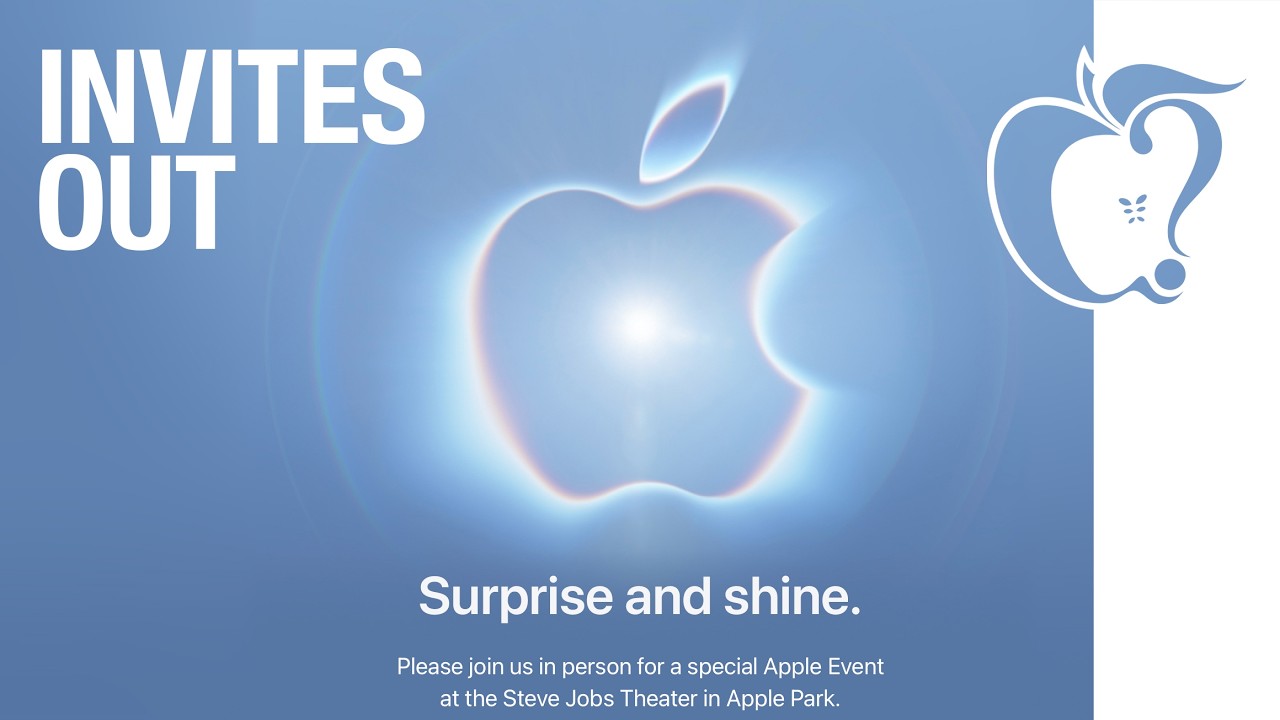
Apple plans to hold its annual iPhone-centric event on Wednesday, September 9 at the Apple Park campus in Cupertino, California. The event will begin at 10:00 a.m. Pacific Time, with select members of the media invited to attend.
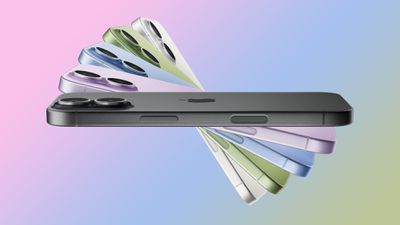
The September 2026 iPhone event will see Apple announce the iPhone 18 Pro, the iPhone 18 Pro Max, and the foldable iPhone, which could be called the iPhone Ultra. There won't be an iPhone 18 this year because Apple is waiting until spring 2027 to launch the more affordable models.
All three new iPhones will use Apple's latest A20 Pro chip built on a 2nm process for speed and efficiency improvements. The iPhone 18 Pro models could get an upgraded variable aperture rear camera, but will otherwise be similar to the iPhone 17 Pro models. We are expecting price increases due to ongoing memory shortages.
The foldable iPhone will be Apple's first new form factor since the launch of the 2017 iPhone X. It will have a book-like design, and it will be around 5.5 inches when closed and 7.6 inches when open. It is wider than it is tall, and will be similar to using an iPad when unfolded. Since the foldable iPhone is so thin, there are compromises, and it will use Touch ID instead of Face ID and it won't have a telephoto camera.
Apple is also going to introduce the Apple Watch Series 12 and Apple Watch Ultra 4, plus there's a possibility we'll see new smart home devices, including the long-rumored home hub, a new Apple TV 4K, and an updated HomePod mini.
Along with new hardware, Apple will give us launch dates for iOS 27, iPadOS 27, macOS Golden Gate, and other upcoming software updates.
Apple plans to stream the fall event live on its website, on YouTube, and through the Apple TV app. For those unable to watch, MacRumors will be providing full event coverage on MacRumors.com and the MacRumorsLive Twitter account.
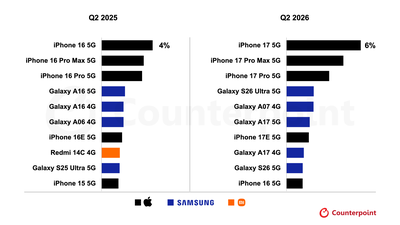
The iPhone 17 retained its position as the world's best selling smartphone in the second quarter of 2026, according to Counterpoint Research, with the iPhone 17 Pro Max and iPhone 17 Pro holding the next two spots on the firm's quarterly ranking.
Data from Counterpoint's Global Handset Model Sales Tracker places the standard iPhone 17 at 6% of global smartphone unit sales for the second quarter, building on the top spot it already held in the first quarter. Apple and Samsung filled all ten of the top spots, with a combined 26% share of worldwide unit sales that was two points higher than a year earlier.
Counterpoint tied the growth to regional strength outside Apple's usual core markets, with gains in India, Japan, and the Middle East and Africa, plus a near doubling of sales in South Korea.
The base iPhone 17 model remained the best selling smartphone during the quarter, supported by significant upgrades that narrowed the gap with the Pro models. Meanwhile, strong premium demand drove the iPhone 17 Pro and Pro Max sales, aided by trade in programs, promotions, and accessible financing options that improved affordability.
Rising smartphone prices across the industry also nudged buyers toward more expensive pricing tiers generally, which largely worked in Apple's favor given its lineup skews upmarket already.
The iPhone 17e took seventh place following its refresh that added MagSafe and increased storage for the same price, boosted by compelling carrier deals in the U.S. and Japan. The iPhone 16 rounded out the list at number ten, leaving Apple with five of the ten slots, which is the same count and nearly the same positions Apple held a year earlier with the iPhone 16 lineup and iPhone 15.
Samsung's best performer was the Galaxy S26 Ultra in fourth place, which is the first time that Samsung's top tier device has outsold every other Android phone in the second quarter. This is said to partly be a reflection of Samsung steering more marketing spend toward its flagship models to protect margins as costs climb. Samsung's cheaper Galaxy A phones also remained competitive further down the market.
Overall, the smartphone market shrank 11% in the quarter, a contraction Counterpoint links to the ongoing shortages and price rises that has manufacturers concentrating resources on their most profitable phones. Apple and Samsung both grew unit sales against that backdrop, a divergence that is visible in Counterpoint's regional data as well.
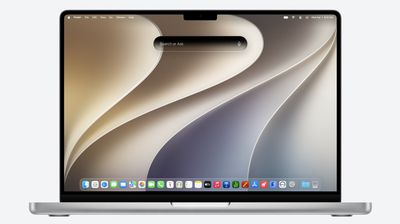
For anyone who's experienced the lengthy post-update indexing process when trialing the beta version of iOS 27, macOS 27 Golden Gate, iPadOS 27, or visionOS 27: Apple has published a Spotlight support document that explains what's going on.
Apple says indexing can take hours or even days depending on how much data you have stored. It completes more quickly when your device is not in use, and when it is connected to power and the internet. Apple also confirms that the index is stored locally, remains private, and is not shared with Apple or any of your other devices.
Starting today, Virginia residents can add a digital version of their driver's license to the Apple Wallet app on the iPhone and Apple Watch. The digital ID can be used to display proof of identity or age at TSA checkpoints in select airports, at select businesses, and in select apps, but the number of places where it is accepted is still quite limited.
Virginia is the 15th state to implement support for Apple Wallet IDs in the U.S., joining Arizona, Arkansas, California, Colorado, Georgia, Hawaii, Illinois, Iowa, Maryland, Montana, New Mexico, North Dakota, Ohio, and West Virginia. The feature is also available in Puerto Rico, and it works with Japan's My Number Card.
Apple has been preparing for the feature to go live in North Carolina, Oklahoma, and Utah in the coming months, and years ago it announced that Connecticut, Kentucky, and Mississippi were committed to launching the feature at some point.
To set up the feature, open the Wallet app on the iPhone and tap on the plus sign in the top-right corner. Next, tap on Driver's License and ID Cards, select Virginia from the list, and follow the on-screen steps to complete the process. Then, you can present your digital ID where it is accepted without handing over your device.
You can present an Apple Wallet ID where accepted by simply tapping your iPhone or Apple Watch on an identity reader. Then, you will be able to view the specific information being requested by the TSA or business. Only after authorizing with Face ID or Touch ID is the requested identity information released from your device.
As mentioned, you do not need to unlock, show, or hand over your device to present an Apple Wallet ID in person, ensuring user privacy.
Apple Wallet IDs are generally not accepted by law enforcement, so carrying a physical ID is still legally required for traffic stops. In addition, the number of businesses that accept Apple Wallet IDs is still quite small. At least for now, Apple Wallet IDs are designed to be a convenient alternative where they are accepted.
Apple Wallet IDs are accepted at TSA checkpoints in more than 250 airports across the U.S. for domestic travel, according to Apple.
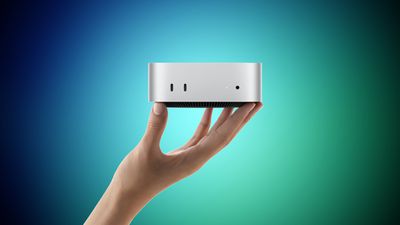
Apple yesterday announced the new Mac mini and Mac Studio, and pre-orders have begun on each device ahead of their September 22 launch date. We aren't currently tracking any straight cash discounts on pre-orders, but Best Buy is offering some money back in the form of Best Buy rewards when ordering.
Note: MacRumors is an affiliate partner with Best Buy. When you click a link and make a purchase, we may receive a small payment, which helps us keep the site running.
Specifically, My Best Buy Plus and Total members will get 2% back in the form of Best Buy rewards with the pre-order of a new Mac mini or Mac Studio. This offers runs through September 22 and is available to new and existing My Best Buy Plus and My Best Buy Total members, which starts at $29.99/year.
You can find out more about everything Apple announced yesterday in our dedicated post. This also includes the new polishing cloth and a few updates to the Magic Keyboards.
If you're on the hunt for more discounts, be sure to visit our Apple Deals roundup where we recap the best Apple-related bargains of the past week.
Deals Newsletter
Interested in hearing more about the best deals you can find in 2026? Sign up for our Deals Newsletter and we'll keep you updated so you don't miss the biggest deals of the season!
Apple's new Mac mini and Mac Studio feature genlock support over USB-C, allowing users to precisely synchronize a display with a camera such as the iPhone 17 Pro, without the need for additional equipment.
It keeps multiple cameras and displays locked to the same timing signal, stopping footage from drifting out of sync during a multi-camera shoot.
A new fan-made concept video imagining Apple's rumored foldable iPhone is circulating online, weeks before the company is expected to unveil the device at its annual fall keynote.
The video was created by designer Gunhoo Lee to provide a realistic look at what a brief "iPhone Ultra" reveal could look like, showcasing its 7.8-inch inner display, Touch ID authentication, mechanical hinge, dual battery system, and A20 chip. The features and specifications it depicts track closely with months of corroborated rumors.
Apple's foldable iPhone is widely expected to be announced alongside the iPhone 18 Pro and iPhone 18 Pro Max next month, so the real reveal video isn't far away.
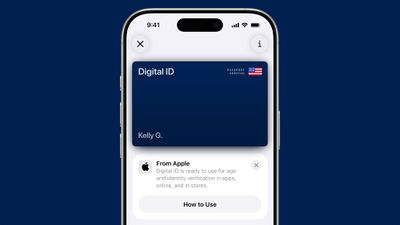
iOS 27 tweaks some of the information and menus shown alongside the Digital ID passport feature in the Apple Wallet app.
As a result of these changes and/or a related bug, some iPhone users have seen their Digital ID deactivated on recent iOS 27 beta versions. Apple says affected users must remove the card and re-add it to the Apple Wallet app in order to use it again.
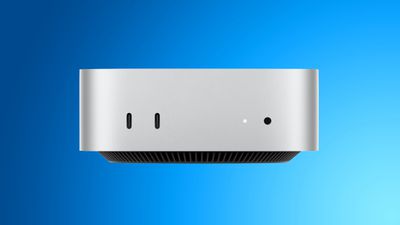
Apple has informed some customers who recently ordered a Mac mini with an M4 chip that has yet to ship that it will be upgrading their order to an equivalent version of the new Mac mini with an M6 chip at no additional cost.
Apple's email to customers:
Thank you for your recent Mac order. We know you're looking forward to receiving your purchase.
As you may know, Apple recently announced the new Mac mini. Since your order has yet to ship, we automatically upgraded you to the new Mac mini at no additional cost.
Given the Mac mini now starts at $899 instead of $799 in the U.S., some customers are effectively receiving a $100 discount on the new model.
One customer on social media was delighted to learn that they would not only be receiving the new Mac mini at no additional cost, but also saw their delivery estimate bumped up from October to September. On the other hand, a student emailed us to complain that their delivery estimate was pushed back by several weeks as a result of the free upgrade, as they said they need the computer imminently for their studies. The student said Apple did not offer them a choice to accept or decline the free upgrade.
Apple announced the new Mac mini with M6 and M5 Pro chip options this week, alongside a new Mac Studio with M5 Max and M5 Ultra chip options. Both new Macs are available to pre-order now ahead and launch on Tuesday, September 22.
The previous-generation Mac mini was released in November 2024.
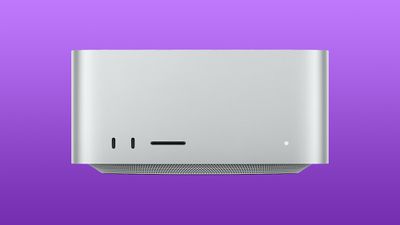
Multiple new Mac Studio units can be clustered together over Thunderbolt 5 and RDMA (remote direct memory access), creating a shared memory pool for running larger AI models.
If four Mac Studio systems are clustered together, Apple says they can deliver 3x faster AI inference than running the same task on a single system, with the shared memory pool helping to load the largest and most demanding frontier-class open-weight models available today.
Three out of four U.S. adults say they have no interest in buying a foldable iPhone, according to a new survey from CNET.
CNET's survey was conducted online by YouGov between August 13 and 17, polling 2,605 U.S. adults. It found that 75% are not interested in an Apple foldable device, and those who are would not pay anywhere near the rumored $2,000+ price.
Interest is low across every generation surveyed. Boomers (1946–1964) and Gen Xers (1965–1980) are the least interested, at 83% and 77% respectively, while 69% of Gen Z (1997–2012) and 68% of millennials (1981–1996) also said they would pass on a foldable iPhone. CNET noted that a quarter of respondents still expressing interest in the device is a notable proportion for what remains a niche product category.
On average, U.S. adults said they would spend just $781 on a foldable iPhone, about $48 less than the $799 starting price of the standard iPhone 17. Gen Z was willing to spend the most, an average of $919, followed by millennials at $859, Gen X at $690, and Boomers at $572. That mismatch between expected pricing and what buyers actually want to pay highlights just how far a $2,000+ device will sit outside most people's budgets.
Moreover, CNET found that 41% of U.S. adults are rethinking their upgrade plans because of anticipated price increases. Apple raised prices on most of its devices in June, citing the global memory shortage, though iPhone, Apple Watch, and AirPods prices were untouched at the time. The iPhone 18 Pro lineup is expected to cost more than its predecessor when it launches for the same reasons.
5% of respondents said they are considering buying an older or cheaper model, 4% are considering switching brands, and 4% are looking at refurbished or used phones. Another 9% said they will only upgrade if a trade-in or carrier promotion covers the cost. 22% of U.S. adults said they have no plans to upgrade anytime soon regardless of what Apple releases, ranging from 16% of millennials to 27% of Boomers.
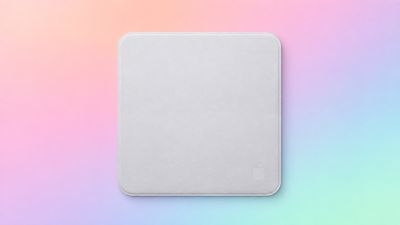
Apple's new $9 Polishing Cloth, whose changes beyond pricing were unclear yesterday, is close in size to the original but noticeably less stiff, according to a comparison posted on X.
The user says the new material feels closer to the cloth included with Apple's nano-texture displays or the Vision Pro.
The M6 model runs two displays at up to 6K 60Hz or 4K 165Hz, up from 144Hz on M4, plus a third display at up to 5K 60Hz over Thunderbolt or 4K 60Hz over HDMI.
The M5 Pro model runs all three displays at up to 6K 60Hz or 4K 165Hz, up from 144Hz on the M4 Pro.
In a two-monitor setup, the M5 Pro model's second screen now supports 5K 120Hz or 4K 200Hz, whereas the M4 Pro listed 6K 60Hz or 4K 144Hz.
The M5 Pro model supports all three displays through one Thunderbolt port, while the M6 still supports two per port.
Single-display support is unchanged: Both chips support 8K 60Hz, 5K 120Hz, or 4K 240Hz.
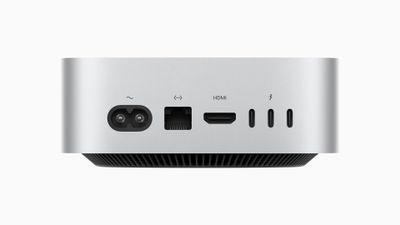
As for port compatibility around the back, the M6 model has Thunderbolt 4 supporting DisplayPort 1.4, while the M5 Pro model has Thunderbolt 5 supporting DisplayPort 2.1.
The new models were announced on Tuesday. Pre-orders are open now, with shipping and in-store availability on September 22.
Images and video claiming to show circuitry from Apple's upcoming foldable iPhone are circulating on X and Chinese social media platforms.
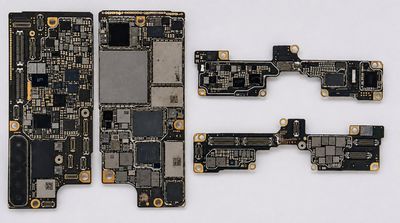
For example, on X, the user "LusiRoy7" posted a short video alongside an image, as well as a labeled composite image identifying components, purportedly depicting the motherboard of Apple's foldable iPhone. The image appears to show the CPU, a hinge connector, a flex cable connector, and more.
Separately, on the Chinese forum Baidu, a diagram from the repair parts vendor MIJING depicts the same components. The MIJING diagram uses Chinese repair-industry component numbering. The range of images appear to show the same parts.
While the authenticity of the images is unknown, they are likely another sign that the launch of the first foldable iPhone is nearing. The device is widely expected to be announced alongside the iPhone 18 Pro models next month.
Rumors point to a 5.5-inch cover display and a 7.8-inch inner display, the A20 Pro chip, and a 5,000mAh battery, as well as a 48-megapixel dual rear camera system and 18-megapixel selfie cameras on both the outer and inner displays. The device is expected to debut with a price of at least $2,000.
Apple's Car Keys feature appears to be coming to supported vehicles made by Chinese maker Xiaomi Auto, based on code changes discovered by MacRumors in Apple's Wallet app backend.
Code spotted in the third developer beta of iOS 27 back in July revealed that Apple was preparing Car Keys support for Xiaomi, so this latest change suggest support is imminent.
The Chinese electronics maker has expanded into EVs with models like the SU7 sedan and YU7 SUV. Car key support would be one of the company's first tie-ins with Apple's ecosystem, despite Xiaomi being a major Apple rival in the smartphone market.
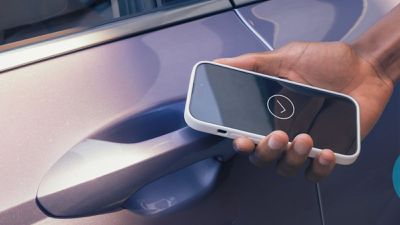
Car Keys allows an iPhone or Apple Watch with NFC capabilities to unlock a vehicle through the Wallet app. A digital version of a car key is stored in Wallet, and unlocking can be done simply by holding an Apple Watch or iPhone near a compatible vehicle's NFC reader.
What can be done with Car Keys may vary by car manufacturer, but at a minimum, Car Keys can be used to unlock your car, lock your car, and start your car, which are the features available with a physical key.
Apple introduced Car Keys in 2022, and car manufacturers like BMW, Rivian, Kia, and Hyundai have all implemented support for Car Keys. Apple maintains a full list of vehicles that support Car Keys on its CarPlay model availability webpage.
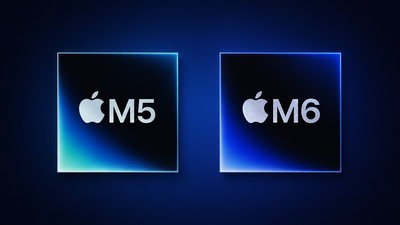
Apple yesterday announced the M6, its first chip built using a 2nm process and the first Apple silicon design to use three different CPU core types, but how does it compare to the M5?
Compared to the M5 chip that Apple launched in October 2025, the M6 delivers:
Up to 1.2x faster multithreaded CPU performance.
Nearly 30% higher peak GPU compute for AI.
Up to 2x peak Neural Engine compute.
50% higher geometry rates for complex graphics.
10% higher unified memory bandwidth.
Apple did not publish real-world benchmarks comparing the M6 to the M5 directly, instead framing its Mac mini figures against the M4 and M1 models:
Up to 13.5x faster LLM prompt processing in LM Studio versus M1, and up to 4.8x faster versus the M4.
Up to 2.3x faster spreadsheet calculations in Microsoft Excel versus M1, and up to 1.5x faster versus the M4.
Up to 2x faster gaming performance with ray tracing in "Cyberpunk 2077: Ultimate Edition" versus the M4.
The most significant architectural change is in the CPU. The M5 splits its ten cores into performance and efficiency groups, which is an arrangement Apple silicon has used since the M1. The M6 adds a third tier called "super cores," which handle single-threaded workloads and which Apple says give the chip the world's fastest single-threaded performance.
The performance cores join them for heavier multithreaded work, while the efficiency cores take background tasks. The second major change is the Neural Engine, which is now doubled, with system frameworks able to use both engines at once so apps see faster model execution without any work from developers required. Other hardware changes compared to the M5 include:
Apple M5 Chip (2025)
Apple M6 Chip (2026)
Made with TSMC's third-generation 3nm process (N3P)
Made with TSMC's first-generation 2nm process (N2)
FinFET transistors
Gate-all-around nanosheet transistors
10-core CPU with 4 performance cores and 6 efficiency cores
12-core CPU with 2 super cores, 4 performance cores, and 6 efficiency cores
Super cores dedicated to single-threaded workloads
16-core Neural Engine
Dual 16-core Neural Engine that system frameworks can run simultaneously
10-core GPU with a Neural Accelerator in every core
12-core GPU with a Neural Accelerator in every core
Enhanced shader cores
Updated shader core architecture
Second-generation dynamic caching
Third-generation dynamic caching
153 GB/s unified memory bandwidth
170 GB/s unified memory bandwidth
The move to a 2nm process is a significant technical change. Apple chips have used FinFET transistors for years, but the M6's N2 process uses a newer design with gate-all-around nanosheet transistors. This means that the transistor's gate wraps around the channel on every side, giving it better control and reducing power leakage at tiny sizes.
TSMC says N2 can offer 10–15% more speed at the same power, or 25–30% lower power use at the same speed, compared with its N3E process. But the M5 uses the newer N3P process, not N3E, so the actual M5-to-M6 improvement is likely to be smaller than those figures suggest.
The M6 is a broad but fairly modest upgrade. It improves the CPU, GPU, Neural Engine, and memory bandwidth, rather than delivering a dramatic gain in one area. The M5's biggest leap was in AI-focused GPU performance, thanks to Neural Accelerators built into each GPU core. The M6's reported 1.2× multithreaded CPU gain and 10% increase in memory bandwidth are good refinements rather than step-changes.
Single-threaded performance is the main exception. Some tasks cannot be split across many CPU cores, including code compilation, file indexing, image editing, and parts of agentic AI workflows. These tasks depend heavily on the speed of one core, and the M6's new "super cores" are designed to improve that directly. A doubled Neural Engine should also help with local AI models, while the larger GPU can process prompts faster.
For everyday work and general responsiveness, the difference will probably be difficult to notice. The M5 already has more than enough performance for normal use, so there is little general-purpose reason to upgrade from an M5 to an M6.
The more consequential question for buyers is where the M6 sits in the lineup, because it is not part of a straightforward replacement for the M5 family. Bloomberg's Mark Gurmanreported in July that Apple has no plans to release "M6 Pro," "M6 Max," or "M6 Ultra" chips, having decided to accelerate development of the AI-optimized M7 generation. The new Mac mini illustrates this point, since its higher-specification configuration uses the M5 Pro. That makes the M6 the first of its kind to not have higher-end variants, and it means the M5 Pro, M5 Max, and M5 Ultra remain the chips to buy if you need anything more than base-tier performance.
The dual Neural Engine and 2nm process give the M6 headroom for on-device AI tools that grow more demanding, but the M7 is expected in the first half of 2027 with neural processing upgrades that prompted Apple to cut the M6 lineup short. If your workloads are AI-heavy enough that the M6's gains matter to you, the chip designed for exactly that is less than a year away.
The M6 chip is currently available only in the new Mac mini, which starts at $899 and ships on September 22. M6 versions of the MacBook Pro and iMac are expected to be announced in October. The M5 chip remains available in the 14-inch MacBook Pro, the latest iPad Pro, and the Apple Vision Pro, with M5 Pro and M5 Max in the higher-end MacBook Pro models and M5 Max and M5 Ultra in the new Mac Studio.
Apple's first foldable iPhone, with a book-style design featuring a 5.4-inch outer display and a 7.6-inch inner display with a minimal crease down the middle.



 For anyone who's experienced the lengthy post-update indexing process when trialing the beta version of iOS 27, macOS 27 Golden Gate, iPadOS 27, or visionOS 27: Apple has published a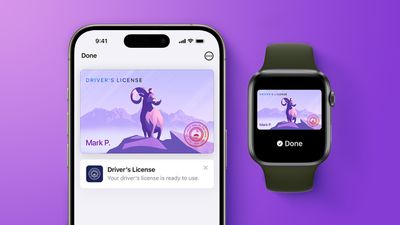

 Note: MacRumors is an affiliate partner with Best Buy. When you click a link and make a purchase, we may receive a small payment, which helps us keep the site running.
 Apple's new

 iOS 27 tweaks some of the information and menus shown alongside the
 Multiple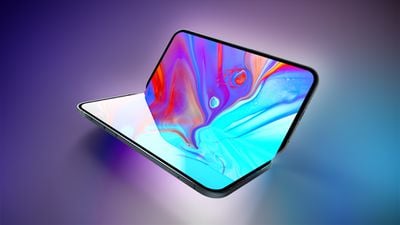
 Apple's