Google Working on Browser for iOS That Would Break Apple's App Store Rules
Google's Chromium developers are working on an experimental web browser for iOS that would break Apple's browser engine restrictions, The Register reports.
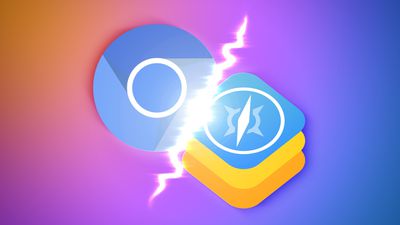
The experimental browser, which is being actively pursued by developers, uses Google's Blink engine. Yet if Google attempted to release it on the App Store, it would not pass Apple's App Review process.
Apple's App Store rules dictate that browser apps on iOS and iPadOS must use its own WebKit browser engine. This means that while browsers like Chrome and Microsoft Edge are built with Chromium on macOS and Windows, their iOS counterparts are forced to use Apple's WebKit, making them behave similarly to Safari.
Based on the visible code commits, the app purportedly looks like the start of an alternate browser build and is still missing some key features at this early stage. Google claims that the app is merely "an experimental prototype [...] with the goal to understand certain aspects of performance on iOS," and "it will not be available to users and we'll continue to abide by Apple's policies."
Even so, Google's experimental iOS browser project could be a sign that the company is anticipating changes to Apple's platform rules that would enable it to release a truly home-grown browser. Apple's browser engine restriction is the subject of growing antitrust scrutiny, most recently by the Biden administration, which has recommended the passing of new legislation to ban "gatekeeper" companies like Apple from banning alternative browser engines on its platform.
Similar recommendations have been made by antitrust authorities in the United Kingdom, Australia, and Japan. The European Union's Digital Markets Act is expected to compel Apple to allow third-party app stores and lift its browser engine restrictions as soon as next year. At minimum, the active project means Google would have a considerable head-start on developing a Blink-based browser for iOS if one is able to be distributed in the future.
Popular Stories
Apple today introduced its first two physical products of 2026: a second-generation AirTag and the Black Unity Connection Braided Solo Loop for the Apple Watch.
Read our coverage of each announcement to learn more:Apple Unveils New AirTag With Longer Range, Louder Speaker, and More
Apple Introduces New Black Unity Apple Watch BandBoth the new AirTag and the Black Unity Connection Braided...
Alongside iOS 26.2.1, Apple today released an updated version of iOS 12 for devices that are still running that operating system update, eight years after the software was first released.
iOS 12.5.8 is available for the iPhone 5s and the iPhone 6, meaning Apple is continuing to support these devices for 13 and 12 years after launch, respectively. The iPhone 5s came out in September 2013,...
Apple today introduced the second-generation AirTag, with key features including longer range for tracking items and a louder speaker.
For those who are not familiar, the AirTag is a small accessory that you can attach to your backpack, keys, or other items. Then, you can track the location of those items in the Find My app on the iPhone, iPad, Mac, Apple Watch, and iCloud.com.
The new...
Update: Apple Creator Studio is now available.
Apple Creator Studio launches this Wednesday, January 28. The all-in-one subscription provides access to the Final Cut Pro, Logic Pro, Pixelmator Pro, Motion, Compressor, and MainStage apps, with U.S. pricing set at $12.99 per month or $129 per year.
A subscription to Apple Creator Studio also unlocks "intelligent features" and "premium...
2026 promises to be yet another busy year for Apple, with the company rumored to be planning more than 20 product announcements over the coming months.
Beyond the usual updates to iPhones, iPads, Macs, and Apple Watches, Apple is expected to release its all-new smart home hub, which was reportedly delayed until the more personalized version of Siri is ready. Other unique products rumored for ...