Following limited testing of native support, Dropbox's Mac app built for Apple silicon is now available to all beta testers.
Earlier this month, Dropbox began testing native Apple silicon support with a handful of beta testers, promising to expand testing to all beta users before the end of the month. Now, all Dropbox users who have enabled "Early releases" in their account preferences will have access to the native Apple silicon app.
On a support page, Dropbox says that users on Apple silicon Macs can expect to receive the newer version within 24 hours after joining the early releases program for their account. Here's how to join the program:
In the top right-hand corner, click your profile picture and go into Settings.
Under General, locate Preferences and toggle on "Early releases."
Dropbox faced criticism late last year following confused messaging from the company about whether its client would adopt native Apple silicon support, forcing customers on Apple's latest Macs to use a version of the app built for Intel-based computers. Amongst Mac users, Dropbox has been criticized for being poorly optimized, leading to excessive memory and battery usage.
Thursday October 22, 2026 11:01 am PDT by Juli Clover
Apple has temporarily removed Keynote, Pages, and Numbers from the App Store, just after releasing an update that added iPhone Duo support and a new Intelligent Assistant.
It is not clear if the apps were removed intentionally, or if it is a bug. Apple has not said when the apps will be reinstated, but if it was in error, they should return soon.
Update: The Mac versions are back without...
Tuesday October 20, 2026 11:12 am PDT by Juli Clover
With just three days to go until the iPhone Duo is released, Apple is getting ready for the launch. Behind the scenes, the App Store now has screenshots of Apple's built-in apps running on the Duo. We've seen some apps in marketing materials, but images of the ones we haven't seen give us an idea of what it will be like using the iPhone Duo day to day.
Many apps are shown in landscape...
Friday October 23, 2026 7:11 am PDT by Joe Rossignol
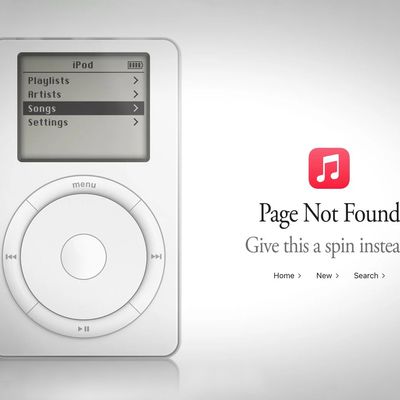
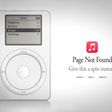
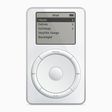
Apple Music has a 404 page easter egg on the web: a functional iPod that appears when you load a page that does not exist, such as music.apple.com/macrumors.
"Page Not Found," says Apple. "Give this a spin instead."
Apple is clever with this. If you navigate to music.apple.com/ipod instead, the page says "Looking for something?" instead of "Page Not Found."
The easter egg is only...
That's what I do... but sometimes it's really impossible, because in my company we use Dropbox as our NAS (Network Area Storage) for sharing files and folders and work in the same project. We've been using Dropbox for 10 years now, and we are more than happy: no file lost in 10 years!!!! And the ability to recover older versions of a file, rewind a folder, share with all the World, having access to more than 5TB of files in ALL my devices...
So, for an Apple Silicon user, this is good news.
For us, OneDrive nor Google Drive nor Apple iCloud are as convenient as Dropbox, nor as powerful. iCloud is a no go because of the Apple-first/Apple-only approach, and no Business plan with lots of storage; Google Drive is a nightmare and a mess (and we don't want to share more information with Google), and only lately its beginning to work nice; and OneDrive is playing catch with Dropbox, but still its a Windows-first / Microsoft-first approach.
I deleted dropbox long ago. Moved 100% to OneDrive and iCloud. Don't miss meager 2GB of dropbox storage while I use 1TB on OneDrive (part of Office 365 subscription) and iCloud's 200GB (1.99 dollars per month).
I find that the lack of user controls over iCloud makes it unsuitable for professional work. With Dropbox, I can clearly see when files have updated. If they haven't, I can force Dropbox to update them, and can see how long it is going to take.
I am trying to use iCloud Drive with Obsidian. But I am finding that even though Obsidian only uses simple text files, switching from one device to the next I am never sure if files have synced. This is true with devices that are *always on* and *always connected to the Internet*! And when I am able to see that a file is not the latest version, I haven't found a reliable way to force an update. I try to rename the file, move it to a different folder, and then undo these changes. Sometimes that forces the update. Sometimes not.
Bottom line: I cannot use iCloud Drive.
For Google Drive and OneDrive, they seem to have improved over time. But the few times I've tried to use them, I've found them both clunky compared to Dropbox.
I deleted dropbox long ago. Moved 100% to OneDrive and iCloud. Don't miss meager 2GB of dropbox storage while I use 1TB on OneDrive (part of Office 365 subscription) and iCloud's 200GB (1.99 dollars per month).
Pretty sure Dropbox isn't missing you sucking off their system for free, Mr. Big Spender. ;)








































![Apple Pulls Keynote, Pages and Numbers From App Store [Update: Back]](https://images.macrumors.com/t/Okb7kitB_gNr6qe5Pex9nQIysD8=/112x112/article-new/2026/01/Apple-Creator-Studio-iWork-suite.jpg)