Craig Federighi Acknowledges Confusion Around Apple Child Safety Features and Explains New Details About Safeguards

Apple's senior vice president of software engineering, Craig Federighi, has today defended the company's controversial planned child safety features in a significant interview with The Wall Street Journal, revealing a number of new details about the safeguards built into Apple's system for scanning users' photos libraries for Child Sexual Abuse Material (CSAM).
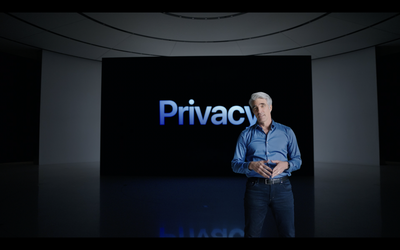
craig wwdc 2021 privacy
Federighi admitted that Apple had handled last week's announcement of the two new features poorly, relating to detecting explicit content in Messages for children and CSAM content stored in iCloud Photos libraries, and acknowledged the widespread confusion around the tools:

It's really clear a lot of messages got jumbled pretty badly in terms of how things were understood. We wish that this would've come out a little more clearly for everyone because we feel very positive and strongly about what we're doing.

[...]

In hindsight, introducing these two features at the same time was a recipe for this kind of confusion. By releasing them at the same time, people technically connected them and got very scared: what's happening with my messages? The answer is...nothing is happening with your messages.

The Communications Safety feature means that if children send or receive explicit images via iMessage, they will be warned before viewing it, the image will be blurred, and there will be an option for their parents to be alerted. CSAM scanning, on the other hand, attempts to match users' photos with hashed images of known CSAM before they are uploaded to iCloud. Accounts that have had CSAM detected will then be subject to a manual review by Apple and may be reported to the National Center for Missing and Exploited Children (NCMEC).

The new features have been subject to a large amount of criticism from users, security researchers, the Electronic Frontier Foundation (EFF) and Edward Snowden, Facebook's former security chief, and even Apple employees.

Amid these criticisms, Federighi addressed one of the main areas of concern, emphasizing that Apple's system will be protected against being taken advantage of by governments or other third parties with "multiple levels of auditability."


Federighi also revealed a number of new details around the system's safeguards, such as the fact that a user will need to meet around 30 matches for CSAM content in their Photos library before Apple is alerted, whereupon it will confirm if those images appear to be genuine instances of CSAM.

If and only if you meet a threshold of something on the order of 30 known child pornographic images matching, only then does Apple know anything about your account and know anything about those images, and at that point, only knows about those images, not about any of your other images. This isn't doing some analysis for did you have a picture of your child in the bathtub? Or, for that matter, did you have a picture of some pornography of any other sort? This is literally only matching on the exact fingerprints of specific known child pornographic images.

He also pointed out the security advantage of placing the matching process on the iPhone directly, rather than it occurring on ‌iCloud‌'s servers.

Because it's on the [phone], security researchers are constantly able to introspect what’s happening in Apple’s [phone] software. So if any changes were made that were to expand the scope of this in some way —in a way that we had committed to not doing—there's verifiability, they can spot that that's happening.

When asked if the database of images used to match CSAM content on users' devices could be compromised by having other materials inserted, such as political content in certain regions, Federighi explained that the database is constructed from known CSAM images from multiple child safety organizations, with at least two being "in distinct jurisdictions," to protect against abuse of the system.

These child protection organizations, as well as an independent auditor, will be able to verify that the database of images only consists of content from those entities, according to Federighi.

Federighi's interview is among the biggest PR pushbacks from Apple so far following the mixed public response to the announcement of the child safety features, but the company has also repeatedly attempted to address users' concerns, publishing an FAQ and directly addressing concerns in interviews with the media.

Popular Stories

maxresdefault

Apple Shows Off a Key Reason to Upgrade to the iPhone 17

Saturday February 7, 2026 9:26 am PST by
Apple today shared an ad that shows how the upgraded Center Stage front camera on the latest iPhones improves the process of taking a group selfie. "Watch how the new front facing camera on iPhone 17 Pro takes group selfies that automatically expand and rotate as more people come into frame," says Apple. While the ad is focused on the iPhone 17 Pro and iPhone 17 Pro Max, the regular iPhone...
apple wallet drivers license feature iPhone 15 pro

Apple Says These 7 U.S. States Plan to Offer iPhone Driver's Licenses

Monday February 9, 2026 6:24 am PST by
In select U.S. states, residents can add their driver's license or state ID to the Apple Wallet app on the iPhone and Apple Watch, and then use it to display proof of identity or age at select airports and businesses, and in select apps. The feature is currently available in 13 U.S. states and Puerto Rico, and it is expected to launch in at least seven more in the future. To set up the...
Apple Logo Zoomed

Apple Expected to Launch These 10+ Products Over the Coming Months

Tuesday February 10, 2026 6:33 am PST by
It has been a slow start to 2026 for Apple product launches, with only a new AirTag and a special Apple Watch band released so far. We are still waiting for MacBook Pro models with M5 Pro and M5 Max chips, the iPhone 17e, a lower-cost MacBook with an iPhone chip, long-rumored updates to the Apple TV and HomePod mini, and much more. Apple is expected to release/update the following products...
14 inch MacBook Pro Keyboard

New MacBook Pros Could Now Arrive in March

Sunday February 8, 2026 6:02 am PST by
New MacBook Pro models with the M5 Pro and M5 Max chips could arrive as soon as Monday, March 2, according to Bloomberg's Mark Gurman. In today's "Power On" newsletter, Gurman said that the release of new MacBook Pro models is tied to the release of macOS Tahoe 26.3. The launch is said to be slated for as early as the week of March 2. He added that the M4 Pro and M4 Max models on sale today...
m5 macbook pro deal

Why You Shouldn't Buy the Next MacBook Pro

Tuesday February 10, 2026 4:27 pm PST by
Apple is planning to launch new MacBook Pro models as soon as early March, but if you can, this is one generation you should skip because there's something much better in the works. We're waiting on 14-inch and 16-inch MacBook Pro models with M5 Pro and M5 Max chips, with few changes other than the processor upgrade. There won't be any tweaks to the design or the display, but later this...

Top Rated Comments

thadoggfather Avatar
59 months ago
It is confusing... but they are gaslighting us into thinking it is universal confusion when there is a large subset of people with clear understanding coupled with dissent
Score: 127 Votes (Like | Disagree)
AndiG Avatar
59 months ago
[HEADING=2]Federighi just doesn’t understand a simple fact. If you don‘t need a local scanning system - don‘t build one.[/HEADING]
Score: 112 Votes (Like | Disagree)
xxray Avatar
59 months ago

Because it's on the [phone], security researchers are constantly able to introspect what’s happening in Apple’s [phone] software. So if any changes were made that were to expand the scope of this in some way —in a way that we had committed to not doing—there's verifiability, they can spot that that's happening.
How does this change the fact at all that there’s now essentially a new backdoor to be abused that’s installed in iOS 15?

Stop defending and get rid of this BS, Apple.
Score: 107 Votes (Like | Disagree)
6787872 Avatar
59 months ago
"but think of the children" has been used for decades now to erode privacy.

people seem to think if you are against it, you support it. they know exactly what they are doing.
Score: 97 Votes (Like | Disagree)
JPSaltzman Avatar
59 months ago
The more you have to "explain" over and over some new controversial "feature", the more it begins to stink.

(And I don't even use iCloud to store anything important -- especially photos!)
Score: 88 Votes (Like | Disagree)
Mac Fly (film) Avatar
59 months ago
So someone who looks at child porn photos stops using iCloud Photos. What about the rest of us who want privacy? What about future governmental interference?
Score: 81 Votes (Like | Disagree)