Apple Being Sued for 'Purposefully Slowing Down Older iPhone Models' [Updated]

Apple yesterday confirmed that it has implemented power management features in older iPhones to improve performance and prevent unexpected shutdowns as the battery in the devices starts to degrade, and this admission has now led to a class action lawsuit, which was first noticed by TMZ.

Los Angeles residents Stefan Bogdanovich and Dakota Speas, represented by Wilshire Law Firm, this morning filed a lawsuit with the U.S. District Court for the Central District of California accusing Apple of slowing down their older iPhone models when new models come out.
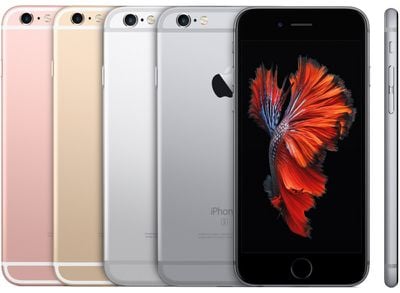
iphone 6s colors

Defendant breached the implied contracts it made with Plaintiffs and Class Members by purposefully slowing down older iPhone models when new models come out and by failing to properly disclose that at the time of that the parties entered into an agreement.

According to the lawsuit, Bogdanovich and Speas have owned the iPhone 7 and several older iPhone models and have noticed that their "older iPhone models slows (sic) down when new models come out." The two say they did not consent to have Apple slow down their devices, nor were they able to "choose whether they preferred to have their iPhones slower than normal."

They're seeking both California and Nationwide class action certification, which would cover all persons residing in the United States who have owned iPhone models older than the iPhone 8.

Apple yesterday addressed speculation that it throttles the performance of older iPhones with degraded batteries, confirming that there are power management features in place to attempt to prolong the life of the iPhone and its battery. Apple implemented these features last year in iOS 10.2.1.

When an iPhone's battery health starts to decline, the battery is not capable of supplying enough power to the iPhone in times of peak processor usage, which can lead to shutdowns, Apple says.

"Our goal is to deliver the best experience for customers, which includes overall performance and prolonging the life of their devices. Lithium-ion batteries become less capable of supplying peak current demands when in cold conditions, have a low battery charge or as they age over time, which can result in the device unexpectedly shutting down to protect its electronic components.

Last year we released a feature for iPhone 6, iPhone 6s and iPhone SE to smooth out the instantaneous peaks only when needed to prevent the device from unexpectedly shutting down during these conditions. We've now extended that feature to iPhone 7 with iOS 11.2, and plan to add support for other products in the future."

The lawsuit seemingly misrepresents Apple's original statement and suggests the plaintiffs and their lawyers do not understand Apple's explanation for how iPhone power management features work and why they were implemented, given the lawsuit's suggestion that it's tied to the release of new devices. As explained by Apple, when certain iPhone models hit a peak of processor power, a degraded battery is sometimes unable to provide enough juice, leading to a shutdown. Apple says it "smooths out" these peaks by limiting the power draw from the battery or by spreading power requests over several cycles.

Lithium-ion batteries degrade over time by nature, and this eventual wearing out addressed by the power management features is unrelated to the release of new iPhone models.

Apple does not deny that iPhones with older batteries can sometimes see slower performance, but power management is a feature that Apple says has been implemented to improve overall performance by preventing an iPhone from shutting down completely rather than a feature that's been implemented to force users to upgrade by deliberately slowing devices.

As many people have suggested, Apple has done a poor job of explaining why it has implemented these power management features and how the state of the battery ultimately affects iPhone performance. More transparent information about battery health should be provided, and customers should be better informed when their batteries start to degrade so they can choose whether or not to pay for a replacement. Apple may also need to relax its policies on when customers can pay for a battery replacement, as currently, a battery can't be replaced unless in-store equipment registers it as near failing.

An iPhone's battery is designed to retain 80 percent of its original capacity at 500 complete charge cycles. A defective battery that does not meet those parameters can be replaced for free for customers who have AppleCare+ or who have devices still under warranty.

For out of warranty customers, Apple offers a battery replacement service, which costs $79 plus $6.95 for shipping.

The lawsuit is demanding the replacement of the old iPhone and compensation for loss of use, loss of value, the purchase of new batteries, ascertainable losses in the form of the deprivation of the value of the iPhone, and overpayments because Plaintiffs and Class Members "did not receive what they paid for" when Apple interfered with the usage of their iPhones.

Additional class action lawsuits have been filed against Apple in Chicago, New York, and Northern California. All three lawsuits allege that Apple slowed down iPhones in an effort to get customers to upgrade to new devices.
Popular Stories

Apple Logo Black

Apple Just Made Its Second-Biggest Acquisition Ever After Beats

Thursday January 29, 2026 10:07 am PST by
Apple today confirmed to Reuters that it has acquired Q.ai, an Israeli startup that is working on artificial intelligence technology for audio. Apple paid close to $2 billion for Q.ai, according to sources cited by the Financial Times. That would make this Apple's second-biggest acquisition ever, after it paid $3 billion for the popular headphone and audio brand Beats in 2014. Q.ai has...

14 inch MacBook Pro Keyboard

Apple Changes How You Order a Mac

Saturday January 31, 2026 10:51 am PST by
Apple recently updated its online store with a new ordering process for Macs, including the MacBook Air, MacBook Pro, iMac, Mac mini, Mac Studio, and Mac Pro. There used to be a handful of standard configurations available for each Mac, but now you must configure a Mac entirely from scratch on a feature-by-feature basis. In other words, ordering a new Mac now works much like ordering an...


Aston Martin CarPlay Ultra Screen

Apple's CarPlay Ultra to Expand to These Vehicle Brands Later This Year

Sunday February 1, 2026 10:08 am PST by
Last year, Apple launched CarPlay Ultra, the long-awaited next-generation version of its CarPlay software system for vehicles. Nearly nine months later, CarPlay Ultra is still limited to Aston Martin's latest luxury vehicles, but that should change fairly soon. In May 2025, Apple said many other vehicle brands planned to offer CarPlay Ultra, including Hyundai, Kia, and Genesis. At the time,...
apple unsold web store

Retail Accessories Apple Won't Sell You Now Available via New Site

Friday January 30, 2026 8:46 am PST by
A newly surfaced resale operation is seemingly offering Apple Store–exclusive display accessories to the public for the first time, potentially giving consumers access to Apple-designed hardware that the company has historically kept confined to its retail environments. Apple designs a range of premium MagSafe charging stands, display trays, and hardware systems exclusively for displays in ...
imac video apple feature

Apple Unveils First New Products of 2026

Monday January 26, 2026 1:55 pm PST by
Apple today introduced its first two physical products of 2026: a second-generation AirTag and the Black Unity Connection Braided Solo Loop for the Apple Watch. Read our coverage of each announcement to learn more:Apple Unveils New AirTag With Longer Range, Louder Speaker, and More Apple Introduces New Black Unity Apple Watch BandBoth the new AirTag and the Black Unity Connection Braided...

Top Rated Comments

chatin Avatar
106 months ago
About time. What they are doing is highly unethical. Their involvement with my property stops after payment.
Score: 240 Votes (Like | Disagree)
macTW Avatar
106 months ago
Users: “why you slow our phones down?!”

Apple: “your battery can’t hold the charge necessary for some tasks. We want you to use your phone for longer.”

Users: “can you believe Apple just wants us to buy more phones?! Let’s sue!!”
Score: 169 Votes (Like | Disagree)
JRobinsonJr Avatar
106 months ago
About time. What they are doing is highly unethical. Their involvement with my property stops after payment.
... and if your phone shut down periodically you would be complaning about that. What Apple is doing is smart. Where they failed is being transparaent.
Score: 145 Votes (Like | Disagree)
swingerofbirch Avatar
106 months ago
This was clearly inevitable and I'm surprised the story hasn't blown up even more.

They can't go around saying their processors trounce SnapDragon's and give specified speed improvements over their previous models when they only perform at the advertised speeds for a year or so. The whole narrative has been false. John Gruber's response was totally uncritical in its thinking. It's not about whether they are intentionally trying to force people to upgrade. It's about whether the product was sold with the specifications it was advertised to have.

And there is so much missing in Apple's explanation about this being about balancing battery vs. performance. If that were the case, why does my fourth generation iPod touch work quickly and without random shutdowns? It's so old I can't even put a number of years on it.

There is either bad battery tech that is particular to Apple's phones or they have designed processors that require a power source that is unsustainable in a phone.
Score: 109 Votes (Like | Disagree)
teknikal90 Avatar
106 months ago
Good. This could all be avoided if apple instead put in higher quality battery cells (apple watch's battery life is 1000 cycles), or if they make it easier to replace the batteries.
Score: 94 Votes (Like | Disagree)
trifid Avatar
106 months ago
I take issue with Macrumor's pro-Apple bias criticizing the lawsuit and giving Apple a pass. Apple's 'workaround' of throttling CPU is just that, a workaround and it's not normal. It may be that Apple is trying to avoid issuing a recall of a hardware defect and resorts to a cheap software fix.

Other smartphone manufacturers don't seem to have implemented the throttling. We still don't know for sure the exact details, yet Macrumors presents Apple's questionable secret throttling as something fine and necessary.

If there is a defect with iPhone batteries that kill my CPU prematurely, I expect Apple to issue recall or free battery replacement, not force me to use a slow iPhone.
Score: 91 Votes (Like | Disagree)