Corning Again Criticizes Sapphire as Potential Alternative to Gorilla Glass - MacRumors
Skip to Content

Corning Again Criticizes Sapphire as Potential Alternative to Gorilla Glass

Corning Glass senior vice president Tony Tripeny spoke critically of sapphire as a material for displays during a question and answer session at the recent Morgan Stanley Technology, Media & Telecom Conference (Via Seeking Alpha and CNET). His responses reiterate the company's earlier opposition to sapphire crystal.
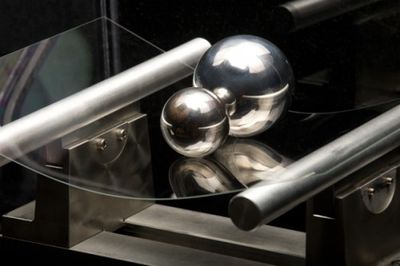
gorillaglass2-1325800748

Corning Gorilla Glass 2

Morgan Stanley's James Fawcett asked Tripeny about sapphire versus glass now that "there is one large handset and device maker that people suspect maybe looking at Sapphire." This one large manufacturer is obviously Apple, which is building a plant in Arizona to manufacture sapphire for "a secret project," possibly the iWatch or the next generation iPhone. Tripeny didn't hold back in his criticism of the sapphire crystal material.

When we look at it, we see a lot of disadvantages of Sapphire versus Gorilla Glass. It's about 10 times more expensive. It's about 1.6 times heavier. It's environmentally unfriendly. It takes about 100 times more energy to generate a Sapphire crystal than it does glass. It transmits less light which it means either dimmer devices or shorter battery life. It continues to break. I think while it's scratch resistant product it still breaks and our testing says that Gorilla Glass, about 2.5 times more pressure that it can take than Sapphire on. So when we look at it, we think from an overall industry and trend that is not attractive in consumer electronics.

Fawcett continued to query Tripeny on the material with the Corning executive hinting that Apple is looking at sapphire for its marketing appeal as the material "has got a very sexy name." Tripeny also mentions the extra cost and lower manufacturing yield of sapphire crystal when compared to Gorilla Glass.

The formation takes about 4,000 times longer than Gorilla Glass at a significantly higher melting temperature. Its hardness makes machining more difficult and costly. Then the cost per unit increases exponentially because when you have defects in boundaries in the crystal growth process, you essentially cut them out and so unlike glass where we have developed technologies so that we can have very large pristine pieces of glass, when you have that on crystals, what you end up doing is always having a yield issue. So it is really those items that make things more expensive.

Corning now is manufacturing Gorilla Glass 3 for use in smartphones and tablets. Announced at CES 2013, the material is three times more damage resistant than its predecessor Gorilla Glass 2. The company earlier this year also announced a new shaped Gorilla Glass product for devices that require a curved display and a version of its Gorilla Glass with antimicrobial properties.
Popular Stories

iPhone Handoff iOS 27 Feature

T-Mobile to Charge $5 a Month for iOS 27 iPhone Handoff

Thursday September 10, 2026 3:58 pm PDT by
T-Mobile will charge customers $5 per month to use iPhone Handoff, an e-SIM feature that allows the same phone number to be used on two separate iPhones. iPhone Handoff requires carrier support, and at launch, only T-Mobile users in the U.S. and Deutsche Telekom users in Germany will be able to use it. T-Mobile says customers can use their number across two compatible iPhone models and...
iOS 27 Feature Dark

Apple Announces iOS 27 Release Date

Wednesday September 9, 2026 10:46 am PDT by
At its event today unveiling the iPhone 18 Pro, AirPods 5, Apple Watch Series 12, and more, Apple announced that iOS 27 will be released later this month. iOS 27 has already been available as a developer beta since June and as a public beta since July, and Apple today said that the update will be released for all users with a compatible iPhone model on Monday, September 14. iOS 27 is...
iphone duo

IMAX Reacts to iPhone Duo's 1:1.4 Aspect Ratio Displays

Friday September 11, 2026 4:42 am PDT by
Production theater company IMAX has responded in a mixed way to Apple's embrace of a 1:1.4 aspect ratio on the iPhone Duo's inner and outer displays. The boxier ratio happens to be very close to the classic "full-frame" IMAX 1.43:1 aspect ratio, which comes from the geometry of the company's original 15-perforation/70mm film system. In response to an X post from someone wondering if we'll see...

Top Rated Comments

164 months ago
Of course they have to complain, they are losing money.
Score: 45 Votes (Like | Disagree)
Rudy69 Avatar
164 months ago
A company bashing a competing product? No way
Score: 42 Votes (Like | Disagree)
164 months ago
Qualcomm criticizes 64bit processor?
Score: 32 Votes (Like | Disagree)
164 months ago
Sour grapes...

How many sour grapes can Gorilla Glass hold? Sounds like this is a company that is scared. If they weren't, they would simply taut the advantages of Gorilla Glass. But if they are attacking sapphire based on an older understanding of the material (keep in mind that Apple and GT have invented a new process that is unknown and top secret right now) then they are scared of what could be. Apple would not release a product that exhibits all the disadvantages that they are saying, so obviously there's some anxiety of what is coming.

That being said, Corning should be grateful to Apple and Steve Jobs for knocking on their door and resurrecting Gorilla Glass and putting them into a whole new industry.
Score: 29 Votes (Like | Disagree)
164 months ago
It transmits less light which it means either dimmer devices or shorter battery life.
uh, what?


http://en.wikipedia.org/wiki/Sapphire#Transparency_and_hardness


I guess transparency might be an issue if Apple decides to use 5-foot-thick glass on their devices.

Shattering isn't the problem-- maybe Corning can let us know when they make a version of Gorilla Glass that scores a 9 on the Mohs scale.
Score: 17 Votes (Like | Disagree)
zorinlynx Avatar
164 months ago
Ya know, in my years of using mobile devices, seeing them in the field, and so on, SCRATCHES are not even close to being a common problem.

CRACKING is. We need glass that is resistant to shock and won't spiderweb when dropped. Current smart phone and tablet screens are already fairly resistant to scratches; I don't use a screen protector on my iPhone and I certainly don't baby it yet there are no easily visible scratches.

I think Apple is going in the wrong direction with sapphire glass. It's okay for the camera; that's a tiny piece and the camera does get abuse because it's on the back of the phone, but not for the screen!
Score: 15 Votes (Like | Disagree)