Find My Network Exploit Turns Any Bluetooth Device Into a Tracker

George Mason University researchers claim to have uncovered a serious vulnerability in Apple's Find My network that allows hackers to track virtually any Bluetooth-enabled device without the owner's knowledge.
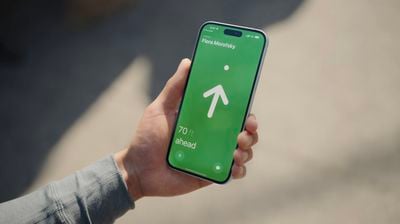
find my friends precision finding
Called "nRootTag," the exploit tricks the Find My network into treating ordinary Bluetooth devices as if they were AirTags, allowing hackers to turn laptops, smartphones, game controllers, VR headsets, and even e-bikes into unwitting tracking beacons.

Find My works by having AirTags and other Find My-compatible items send Bluetooth signals to nearby Apple devices, which then anonymously relay location data to Apple's servers. The researchers discovered they could manipulate cryptographic keys to make the network believe any Bluetooth device was a legitimate AirTag.

The research team found that the attack has a 90% success rate and can pinpoint a device's location within minutes. "While it is scary if your smart lock is hacked, it becomes far more horrifying if the attacker also knows its location," said one of the researchers.

What makes the exploit even more concerning is that it doesn't require physical access or administrator privileges on the target device – it can actually be executed remotely. In their experiments, the team successfully tracked a stationary computer with 10-foot accuracy and even reconstructed the exact flight path of a gaming console brought onboard an airplane.

The attack does require fairly hefty computing resources – the research team used hundreds of graphics processing units to quickly find matching cryptographic keys. However, they note that this could be achieved relatively inexpensively by renting GPUs, which has become a common practice in the crypto-mining community.

The team said they notified Apple about the vulnerability in July 2024, and Apple says that it protected against the vulnerability in December software updates.

Even after Apple implements a fix, the researchers warn the vulnerability could persist for years as many users delay updating their devices. "The vulnerable Find My network will continue to exist until those devices slowly 'die out,' and this process will take years," said one researcher.

The research will be formally presented at the USENIX Security Symposium in August. The team recommends users be cautious about apps requesting Bluetooth permissions, keep their devices updated, and consider privacy-focused operating systems for better protection.

Update: This article has been updated to clarify that Apple bolstered the Find My network in December 2024 to protect against this type of attack.
Popular Stories

Apple Logo Zoomed

Tim Cook Teases Plans for Apple's Upcoming 50th Anniversary

Thursday February 5, 2026 12:54 pm PST by
Apple turns 50 this year, and its CEO Tim Cook has promised to celebrate the milestone. The big day falls on April 1, 2026. "I've been unusually reflective lately about Apple because we have been working on what do we do to mark this moment," Cook told employees today, according to Bloomberg's Mark Gurman. "When you really stop and pause and think about the last 50 years, it makes your heart ...
iOS 26

iOS 26.3 and iOS 26.4 Will Add These New Features to Your iPhone

Tuesday February 3, 2026 7:47 am PST by
While the iOS 26.3 Release Candidate is now available ahead of a public release, the first iOS 26.4 beta is likely still at least a week away. Following beta testing, iOS 26.4 will likely be released to the general public in March or April. Below, we have recapped known or rumored iOS 26.3 and iOS 26.4 features so far. iOS 26.3 iPhone to Android Transfer Tool iOS 26.3 makes it easier...
imac video apple feature

Apple Makes Its Second-Biggest Acquisition Ever

Tuesday February 3, 2026 12:45 pm PST by
Apple recently acquired Israeli startup Q.ai for close to $2 billion, according to Financial Times sources. That would make this Apple's second-biggest acquisition ever, after it paid $3 billion for the popular headphone maker Beats in 2014. This is also the largest known Apple acquisition since the company purchased Intel's smartphone modem business and patents for $1 billion in 2019....
wwdc sans text feature

Apple Rumored to Announce New Product on February 19

Thursday February 5, 2026 12:22 pm PST by
Apple plans to announce the iPhone 17e on Thursday, February 19, according to Macwelt, the German equivalent of Macworld. The report, citing industry sources, is available in English on Macworld. Apple announced the iPhone 16e on Wednesday, February 19 last year, so the iPhone 17e would be unveiled exactly one year later if this rumor is accurate. It is quite uncommon for Apple to unveil...
Finder Siri Feature

Why Apple's iOS 26.4 Siri Upgrade Will Be Bigger Than Originally Promised

Friday February 6, 2026 3:06 pm PST by
In the iOS 26.4 update that's coming this spring, Apple will introduce a new version of Siri that's going to overhaul how we interact with the personal assistant and what it's able to do. The iOS 26.4 version of Siri won't work like ChatGPT or Claude, but it will rely on large language models (LLMs) and has been updated from the ground up. Upgraded Architecture The next-generation...

Top Rated Comments

JuicyGoomba Avatar
12 months ago
But but but Timmy told me that the real threat was letting people install those pesky 3rd party app stores!

angrybabyfistshake.gif
Score: 20 Votes (Like | Disagree)
NMBob Avatar
12 months ago
Finally! Something that just works!
Score: 17 Votes (Like | Disagree)
0049190 Avatar
12 months ago
I’m ok. Whenever I login to my Apple account it sends me a verification message saying I am 200 miles away from where I actually am.
Score: 8 Votes (Like | Disagree)
klasma Avatar
12 months ago
Website: https://nroottag.github.io/

How it works (from the link above):
[LIST=1]
* Through pairing, an AirTag shares the public / private key information with the owner’s device.
* When the AirTag is separated from the paired device, it advertises its public key via BLE advertisements, known as lost messages.
* Nearby Apple devices, referred to as finders, generate encrypted location reports and send them, along with the hashed public key, to the Apple Cloud.
* The Apple Cloud allows anyone to use a hashed public key to retrieve the associated location reports, which can only be decrypted using the correct private key. To ensure anonymity, finders do not authenticate whether a lost message is sent from an Apple device.

IIUC, any program that can send BLE advertisements can make the device it’s running on trackable via Apple’s Find My network.
Score: 8 Votes (Like | Disagree)
ikramerica Avatar
12 months ago
The author does a poor job if explaining how the hack works.

How did they locate the desktop computer remotely without hacking it and:

A. and finding out it exists
B. Knowing it’s Bluetooth information
C. Broadcasting the BT to Find My as an Airtag

Also, if the Find My network sees it as an Airtag, aren’t nearby iPhone users going to get an alert that an AirTag has been near them that doesn’t belong to you?
Score: 7 Votes (Like | Disagree)
I7guy Avatar
12 months ago
Interesting vulnerability. How easy or hard to deploy? What is the actual threat level? And I presume one can’t be tracked if Bluetooth is off.
Score: 5 Votes (Like | Disagree)