1Password Teases Safari Web Extension Already Working on iPadOS 15
With the introduction of iOS 15 and iPadOS 15, Safari extensions that previously only worked on the Mac can also run on the iPhone and iPad. While the feature won't be widely available until the fall when the new updates roll out to the public, 1Password, a popular password management app, has already teased a functional Safari extension on iPadOS 15.
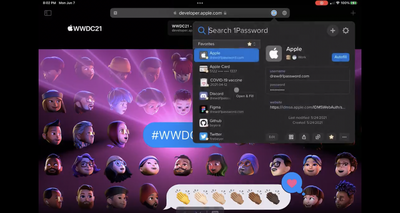
Shared by 1Password developer Andrew Beyer on Twitter, the in-development 1Password iPadOS 15 extension allows users to access their saved passwords quickly, create new passwords, edit existing accounts, and more.
The 1Password extension will also work on the iPhone running iOS 15. Similar to on macOS, Safari extensions on iOS and iPadOS 15 are easily accessible through the main toolbar. On iOS 15, iPadOS 15, and macOS Monterey, Safari received noteworthy updates, including major redesigns, enhanced security, and on iOS and iPadOS, the ability to pull down on a tab to refresh.
Popular Stories
Apple has launched a new "Switch to Safari" marketing campaign that encourages Chrome users to switch to Safari as their web browser of choice on the Mac.
"Safari is a more powerful and private browser than Chrome," says Apple.
Apple has a new "Switch to Safari" page on its website that outlines more than 10 reasons that Chrome users should switch to Safari, including faster performance...
Apple is considering changes to Safari on the iPhone Duo that would give websites access to more of the outer display, although the company has yet to settle on an approach.
The challenge is allowing pages to occupy the area beneath Safari's side-mounted controls without making parts of a website inaccessible. In an Friday, October 23 WebKit post, Apple's Jen Simmons explained that an...
Earlier this month, a security researcher discovered that private cryptographic keys associated with eight of Indian company eMudhra's intermediate certificate authority (CA) certificates were weak. The compromised keys could have allowed attackers to impersonate legitimate websites, potentially putting users' sensitive information at risk. However, there is currently no evidence that the keys...