Apple Says Tile Trackers Sold Poorly in Apple Stores

Earlier last month, Spotify, Tile, and Match (owner of Tinder), testified at an app store antitrust hearing spearheaded by the U.S. Senate. During the hearing, Spotify called Apple's App Store "an abusive power grab," while Tile said Apple uses its platform to "unfairly limit competition for its products."
tile amazon sidewalk integration
Now, in response to their testimonies, Apple's vice president and chief compliance officer, Kyle Andeer, has sent U.S. Senator Amy Klobuchar, who's overseeing the hearings, a letter signaling out Apple's response. In the letter, Apple says that Spotify, Tile, and Tinder are some of the "largest and most successful [developers] on the ‌App Store‌" and that their testimonies focused "more on grievances related to business disputes with Apple than on competition concerns with the ‌App Store‌."

Spotify has been one of the most vocal critics of the ‌App Store‌ and has long called into question Apple's in-app purchasing system that gives it a 30% commission on all purchases made. Apple has called its own system both secure and safe for users and developers, and Spotify aims to challenge that declaration. During the hearing, Spotify stated that Apple should allow third-party payment methods on the store if it truly believes that its own system is "superior."

If Apple is convinced that their payment system is that superior, that it really should command a 30% fee, they should allow for competition and let the market determine that. Let supply and demand determine what the right fee is, but they haven't done that.

Apple is pushing back, saying that Spotify's assertion that its own in-app purchasing system hasn't faced competition is incorrect and that it "meets or beats" the "intense competition."

Apple explains that before the birth of the ‌App Store‌ in 2008, developers had a difficult time with software distribution and that any possible attempt to distribute their apps was outright expensive. So when the ‌App Store‌ launched, it charged developers only a 30% commission on purchases, which Apple says helped in "reducing barriers to entry for software developers."

Since then we have never raised the commission; we have only lowered it, including for subscriptions and small businesses, or we have eliminated it altogether in certain situations, as with the Reader Rule and the Multi-Platform Rule. Today, about 85% of apps pay no commission, and the vast majority of developers that do pay a commission can pay just 15% by entering our Small Business Program. The remainder—those making over $1 million per year selling digital goods or services in the App Store— pay a 30% commission (which is reduced to 15% for subscription services after the first year).

Apple goes on to say that Spotify has benefited itself from its ‌App Store‌ commission structure since it "pays a commission on less than one percent of its premium subscribers, and that commission is always just 15%."

Addressing final concerns for Spotify, Apple says that despite what the music streaming giant said during the hearing, it does not prohibit developers from informing users about the ability to purchase in-app purchases, such as subscriptions, elsewhere, such as on the web. Apple correlates this rule to its inability to, for example, place a storefront sign at a Verizon location informing customers to purchase an iPhone from Apple instead.

Apple does not prohibit developers from communicating with their customers; Apple simply says that developers cannot redirect customers who are in the App Store to leave the App Store and go elsewhere—just as Apple cannot put a sign in the Verizon store, telling customers to buy iPhones directly from Apple instead.

The rule is one that has long-been embraced by retailers in both the physical and digital worlds. As for Apple, this common-sense rule has been in place since 2009, pre-dating Spotify's launch on the App Store. Spotify launched, grew, and thrived under these rules, but now Spotify apparently either wants Apple to change them or to hold Spotify to a different set of standards from everyone else.

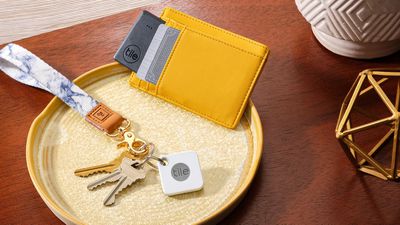
Targeting Tile, which has long voiced opposition to the Apple ecosystem, and more so following the launch of AirTags, Apple says Tile's item trackers sold poorly at Apple Stores. Apple's response followed Tile raising concerns that since its item-trackers are sold at Apple Stores, Apple would have information on its sales performance which it could then use for development purposes of AirTags.

Years ago, Apple had some information about how Tile products sold in Apple's retail store. It did not sell well. Tile sells its products through dozens of retailers around the globe and its own website. Any information from Apple Store retail sales is both very limited and very outdated and likely no different from the information other brick-and- mortar stores have about products sold in those stores. Nonetheless, Apple has never used any of that information in any decision making related to AirTags.

In its letter to the U.S. Senator, Apple also laid out specifics regarding concerns brought up by Match, which owns the dating network Tinder. Tinder has raised concerns about underage users on the ‌App Store‌ and that Apple does not do enough to limit it. Apple disagreed with this, saying it "strives to make the ‌App Store‌ a safe and trusted marketplace, including by empowering parents with parental controls."

Apple says that it shares the subcommittee's commitment to "promoting competition and innovation, allowing developers to thrive, and supporting the success of great American ideas."
Popular Stories

maxresdefault

Apple Shows Off a Key Reason to Upgrade to the iPhone 17

Saturday February 7, 2026 9:26 am PST by
Apple today shared an ad that shows how the upgraded Center Stage front camera on the latest iPhones improves the process of taking a group selfie. "Watch how the new front facing camera on iPhone 17 Pro takes group selfies that automatically expand and rotate as more people come into frame," says Apple. While the ad is focused on the iPhone 17 Pro and iPhone 17 Pro Max, the regular iPhone...
apple wallet drivers license feature iPhone 15 pro

Apple Says These 7 U.S. States Plan to Offer iPhone Driver's Licenses

Monday February 9, 2026 6:24 am PST by
In select U.S. states, residents can add their driver's license or state ID to the Apple Wallet app on the iPhone and Apple Watch, and then use it to display proof of identity or age at select airports and businesses, and in select apps. The feature is currently available in 13 U.S. states and Puerto Rico, and it is expected to launch in at least seven more in the future. To set up the...
Apple Logo Zoomed

Apple Expected to Launch These 10+ Products Over the Coming Months

Tuesday February 10, 2026 6:33 am PST by
It has been a slow start to 2026 for Apple product launches, with only a new AirTag and a special Apple Watch band released so far. We are still waiting for MacBook Pro models with M5 Pro and M5 Max chips, the iPhone 17e, a lower-cost MacBook with an iPhone chip, long-rumored updates to the Apple TV and HomePod mini, and much more. Apple is expected to release/update the following products...
14 inch MacBook Pro Keyboard

New MacBook Pros Could Now Arrive in March

Sunday February 8, 2026 6:02 am PST by
New MacBook Pro models with the M5 Pro and M5 Max chips could arrive as soon as Monday, March 2, according to Bloomberg's Mark Gurman. In today's "Power On" newsletter, Gurman said that the release of new MacBook Pro models is tied to the release of macOS Tahoe 26.3. The launch is said to be slated for as early as the week of March 2. He added that the M4 Pro and M4 Max models on sale today...
m5 macbook pro deal

Why You Shouldn't Buy the Next MacBook Pro

Tuesday February 10, 2026 4:27 pm PST by
Apple is planning to launch new MacBook Pro models as soon as early March, but if you can, this is one generation you should skip because there's something much better in the works. We're waiting on 14-inch and 16-inch MacBook Pro models with M5 Pro and M5 Max chips, with few changes other than the processor upgrade. There won't be any tweaks to the design or the display, but later this...

Top Rated Comments

Macintosh IIvx Avatar
62 months ago

This is an incredibly misleading statement when it comes to iPhone. Prior to 2008, Apple did not allow any 3rd party apps of any kind on the iPhone. It wasn’t like I could get an app like Pandora but I had to go their website to download it. Apps simply weren’t allowed. The only way around that prohibition was to jailbreak the phone, and we all know how Apple reacted to people doing that…

To say that the App Store merely streamlined distribution might be true on the Mac. But it’s an outright lie when talking about the iPhone.
That's not true at all. Remember the iPhone existed for only a year before the App Store came along.

The App Store is HUGE for developers. Most of them would never have their product seen if it wasn't for it. It's the difference between trying to sell your product on your own and having it featured at Target. It removes many hurdles for developers and the cut they take is actually smaller than a developer would have taken from other retailers (which is typically 40-50%). I say this as a developer for more than 25 years.
Score: 42 Votes (Like | Disagree)
darkpaw Avatar
62 months ago
Tile did sell their products in Apple Stores, and I was genuinely interested in them. Then I read the box, and it said the battery wasn't replaceable, so I put the box down.

Now, to the 30%... That's pretty much the standard across all the app stores. We all know this. Epic and Spotify know this. But who are they to say that 30% is too much? I don't know how much the App Stores cost to run, or how much Apple spends on R&D to improve the SDKs and developer software, or how much the hosting costs or card charges are, but I do know that it's not free. Apple is a business, and is there to make a profit. 30% is not too much, and as they say, most apps pay no commission, and most of the remaining developers can cut theirs to 15%.

Who's to say 30% is too much? Apple won't drop it below the costs of running it, so it's either breaking even or is set above the costs of running it. If they set it at break even now, say 10%, what if the costs are 12% next year? Does Apple have to redo all their contracts to explain that they now need another 2% off their developers? No; they've set it at the right price for them.

What are the costs of running Spotify? Are they making any profit? If so, how dare they! They should reduce their prices so they either break even or lose money. That's essentially the argument over the 30% cut.
Score: 30 Votes (Like | Disagree)
Mojohanna32 Avatar
62 months ago

This is an incredibly misleading statement when it comes to iPhone. Prior to 2008, Apple did not allow any 3rd party apps of any kind on the iPhone. It wasn’t like I could get an app like Pandora but I had to go their website to download it. Apps simply weren’t allowed. The only way around that prohibition was to jailbreak the phone, and we all know how Apple reacted to people doing that…

To say that the App Store merely streamlined distribution might be true on the Mac. But it’s an outright lie when talking about the iPhone.
It's not really, when you take into account brick and mortar distribution, which, prior to the digital app stores was the primary means of software distribution. The cost of which is very high. Physical copies of software, packaging, shipping, and yes, marketing $$'s spent to place software in stores etc. So when you look at the overhead and expense eliminated by the digital market places, costs paid by the software developers, all Google, Apple and others did was replace this overhead, and arguably reduce the cost of getting software into the hands of customers. At the same time, they made it instantaneous.
Score: 14 Votes (Like | Disagree)
mattspace Avatar
62 months ago

Apple explains that before the birth of the App Store in 2008, developers had a difficult time with software distribution and that any possible attempt to distribute their apps was outright expensive. So when the App Store launched, it charged developers only a 30% commission on purchases, which Apple says helped in "reducing barriers to entry for software developers."
The thing about trying to rewrite history while those who remember the events are still alive, is they can speak the truth of the story themselves:

https://mjtsai.com/blog/2021/05/13/what-it-was-like-to-sell-apps-online-in-2003/
Score: 13 Votes (Like | Disagree)
alexandr Avatar
62 months ago
tile says — reason their trackers sold poorly in apple stores is apple store employees would whisper in ears of those, who wanted to buy a tile tracker — "do not buy — we're working on our own, better version!" — and proceeded to gently push them away from the product.
Score: 11 Votes (Like | Disagree)
Vol Braakzakje Avatar
62 months ago
Wake me up when all this madness is over and tell me about the verdict.

Thanks.
Score: 10 Votes (Like | Disagree)