iPad and MacBook Production Reportedly Delayed Due to Global Chip Shortage

Apple is facing a global shortage of certain components for some of its MacBook and iPad models, causing the Cupertino tech giant and its suppliers to postpone production of the products, according to a new report from Nikkei Asia.
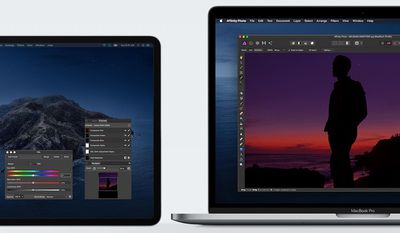
ipad pro and macbook pro
According to the report, MacBook production is being hindered due to the shortage of chips mounted onto the circuit board before final assembly, which is a key step in the overall production process. ‌iPad‌ production is being impacted due to display and display component shortages, the report adds.

In response to the pushed back production, Apple has postponed component orders for the two devices to the second half of the year. While MacBook and ‌iPad‌ production is being directly impacted, iPhone production is so far not affected. However, industry sources say that supplies for ‌iPhone‌ components are limited.

Production plans for Apple's iconic iPhones have so far not been affected by the supply shortage, although the supply of some components for the devices is "quite tight," according to two sources. Overall, the component shortage remains a supply chain issue for Apple and has not yet had an impact on product availability for consumers, Nikkei has learned.

Apple is widely expected to be launching new iPad Pro models and possibly redesigned MacBook Pros with Apple silicon in the coming months. Bloomberg has reported that new ‌iPad‌ models with drastically improved performance and a new mini-LED display are simply weeks away from launch.

While Nikkei doesn't specify which ‌iPad‌ and MacBook models are being impacted due to the shortage, it certainly seems plausible that the delayed assembly of the products could result in some form of a delayed product announcement from Apple.


Related Roundups: iPad, iPad Pro, iPad mini, MacBook Pro
Tag: Nikkei
Related Forums: iPad, MacBook Pro

Popular Stories

imac video apple feature

Apple Unveils First New Products of 2026

Monday January 26, 2026 1:55 pm PST by
Apple today introduced its first two physical products of 2026: a second-generation AirTag and the Black Unity Connection Braided Solo Loop for the Apple Watch. Read our coverage of each announcement to learn more:Apple Unveils New AirTag With Longer Range, Louder Speaker, and More Apple Introduces New Black Unity Apple Watch BandBoth the new AirTag and the Black Unity Connection Braided...
iPhone 5s

iPhone 5s Gets New Software Update 13 Years After Launch

Monday January 26, 2026 3:56 pm PST by
Alongside iOS 26.2.1, Apple today released an updated version of iOS 12 for devices that are still running that operating system update, eight years after the software was first released. iOS 12.5.8 is available for the iPhone 5s and the iPhone 6, meaning Apple is continuing to support these devices for 13 and 12 years after launch, respectively. The iPhone 5s came out in September 2013,...
Apple Creator Studio

Apple's Next Launch is Today

Tuesday January 27, 2026 2:39 pm PST by
Update: Apple Creator Studio is now available. Apple Creator Studio launches this Wednesday, January 28. The all-in-one subscription provides access to the Final Cut Pro, Logic Pro, Pixelmator Pro, Motion, Compressor, and MainStage apps, with U.S. pricing set at $12.99 per month or $129 per year. A subscription to Apple Creator Studio also unlocks "intelligent features" and "premium...
Apple Logo Black

Apple Just Made Its Second-Biggest Acquisition Ever After Beats

Thursday January 29, 2026 10:07 am PST by
Apple today confirmed to Reuters that it has acquired Q.ai, an Israeli startup that is working on artificial intelligence technology for audio. Apple paid close to $2 billion for Q.ai, according to sources cited by the Financial Times. That would make this Apple's second-biggest acquisition ever, after it paid $3 billion for the popular headphone and audio brand Beats in 2014. Q.ai has...
Second Generation AirTag Feature

Apple Unveils New AirTag With Longer Range, Louder Speaker, and More

Monday January 26, 2026 6:07 am PST by
Apple today introduced the second-generation AirTag, with key features including longer range for tracking items and a louder speaker. For those who are not familiar, the AirTag is a small accessory that you can attach to your backpack, keys, or other items. Then, you can track the location of those items in the Find My app on the iPhone, iPad, Mac, Apple Watch, and iCloud.com. The new...

Top Rated Comments

RedTomato Avatar
63 months ago

The fundamental problem is that in the year 2000, there were about 30 companies that made their own integrated circuits.

Then, they discovered that it's a lot cheaper to outsource, and now we have only a handful of companies producing chips while the demand is higher than it has ever been. Even AMD outsource their actual chip manufacturing to companies like TSMC.
Not really cheaper. The technology for tooling a modern chip line has become so advanced and so expensive that even with the resources of the entire world, it's only possible to set up 2 or 3 next-generation EUV chip lines. The machines are insanely complicated - they use lasers to explode droplets of vaporised tin plasma, creating extreme ultra-violet light that needs to be focussed through mirrors to etch the chip - but the mirrors unavoidably absorb 96% of the light.

The power efficiency is around 0.02% so for each 200watts of laser light delivered over a million watts is needed at the wall. Each EUV machine weights 200 tons and only does about 40 wafers per hour, and costs over $120 million, and that is only a small part of what building a new chip line involves - but it's the main limiting factor.

There's more or less only one company that makes them, ASML in the Netherlands, which was formed from a consortium of almost all the research companies working in this field - because the expense and difficulty of developing them was so extreme. So far, I believe there's only around 100 of these EUV machines worldwide, and ASML is working flat out to refine and make more of them.

As you said, it costs around $20-100 billion to set up new chip lines, and the next generation is likely to be even more expensive. It may be that from 2025 onwards, every chip company in the world will have to jointly collaborate to fund a single next-generation line with huge government funding - the costs are just too extreme otherwise.
Score: 15 Votes (Like | Disagree)
-DMN- Avatar
63 months ago
There’s only a chip shortage because of demand, so why not set up infrastructure so we’re able to build more chips here in the U.S.
Score: 15 Votes (Like | Disagree)
wanha Avatar
63 months ago
Apple is THE premium customer in tech and will always get preferential treatment from suppliers because of that.

This puts Apple in a better spot to weather this shortage than every other company on earth.

Time to collectively take a deep breath and relax that unnecessary tension in our sphincters.
Score: 10 Votes (Like | Disagree)
wanha Avatar
63 months ago

There’s only a chip shortage because of demand, so why not set up infrastructure so we’re able to build more chips here in the U.S.
The fundamental problem is that in the year 2000, there were about 30 companies that made their own integrated circuits.

Then, they discovered that it's a lot cheaper to outsource, and now we have only a handful of companies producing chips while the demand is higher than it has ever been. Even AMD outsource their actual chip manufacturing to companies like TSMC.

To combat this, Intel and TSMC have both just recently announced plans to invest a lot of money ($20 and $100 billion, respectively) to increase capacity to meet demand. Intel is also planning to open its doors to other manufacturers, like TSMC and Samsung are already doing.

TL;DR version: investments are being made to combat the chip shortage, but it will take some time (probably going well into 2022) before the increased capacity becomes available.
Score: 7 Votes (Like | Disagree)
James Godfrey Avatar
63 months ago
I have to highlight the following line from the article:

‘As a result of the delay, Apple has pushed back a portion of component orders for the two devices from the first half of this year to the second half, the people said.’

With this statement, I assume apple has merely just reduced its order size down a bit to relieve the pressure, now in regards to how much this has been reduced hasn’t actually been released, this could just be 10% reduction, which will have a small impact on availability after initial launch.

This article in no way means a launch isn’t still happening, it just means after the initial stock has gone, consumers might be waiting a while to receive their new iPads.
Score: 7 Votes (Like | Disagree)
vagos Avatar
63 months ago
So glad I went for the MBA M1 and did not wait for the MBP later this year.
Score: 6 Votes (Like | Disagree)