Kuo: iPad Air to Adopt OLED in 2022, Mini-LED to Remain Exclusive to iPad Pro Models

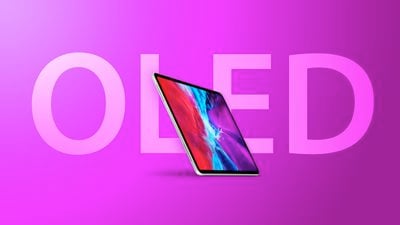
Apple will transition the iPad Air to OLED displays in the second half of next year, while mini-LED display technology will remain exclusive to upcoming higher-end iPad Pro models, according to a new report from Apple analyst Ming-Chi Kuo.
OLED iPad Pro Feature
Apple is expected to be just weeks away from launching a mini-LED ‌iPad Pro‌, the first Apple device to feature the newer technology. In Kuo's latest investor note, seen by MacRumors, the analyst underlines his belief that even when the ‌iPad Air‌ transitions to an OLED display in 2022, mini-LED will remain in its tablet lineup as a display technology exclusive to ‌iPad Pro‌ models.

The market is worried that if the iPad starts to use OLED in 2022, Apple will abandon the mini LED. However, according to our latest industry survey, if the iPad adopts an OLED display in 2022, it will be the mid-/low-end iPad Air, while the high-end iPad Pro will still use a mini LED display. The adoption of OLED in iPad does not affect the positive trend of mini LED. Since the OLED used in iPad is a rigid type and has a significantly lower PPI than iPhone, it is less challenging to produce, and the cost is close to the LCD currently used in iPad Air.

Kuo envisions a future iPad lineup in which OLED and mini-LED further differentiate Apple's mid-to-low end ‌iPad Air‌ models from its ‌iPad Pro‌ devices. Apple currently uses OLED displays in the Apple Watch and the iPhone, while Macs and ‌iPad‌ still retain the older LCD technology. OLED displays offer higher brightness, deeper blacks, and wider viewing angles. However, they often cost significantly more to produce than LCDs.

Earlier this month, DigiTimes reported that a 10.9-inch ‌iPad‌, presumably the ‌iPad Air‌, will be updated with an OLED display in early 2022. In contrast to Kuo's note, ‌DigiTimes‌ stated that Apple would also adopt OLED technology for the 12.9-inch ‌iPad Pro‌. ‌DigiTimes‌ has also claimed that Apple might release 16-inch and 17-inch MacBook Pro with OLED later on next year.

Apple is already working on several products with mini-LED displays, including redesigned MacBook Pros. Kuo believes that Apple's use of mini-LED will accelerate in the coming years as production costs decrease, with Apple's mid-to-high-end devices consistently adopting the technology first.
Related Roundup: iPad Air
Buyer's Guide: iPad Air (Neutral)
Related Forum: iPad

Popular Stories

imac video apple feature

Apple Unveils First New Products of 2026

Monday January 26, 2026 1:55 pm PST by
Apple today introduced its first two physical products of 2026: a second-generation AirTag and the Black Unity Connection Braided Solo Loop for the Apple Watch. Read our coverage of each announcement to learn more:Apple Unveils New AirTag With Longer Range, Louder Speaker, and More Apple Introduces New Black Unity Apple Watch BandBoth the new AirTag and the Black Unity Connection Braided...
iPhone 5s

iPhone 5s Gets New Software Update 13 Years After Launch

Monday January 26, 2026 3:56 pm PST by
Alongside iOS 26.2.1, Apple today released an updated version of iOS 12 for devices that are still running that operating system update, eight years after the software was first released. iOS 12.5.8 is available for the iPhone 5s and the iPhone 6, meaning Apple is continuing to support these devices for 13 and 12 years after launch, respectively. The iPhone 5s came out in September 2013,...
Apple Logo Black

Apple Just Made Its Second-Biggest Acquisition Ever After Beats

Thursday January 29, 2026 10:07 am PST by
Apple today confirmed to Reuters that it has acquired Q.ai, an Israeli startup that is working on artificial intelligence technology for audio. Apple paid close to $2 billion for Q.ai, according to sources cited by the Financial Times. That would make this Apple's second-biggest acquisition ever, after it paid $3 billion for the popular headphone and audio brand Beats in 2014. Q.ai has...
Apple Creator Studio

Apple's Next Launch is Today

Tuesday January 27, 2026 2:39 pm PST by
Update: Apple Creator Studio is now available. Apple Creator Studio launches this Wednesday, January 28. The all-in-one subscription provides access to the Final Cut Pro, Logic Pro, Pixelmator Pro, Motion, Compressor, and MainStage apps, with U.S. pricing set at $12.99 per month or $129 per year. A subscription to Apple Creator Studio also unlocks "intelligent features" and "premium...
Second Generation AirTag Feature

Apple Unveils New AirTag With Longer Range, Louder Speaker, and More

Monday January 26, 2026 6:07 am PST by
Apple today introduced the second-generation AirTag, with key features including longer range for tracking items and a louder speaker. For those who are not familiar, the AirTag is a small accessory that you can attach to your backpack, keys, or other items. Then, you can track the location of those items in the Find My app on the iPhone, iPad, Mac, Apple Watch, and iCloud.com. The new...

Top Rated Comments

xxray Avatar
64 months ago
I’d rather have OLED than mini-LED though. You get true infinite contrast, and burn in has never been a thing with Apple’s OLED.

Mini-LED is just a glorified LCD panel with slightly better contrast. It still doesn’t compare to OLED pure blacks. It makes no sense that mini-LED would be the premium product while OLED is the mid- to low-tier product.
Score: 29 Votes (Like | Disagree)
iSayuSay Avatar
64 months ago

makes sense. Pro devices get mini-LED that has no burn in, but still has most of the advantages of OLED
I don't know.. miniLED is basically an LCD with controlled backlit. It still has some sort of backlight bleeding, or halo effect in the edges between dark and light images? TCL uses miniLED for their latest TVs, because it's cheap for its ability to mimicking OLED contrast (to some degree).

OLED however is pixel perfect. If anything OLED is still the king of high-end display both for TV and mobile market. I mean why Pro model iPhones (before 12 Series) go with OLED if it's not a premium offering? It's been years since iPhone uses OLED and I don't see any meaningful burn-in problems.
Score: 14 Votes (Like | Disagree)
locoboi187 Avatar
64 months ago

IF that was the case Samsung would use it in their TVs, but they don't because for larger panels its not as good.
Most inaccurate thing I read to start my day.
Score: 14 Votes (Like | Disagree)
iSayuSay Avatar
64 months ago

IF that was the case Samsung would use it in their TVs, but they don't because for larger panels its not as good.
But then again in the premium TV market, LG OLED consistently beats Samsung QLED years after years?

LG also has their own lineup for QLED which is called NanoCell. It is okay, bigger and cheaper, a bang for your bucks. But obviously a second grade product compared to their own OLEDs.
Score: 8 Votes (Like | Disagree)
xxray Avatar
64 months ago

IF that was the case Samsung would use it in their TVs, but they don't because for larger panels its not as good.
1. “If that were true” - ?? It is true. It is literal fact. OLED has infinite contrast, mini-LED does not. iPhone X is going on 4 years old and all subsequent models of iPhone X/Pro have been OLED, all Apple Watch models have been OLED, and there have been no reports of widespread burn-in.

2. LG’s OLED TVs are consistently considered the best possible picture you can get on a TV by professionals who test displays objectively for a living.
Score: 7 Votes (Like | Disagree)
T'hain Esh Kelch Avatar
64 months ago

IF that was the case Samsung would use it in their TVs, but they don't because for larger panels its not as good.
They actually did for a couple of years, but their technology wasn't living up to LGs and they had production issues, so they instead shifted back to LEDs. Of course, even Samsung knows that OLED is the best, so they started marketing their LEDs as 'QLED' to trick uninformed consumers like you into buying their second rate displays.

If you go to any TV rating site, you'll see OLED displays easily winning over QLED displays, over and over again.
Score: 5 Votes (Like | Disagree)