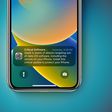
Link Previews in Popular Messaging Apps May Lead to Security Vulnerabilities

A new report by security researchers Talal Haj Bakry and Tommy Mysk has revealed that link previews in messaging apps can lead to security and privacy issues on iOS and Android. Through link previews, Bakry and Mysk discovered that apps could leak IP addresses, expose links sent in end-to-end encrypted chats, download large files without users' consent, and copy private data.
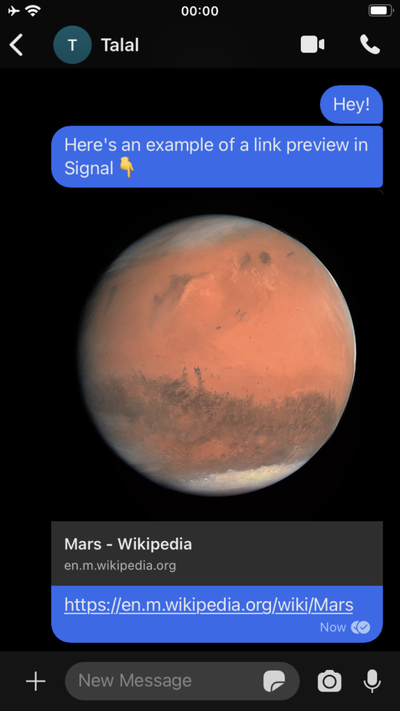
link preview example signal

Link previews offer a peek at content such as web pages or documents in many messaging apps. The feature allows users to see a short summary and preview image inline with the rest of the conversation without having to tap on the link.

Apps such as iMessage and WhatsApp ensure that the sender generates the preview, meaning that the receiver is protected from risk if the link is malicious. This is because the summary and preview image are created on the sender's device and sent as an attachment. The receiver's device will show the preview as it was transmitted from the sender without having to open the link. Apps that do not generate a link preview at all, such as TikTok and WeChat, are also unaffected.

The issue arises when the receiver generates the link preview, because the app will automatically open the link in the background to create the preview. This occurs before users even tap on the link, potentially exposing them to malicious content. Apps such as Reddit generate links in this way.

For example, a malicious actor could send a link to their own server. When the receiver's app automatically opens the link in the background, it would send the device's IP address to the server, revealing their location.

This approach can also cause issues if the link points to a large file, whereupon the app may attempt to download the whole file, draining battery life and hemorrhaging data plan limits.

Link previews can also be generated on an external server, and this is how many popular apps such as Discord, Facebook Messenger, Google Hangouts, Instagram, LinkedIn, Slack, Twitter, and Zoom work. In this case, the app will first send the link to an external server and ask it to generate a preview, and then the server will send the preview back to both the sender and receiver.

However, this may pose a security threat when the contents of the sent link are private. Using an external server allows these apps to potentially create unauthorized copies of private information and retain it for a period of time.

Although many of the apps had implemented a data limit on how much of any link content to download, the researchers discovered that Facebook Messenger and Instagram were particularly notable for downloading the entirety of any link's contents to its servers, regardless of size. When questioned about this behavior, Facebook reportedly said that it considers this to be "working as intended."

Copies kept on external servers could be subject to data breaches, which may be particularly concerning for users of business apps such as Zoom and Slack, and those who send links to sensitive private data.

The research offers an appreciation of how the same exact feature can work in different ways, and how these differences can have a significant impact on security and privacy. See the full report for more information.
Popular Stories

maxresdefault

Apple Shows Off a Key Reason to Upgrade to the iPhone 17

Saturday February 7, 2026 9:26 am PST by
Apple today shared an ad that shows how the upgraded Center Stage front camera on the latest iPhones improves the process of taking a group selfie. "Watch how the new front facing camera on iPhone 17 Pro takes group selfies that automatically expand and rotate as more people come into frame," says Apple. While the ad is focused on the iPhone 17 Pro and iPhone 17 Pro Max, the regular iPhone...
apple wallet drivers license feature iPhone 15 pro

Apple Says These 7 U.S. States Plan to Offer iPhone Driver's Licenses

Monday February 9, 2026 6:24 am PST by
In select U.S. states, residents can add their driver's license or state ID to the Apple Wallet app on the iPhone and Apple Watch, and then use it to display proof of identity or age at select airports and businesses, and in select apps. The feature is currently available in 13 U.S. states and Puerto Rico, and it is expected to launch in at least seven more in the future. To set up the...
m5 macbook pro deal

Why You Shouldn't Buy the Next MacBook Pro

Tuesday February 10, 2026 4:27 pm PST by
Apple is planning to launch new MacBook Pro models as soon as early March, but if you can, this is one generation you should skip because there's something much better in the works. We're waiting on 14-inch and 16-inch MacBook Pro models with M5 Pro and M5 Max chips, with few changes other than the processor upgrade. There won't be any tweaks to the design or the display, but later this...
iOS 26

Apple Releases iOS 26.3 and iPadOS 26.3

Wednesday February 11, 2026 10:07 am PST by
Apple today released iOS 26.3 and iPadOS 26.3, the latest updates to the iOS 26 and iPadOS 26 operating systems that came out in September. The new software comes almost two months after Apple released iOS 26.2 and iPadOS 26.2. The new software can be downloaded on eligible iPhones and iPads over-the-air by going to Settings > General > Software Update. According to Apple's release notes, ...
Apple Logo Zoomed

Apple Expected to Launch These 10+ Products Over the Coming Months

Tuesday February 10, 2026 6:33 am PST by
It has been a slow start to 2026 for Apple product launches, with only a new AirTag and a special Apple Watch band released so far. We are still waiting for MacBook Pro models with M5 Pro and M5 Max chips, the iPhone 17e, a lower-cost MacBook with an iPhone chip, long-rumored updates to the Apple TV and HomePod mini, and much more. Apple is expected to release/update the following products...

Top Rated Comments

jayducharme Avatar
69 months ago

Although many of the apps had implemented a data limit on how much of any link content to download, the researchers discovered that Facebook Messenger and Instagram were particularly notable for downloading the entirety of any link's contents to its servers, regardless of size.
And why does this not surprise me?
Score: 19 Votes (Like | Disagree)
macintoshmac Avatar
69 months ago

These automatic link previews are a cancer, when I am sending a link I don't need a preview, I know what I am sending.
Link previews are targeted at receivers who would appreciate a quick preview, not towards previews that are shown on sender's devices as well when senders send messages.
Score: 10 Votes (Like | Disagree)
69 months ago
Got it, use only iMessage :)
Score: 4 Votes (Like | Disagree)
Apple Freak Avatar
69 months ago

Rotary phones without answering machines and letter writing: It's the only solution!
Don't forget about smoke signals and carrier pigeons too.
Score: 3 Votes (Like | Disagree)
jonblatho Avatar
69 months ago

Security researchers do not agree on people not wanting it. They are commenting on misuse of autoamtic link preview.
To expand on this, they’re specifically taking issue with only some implementations which can create privacy and security risks. Granted, nothing that they discuss here is that bad or difficult to fix.
Score: 3 Votes (Like | Disagree)
Runs For Fun Avatar
69 months ago
It's interesting in this case (and probably many others) how there is a direct tradeoff between device security and data privacy.

If everything is generated externally and only a preview image is sent to your device, there is no security risk to your device (unless you open the link), but a privacy disadvantage.

If everything is generated on-device, there's no privacy issue in terms of third party services, but there is a privacy issue if the link is being used maliciously to track the user, and there's a potential security risk if there's a vulnerability on the page that requires no user interaction.

Of course, on the privacy side, if any sensitive content being linked to doesn't require a login, then it is only offering security by obscurity, which is so bad from a security standpoint already, so that's kind of a moot point. You likewise shouldn't be pushing passwords or whatnot in the URL.

Which is to say the researchers are right that the potential privacy hit is better than the potential local security hit, although I'm loathe to say that when Facebook is involved since you can be pretty sure they're going to use this to abusively harvest and store any user data they possibly can.

I don't see Apple Messages anywhere on that list, and I know it generates previews, so I'm assuming they're the redacted one?

Interestingly, I've noticed that Messages will generate a preview of links from contacts in my address book, but does NOT generate a preview of links from other contacts. So I don't get previews from spam links or things like UPS tracking alerts, but I do get them from friends and co-workers.

This isn't perfect from a security standpoint, but seems like a not-so-bad compromise.
iMessage generates the preview one the sender’s device which is the correct way to do this. The problem here is some crappy third party apps don’t do this and/or have no size limit for what is fetched for the preview.
Score: 3 Votes (Like | Disagree)