Qualcomm Wins Appeal in FTC Antitrust Lawsuit

Qualcomm today scored a major victory in its ongoing antitrust battle with the FTC, winning an appeal that will prevent the San Diego company from having to renegotiate its licensing agreements with smartphone makers.
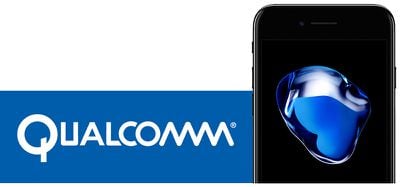
qualcomm iphone 7
Back in May 2019, the Federal Trade Commission won an antitrust lawsuit against Qualcomm, with the court ruling that Qualcomm's "no license, no chips" model that allowed Qualcomm to refuse to provide chips to companies without a patent license, violated federal antitrust laws. The ruling required Qualcomm to renegotiate all of its licensing terms with customers in good faith.

According to Bloomberg, the federal appeals court today said that the judge in the original case was wrong to side with the FTC, and the court vacated the order mandating that Qualcomm re-establish its licensing deals with companies like Apple.

The court said that the original ruling went "beyond the scope" of antitrust law and that Qualcomm's licensing practices are not anticompetitive because Qualcomm is "under no antitrust duty to license rival chip suppliers." If Qualcomm has breached obligations to license patents under fair and reasonable terms (FRAND), the issue needs to be brought up under patent law, not antitrust law.

In a statement, the FTC called the court's ruling "disappointing" and said that it will be considering options going forward. The FTC can appeal the decision, but if it stands, it will end Qualcomm's years-long legal battle over its chip licensing deals.

Qualcomm general counsel and executive vice president Don Rosenberg told Bloomberg that the ruling validates Qualcomm's business model.

"The court of appeals unanimous reversal, entirely vacating the district court decision, validates our business model and patent licensing program and underscores the tremendous contributions that Qualcomm has made to the industry."

Qualcomm's fight with the FTC ran concurrent with its legal battle with Apple. The Qualcomm vs. Apple dispute spanned years, but was resolved last year when the two companies reached a settlement and agreed to drop all litigation.

Apple had accused Qualcomm of unfair licensing deals and overcharging for the iPhone components that it supplied to Apple, but Apple dropped the case because it has no other source for 5G modems for its iPhones. Apple tried using Intel modem chips in its devices and did so successfully for a few years, but Intel ultimately could not produce the chips Apple needed and ended up selling its modem chip business.

Apple purchased Intel's smartphone modem business for $1 billion, and in the future, intends to manufacture its own modem chips. For now, though, Apple continues to be reliant on Qualcomm and this year's ‌iPhone‌ 12 models will be equipped with Qualcomm modem chips.
Popular Stories

Apple Logo Zoomed

Tim Cook Teases Plans for Apple's Upcoming 50th Anniversary

Thursday February 5, 2026 12:54 pm PST by
Apple turns 50 this year, and its CEO Tim Cook has promised to celebrate the milestone. The big day falls on April 1, 2026. "I've been unusually reflective lately about Apple because we have been working on what do we do to mark this moment," Cook told employees today, according to Bloomberg's Mark Gurman. "When you really stop and pause and think about the last 50 years, it makes your heart ...
Finder Siri Feature

Why Apple's iOS 26.4 Siri Upgrade Will Be Bigger Than Originally Promised

Friday February 6, 2026 3:06 pm PST by
In the iOS 26.4 update that's coming this spring, Apple will introduce a new version of Siri that's going to overhaul how we interact with the personal assistant and what it's able to do. The iOS 26.4 version of Siri won't work like ChatGPT or Claude, but it will rely on large language models (LLMs) and has been updated from the ground up. Upgraded Architecture The next-generation...
wwdc sans text feature

Apple Rumored to Announce New Product on February 19

Thursday February 5, 2026 12:22 pm PST by
Apple plans to announce the iPhone 17e on Thursday, February 19, according to Macwelt, the German equivalent of Macworld. The report, citing industry sources, is available in English on Macworld. Apple announced the iPhone 16e on Wednesday, February 19 last year, so the iPhone 17e would be unveiled exactly one year later if this rumor is accurate. It is quite uncommon for Apple to unveil...
iOS 26

iOS 26.3 and iOS 26.4 Will Add These New Features to Your iPhone

Tuesday February 3, 2026 7:47 am PST by
While the iOS 26.3 Release Candidate is now available ahead of a public release, the first iOS 26.4 beta is likely still at least a week away. Following beta testing, iOS 26.4 will likely be released to the general public in March or April. Below, we have recapped known or rumored iOS 26.3 and iOS 26.4 features so far. iOS 26.3 iPhone to Android Transfer Tool iOS 26.3 makes it easier...
iphone 17 pro dark blue 1

iPhone 18 Pro Max Rumored to Deliver Next-Level Battery Life

Friday February 6, 2026 5:14 am PST by
The iPhone 18 Pro Max will feature a bigger battery for continued best-in-class battery life, according to a known Weibo leaker. Citing supply chain information, the Weibo user known as "Digital Chat Station" said that the iPhone 18 Pro Max will have a battery capacity of 5,100 to 5,200 mAh. Combined with the efficiency improvements of the A20 Pro chip, made with TSMC's 2nm process, the...

Top Rated Comments

jayducharme Avatar
72 months ago
Apple dropped the case ('https://www.macrumors.com/2019/04/16/apple-qualcomm-settlement/') because it has no other source for 5G modems for its iPhones
And yet Congress thinks Apple is a monopoly?
Score: 8 Votes (Like | Disagree)
GeoStructural Avatar
72 months ago
I agree with the court’s decision. I think Qualcomm is entitled to charge royalties and license fees for patents and technologies that they are actively developing and improving.

Apple charges royalties for using the Lightning connector, a proprietary cable that relies on 20-year old usb protocols just for greed... so why defend Apple and condemn Qualcomm? I think the latter has more merit.


And yet Congress thinks Apple is a monopoly?
They are not saying that Apple is a monopoly, they are saying the App Store is.
Score: 6 Votes (Like | Disagree)
cmaier Avatar
72 months ago

Which is completely stupid too.

It’s like saying Disney World is a monopoly because it only has Disney content.
And McDonald’s stubbornly refuses to let me sell my own hamburgers in their restaurants. They also refuse to allow me to sell Big Macs out of my garage. Monopoly!
Score: 6 Votes (Like | Disagree)
cmaier Avatar
72 months ago

I did not say you "own" the operating system. I said you pay to use it. No other operating system ever restricts users’ freedom like iOS. On Windows, Linux, macOS, and Android, you can just write an app, compile it and run it (and you can freely distribute it to others). On iOS, you have to pay Apple $99 just to distribute your app, which unreasonably burdens free and open-source softwares (they could have distributed their products with much lower costs (zero cost via GitHub) and no less rigorous review).
There are many operating systems that restrict your freedom well beyond iOS. Good luck installing apps on the OS in your car. Or installing unblessed apps on your average smart tv.

And $99 is not the charge to distribute your app. The $99 fee includes support, tooling, etc.

In any event your points are off-topic. You don’t have a “right” to install whatever you want on an ios device, because when you bought it and first set it up you agreed to a contract that says otherwise, as a condition of your license to use the software built into the device.
Score: 4 Votes (Like | Disagree)
Reindeer_Legal Avatar
72 months ago

And yet Congress thinks Apple is a monopoly?
When you purchase an iPhone, you agree to pay for the hardware, the operating system and various Apple services (for example, iCloud). Your property right over your iPhone gives you a right to run whatever apps you see fit that can run on your iPhone, and you did not relinquish that right by purchasing an iPhone in the first place, or by agreeing to the terms of Apple's App Store. Apple's current practices severely infringe your freedom (and developers' freedom). Apple abused its control over App Store to maximize its profits, rather to provide a reasonably-regulated marketplace for users and developers, so you could not have agreed to App Store's restrictions.

Responding to another comment about McDonald's:
You can cook your burger and eat it. In fact, you can cook your burgers and sell them to others across the street McDonald's sits on. You can eat burgers at any other restaurant. McDonald's did not say, if you live in this neighborhood, you cannot cook your own burger, you cannot sell your burger to others, you can only eat McDonald's burgers.
Score: 3 Votes (Like | Disagree)
Baymowe335 Avatar
72 months ago


They are not saying that Apple is a monopoly, they are saying the App Store is.
Which is completely stupid too.

It’s like saying Disney World is a monopoly because it only has Disney content.
Score: 3 Votes (Like | Disagree)