Former Intel Engineer Claims Buggy Skylake Chips Hastened Apple's Switch to Custom Silicon
At this week's WWDC, Apple confirmed its plan to switch from Intel to custom processors for its Macs over a two-year transition period. Apple said that the switch is all about platform consolidation and performance advantages, but at least one former Intel insider claims that quality control issues with Skylake chips was the reason Apple finally decided to to ditch Intel.
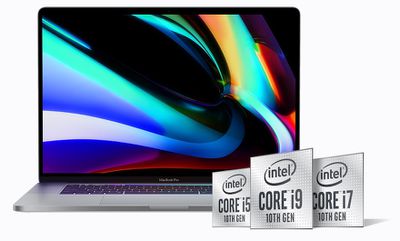
"The quality assurance of Skylake was more than a problem," said former Intel engineer François Piednoël, speaking to PC Gamer. "It was abnormally bad. We were getting way too much citing for little things inside Skylake. Basically our buddies at Apple became the number one filer of problems in the architecture. And that went really, really bad.
"When your customer starts finding almost as much bugs as you found yourself, you're not leading into the right place."
"For me this is the inflection point," said Piednoël. "This is where the Apple guys who were always contemplating to switch, they went and looked at it and said: 'Well, we've probably got to do it.' Basically the bad quality assurance of Skylake is responsible for them to actually go away from the platform."
There have been rumors suggesting Apple has an interest in Arm-based Macs for years now, but it was only on Monday that Apple confirmed the plan, satying it expects its first Mac with custom silicon to launch by the end of 2020.
Apple analyst Ming-Chi Kuo believes that a redesigned iMac due in the fourth quarter of 2020 will be one of Apple's first two Mac models with a custom Arm-based processor, with the other being a future 13-inch MacBook Pro.
Following Apple's announcement about its switch to custom silicon, Intel said it will continue supporting the Mac through its transition, but insisted that its processors are still the best option for developers.
Popular Stories
Apple is planning to launch new MacBook Pro models as soon as early March, but if you can, this is one generation you should skip because there's something much better in the works.

We're waiting on 14-inch and 16-inch MacBook Pro models with M5 Pro and M5 Max chips, with few changes other than the processor upgrade. There won't be any tweaks to the design or the display, but later this...

Wednesday February 11, 2026 10:07 am PST by
Juli CloverApple today released iOS 26.3 and iPadOS 26.3, the latest updates to the iOS 26 and iPadOS 26 operating systems that came out in September. The new software comes almost two months after Apple released iOS 26.2 and iPadOS 26.2.
The new software can be downloaded on eligible iPhones and iPads over-the-air by going to Settings > General > Software Update.
According to Apple's release notes, ...
It has been a slow start to 2026 for Apple product launches, with only a new AirTag and a special Apple Watch band released so far. We are still waiting for MacBook Pro models with M5 Pro and M5 Max chips, the iPhone 17e, a lower-cost MacBook with an iPhone chip, long-rumored updates to the Apple TV and HomePod mini, and much more.
Apple is expected to release/update the following products...
Apple plans to announce the iPhone 17e on Thursday, February 19, according to Macwelt, the German equivalent of Macworld.
The report said the iPhone 17e will be announced in a press release on the Apple Newsroom website, so do not expect an event for this device specifically.
The iPhone 17e will be a spec-bumped successor to the iPhone 16e. Rumors claim the device will have four key...
Apple acquired Canadian graph database company Kuzu last year, it has emerged.
The acquisition, spotted by AppleInsider, was completed in October 2025 for an undisclosed sum. The company's website was subsequently taken down and its Github repository was archived, as is commonplace for Apple acquisitions.
Kuzu was "an embedded graph database built for query speed, scalability, and easy of ...