Anti-Surveillance Coalition That Includes Apple Condemns Proposals for Device Backdoors

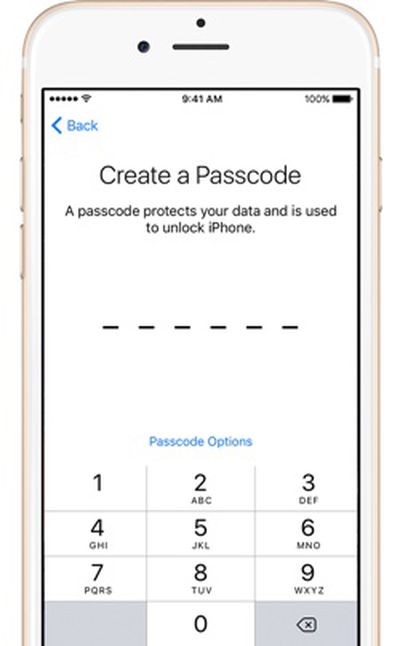
iphonecreateapasscodeThe Reform Government Surveillance coalition, which includes several major tech companies who have teamed up to lobby for surveillance law reform, this week released a statement condemning recent proposals for backdoor access into electronic devices and reaffirming a commitment to strong encryption.

The coalition is made up of multiple tech companies who have taken a strong stance against weakening encryption, including Apple, Google, Microsoft, Dropbox, Snap, Evernote, LinkedIn, Oath (owned by Verizon) and Facebook.

Reform Government Surveillance recently announced a new core principle on encryption that will guide our advocacy efforts, and we continue to believe that strong encryption helps protect the security and privacy of individuals and companies around the world. We have consistently raised concerns about proposals that would undermine encryption of devices and services by requiring so-called "exceptional access" for law enforcement. Recent reports have described new proposals to engineer vulnerabilities into devices and services - but they appear to suffer from the same technical and design concerns that security researchers have identified for years. Weakening the security and privacy that encryption helps provide is not the answer.

As ZDNet points out, the statement comes following a WIRED article profiling Microsoft chief technical Ray Ozzie and his suggestion for a solution called "Clear" that would supposedly provide law enforcement with access to encrypted data with less security risk.

Ozzie's proposal uses a public key and a private key (housed and protected by a company like Apple) that are used to encrypt and decrypt a PIN generated on the device. No one is meant to be able to decode and use the PIN to unlock the device aside from the vendor, using the aforementioned private key.

So, say the FBI needs the contents of an iPhone. First the Feds have to actually get the device and the proper court authorization to access the information it contains--Ozzie's system does not allow the authorities to remotely snatch information. With the phone in its possession, they could then access, through the lock screen, the encrypted PIN and send it to Apple.

Armed with that information, Apple would send highly trusted employees into the vault where they could use the private key to unlock the PIN. Apple could then send that no-longer-secret PIN back to the government, who can use it to unlock the device.

Ozzie demonstrated his "Clear" solution to representatives from tech companies that included Apple, Google and Facebook, according to WIRED, but unsurprisingly, none of them had "any interest whatsoever" in voluntarily implementing that kind of access into their devices and services.

The coalition Apple is a part of in April published a core principle pledging to ensure device security through strong encryption and calling on governments to avoid taking actions that would require companies to "create any security vulnerabilities in their produces and services."

Strong encryption of devices and services protects the sensitive data of our users - including individuals, corporations, and governments. Strong encryption also promotes free expression and the free flow of information around the world. Requiring technology companies to engineer vulnerabilities into their products and services would undermine the security and privacy of our users, as well as the world's information technology infrastructure. Governments should avoid any action that would require companies to create any security vulnerabilities in their products and services.

The renewed activity from the Reform Government Surveillance group follows reports that have suggested law enforcement officials are quietly revisiting proposals that would require tech companies to add backdoor access into electronic devices for use by law enforcement officials.

FBI and DOJ officials have been meeting with security researchers with the aim of developing approaches that would offer "extraordinary access" to encrypted devices like the iPhone, with DOJ officials reportedly "convinced" there is a way to create a backdoor without weakening a device's defense against hacking.

Apple software engineering chief Craig Federighi recently said that this kind of backdoor access would "inject new and dangerous weaknesses into product security."

"Weakening security makes no sense when you consider that customers rely on our products to keep their personal information safe, run their businesses or even manage vital infrastructure like power grids and transportation systems," Federighi said.

Apple vehemently opposes backdoor solutions like the one Ozzie proposed because they have the potential to weaken device encryption and provide new ways for bad actors to access device data.

Apple's strong stance against weakened device protections for the sake of law enforcement access was highlighted in the 2016 Apple vs. FBI conflict that saw Apple refuse to create a backdoor access solution to allow the FBI to crack the iPhone 5c owned by San Bernardino shooter Syed Farook.
graykey1

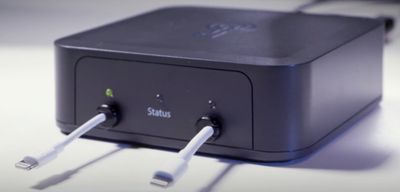
GrayKey iPhone unlocking box via MalwareBytes

Without device backdoors, law enforcement officials have still found ways to crack devices like iPhones through other means. At the current time, for example, agencies like the FBI and DOJ have access to an iPhone unlocking box called GrayKey, which is capable of unlocking Apple's most recent iPhones running modern versions of iOS.

Note: Due to the political nature of the discussion regarding this topic, the discussion thread is located in our Politics, Religion, Social Issues forum. All forum members and site visitors are welcome to read and follow the thread, but posting is limited to forum members with at least 100 posts.
Popular Stories

iOS 26

15 New Things Your iPhone Can Do in iOS 26.2

Friday December 5, 2025 9:40 am PST by
Apple is about to release iOS 26.2, the second major point update for iPhones since iOS 26 was rolled out in September, and there are at least 15 notable changes and improvements worth checking out. We've rounded them up below. Apple is expected to roll out iOS 26.2 to compatible devices sometime between December 8 and December 16. When the update drops, you can check Apple's servers for the ...
iPhone 14 Pro Dynamic Island

iPhone 18 Pro Leak Adds New Evidence for Under-Display Face ID

Monday December 8, 2025 4:54 am PST by
Apple is actively testing under-screen Face ID for next year's iPhone 18 Pro models using a special "spliced micro-transparent glass" window built into the display, claims a Chinese leaker. According to "Smart Pikachu," a Weibo account that has previously shared accurate supply-chain details on Chinese Android hardware, Apple is testing the special glass as a way to let the TrueDepth...
iOS 26

Apple Seeds Second iOS 26.2 Release Candidate to Developers and Public Beta Testers

Monday December 8, 2025 10:18 am PST by
Apple today seeded the second release candidate version of iOS 26.2 to developers and public beta testers, with the software coming one week after Apple seeded the first RC. The release candidate represents the final version iOS 26.2 that will be provided to the public if no further bugs are found. Registered developers and public beta testers can download the betas from the Settings app on...
iPhone 17 Pro Cosmic Orange

10 Reasons to Wait for Next Year's iPhone 18 Pro

Monday December 1, 2025 2:40 am PST by
Apple's iPhone development roadmap runs several years into the future and the company is continually working with suppliers on several successive iPhone models at the same time, which is why we often get rumored features months ahead of launch. The iPhone 18 series is no different, and we already have a good idea of what to expect for the iPhone 18 Pro and iPhone 18 Pro Max. One thing worth...
Johny Srouji

Apple's Chipmaking Chief Johny Srouji Responds to Report About Him Potentially Leaving

Monday December 8, 2025 9:23 am PST by
Apple's chipmaking chief Johny Srouji has reportedly indicated that he plans to continue working for the company for the foreseeable future. "I love my team, and I love my job at Apple, and I don't plan on leaving anytime soon," said Srouji, in a memo obtained by Bloomberg's Mark Gurman. Here is Srouji's full memo, as shared by Bloomberg:I know you've been reading all kind of rumors and...
Johny Srouji

Apple Chip Chief Johny Srouji Could Be Next to Go as Exodus Continues

Sunday December 7, 2025 10:41 am PST by
Apple's senior vice president of hardware technologies Johny Srouji could be the next leading executive to leave the company amid an alarming exodus of leading employees, Bloomberg's Mark Gurman reports. Srouji apparently recently told CEO Tim Cook that he is "seriously considering leaving" in the near future. He intends to join another company if he departs. Srouji leads Apple's chip design ...
Intel Inside iPhone Feature

Apple's Return to Intel Rumored to Extend to iPhone

Friday December 5, 2025 10:08 am PST by
Intel is expected to begin supplying some Mac and iPad chips in a few years, and the latest rumor claims the partnership might extend to the iPhone. In a research note with investment firm GF Securities this week, obtained by MacRumors, analyst Jeff Pu said he and his colleagues "now expect" Intel to reach a supply deal with Apple for at least some non-pro iPhone chips starting in 2028....
google pixel 10

Switching Between iPhone and Android Will Get Easier With New Apple and Google Collaboration

Monday December 8, 2025 11:10 am PST by
Apple and Google are teaming up to make it easier for users to switch between iPhone and Android smartphones, according to 9to5Google. There is a new Android Canary build available today that simplifies data transfer between two smartphones, and Apple is going to implement the functionality in an upcoming iOS 26 beta. Apple already has a Move to iOS app for transferring data from an Android...
Apple Fitness Plus expansion hero

Apple Fitness+ Coming to 28 New Regions With Digital Voice Dubbing

Monday December 8, 2025 6:19 am PST by
Apple today announced that Fitness+ is expanding to 28 new markets on December 15 in the service's largest international rollout since launch, accompanied by new language dubbing and a K-Pop music genre. Apple Fitness+ will become available in Chile, Hong Kong, India, the Netherlands, Singapore, Taiwan, and additional regions on December 15, with Japan scheduled to follow early next year....
Foldable iPhone 2023 Feature 1

Apple to Make More Foldable iPhones Than Expected

Tuesday December 9, 2025 9:59 am PST by
Apple has ordered 22 million OLED panels from Samsung Display for the first foldable iPhone, signaling a significantly larger production target than the display industry had previously anticipated, ET News reports. In the now-seemingly deleted report, ET News claimed that Samsung plans to mass-produce 11 million inward-folding OLED displays for Apple next year, as well as 11 million...

Top Rated Comments

GermanSuplex Avatar
99 months ago
Explain why not.
Because it compromises the privacy of everyone, not just lawbreakers.

You’re only as strong as your weakest link, and the government wants to force a weak link onto a chain.
Score: 28 Votes (Like | Disagree)
PotatoLeekSoup Avatar
99 months ago
Weakening security is dumb.
Score: 20 Votes (Like | Disagree)
camomac Avatar
99 months ago
I'm glad that Apple is staying strong.
Score: 16 Votes (Like | Disagree)
tridley68 Avatar
99 months ago
Stick to your guns Apple keep security tight.
Score: 16 Votes (Like | Disagree)
bitfactory Avatar
99 months ago
Microsoft and security recommendations. lul
Score: 13 Votes (Like | Disagree)
Black Tiger Avatar
99 months ago
Good for Apple. There is an alarming trend towards sacrificing privacy in the name of “security”. The problem is when organized crime or hackers are able to utilize these back foot methods, and it seems that this is a greater problem.
Score: 12 Votes (Like | Disagree)