Skip to Content

Apple Reportedly Developing Its Own Custom Image Sensor for iPhone

Apple is moving forward with plans to bring a new type of image sensor with dynamic range levels approaching that of the human eye to future iPhones, according to a Weibo leaker.
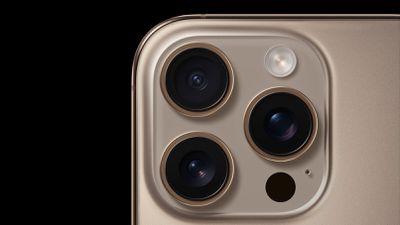
iphone 16 pro rear cameras
Last month, Apple filed a patent titled "Image Sensor With Stacked Pixels Having High Dynamic Range And Low Noise." It described an advanced sensor architecture that combines stacked silicon, multiple levels of light capture, and on-chip noise suppression mechanisms to reach up to 20 stops of dynamic range.

For comparison, the dynamic range of the human eye is estimated to be around 20 to 30 stops, depending on how the pupil adjusts and how light is processed over time. Most smartphone cameras today capture between 10 and 13 stops. If Apple's proposed sensor reaches its potential, it would not only surpass current iPhones but also outperform many professional cinema cameras, such as the ARRI ALEXA 35.

The patent outlined a stacked sensor design made up of two layers. The top layer, called the sensor die, contains the parts that capture light. The layer underneath, the logic die, handles processing, including noise reduction and exposure control.

One of the most important parts of the sensor design is a system called a Lateral Overflow Integration Capacitor (LOFIC). This allows each pixel in the sensor to store different amounts of light depending on how bright the scene is, all in the same image. With this, the sensor can handle extremely wide lighting differences, such as a person standing in front of a bright window, without losing detail in the shadows or highlights.

Another part of the design focuses on reducing image noise and grain. Each pixel has its own built-in memory circuit that measures and cancels out heat-related electronic noise in real time. This is done on the chip itself, before the image is saved or edited by software.

According to the Weibo leaker known as "Fixed Focus Digital," the project is more than merely a patent filing at Apple. The company has reportedly already developed the sensor and could now be testing it in developmental hardware, suggesting that there are plans to bring it to a consumer device in the future.

Currently, Apple uses sensors made by Sony across the iPhone lineup. Those sensors also use a two-layer design, but Apple's proposed version includes several original features and takes up less space. Crucially, Apple transitioning to its own sensors would give it complete control over the image pipeline and follow similar moves away from using hardware from companies like Intel and Qualcomm in favor of its own custom technology.


Popular Stories

iOS 27 Mock Quick

iOS 27 Will Reportedly Be Like Mac OS X Snow Leopard

Sunday March 15, 2026 9:42 am PDT by
In his Power On newsletter today, Bloomberg's Mark Gurman reiterated that iOS 27 will be similar to 2009's Mac OS X Snow Leopard, in the sense that one of Apple's biggest priorities is bug fixes for improved performance and stability. During WWDC 2008's State of the Union, Apple showed a slide that said Mac OS X Snow Leopard had "0 new features," as it opted to focus on performance and...
AirPods Max 2 Feature

Apple Announces AirPods Max 2 With H2 Chip and More

Monday March 16, 2026 6:12 am PDT by
Apple today unveiled AirPods Max 2, with key upgrades including the H2 chip, increased active noise cancellation, improved sound quality, and features such as Adaptive Audio, Conversation Awareness, Voice Isolation, and Live Translation. The new AirPods Max have the same overall design as the previous generation, with most of the new features coming from the upgrade to the H2 chip:- Adaptive ...
Apple Logo Sketch Feature

Apple Unveiled a Surprise New Product Today

Monday March 16, 2026 10:50 am PDT by
Surprise! Apple today unveiled the AirPods Max 2, despite no rumors suggesting that a new version of Apple's over-ear headphones were imminent. Key upgrades compared to the previous AirPods Max include Apple's H2 chip, increased active noise cancellation, improved sound quality, and features such as Adaptive Audio, Conversation Awareness, Voice Isolation, and Live Translation. AirPods Max ...

Top Rated Comments

McWetty Avatar
8 months ago
THIS is the kind of innovation that would make me upgrade my iPhone… not an additional button.
Score: 40 Votes (Like | Disagree)
the future Avatar
8 months ago
If you (correctly) analyze that the cameras are the most important part/function for many/most users of modern smartphones, especially on the high(er) end, it makes all the sense in the world to push research and development in this area. Great to hear that this project may be much further along on the r&d timescale than previously suggested.
Score: 20 Votes (Like | Disagree)
8 months ago
But but but... Apple doesn't innovate anymore (according to the majority here), right?
Score: 13 Votes (Like | Disagree)
8 months ago

That'd be pretty amazing. Far less editing to make photos look as good as they should.
I'll take improvements to optics over improvements to 'computational photography' every damn time.
Score: 12 Votes (Like | Disagree)
8 months ago

So basically they want to cut Sony out to save money, and are making an excuse to try to justify it. Gotcha.

They should be making their own displays. You know, the part that really matters?
Nope... It's much more about giving photographers who use iPhones for making photographs significantly better image quality. Which will sell more iPhones. Since it will be Apple's image sensor, they'll also save money.

It's a very significant competitive advantage.
Score: 11 Votes (Like | Disagree)
Jumpthesnark Avatar
8 months ago
I love the comments about this being a cost-saving measure, as if Apple is developing a rumored new camera sensor because it's cheap.

How does anyone here know this sensor is cheaper? How much is Apple paying Sony for their sensors now? Now compare that to the R&D that Apple would have put into this (rumored) sensor, and tell us how much they will cost to make, plus the costs of engineering new camera modules and writing new software for these (rumored) sensors.

As they say on math tests, show your work. And if you don't actually have facts, it's okay to say you don't know. Let's see if anyone replies with facts.
Score: 9 Votes (Like | Disagree)