Apple will be among several U.S. tech giants to attend a meeting at the White House today to discuss cybersecurity and possible security threats posed by open-source software, Reutersreports.
The meeting will be held by U.S. National Security Advisor Jake Sullivan and will focus on "concerns around the security of open-source software and how it can be improved." The meeting was prompted by concerns around a security vulnerability found in open-source software Log4j.
The vulnerability, which posed a threat to organizations that use Log4j around the world, allowed hackers to control a system and remotely execute malicious code.
According to Sullivan, open-source software such as Log4j presents a "key national security concern" as it is often used and maintained by volunteers. Google, IBM, Meta, Microsoft, and Oracle are also expected to attend the meeting.
Note: Due to the political or social nature of the discussion regarding this topic, the discussion thread is located in our Political News forum. All forum members and site visitors are welcome to read and follow the thread, but posting is limited to forum members with at least 100 posts.
Saturday April 11, 2026 9:14 am PDT by Joe Rossignol
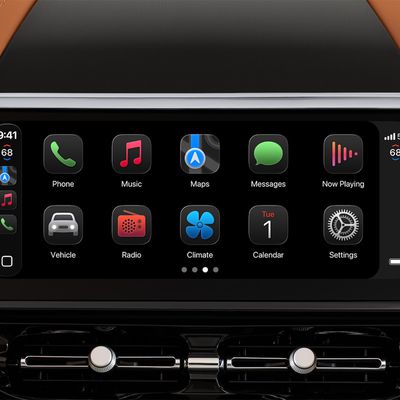
Last year, Apple launched CarPlay Ultra, the long-awaited next-generation version of its CarPlay software system for vehicles. Nearly a year later, CarPlay Ultra is still limited to Aston Martin's latest luxury vehicles, but that should change fairly soon.
In May 2025, Apple said many other vehicle brands planned to offer CarPlay Ultra, including Hyundai, Kia, and Genesis.
CarPlay Ultra...
As we wait for WWDC to kick off next Monday, Apple today announced the winners of its annual Apple Design Awards, recognizing apps and games for their innovation, ingenuity, and technical achievement.
The 2025 Apple Design Award winners are listed below, with one app and one game selected per category:
Delight and Fun - CapWords (App) and Balatro (Game)
Innovation - Play (App) and PBJ -...
Tuesday April 14, 2026 4:39 am PDT by Tim Hardwick
Apple's iPhone development roadmap runs several years into the future and the company is continually working with suppliers on several successive iPhone models at the same time, which is why we often get rumored features months ahead of launch. The iPhone 18 series is no different, and we already have a good idea of what to expect for the iPhone 18 Pro and iPhone 18 Pro Max.
One thing worth...
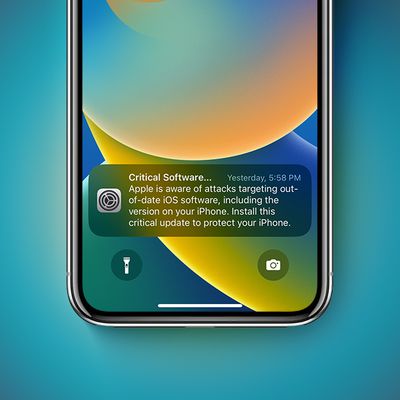
Apple has begun pushing Lock Screen notifications to iPhones and iPads running older versions of iOS and iPadOS, warning users of active web-based attacks.
The alerts, which appear as a "Critical Software" notification from the Settings app, warn that Apple "is aware of attacks targeting out-of-date iOS software, including the version on your iPhone," and urge users to install a critical...
Apple says it has no record of a successful spyware attack against any device running Lockdown Mode, the opt-in security feature it introduced in 2022.
"We are not aware of any successful mercenary spyware attacks against a Lockdown Mode-enabled Apple device," an Apple spokesperson told TechCrunch.
Lockdown Mode is available on the iPhone, iPad, and Mac, and dramatically restricts...
Saturday April 11, 2026 9:14 am PDT by Joe Rossignol
Last year, Apple launched CarPlay Ultra, the long-awaited next-generation version of its CarPlay software system for vehicles. Nearly a year later, CarPlay Ultra is still limited to Aston Martin's latest luxury vehicles, but that should change fairly soon.
In May 2025, Apple said many other vehicle brands planned to offer CarPlay Ultra, including Hyundai, Kia, and Genesis.
CarPlay Ultra...
I'm waiting for all the rabbid open-source fans to tell us open-source is much safer than closed-source.
It's not that simple. open-source CAN be safer, it can also be less safe. In open-source, the exact code is out there for anyone to look at. This means anyone could see any flaws and fix them. It also means that anyone could see any flaws and exploit them.
In closed-source, you can't see the code. It's a much different process to exploit the code. Much harder. There are also less people who have access to the code to fix any flaws. So, flaws will stick around longer.
The issue is more that there are a certain amount of core libs that everyone has in their builds. I think now its the Wild West because its no one person/ orgs job to check any of these libs or certify them. … We are leaving for too many core components to be looked after by people for free with no incentive to make sure everything is ok.
The entire Linux community is open source, and yet this is a much more secure platform than Windows has been. And Mac OS and their browsers have heavily benefited from the give and take between Unix and Linux (macOS building on a Unix rather than Linux kernel )
I am almost certain that there have been more security faults in proprietary systems than well maintained open source projects, because the drive behind open source is a more idealistic than the industries “quick to market / milk them all”
With that being said, especially when it comes to web development and the package repositories I see there, I am more doubtful and careful with using and relying on them. I feel it often moves too fast and the community has a different background than e.g. hardcore Linux developers.
I'm waiting for all the rabbit open-source fans to tell us open-source is much safer than closed-source.
It's not that simple. open-source CAN be safer, it can also be less safe. In open-source, the exact code is out there for anyone to look. This means anyone could see any flaws and fix them. It also means that anyone could see any flaws and exploit them.
In closed-source, you can't see the code. It's a much different process to exploit the code. Much harder. There are also less people who have access to the code to fix any flaws. So, flaws will stick around longer.
It's not simple.
Not a rabid open sores fan at all (except back in my teenage years when I went through a rebellious Linux phase ugh), but obscurity does not imply security.