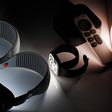
Apple's augmented reality headset will enter mass production in the second quarter of next year, with a launch expected between the third and fourth quarter of 2022, according to a translated report from the Taiwanese version of DigiTimes.
In June, Apple analyst Ming-Chi Kuooffered a similar timeline for Apple's AR headset, reporting it will launch sometime between April and June of next year. According to today's report, Apple's AR headset has completed its second phase of prototype testing, inching closer to being ready for primetime mass production.
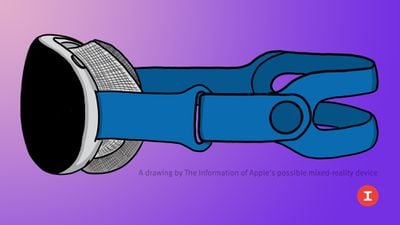
The first iteration of Apple's AR headset may be a bit bulky in design, similar to the Oculus Rift headset, but a sleeker pair of "Apple Glasses" could launch a few years later. In recent years, Apple has been building up its AR platform, rolling out several AR-centric features on iOS and iPadOS, possibly paving the way for the "Apple Glasses."
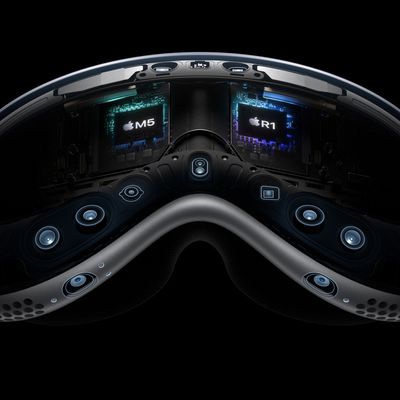
Apple's AR headset isn't expected to be cheap in price, at least at the start. One report says that it will feature at least 15 camera modules, feature eye-tracking, possibly iris recognition, and could cost between $2,000 and $3,000.
Monday September 28, 2026 3:52 am PDT by Tim Hardwick
Apple is working on a "completely revamped" Vision Pro headset that could go in any of four directions and likely won't arrive before late 2028 or early 2029, according to Bloomberg's Mark Gurman.
Writing in his latest Power On newsletter, Gurman said Apple's Vision team is exploring four concepts for the device, codenamed N224, including designs that offload internal components in a similar ...
Thursday September 17, 2026 12:01 am PDT by Joe Rossignol
Apple has agreed to pay Samsung even higher prices for RAM and storage chips starting in the first quarter of 2027, according to a DigiTimes report this week citing an earlier report from Chinese publication Jiemian News.
Apple has reportedly agreed to pay nearly $2 per Gb of DRAM and $0.33 per Gb of NAND storage. This is a 30% to 40% increase in pricing for these chips compared to what...
Wednesday September 16, 2026 10:12 am PDT by Juli Clover
Alongside new betas of iOS 27.2, iPadOS 27.2, and macOS Golden Gate 27.2, Apple has released the first betas of watchOS 27.2, tvOS 27.2, and visionOS 27.2. The betas come two days after the 27.0 software updates were released.
Registered developers can download the betas through the Settings app on each device.
Two new Apple Intelligence features are coming to the Apple Watch Series 12...
Why? Apple isn’t a game developing company and they can barely keep Arcade alive with games from 10 years ago. What are you possibly going to do with it … measure your 40 Euro IKEA table with a 2k device? AR is a gimmick to me trying to fix an issue that doesn’t exist to simply exist itself. How often are you using the LIDAR scanner on your iPhone / iPad?
LOL! Who would buy it? Gamers certainly have plenty of other less expensive options. It's already been demonstrated that both VR and AR goggles are a niche market at best, and that most people (currently) have no need for them. What would the average user do with a $2000 set of Apple goggles? See what an Ikea table would look like in their dining room? I don't think so. Apple would have to turn their reality distortion field up to 11 in order to convince people that this is something they need.
Apple's first foldable iPhone, with a book-style design featuring a 5.4-inch outer display and a 7.6-inch inner display with a minimal crease down the middle.




/https://forums.macrumors.com/attachments/1840043/)