Apple Began Preparing for AirTag Regulatory Approval Nearly Two Years Ago

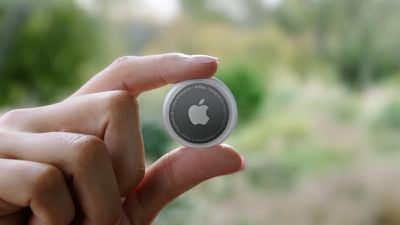
FCC filings for Apple's newly released AirTags have revealed that the Cupertino tech giant began regulatory testing and preparing to seek regulatory approval for the product nearly two years before they were officially announced.
f1618938547
A series of documents submitted to the Federal Communications Commission indicate that AirTag underwent testing for official certification between July and November of 2019. Despite testing being conducted in mid-2019, official reports for regulatory certification were only issued in September and October of last year.

Like all consumer products, Apple devices must undergo extensive and rigorous testing with the FCC in the United States and regulatory agencies of countries where the device will be sold before they can reach the market. What makes this case particularly interesting is that AirTags were the subject of rumors for a full two years, with a launch seemingly imminent for much of that time.

With the FCC filings indicating that AirTags were far enough along that they were undergoing regulatory testing in 2019, it suggests that Apple may indeed have pushed back the AirTags launch by as much as a year. While the exact reasoning behind Apple's delay for AirTags remains a point of mystery, an educated guess could be that the company wanted to build out its Find My network before its launch to avoid accusations of anti-competitive behavior.

As AirTags were rumored to be in development, Tile, which creates a line of similar item trackers, began to ring the alarm bells that certain features in iOS would make it harder to compete with the eventual Apple item tracker. At the time, companies such as Tile had no real platform or network on Apple devices that would render their item trackers mainstream or particularly easy to use compared to an Apple-made accessory.

That all changed earlier this month when Apple announced it's opening up the Find My network to third-party accessory makers. ‌AirTag‌ is built off of the ‌Find My‌ network that consists of more than a billion Apple devices that use encrypted signals to crowdsource the location of other ‌Find My‌ compatible devices and items.

By opening up the network to third-party companies ahead of the launch of AirTags, Apple may have felt it would be avoiding scrutiny and anti-competitive accusations given that its own item tracker would no longer have an advantage on Apple devices compared to those made by other companies.

Tile doesn't use Apple's ‌Find My‌ ecosystem, and it's unclear if the company plans to adopt the network in the future. Others, however, such as Belkin, VanMoof, and Chipolo, have announced plans to adopt the ‌Find My‌ network for their own products, including wireless earbuds, bikes, and an item tracker, respectively.

Apple's own AirTags became available for pre-order earlier today and will begin arriving to customers on April 30.
Related Roundup: AirTag

Popular Stories

maxresdefault

Apple Shows Off a Key Reason to Upgrade to the iPhone 17

Saturday February 7, 2026 9:26 am PST by
Apple today shared an ad that shows how the upgraded Center Stage front camera on the latest iPhones improves the process of taking a group selfie. "Watch how the new front facing camera on iPhone 17 Pro takes group selfies that automatically expand and rotate as more people come into frame," says Apple. While the ad is focused on the iPhone 17 Pro and iPhone 17 Pro Max, the regular iPhone...
Finder Siri Feature

Why Apple's iOS 26.4 Siri Upgrade Will Be Bigger Than Originally Promised

Friday February 6, 2026 3:06 pm PST by
In the iOS 26.4 update that's coming this spring, Apple will introduce a new version of Siri that's going to overhaul how we interact with the personal assistant and what it's able to do. The iOS 26.4 version of Siri won't work like ChatGPT or Claude, but it will rely on large language models (LLMs) and has been updated from the ground up. Upgraded Architecture The next-generation...
wwdc sans text feature

Apple Rumored to Announce New Product on February 19

Thursday February 5, 2026 12:22 pm PST by
Apple plans to announce the iPhone 17e on Thursday, February 19, according to Macwelt, the German equivalent of Macworld. The report, citing industry sources, is available in English on Macworld. Apple announced the iPhone 16e on Wednesday, February 19 last year, so the iPhone 17e would be unveiled exactly one year later if this rumor is accurate. It is quite uncommon for Apple to unveil...
apple wallet drivers license feature iPhone 15 pro

Apple Says These 7 U.S. States Plan to Offer iPhone Driver's Licenses

Monday February 9, 2026 6:24 am PST by
In select U.S. states, residents can add their driver's license or state ID to the Apple Wallet app on the iPhone and Apple Watch, and then use it to display proof of identity or age at select airports and businesses, and in select apps. The feature is currently available in 13 U.S. states and Puerto Rico, and it is expected to launch in at least seven more in the future. To set up the...
14 inch MacBook Pro Keyboard

New MacBook Pros Could Now Arrive in March

Sunday February 8, 2026 6:02 am PST by
New MacBook Pro models with the M5 Pro and M5 Max chips could arrive as soon as Monday, March 2, according to Bloomberg's Mark Gurman. In today's "Power On" newsletter, Gurman said that the release of new MacBook Pro models is tied to the release of macOS Tahoe 26.3. The launch is said to be slated for as early as the week of March 2. He added that the M4 Pro and M4 Max models on sale today...

Top Rated Comments

JPack Avatar
63 months ago
An AirTags launch in 2020? At the start of the pandemic?

It should be pretty obvious why Apple didn't launch it last year and took the time to continue development. Not many people worried about losing their keys or backpack in 2020.
Score: 16 Votes (Like | Disagree)
countryside Avatar
63 months ago
Apple spent years crafting these magnificent AirTags... a product that will create a whole new tech industry/ecosystem. They did it right. They created jobs due to the 3rd party market.

On the flip side, I bet Samsung spent a week on R&D after they heard rumors of Apple's plans... then put their crappy product out right before Apple. Shame on you!
Score: 15 Votes (Like | Disagree)
WiseAJ Avatar
63 months ago

One of the items is that to use the Find My network, the device can't use any similar network, such as the one Tile already created. They would have to abandon their own network, and thus all of their Android users.
They don't have to abandon their network. Just any device that is connected to Find My can't be connected to any other network. Chipolo still has their own network and are still selling other devices accessing that network. They just created a new tag specifically for Find My integration that is only for Find My so they can still get sales from the iOS customers who would prefer that option. Tile can do the same but they insist on extorting every single one of their customers to get them signed up for a overpriced subscription service that's equivalent to highway robbery.
Score: 11 Votes (Like | Disagree)
jav6454 Avatar
63 months ago
Tile needs to quit whining and use the tools available to them. I mean, they now have access to the Find My network. Where as before they depended on other Tile users. They can simply try to merge those and eek out an advantage.
Score: 10 Votes (Like | Disagree)
frenchcamp49er Avatar
63 months ago

Tile needs to quit whining and use the tools available to them. I mean, they now have access to the Find My network. Where as before they depended on other Tile users. They can simply try to merge those and eek out an advantage.
Yep Tile shouldn't be whining, Tiles is also developing an ultra wide band version. They argument is full of holes. Why don't they complain about Samsung and all the other personal trackers out there.
Score: 9 Votes (Like | Disagree)
TheRealTVGuy Avatar
63 months ago

The Find My network has a 50 page terms and conditions which is under NDA, but it leaked to the Washington Post.

One of the items is that to use the Find My network, the device can't use any similar network, such as the one Tile already created. They would have to abandon their own network, and thus all of their Android users.

This is exactly why Apple is under anti-trust investigation.

Apple as a developer has created an OS level tool for finding items--it requires no app installation, like Tile does. Tile can't build system level tracking that goes out with every iPhone. But every iPhone Apple sells will help others' track Find My items. But no other developer can do that. No one gets that access but through Apple, and then Apple tells them they can't have any other tracking system, which means they have to give up what they built and abandon their Android customers.

Apple is using its dominance in one field to squash out competition in another. If they let Tile keep their own network and use Find My it would be different, or if Apple made Find My a cross platform feature so that it worked on Android too it might be different. But it seems like it's just one more way to get licensing fees (for Find My products) and to keep users in the iOS ecosystem.
But would having a device able to access two networks make the device less secure? For instance, some entrepreneurial hacker decides to use the Tile network to bridge over to the Find My network and start pulling location & other data.
Score: 8 Votes (Like | Disagree)