Apple Could Ban Apps That Don't Follow iOS 14 Anti-Tracking Rules, Says Software Chief Craig Federighi
Apple's software engineering chief Craig Federighi has warned developers to "play by the rules" as they relate to Apple's upcoming anti-tracking policy for iOS 14, or their apps could be removed from the App Store.
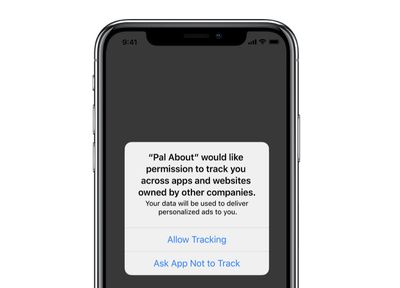
Starting early next year, iOS 14 will require apps to get opt-in permission from users to collect their random advertising identifier, which advertisers use to deliver personalized ads and track how effective their campaigns were. While it was originally supposed to arrive with iOS 14 earlier this year, Apple postponed the feature until early 2021 to give developers more time to accommodate it.
Major app developers and ad networks like Facebook have since spoken out against the feature, claiming that Apple's anti-tracking efforts are anticompetitive and will impact small businesses. Apple says that it is concerned about users being tracked without their consent and having their data bundled and resold by advertising networks. Tracking across apps and websites owned by multiple companies and data sold by data brokers can be "invasive and "creepy," according to Apple.
Although Apple has delayed introduction of the new policy, all apps will be expected to abide by Apple's App Tracking Transparency Rules once they come into effect. Speaking to The Telegraph, Federighi said:
"There will be policy enforcement. Any form or mechanism of tracking a user for advertising or for providing information to data brokers will have to ask for permissions. Failure to do so is a violation of App Store policy… and are grounds for having an app removed."
Federighi also emphasized that Apple expects advertisers to adapt to the change, and suggested that social media platforms had no choice but to conform to the new policy: "The largest players understand they have to play by the rules here," he told The Telegraph, adding that despite inevitable "spirited debate," he believed they would work to find a solution.
Popular Stories
Apple is planning to debut a high-end secondary version of AirPods Pro 3 this year, sitting in the lineup alongside the current model, reports suggest.

Back in September 2025, supply chain analyst Ming-Chi Kuo reported that Apple is planning to introduce a successor to the AirPods Pro 3 in 2026. This would be somewhat unusual since Apple normally waits around three years to make major...
Over the last few months, rumors around the iPhone 18 Pro's front-panel design have been conflicted, with some supply-chain leaks pointing to under-display Face ID, reports suggesting a top-left hole-punch camera, and debate over whether the familiar Dynamic Island will shrink, shift, or disappear entirely.
Today, Weibo-based leaker Instant Digital shared new details that appear to clarify the ...
iOS 27 is still many months away, but there are already plenty of rumors about new features that will be included in the software update.
The first beta of iOS 27 will be released during WWDC 2026 in June, and the update should be released to all users with a compatible iPhone in September.
Bloomberg's Mark Gurman said that iOS 27 will be similar to Mac OS X Snow Leopard, in the sense...
MacBook Pro availability is tightening on Apple's online store, with select configurations facing up to a two-month delivery timeframe in the United States.
A few 14-inch and 16-inch MacBook Pro configurations with an M4 Pro chip are not facing any shipping delay, but estimated delivery dates for many configurations with an M4 Max chip range from February 6 to February 24 or even later. At...
In addition to updating many of its existing products, Apple is expected to unveil five all-new products this year, including a smart home hub, a Face ID doorbell, a MacBook with an A18 Pro chip, a foldable iPhone, and augmented reality glasses.
Below, we have recapped rumored features for each product.
Smart Home Hub
Apple home hub (concept)
Apple's long-rumored smart home hub should...