Apple today seeded the third betas of upcoming iOS and iPadOS 13.3 updates to developers, one week after seeding second betas and three weeks after the release of iOS 13.2 and iPadOS 13.2 with new emoji, Siri privacy controls, Deep Fusion, and more.
iOS and iPadOS 13.3 can be downloaded through the Apple Developer Center or over the air after the proper developer profile has been installed.
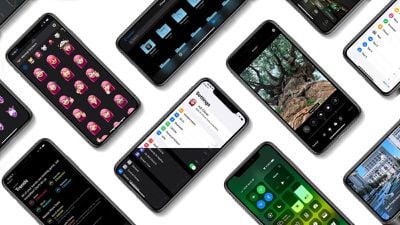
iOS 13.3 introduces Communication Limits for Screen Time, a feature that Apple promised would be coming in an iOS 13 update. Communication Limits allow parents to control who their children are able to contact both during downtime and during Screen Time.
Communication Limits include FaceTime, Phone, and Messages, along with iCloud contacts. Calls to emergency numbers are always allowed and will turn off communication limits for 24 hours when placed.
The update includes support for NFC, USB, and Lightning FIDO2-compliant security keys in Safari. That means physical security keys like the Lightning-equipped YubiKey can be used for more secure two-factor authentication in place of a software-based two-factor authentication option.
In the Keyboards section of the Settings app (under General), there's a new toggle that prevents Animoji and Memoji stickers from being displayed as an option on the Emoji Keyboard, and when editing a video, there's an option to save the edited version as a new clip rather than saving over the original.
Apple has also tweaked the Apple Watch app icon, changing the color of the Digital Crown from black to gray.

Tuesday February 10, 2026 4:27 pm PST by Juli Clover
Apple is planning to launch new MacBook Pro models as soon as early March, but if you can, this is one generation you should skip because there's something much better in the works.
We're waiting on 14-inch and 16-inch MacBook Pro models with M5 Pro and M5 Max chips, with few changes other than the processor upgrade. There won't be any tweaks to the design or the display, but later this...
Wednesday February 11, 2026 10:07 am PST by Juli Clover
Apple today released iOS 26.3 and iPadOS 26.3, the latest updates to the iOS 26 and iPadOS 26 operating systems that came out in September. The new software comes almost two months after Apple released iOS 26.2 and iPadOS 26.2.
The new software can be downloaded on eligible iPhones and iPads over-the-air by going to Settings > General > Software Update.
According to Apple's release notes, ...
Thursday February 12, 2026 11:17 am PST by Joe Rossignol
Apple plans to release an iPhone 17e and an iPad Air with an M4 chip "in the coming weeks," according to the latest word from Bloomberg's Mark Gurman.
"Apple retail employees say that inventory of the iPhone 16e has basically dried out and the iPad Air is seeing shortages as well," said Gurman. "I've been expecting new versions of both (iPhone 17e and M4 iPad Air) in the coming weeks."...
Wednesday February 11, 2026 3:36 am PST by Tim Hardwick
The MacBook Air is Apple's most popular laptop – a thin, fanless machine that wields quiet power thanks to the efficiency of Apple silicon. While the M4 model isn't exactly old, attention is already turning to its successor.
Apple doesn't telegraph new product launches ahead of time, but we can draw a surprisingly clear picture of what to expect by looking at Apple's silicon roadmap,...
Tuesday February 10, 2026 1:51 pm PST by Joe Rossignol
Apple plans to announce the iPhone 17e on Thursday, February 19, according to Macwelt, the German equivalent of Macworld.
The report said the iPhone 17e will be announced in a press release on the Apple Newsroom website, so do not expect an event for this device specifically.

The iPhone 17e will be a spec-bumped successor to the iPhone 16e. Rumors claim the device will have four key...

Why do you have to type in your iPhone password when starting the software update? I mean, isn't FaceID secure enough???
Apple explains this in their security white paper:
In the case of an Over-The-Air (OTA) software update, the user is prompted for their passcode when initiating the update. This is used to securely create a one-time Unlock Token, which unlocks the user keybag after the update. This token can’t be generated without entering the user’s passcode, and any previously generated token is invalidated if the user’s passcode changed.
There's more details there, if you're curious. Look for Escrow keybag. I pulled the text from the iOS 12.3 white paper. If there's one for 13 I haven't seen it yet.
so after all the fuss about animoji & memoji and emojis, someone came to their senses over there and now we can turn the whole bloody show off via a keyboard toggle. Thank goodness. Granted a couple of the emoji are useful (red dot, green check etc) but it has become so overwhelming that I never wanted to open up that Pandora's box anymore.
Why do you have to type in your iPhone password when starting the software update? I mean, isn't FaceID secure enough???
FaceID can handle 2 faces. Let's say I decide to give my child one of those slots so they can play on my phone. Do I really want a 5 year old deciding to install an update? Probably not. Or the other face belongs to my wife. Again, I wouldn't want her to install an update on my phone without my knowledge.
My boys are actually 17 and 22 and have their own devices and I don't let ANYONE else into my phone. But it's a possibility that ought to be considered. Especially with the older TouchID system where you could in theory have 4 other people who could unlock your phone.
The other explanation I've heard is that your passcode is your security. FaceID is a quick and easy way to bypass that security. It's a biometric convenience, not the actual security itself. Which is why you need to enter your passcode after a reboot or when doing something as important as updating the entire OS.
There's some (possibly) lame excuses that may or may not satisfy your curiosity. Honestly, it's a question I've asked myself and I all I could come up with was "extra security". Like asking "Are you sure?" before deleting a file.