When Dark Mode was marketed as a headline feature in iOS 13, Apple promoted it as an alternative new look that was easier on the eyes when viewed in dark environments. Oddly though, Apple never mentioned that it also potentially offers energy-saving benefits – particularly for OLED iPhones, since pixels on an OLED panel are individually powered and true black pixels remain inactive.
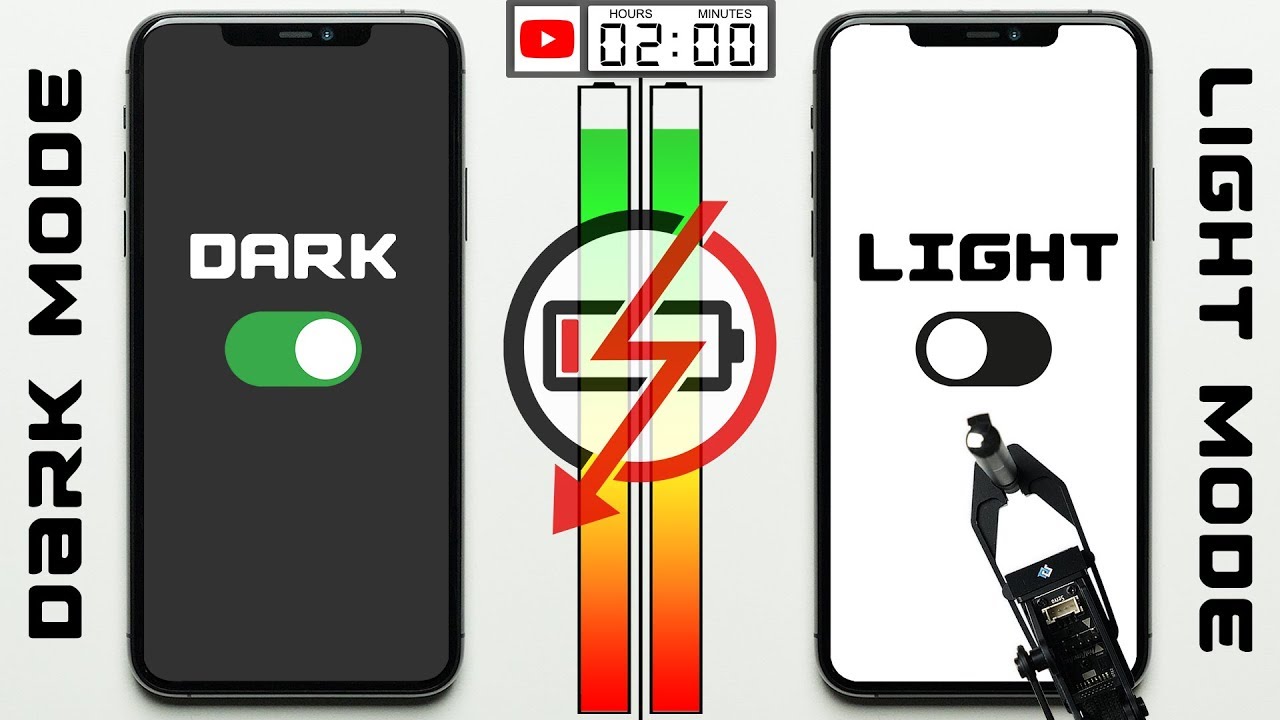

That potential battery saving has now been put to the test. In an experiment shared on YouTube, PhoneBuff used robotic arms to interact with two fully charged iPhones running iOS 13, with one running in Dark Mode and the other in Light mode. The robots worked their way through various native and third-party apps, all of which support both iOS display modes, until the iPhones died.
The results are pretty conclusive: The test found that an iPhone XS Max using Dark Mode uses up significantly less battery than an iPhone XS Max using Light Mode. When the Light Mode-enabled iPhone XS Max died, the Dark Mode iPhone XS Max still had 30 percent battery life remaining.
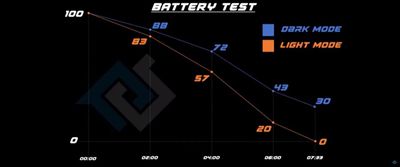
PhoneBuff notes one important variable in his test that conditioned the results: The iPhones both had their displays set to 200 nits brightness. At 100 nits, which is what you'd expect indoors, two hours on Twitter saved just 5 percent more battery in Dark Mode. The same test performed at 300 nits, which is closer to outdoors use, saw Dark Mode save 12 percent battery.
Either way, the test appears to prove that Dark Mode is a significant battery saver for OLED iPhones, which include the iPhone X, iPhone XS, and iPhone 11 Pro, but not the iPhone XR or iPhone 11. You can watch the video embedded above for the full lowdown.