macOS High Sierra 10.13.4 Displays Warnings When Opening 32-Bit Apps as Part of Apple's Phase Out Plan

Starting with macOS High Sierra 10.13.4, Apple is commencing with its plan to begin phasing out 32-bit apps on Macs. Apple has promised that macOS High Sierra will be the "last macOS release to support 32-bit apps without compromises."

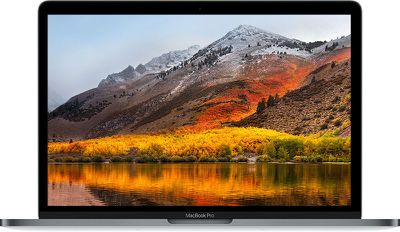
After installing macOS High Sierra 10.13.4, which is now available in a beta testing capacity, when you open up an app that's a 32-bit app, you'll get a warning about its future incompatibility with the macOS operating system.
macoshighsierra
This is the first of many warnings Apple plans to provide as it works to put an end to 32-bit Mac apps, and this initial warning will only be shown one time for each app.

Apple's efforts to phase out 32-bit apps on Macs mirror the path it took when ending 32-bit app support on iOS devices. In iOS 10, Apple provided increasingly more insistent warnings to let users know that their apps wouldn't work with future versions of iOS before phasing out 32-bit support entirely in iOS 11.

As of January 2018, all new apps submitted to the Mac App Store must be 64-bit, and all apps and app updates submitted must be 64-bit by June of 2018. The next version of macOS after High Sierra will include "aggressive" warnings about 32-bit apps before they are phased out entirely.

Once 32-bit apps are phased out on Macs, they won't be able to be used at all, so users will need to find replacements for older 32-bit apps that aren't likely to be updated to 64-bit.

Related Forum: macOS High Sierra

Popular Stories

top stories 2025 12 20

Top Stories: iOS 26.3 Beta, Major Apple Leaks, and More

Saturday December 20, 2025 6:00 am PST by
You'd think things would be slowing down heading into the holidays, but this week saw a whirlwind of Apple leaks and rumors while Apple started its next cycle of betas following last week's release of iOS 26.2 and related updates. This week also saw the release of a new Apple Music integration with ChatGPT, so read on below for all the details on this week's biggest stories! Top Stories i...
maxresdefault

Where's the New Apple TV?

Monday December 22, 2025 11:30 am PST by
Apple hasn't updated the Apple TV 4K since 2022, and 2025 was supposed to be the year that we got a refresh. There were rumors suggesting Apple would release the new Apple TV before the end of 2025, but it looks like that's not going to happen now. Subscribe to the MacRumors YouTube channel for more videos. Bloomberg's Mark Gurman said several times across 2024 and 2025 that Apple would...
iPhone Top Left Hole Punch Face ID Feature Purple

iPhone 18 Pro Features Leaked in New Report, Including Under-Screen Face ID

Tuesday December 16, 2025 8:44 am PST by
Next year's iPhone 18 Pro and iPhone 18 Pro Max will be equipped with under-screen Face ID, and the front camera will be moved to the top-left corner of the screen, according to a new report from The Information's Wayne Ma and Qianer Liu. As a result of these changes, the report said the iPhone 18 Pro models will not have a pill-shaped Dynamic Island cutout at the top of the screen....
ios 18 security update

Don't Want to Upgrade to iOS 26? Here's How to Stay on iOS 18 [Update: Now Unavailable]

Friday December 19, 2025 10:37 am PST by
Since the beginning of December, Apple has been pushing iPhone users who opted to stay on iOS 18 to install iOS 26 instead. Apple started by making the iOS 18 upgrades less visible, and has now transitioned to making new iOS 18 updates unavailable on any device capable of running iOS 26. If you have an iPhone 11 or later, Apple is no longer offering new versions of iOS 18, even though there...
iOS 26

iOS 26.3 Brings AirPods-Like Pairing to Third-Party Devices in EU Under DMA

Monday December 22, 2025 3:20 pm PST by
The European Commission today praised the interoperability changes that Apple is introducing in iOS 26.3, once again crediting the Digital Markets Act (DMA) with bringing "new opportunities" to European users and developers. The Digital Markets Act requires Apple to provide third-party accessories with the same capabilities and access to device features that Apple's own products get. In iOS...
iPhone Chips

Apple Clings to Samsung as RAM Prices Soar

Monday December 22, 2025 6:17 am PST by
Apple is significantly increasing its reliance on Samsung for iPhone memory as component prices surge, according to The Korea Economic Daily. Apple is said to be expanding the share of iPhone memory it sources from Samsung due to rapidly rising memory prices. The shift is expected to result in Samsung supplying roughly 60% to 70% of the low-power DRAM used in the iPhone 17, compared with a...
apple beta 26 lineup

Apple's 2026 and 2027 Product Roadmap: Foldable iPhone, iPhone 18 Pro, M5 Macs, and More

Tuesday December 16, 2025 4:42 pm PST by
There has been a whirlwind of rumors over the last few days, sourced from leaked internal software designed for the iPhone and the Mac, and news sites like The Information. Below, we have a quick recap of everything we've heard this week, which serves as a guide to Apple's product plans in 2026 and beyond. We've organized the info by likely release date, though there are some products that...

Top Rated Comments

casperes1996 Avatar
103 months ago
The CPU has NO PROBLEM executing 32-bit code, and there isn't even a performance hit in doing so. There's no real solid reason to discontinue 32-bit support. This is going to keep people who requires certain older apps from upgrading to the latest version of MacOS, and expose them to security vulnerabilities for no good reason at all.
Running 32-bit code, means that you need to keep a 32-bit version of all the libraries and frameworks those apps may rely on. That's both storage, and more crucially RAM consuming. And there is in fact a performance hit to having 32-bit and 64-bit apps running on the same system, as opposed to if both were 64-bit. If they are both 64-bits they can share certain conditions giving the processor an ability to preemtptively execute that code more quickly.

32-bit support isn't free either. You need to test against your 32-bit libraries and if you update a 64-bit library for a security reason, you'll also need to update and test the corresponding 32-bit library. And it may behave differently.

Nvidia has stopped supporting 32-bit systems because the testing burden just got too big. A lot of Linux distros are killing 32-bit variants as well.

It's not worth the effort anymore.

Edited slightly to fix a typo and improve readability
Score: 47 Votes (Like | Disagree)
zorinlynx Avatar
103 months ago
I wonder why Apple has such a fetish for phasing out 32-bit code.

The CPU has NO PROBLEM executing 32-bit code, and there isn't even a performance hit in doing so. There's no real solid reason to discontinue 32-bit support. This is going to keep people who requires certain older apps from upgrading to the latest version of MacOS, and expose them to security vulnerabilities for no good reason at all.
Score: 39 Votes (Like | Disagree)
pgiguere1 Avatar
103 months ago
I wonder why Apple has such a fetish for phasing out 32-bit code.

The CPU has NO PROBLEM executing 32-bit code, and there isn't even a performance hit in doing so. There's no real solid reason to discontinue 32-bit support. This is going to keep people who requires certain older apps from upgrading to the latest version of MacOS, and expose them to security vulnerabilities for no good reason at all.
The performance hit comes from the OS having to keep both a 32-bit and 64-bit version of shared libraries in RAM.
Score: 14 Votes (Like | Disagree)
keysofanxiety Avatar
103 months ago
I wonder why Apple has such a fetish for phasing out 32-bit code.

The CPU has NO PROBLEM executing 32-bit code, and there isn't even a performance hit in doing so. There's no real solid reason to discontinue 32-bit support. This is going to keep people who requires certain older apps from upgrading to the latest version of MacOS, and expose them to security vulnerabilities for no good reason at all.
People said the same thing when they went from 16 bit to 32 bit. Honestly, they did. Stubbornness for change is just slowing down progress. Just look at the cluster that is Windows which still rocks Program Files x86 for legacy purposes.

Apple have always been happy to drop older standards. 32 bit is only the latest in a long list. They did this in iOS and they’ve already dropped 32 bit support/plug-ins years ago for their Pro Apps (LPX), so this shouldn’t come as much surprise.
Score: 9 Votes (Like | Disagree)
Guy Clark Avatar
103 months ago
Thankfully Apple has kept 32-bit support for longer on MacOS so fewer apps are affected, but I can still see users refusing to update to the next MacOS because their useful older software is going to break.
Just keep using Snow Leopard complete 32-bit support and Rosetta for PPC apps plus pre iOS infestation.
Score: 9 Votes (Like | Disagree)
arrowood Avatar
103 months ago


;-) Ok, ok, yeah. I get it. 32-bit overhead, memory, libraries, etc. But, but, I can't live without Adobe Fireworks ;-)
Score: 8 Votes (Like | Disagree)