Apple and Broadcom have jointly filed counterclaims against the California Institute of Technology in an ongoing Wi-Fi-related lawsuit, denying any alleged infringement of the technologies and urging the court to invalidate the asserted patents, according to court documents filed electronically this week.

Caltech-Wi-Fi
Apple argued that Caltech did not file the lawsuit until May 26, 2016, more than six years after the publication of the 802.11n wireless standard, and thereby the time limit to collect damages has passed under U.S. law. It also argued that Caltech does not make, use, or sell any product that practices any claim of the asserted patents.

Caltech's patents, granted between 2006 and 2012, are highly technical and relate to IRA codes that utilize simpler encoding and decoding circuitry for improved data transmission rates and performance. The technologies are implemented in both the 802.11n and 802.11ac Wi-Fi standards used by many Apple products.

The asserted patents include U.S. Patent No. 7,116,710, U.S. Patent No. 7,421,032, U.S. Patent No. 7,916,781, and U.S. Patent No. 8,284,833.

In a May 2016 court filing with the U.S. District Court for Central California, Caltech accused Apple of selling various Mac, iPhone, iPad, and Apple Watch models, along with other Wi-Fi products, that incorporate those IRA/LDPC encoders and/or decoders and thereby infringe upon the four asserted patents in question.

Apple provided a series of other defenses, including Caltech's failure to disclose prior art, which is any information or evidence that might be relevant to a patent's claims of originality, with the U.S. Patent and Trademark Office. In this case, Apple said Repeat-Accumulate codes ("RA codes") were well known prior to IRA codes.

Apple and Broadcom, one of the company's main suppliers of Wi-Fi chips for select MacBook Air, MacBook Pro, iMac, iPhone, iPad, and Apple Watch models, have demanded a jury trial in the lawsuit. The case is officially titled "California Institute of Technology v. Broadcom Limited et al" on the docket.
iOS-9-Siri

Apple Settles With Dot 23 Technologies

Dot 23 Technologies, LLC has filed a motion to dismiss a patent lawsuit against Apple with the U.S. District Court for Eastern Texas. The two companies have agreed to settle out of court, but the specific terms of their agreement have not been publicized.

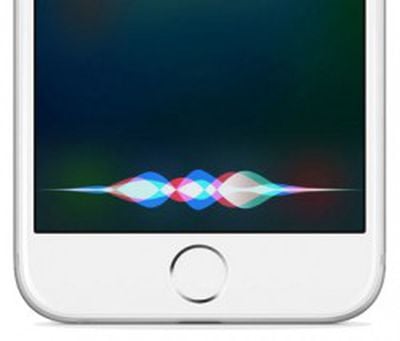
Dot 23, a Texas-based entity that generally fits the description of a "patent troll," filed suit against Apple in January, claiming that Siri on iPhone and iPad violated a trio of its patents related to voice dialing and recognition. The firm was seeking damages of an unspecified amount plus interest and fees in the case.


Top Rated Comments

124 months ago
MUST...DEFEND...APPLE...
MUST ...NOT...UNDERSTAND what is going on.
Score: 10 Votes (Like | Disagree)
124 months ago
MUST...DEFEND...APPLE...
He asked a legitimate question... to which you don't have a legitimate reply. In reality, we don't have enough facts to determine who is or is not guilty. Yet, you seem hell bent on convicting Apple without knowing what you're talking about.
Score: 5 Votes (Like | Disagree)
124 months ago
I understand some of the patent lawsuits has a legitimate claim or at least more convincing in certain situations. But what I don't understand is that when I buy components to assemble my product, I'm not supposed to be liable for anything. My payment for that component should have already covered any current or future claim toward such intellectual property. If I decided to put my own gps navigation in my car. Then I bought a monitor and gps chips and the software and the computer to power the device. I shouldn't be paying anymore if the manufacturer already paid to manufacture the components I needed. Just my 2 cents.
Score: 3 Votes (Like | Disagree)
Gasu E. Avatar
124 months ago
The lawsuit included Apple and their supplier, Broadcom.

If you buy stolen property, the police can take it away without paying you.
Actually, by the same token, if you bought the end product ("iPhone") from Apple, then you stole the technology in turn, making you equally liable.

The only reason Caltech is not going after you is that you don't have Apple's deep pockets. But you are as guilty as Apple, just too insignificant to be worth anyone's bother.
[doublepost=1470249241][/doublepost]
MUST...DEFEND...APPLE...
Do you have one of those iPhones? Then you received stolen goods. You really should turn yourself in.
Score: 2 Votes (Like | Disagree)
124 months ago
You do realize apple had nothing to do with that wifi tech, right? That technology is used by brodcom maker of wifi chips for the iphone and other devices, right?
Those is just yet another case of Apple stealing someone else's innovation and refusing to pay.
Score: 2 Votes (Like | Disagree)
124 months ago
Those is just yet another case of Apple stealing someone else's innovation and refusing to pay.
What did they steal exactly?

There's nothing in either cases to confirm anything. In the first case, Apple bought the components from Broadcom and put it in their devices. Apple does not produce its own Wi-Fi chips in any form. In this specific case, it would be Broadcom's stealing someone one else's innovation and shipping it to Apple. Unfortunately, in US, you can still be charged for infringing even if you had no awareness of the infringing parts in the components you buy. You won't be found "willingly infringing" but you will expect to pay some small fines.

As for the other case, a settlement doesn't mean anything in terms of someone's being guilty. In many cases, it may be cheaper to just settle a case even if you're not guilty and even if you think the patents are invalid. Courts are expensive, they often go into tens of millions of dollars if they drag on for too long. For patents that are not even worth it, it's better to settle and get a license that's a fraction of the lawsuit costs.
Score: 2 Votes (Like | Disagree)

Popular Stories

m5 macbook pro deal

Why You Shouldn't Buy the Next MacBook Pro

Tuesday February 10, 2026 4:27 pm PST by
Apple is planning to launch new MacBook Pro models as soon as early March, but if you can, this is one generation you should skip because there's something much better in the works. We're waiting on 14-inch and 16-inch MacBook Pro models with M5 Pro and M5 Max chips, with few changes other than the processor upgrade. There won't be any tweaks to the design or the display, but later this...
iOS 26

Apple Releases iOS 26.3 and iPadOS 26.3

Wednesday February 11, 2026 10:07 am PST by
Apple today released iOS 26.3 and iPadOS 26.3, the latest updates to the iOS 26 and iPadOS 26 operating systems that came out in September. The new software comes almost two months after Apple released iOS 26.2 and iPadOS 26.2. The new software can be downloaded on eligible iPhones and iPads over-the-air by going to Settings > General > Software Update. According to Apple's release notes, ...
Apple Logo Zoomed

Apple Expected to Launch These 10+ Products Over the Coming Months

Tuesday February 10, 2026 6:33 am PST by
It has been a slow start to 2026 for Apple product launches, with only a new AirTag and a special Apple Watch band released so far. We are still waiting for MacBook Pro models with M5 Pro and M5 Max chips, the iPhone 17e, a lower-cost MacBook with an iPhone chip, long-rumored updates to the Apple TV and HomePod mini, and much more. Apple is expected to release/update the following products...
iPhone 16e Bottom Crop

Apple Reportedly Unveiling a New iPhone Next Week

Tuesday February 10, 2026 1:51 pm PST by
Apple plans to announce the iPhone 17e on Thursday, February 19, according to Macwelt, the German equivalent of Macworld. The report said the iPhone 17e will be announced in a press release on the Apple Newsroom website, so do not expect an event for this device specifically. The iPhone 17e will be a spec-bumped successor to the iPhone 16e. Rumors claim the device will have four key...
Apple Logo Black

Apple Acquires New Database App

Wednesday February 11, 2026 6:44 am PST by
Apple acquired Canadian graph database company Kuzu last year, it has emerged. The acquisition, spotted by AppleInsider, was completed in October 2025 for an undisclosed sum. The company's website was subsequently taken down and its Github repository was archived, as is commonplace for Apple acquisitions. Kuzu was "an embedded graph database built for query speed, scalability, and easy of ...