Apple Bringing More Chip Development In House - MacRumors
Skip to Content

Apple Bringing More Chip Development In House

by

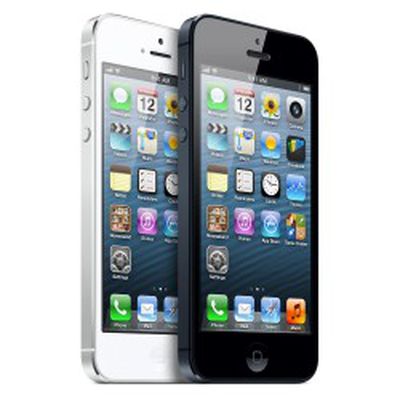
iphone5_imageApple is planning on creating an R&D team to develop baseband chips, which are used to control a device's radio functions like modulation, signal generation and more, for future iPhones in-house, according to a new report from DigiTimes. The baseband chip is separate from the A7 processor, which Apple already designs with an in-house team.

Apple reportedly plans to form a R&D team to develop baseband processors for use in iPhones to be released in 2015 and will place the baseband chip orders with Samsung Electronics and Globalfoundries, according to industry sources.

Qualcomm is currently the company that Apple acquires its baseband chips from, although they're produced in mass quantities at Apple manufacturing partner Taiwan Semiconductor Manufacturing Company.

Recently, Apple has made moves to bring more chip development in-house, including rumors of an effort to purchase a unit of Renesas Electronics that creates chips for smartphone displays. It also acquired low-power wireless chip provider Passif Semiconductor, whose chips could be used to improve battery life in wearables, like Apple's rumored iWatch.

The moves are a part of Apple's effort to control its own production supplies and core technologies, and include partnerships like Apple's deal with GT Advanced, which will provide the Cupertino company with massive supplies of sapphire displays.

Related Forum: iPhone

Top Rated Comments

161 months ago
Although I love that apple exerts such care and control over their hardware, I do wonder if it's a bit dangerous for them to be investing so heavily in the R/D for such specific components (stretching themselves too thin?). Then again, the hardware software combo is one of their strengths and they should be focusing on it.

Bringing it all in house does bring benefits especially if the can get software based modulation working which means a single product line supporting every frequency imaginable out of the box.
Score: 4 Votes (Like | Disagree)
chrmjenkins Avatar
161 months ago
Apple was late to LTE for the same reason they didn't include 3G in the first iPhone: they wanted to keep their build costs down. Nothing changed as far as power requirements in between.

Correct me if I'm wrong, but at the time of creating the iPhone 4, there was no single chip radio solution for normal 2G/3G and LTE. The thunderbolt had multiple chips. So yes, it kept build costs down, but it also simplified the PCB and kept it smaller and saved on power consumption. It wasn't only cost.
Score: 2 Votes (Like | Disagree)
161 months ago
On the hardware side, Apple is doing great. It's the software side they've stretched themselves a bit too thin.

Um what? Apple is doing well on both ends.
Score: 2 Votes (Like | Disagree)
theBB Avatar
161 months ago
A team of 10, 15 people at a cost of roughly $5 million/year to control timing and production cycle is not a bad thing.
If Apple can have a team of only 10 or 15 people develop and test a chip that takes hundreds of engineers in other companies, it should definitely do it. :)
Score: 1 Votes (Like | Disagree)
dumastudetto Avatar
161 months ago
This is great news for consumers. It proves Apple is committed to bringing us even greater coupling of hardware and software for the best product experiences. I'm excited to see these new technologies in the next generation iPhone and iPad.
Score: 1 Votes (Like | Disagree)
161 months ago
The problem with Apple's approach is interoperability. When a qualcomm chip goes through testing, it's a known quantity that's used by lots and lots of people. If Apple goes its own way it loses that base of testers and troubleshooters.

That would have caused problems back in the day, when iPhones apparently had some incorrect settings. That sort of debugging would be really difficult if Apple went its own way. With a Qualcomm chip, you can at least say that it's not the chip because other people's phones work fine. With Apple having its own chip, you're SOL when it comes to knowing what the issue is.
Score: 1 Votes (Like | Disagree)

Popular Stories

Four iPhone 18 Pro Colors Mock Feature

iPhone 18 Pro: Pre-Orders and Release Date

Sunday August 16, 2026 8:24 pm PDT by
Apple has yet to reveal when the iPhone 18 Pro and iPhone Ultra will be announced and released, but the dates usually follow a familiar pattern. As usual, the event is expected to take place in the first half of September. Labor Day falls on September 7 this year. The last time the holiday was on that day was in 2020, but the iPhone event that year was delayed until October due to the...
iPhone 18 Pro Rumored Colors

What's Coming in September: New iPhones, Apple Watches and More

Thursday August 13, 2026 4:20 pm PDT by
Apple will introduce at least five new devices at its iPhone-centric event next month, and it's also possible we'll get devices waiting on Siri AI like the Apple TV. iPhone 18 Pro The iPhone 18 Pro is going to look like the iPhone 17 Pro, but with a smaller Dynamic Island. It's getting some internal updates, including a new Wide camera with a variable aperture for more control over lighting ...
iPhone 17 One Year Later Thumb 1

Should You Buy an iPhone 17 Now or Wait for iPhone 18?

Friday August 14, 2026 12:15 pm PDT by
For the first time since Apple started selling standard and "Pro" iPhones, we're not going to get an entry-level iPhone model this fall. Apple doesn't plan to release an iPhone 18 in September, and will only launch the iPhone 18 Pro, iPhone 18 Pro Max, and foldable iPhone Ultra. The lower-cost iPhone 18 won't come out until spring 2027. Subscribe to the MacRumors YouTube channel for more ...