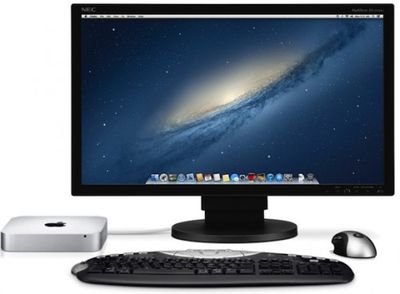
Following last month's launch of new Mac mini models, a number of users in the MacRumors forums and Apple's support forums have cited issues with flickering on external monitors connected to their machines via HDMI. Connections via Thunderbolt/Mini DisplayPort are not affected.
The issue seems to be a known one related to the Intel HD 4000 graphics used in the Mac mini, and Intel has now acknowledged the issue in the Mac mini and indicated that a fix is on the way. A timeframe for a fix delivered through Apple is, however, so far unknown.
We are aware of the flickering issue, and there will be a fix provided in the future. The overall flicker issue is also being addressed here; http://communities.intel.com/thread/32932
Your OEM (Apple) will provide the driver with the fix when they are done configuring our driver (that has the fix). An ETA on this is currently unknown.
Apple has begun developer seeding of OS X 10.8.3 with an emphasis on graphics drivers, but it seems to be unclear at the present time whether the current beta version of OS X 10.8.3 contains the specific fix for this issue.
Apple's unusually timed announcement of new Mac mini and Mac Studio models this week was driven by unexpectedly strong enterprise appetite for AI hardware, according to The Information.
Apple normally releases new Mac models in the autumn, closer to October or November, making this week's announcement unusually early, falling just before the anticipated arrival of new iPhone models. The...
Tuesday August 25, 2026 6:11 am PDT by Joe Rossignol
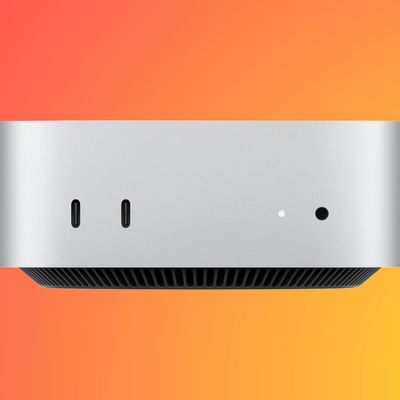
Apple today announced the next-generation Mac mini, which can be configured with an all-new M6 chip or the M5 Pro chip released earlier this year.
The M6 chip is equipped with a 12-core CPU and a 12-core GPU, up from a 10-core CPU and 10-core GPU in the M5 chip. In addition, the M6 chip features the first-ever dual Neural Engine with two 16-core engines, up from one in previous chips. The M6 ...
Tuesday August 25, 2026 9:10 am PDT by Joe Rossignol
Apple today unveiled a new Mac mini with M6 and M5 Pro chip options, a new Mac Studio with M5 Max and M5 Ultra chip options, a new version of the Polishing Cloth with a lower price, and updated Magic Keyboards for Macs.
Subscribe to MacRumors on YouTube
Here are all of the new products that Apple announced today:
Apple Announces New Mac Mini With M6 and M5 Pro Chips and More
Apple Unveils...
Integrated graphics are ridiculous for a desktop. I'd rather sacrifice a bit of space in order to replace the card, repair it, upgrade it or simply have an independent card with its own RAM and better performance.
Mobile devices I can understand, but this obsession with "thin" iMac's and small Mac Mini's at the sacrifice of function is getting out of hand. How is Intel proposing to fix this issue? What if this had been a bad logic board w/ integrated graphics?
Apple are the ones pushing for integrated GPU's. That's why there are no discrete GPU's in the rMBP 13" and MBA's.
Hardly. AMD is moving the market to APUs and Intel knows it has to do something better than their HD 4000/5000 or they will open up x86 to AMD. It's another reason for the Xeon Phi (http://www.intel.com/content/www/us/en/high-performance-computing/high-performance-xeon-phi-coprocessor-brief.html) to compete against GPGPUs and the HSA Initiative (http://hsafoundation.com/) which is founded upon LLVM and OpenCL.
Apple wants SoC to have as small a form-factor as possible while improving system performance.
The Macbook AIR is an example of where Mobile GPGPUs have room to scale down before they're able to put them back in such a thin frame. Until then, the integrated section from Intel's HD 4000 will have to do.
The moment Nvidia and AMD can put an extremely thin, low power, but dedicated discrete gpgpu in that form factor Apple will jump on it. AMD's upcoming Radeon HD 8000 series is reportedly 33% more power efficient in power, even at 28nm. AMD is moving to 20nm in 2013 and 14nm in 2014 thanks to GlobalFoundries.
The power efficiency increases and the die size drops will be win/win for Apple's thin is in all the way up to the thin doesn't matter Mac Pro.
AMD is dropping their GPGPUs pricing for the HD 8000 series by > 20% while computational improvements are up > 60% for SP and DP.
New materials will soon launch CPU/GPGPU designs producing performance and power consumption drops that will once again remind us all how amazing this industry is relative to any other in the globe.