MacRumors

Simplify Media was one of the early App Store hits, allowing users to stream their entire iTunes music library to their iPhone or iPod touch via Wi-Fi, 3G or EDGE. The application also allowed users to stream from up to 30 of their friends' libraries.

Simplify Media has now released Simplify Music 2.0 [App Store, $2.99], bringing several new features to the application.

- Search: Search by artist, album and title across all connected computers as though its one giant library
- Favorites: Tag favorite music on the fly from personal libraries, or those of friends
- Playlists: Create an on-the-fly playlist for later enjoyment right on your phone or touch
- Seek: Use the scrub bar to easily move forward or back in a streamed podcast or audio book

While DRM-protected iTunes Store music can only be streamed to other authorized computers and not to the iPhone and iPod touch client, iTunes Plus tracks are available for streaming to any linked device.

Users are also required to install Simplify Media's free software on computers from which they wish to stream music libraries. The software is available for Mac, Windows, and Linux.

Simplify Media 2.0 is available at an introductory price of $2.99 for both new and existing users, and the original version of Simplify Media will continue to be supported for existing users who choose not to upgrade.

Related Forum: iPhone
234858 zillow

Zillow, the popular real estate information and valuation site, has released a dedicated iPhone application, Zillow Real Estate [App Store, Free]. Zillow's database covers 88 million U.S homes (95% of homes in the country) and provides home details, transaction histories, and estimated home values known as "Zestimates."

In addition, Zillow provides for-sale home listings with details, photos and contact info, currently listing approximately 3.4 million available homes. Zillow's "Make Me Move" feature allows owners to select a price at which they would consider selling their house without having to formally list the property for sale.

Zillow Real Estate takes advantage of the iPhone's GPS capabilities to display homes near the user's location, following the user as they move. A search feature is also available to locate homes by address, neighborhood, ZIP code, or city.

- GPS technology follows you - no need to enter an address
- See Zestimates, homes for sale, recently sold, and Make Me Move homes all on one screen.
- Perfect research companion for buyers or real estate junkies.
- Drive by your "dream homes" and see what they're worth.
- Or, custom search homes by address, neighborhood, or ZIP.

A video preview of Zillow Real Estate is also available.

Related Forum: iPhone

225007 iphone 3

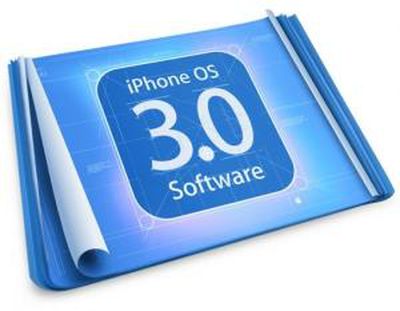
Continuing a pattern of biweekly releases, Apple tonight seeded the fourth beta version of iPhone OS 3.0 to developers. Apple also issued a developer pre-release version of iTunes 8.2, which is required to activate the new beta. No new features in the fourth beta version have been revealed as of yet.

The iPhone OS 3.0 was first demonstrated at a media event in mid-March and will bring over 100 new features to users. The iPhone OS 3.0 is expected to be a major focus of Apple's sold out Worldwide Developers Conference to be held in San Francisco in June.

Update: One forum poster points out that the latest iTunes 8.2 beta carries references to Blu-Ray data from Gracenote, suggesting that iTunes could support the reading/recognizing of Blu-Ray discs. This note is not present in the current version of iTunes:

225910 Picture 1 1 500
From iTunes 8.2 Beta

Related Forum: iPhone

182018 soldout

Apple quietly posted a notice on their WWDC site that the developer's conference had sold out for 2009.

The news should come as no surprise to most as Apple's WWDC sold out last year as well. With the massive success of the iPhone App Store this past year, many expected interest in this year's conference to exceed last year's.

WWDC takes place between June 8-12th in San Francisco, CA. Apple is expected to reveal more information about the iPhone 3.0 SDK and Mac OS X Snow Leopard at the conference. Rumors also suggest that we'll also see an announcement about the next generation iPhone.

Related Forum: iPhone

In a brief report (subscription required), The Wall Street Journal claims that Microsoft and Verizon are in talks to launch an iPhone rival in early 2010. MarketWatch summarizes the report:

The Microsoft phone, code-named "Pink," is expected to appear by 2010 and would extend the tech giant's Windows Mobile cellphone operating system, according to the Journal.

Similar to Google's Android platform, Microsoft will reportedly work with a third party who will manufacture the device, but Microsoft will play an integral role in design and development.

Verizon has been linked to several rumors regarding the iPhone from mainstream news sources in recent days, first with renewed claims that the iPhone may be making its way onto the carrier's network sometime next year, and earlier today with rumors that Apple and Verizon are developing two new products, an "iPhone lite" and a larger "Media Pad", also slated for release as early as 2010.

Related Forum: iPhone
112641 truphone

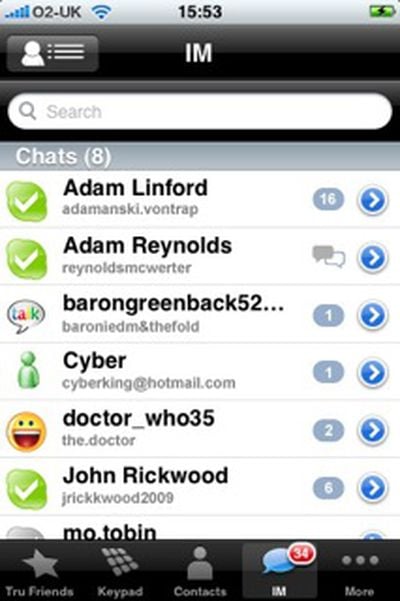
Truphone [App Store, Free], one of the most popular voice-over-IP phone solutions for the iPhone, has been updated to version 3.0. Among the new features are improved voice quality, instant messaging support, and improved performance.

Truphone 3.0 release will provide Truphone users with:

- Superior voice call quality

- A slick, new instant messaging service (allowing you to IM and call Skype and Google Talk users from within the app and to IM Yahoo!, AIM and MSN buddies.)

- Overall improved account management features and application performance.

Truphone 3.0 is a free download offering free calling to other Truphone, Skype and Google Talk users over Wi-Fi, and several combinations of monthly fees and unit charges for landline and mobile calls and SMS are available.

Related Forum: iPhone

Apple and Verizon partnership rumors seem to have taken on a life of their own with multiple reports that the companies are planning to work together as early as 2010. Businessweek provides the most intriguing report yet with claims that Apple could be working on releasing two different devices with Verizon: an iPhone Lite and a Media Pad.

One device is a smaller, less expensive calling device described by a person who has seen it as an "iPhone lite." The other is a media pad that would let users listen to music, view photos, and watch high-definition videos, the person says. It would place calls over a Wi-Fi connection. One of these devices may be introduced as early as this summer, one person says.

BusinessWeek was able to confirm with Verizon Wireless CEO Lowell McAdam that Verzion had been in talks with Apple but could not get any details from McAdam.

Instead, the magazine cites "two people familiar with the subject" as the source for these two possible Apple devices. The Apple media pad is said to be smaller than Amazon's Kindle ebook reader but its touchscreen is bigger than the Kindle's. The source predicts that this new product will be a category defining breakthrough device:

"The media pad category might go to Verizon," said the person who has seen the device. "We are talking about a device where people will say, 'Damn, why didn't we do this?' Apple is probably going to define the damn category."

Meanwhile, the iPhone Lite is said to be thinner, smaller, and cheaper than the current iPhone. Most of the cost savings are said to come from a new system-on-chip that has reduced costs.

Related Forum: iPhone

The Inquirer reports that former ATI chip designer and executive Bob Drebin is apparently now a Senior Director at Apple. Drebin was formerly the Chief Technology Officer for the Graphics Products Group at AMD, assuming the position as part of AMD's acquisition of ATI in 2006. As detailed in his still-active AMD profile, Drebin brings extensive experience in graphics chip design.

Bob Drebin is the chief technology officer of the Graphics Products Group within AMD. In this role, he oversees the technical strategy and direction for AMD's graphics related businesses.

Mr. Drebin joined AMD with the ATI acquisition in 2006. At ATI, Mr. Drebin led the architecture and design of many of ATI award-winning graphics processors. Before ATI, Mr. Drebin managed the architecture and design unit of ArtX, where he was instrumental in development of the graphics component for the Nintendo Game Cube. Prior to joining ArtX, Mr. Drebin was a chief engineer in Silicon Graphics' Advanced Graphics Division, where he spent nine years developing high performance graphics systems.

While the details of Drebin's new role remain unknown, his experience in graphics hardware suggests that he may have a similar focus at Apple, which is known to be focused on development of OpenCL, a key component of Apple's upcoming OS X 10.6 Snow Leopard that will allow the operating system to take greater advantage of parallel processing across multi-core CPUs and graphics chips.

Notably, Drebin appears to have left AMD in January 2008 and did not assume his position at Apple until earlier this year, possibly due to non-compete clauses in his employment contract. Similar non-compete terms delayed the appointment of Mark Papermaster to his new position of senior vice president of Hardware Devices Engineering at Apple and triggered a lawsuit from his former employer, IBM. Apple announced in January that the dispute had been settled, and that Papermaster would assume his new position as of April 24th. As noted by CNET, Papermaster did indeed begin work on Friday, and his biography has been added to Apple's list of executives.

Apple today announced on its MobileMe News page that Live Chat support for MobileMe is now available in English 24 hours a day, 7 days a week.

If you encounter an issue while using MobileMe and would like to address it immediately, simply go to MobileMe support. Click on the topics at the bottom left of the page to see if your question has already been answered. If it's not, click the Chat Now button to initiate a realtime help session with a MobileMe support agent.

Apple received significant criticism upon the initial launch of MobileMe last summer due to numerous issues that ultimately led to an acknowledgement of the problems from Steve Jobs and multiple free extensions of service to affected users. While Apple was able to work through its early issues, it has also continued to tweak performance and add features to the service.

Apple today announced that it has filed an amended Form 10-Q with the U.S. Securities and Exchange Commission, correcting errors in the reported vote totals for shareholder-submitted proposals at its most recent annual shareholder meeting.

Last week's filing incorrectly reported the voting percentages for shareholder-submitted proposals because abstentions were counted as "No" votes. Very shortly after the original filing, the company learned that these votes had been incorrectly tallied and an internal investigation confirmed the mistake was due to human error, which Apple regrets. Today's amendment correctly reports the voting results.

The correction affected the outcome of one shareholder-submitted proposal, known as "Say on Pay," which successfully passed with approximately 51.63% of votes cast under corrected counting procedures.

As a result of the corrected vote count, Shareholder Proposal No. 5 Regarding Advisory Vote on Compensation, known as "Say on Pay," was approved with a majority of votes cast. The Compensation Committee of Apple's Board of Directors has been closely following the Say on Pay issue, and anticipates that new laws or regulations will require some form of Say on Pay vote at all public companies in the near future. Even if that does not occur, Apple is committed to implementing an advisory Say on Pay vote next year.

As noted in shareholder materials for the annual meeting, the "Say on Pay" proposal will allow shareholders to cast advisory votes regarding compensation for Apple's senior management at each annual meeting. The referendums would be non-binding, but would allow shareholders a greater voice in communicating with Apple management. Apple had formally opposed the proposal as an ineffective means of offering shareholder input.

Executive compensation has become a popular topic among shareholders throughout the corporate world, with several countries recently passing laws requiring such opportunities for shareholders and the U.S. considering similar legislation.

AppleInsider reports that QuickTime X Player, slated for release as part of OS X 10.6 Snow Leopard later this year, will feature integrated uploading of supported video files to YouTube and MobileMe.

In particular, the application will let users take any supported video file and upload it directly to YouTube. Users will be prompted to enter their YouTube username and password, and QuickTime X Player take care of the rest. This includes converting the movie into a file optimized for the video sharing service and then uploading it to the appropriate user account.

Of course, Apple will also offer a similar option for users of its own MobileMe service that will take video files and upload them to a MobileMe Gallery. Both options are reportedly accessible via a new "Share" menu in the QuickTime X Player interface.

115255 quicktimex youtube 500
Mockup of YouTube upload dialog (Source: AppleInsider)

The new "Share" menu will reportedly also provide a more prominent location for existing options for export to formats optimized for the iPhone and Apple TV. The report also points out that the change will bring integrated YouTube offerings to all three of Apple's platforms, with a standalone iPhone application available since the device's launch, and YouTube functionality added to the Apple TV in a software update just months after the device's 2007 debut.

Last week, Forbes published the full text of Steve Jobs' deposition to the Securities and Exchange Commission. While a number of stories have been circulating around the internet about Jobs' take on the stock options scandal, perhaps most interesting was Jobs' attitude and state of mind surrounding his return to Apple and the role of Apple CEO.

Back in 1996, after Apple announced that it would purchase NeXT, Steve Jobs returned to Apple as the "interim CEO" while a replacement was sought. Most casual observers felt that Jobs would certainly remain as CEO despite the interim title. Jobs finally dropped the interim title at the 2000 Macworld Expo. TechCrunch provides a good summary of quotes from the deposition about Steve Jobs' thought process during that time and that transitioning to Apple as full-time CEO was not as obvious a decision as one might have suspected:

Q: And did you take on the role then as CEO?
Jobs: Well, no, I did not. I was very concerned that Pixar was a newly public company with shareholders, employees, and I felt that - - to my knowledge there had never been a CEO of two public companies before. So I felt if I took the job, the Pixar shareholders and employees would think I was abandoning them.
Q. Mm-hmm
Jobs. And I decided I just - - that I couldn't do that. So I took the title of interim CEO and agreed to come back for 90 days to help recruit a full-time CEO.

Jobs, of course, was later unable to find a suitable candidate and eventually slid into the position himself.

Jobs also explains that the reason for the stock options was that he felt unappreciated by Apple's board despite the amount of work he put into the company during those years. Jobs, of course, was cleared of wrongdoing with respect to the stock option investigation.

USA Today revives rumors that Apple is considering bringing the iPhone to Verizon's network as early as 2010. According to "people familiar with the matter," high-level discussions were initiated between Apple and Verizon a few months ago and are continuing. AT&T is presently the exclusive carrier for Apple's iPhone, but that exclusivity expires in 2010.

This is just the latest in a series of reports that Apple may open the iPhone up to other U.S. carriers. AT&T has been said to be working on trying to extend their exclusivity into 2011. It's no wonder, since AT&T's most recent financial results showed that they had 1.6 million activations of the iPhone 3G in the 1st quarter of 2009 and 40% of those customers were new to AT&T. If Verizon were to also offer the iPhone, it would likely reduce the number of customers switching to AT&T.

USA Today speculates that even if Apple did open the iPhone up to Verizon, it would likely also remain available to AT&T customers.

Related Forum: iPhone

First posted over at TouchArcade.com, a YouTube video depicts what could be World of Warcraft running on the iPhone.


World of Warcraft is an incredibly popular massively multiplayer online role-playing game (MMORPG) with over 11 million subscribers.

While there have been sketchy rumors in the past that this game could find its way to the iPhone, the video seems believable as it shows the game running within the Vollee client application. Vollee is a company that develops software to allow mobile 3G phones to play CPU intensive PC applications over the network. Their first demonstration in 2008 showed Second Life on a mobile device. The software works by essentially streaming video of the game rather than rendering it by the handset itself:

The companys VolleeX engine adapts applications for screen size and key layout, and then streams the original application to mobile devices. Vollees interactive video streaming platform optimizes compression to minimize bandwidth requirements and also leverages the 3G mobile networks in such a way that gamers can easily and smoothly navigate virtual worlds. Vollees technology is also extensible to fast paced, high quality video games previously impossible on mobile.

Vollee has also previously announced upcoming iPhone support as well as a partnership with ActivisionBlizzard which would make this client a distinct possibility. The company, however, has been rather quiet lately and their website is currently not resolving.

Related Forum: iPhone

AppleInsider reports on one new feature that has been found in the latest Snow Leopard developer seeds: screen recording.

Similar in many ways to a feature long offered by Ambrosia Software through its Snapz Pro X utility, the option will allow users to capture in motion video their Mac's screen -- essentially video screenshots.

Such a feature will be particularly useful for software developers and educators, as it will simplify the process of creating video tutorials, software demonstrations, and anything else best captured in live motion as opposed to still shots.

The feature does step on the toes of some 3rd party developers (Snapz Pro, Screenflow) who have been offering a similar feature set as commercial applications.

Apple has been continuing to seed Mac OS X Snow Leopard builds to developers. The latest build (10A335) was delivered just yesterday. Early reports of that build indicate it's become even more stable and "polished" but no other new features have been noted.

Arstechnica reports that Apple has been ordered to pay $19 million to Opti Inc. for patent infringement on a technology called "predictive snooping":

The patent -- its full name is "Predictive snooping of cache memory for master-initiated accesses" -- describes a method to more efficiently transfer data among the CPU, memory, and "other devices." The patent was issued to Opti in June of 2002, and the company filed a patent infringement lawsuit against Apple in January of 2007.

Apple, of course, has been the target of many patent infringement lawsuits. Many lawsuits, however, never come to fruition. The most recent high profile lawsuit comes from Elan who who claims Apple has infringed on their multi-touch technologies. It may be years before we hear the conclusion of that claim.

We tend to avoid reporting on all lawsuit claims, instead holding out for the ones that actually seem to stick.

CNET notes that, according Apple's 10-Q document filed with the Securities and Exchange Commission in association with the release of its earnings for the second fiscal quarter of 2009, Apple reduced the number of employees in its retail store division from 15,600 to approximately 14,000 full-time equivalents during the quarter.

The retail arm of the company now employs 14,000 full-time equivalent workers, down from 15,600 at the end of Apple's first fiscal quarter, according to a filing with the SEC. Reports surfaced late last year that Apple was looking into ways to reduce the number of hours worked by part-time employees as a hedge against a coming recession.

The report also noted that Apple opened only one new retail store during the quarter. The new store is located in Greensboro, North Carolina.

Update: We failed to stress in the original article that the numbers are "full-time equivalents", meaning that several part-time employees would be counted as one full-time employment. The decline in full-time equivalents appears to have been primarily due to Apple scaling back the hours of its part time employees and not through any layoffs.

In a press release issued this morning regarding the App Store's one billion app milestone, Apple announced that the winner of the associated contest was 13-year old Connor Mulcahey of Weston, Connecticut. Connor, who downloaded Bump [App Store] as the milestone application, will receive a $10,000 iTunes gift card, a 32 GB iPod touch, a Time Capsule, and a 17" MacBook Pro.

"The revolutionary App Store has been a phenomenal hit with iPhone and iPod touch users around the world, and we'd like to thank our customers and developers for helping us achieve the astonishing milestone of one billion apps downloaded," said Philip Schiller, Apple's senior vice president of Worldwide Product Marketing. "In nine months, the App Store has completely revolutionized the mobile industry and this is only the beginning."

Related Forum: Mac Apps