Skip to Content

Apple Looking to Fundamentally Change iPhone Memory Design to Enhance AI Performance [Update: False]

Update 6:44 p.m.: Samsung has informed MacRumors that the original report from The Elec is "completely incorrect" and that the "details are false." While The Elec has pulled its report entirely, we are leaving our original article intact below for reference to ensure clarity around the situation.


Apple is reportedly planning a significant shift in its iPhone hardware design by transitioning to discrete memory packaging to enhance on-device AI performance.
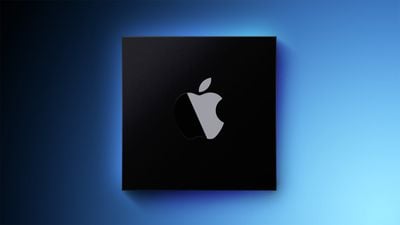
apple silicon feature joeblue
Samsung, a key supplier of Apple's memory components, has begun research to accommodate the change at Apple's request, according to a new report from Korea's The Elec. The shift will mark a departure from the current package-on-package (PoP) method, where the low-power double data rate (LPDDR) DRAM is stacked directly on the System-on-Chip (SoC). Starting in 2026, the DRAM will instead be packaged separately from the SoC, which should significantly improve memory bandwidth and enhance the ‌iPhone‌'s AI capabilities.

The current PoP configuration was first introduced in the ‌iPhone‌ 4 in 2010 and favored since then for its compact design. Stacking the memory directly atop the SoC minimizes the physical footprint, which is especially important for mobile devices where space is at a premium. However, PoP packaging imposes constraints that limit its suitability for AI applications, which require faster data transfer rates and more memory bandwidth.

With PoP, the size of the memory package is constrained by the size of the SoC, capping the number of I/O pins and therefore limiting performance. Moving to discrete packaging will allow the memory to be physically separated from the SoC, enabling the addition of more I/O pins. This design change should increase the data transfer rate and the number of parallel data channels. Separating the memory from the SoC also provides better heat dissipation.

Apple has previously used discrete memory packaging across the Mac and iPad product lines but later shifted to memory-on-package (MOP) with the introduction of the M1 chip. MOP shortens the distance between the memory and the SoC, reducing latency and improving power efficiency. For the ‌iPhone‌, adopting discrete packaging may necessitate other design changes, such as shrinking the SoC or battery to create additional space for the memory component. It may also use more power and increase latency.

In addition, Samsung is reportedly working on next-generation LPDDR6 memory technology for Apple, which is expected to offer two to three times the data transfer speed and bandwidth of the current LPDDR5X. One variant under development, LPDDR6-PIM (Processor-in-Memory), integrates processing capabilities directly into the memory. Samsung is said to be collaborating with SK Hynix to standardize this technology.

The changes could appear beginning with 2026's "iPhone 18" devices, providing Apple can overcome engineering challenges related to SoC miniaturization and internal layout optimization.
Popular Stories

imac video apple feature

Apple Unveils Seven New Products

Friday March 6, 2026 11:48 am PST by
Apple this week unveiled seven products, including an iPhone 17e, an iPad Air with the M4 chip, updated MacBook Air and MacBook Pro models, a new Studio Display, a higher-end Studio Display XDR, and an all-new MacBook Neo that starts at just $599. iPhone 17e features the same overall design as the iPhone 16e, but it gains Apple's A19 chip, MagSafe for magnetic wireless charging and magnetic...

Apple MacBook Pro M4 hero

Apple Planning 'MacBook Ultra' With Touchscreen and Higher Price

Sunday March 8, 2026 8:05 am PDT by
Apple is planning to launch an all-new "MacBook Ultra" model this year, featuring an OLED display, touchscreen, and a higher price point, Bloomberg's Mark Gurman reports. Gurman revealed the information in his latest "Power On" newsletter. While Apple has been widely expected to launch new M6-series MacBook Pro models with OLED displays, touchscreen functionality, and a new, thinner design...
MacBook Neo Feature Pastel 1

First MacBook Neo Benchmarks Are In: Here's How It Compares to the M1 MacBook Air

Thursday March 5, 2026 4:07 pm PST by
Benchmarks for the new MacBook Neo surfaced today, and unsurprisingly, CPU performance is almost identical to the iPhone 16 Pro. The MacBook Neo uses the same 6-core A18 Pro chip that was first introduced in the iPhone 16 Pro, but it has one fewer GPU core. The MacBook Neo earned a single-core score of 3461 and a multi-core score of 8668, along with a Metal score of 31286. Here's how the...

Top Rated Comments

vertsix Avatar
17 months ago
Doesn't packaged memory offer significantly reduced latency though?
Score: 31 Votes (Like | Disagree)
17 months ago
cool. higher power consumption and worse latency for... *checks notes* more genmoji and bad notification summaries.
Score: 26 Votes (Like | Disagree)
hovscorpion12 Avatar
17 months ago
Basically, Apple is re-inventing PCs. This could be the start of user swappable RAM, SSD and potentially discrete GPUs.

Imagine a Macbook with the base GPU and the option for Apple discrete GPU

For ex [M5 Pro 18-core GPU w/M5 Max 40-core discrete GPU]
Score: 21 Votes (Like | Disagree)
maxoakland Avatar
17 months ago

Basically, Apple is re-inventing PCs. This could be the start of user swappable RAM, SSD and potentially discrete GPUs.

Imagine a Macbook with the base GPU and the option for Apple discrete GPU

For ex [M5 Pro 18-core GPU w/M5 Max 40-core discrete GPU]
This is nuts because I’ve been saying I want Apple to do this on Macs so we can upgrade our RAM again and Apple’s line has been that RAM in the SOC is way more performant

Now I’m hearing it’s not!!?? I feel like I’m taking crazy pills
Score: 19 Votes (Like | Disagree)
randomgeeza Avatar
17 months ago
AI this, AI that... such an overused term nowadays. AI fatigue is and has set in...
Score: 14 Votes (Like | Disagree)
17 months ago
In other words, Apple is trying hard not to add more RAM.
Score: 12 Votes (Like | Disagree)